

P0322 on 2011-2016 Kia Sportage 2.4L: Crankshaft Sensor Causes and Fixes
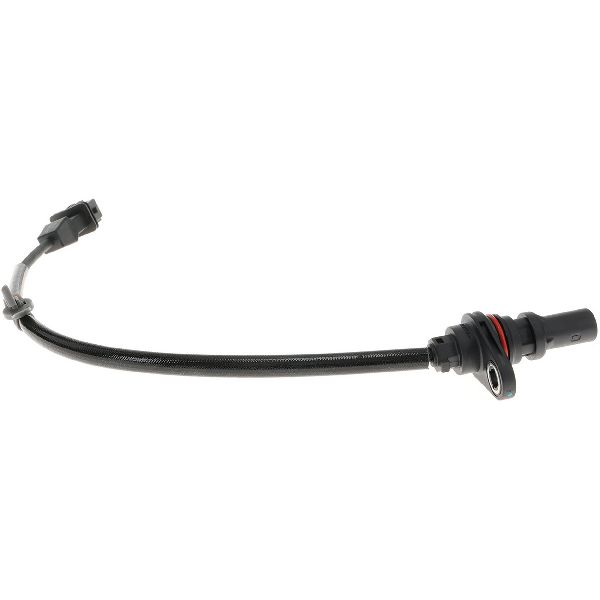
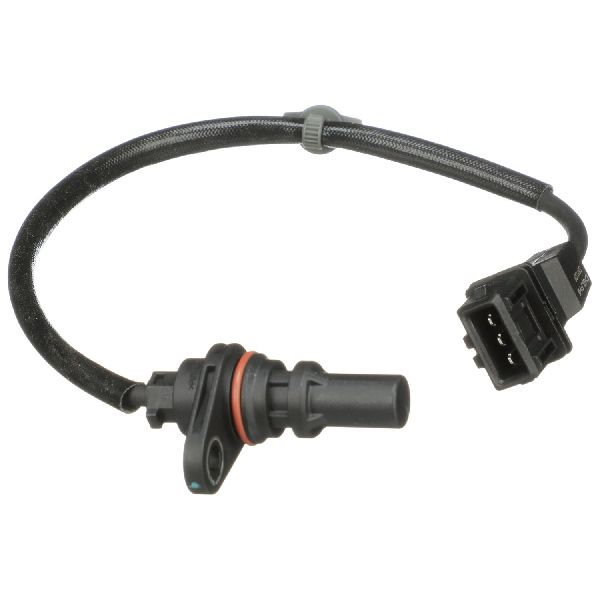
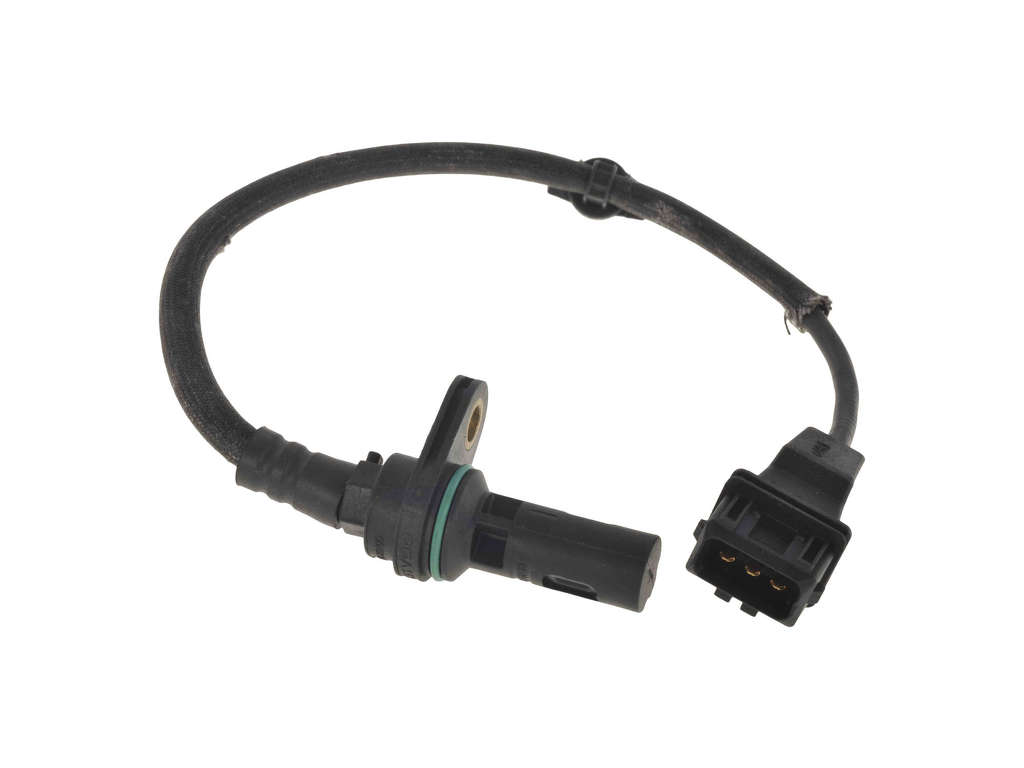
P0322 on a 2011-2016 Kia Sportage almost always means the crankshaft position sensor has failed, causing the engine to crank but not start, or to stall unexpectedly. Replacing the sensor is the common fix, costing between $25-$65 for an aftermarket part or $90-$130 for an OEM part. Using a genuine Kia/Hyundai part is strongly recommended as aftermarket sensors for this application are known to fail prematurely.
- P0322 means your Sportage's engine computer has lost the signal from the crankshaft position sensor, which will cause it to stall or not start.
- The most probable cause is a failed crankshaft position sensor. It is highly recommended to use a genuine OEM part for the replacement.
- The 2011-2016 year range spans two generations (SL and QL); the crankshaft sensor part number is different for each. Verify the correct part for your specific vehicle year before purchasing.
- The sensor is located on the back of the engine near the transmission; access is tight but replacement is a manageable DIY job for those with some mechanical skill.
- Do not continue to drive the vehicle, as it can stall at any time, creating a serious safety risk.
- This code is an electronic sensor failure and is separate from the Theta II engine's well-known mechanical recalls for engine bearing failure (which triggers code P1326).
What's Unique About the 2011-2016 Kia Sportage
For the 2.4L Theta II engine in this Sportage, a P0322 code is a very common and straightforward diagnosis. It's crucial to distinguish this electronic fault from the engine's more infamous mechanical problems. While the Theta II engine family has faced major recalls (like SC147) and a class-action lawsuit for connecting rod bearing failure, the P0322 code is almost always an independent, external electronic failure of the crankshaft sensor itself. The key challenge for this platform is ensuring you buy the correct OEM part, as the sensor changed between the third and fourth generations covered in this year range.
Generation note: The 2011-2016 year range covers two Sportage generations: the end of the 3rd Gen (SL; 2011-2015) and the start of the 4th Gen (QL; 2016). This is important because the crankshaft position sensor part number is different between these generations. Always verify the part with your vehicle's VIN before purchasing.
Symptoms You May Notice
- Engine cranks but will not start.
- Engine stalls suddenly while driving, especially when warm.
- Check Engine Light is on.
- Tachometer shows 0 RPM while cranking or behaves erratically.
- Rough idling or engine misfires if the signal is intermittent.
- Traction control light may illuminate simultaneously.
- Replacing the camshaft position sensor. While related, a faulty cam sensor typically throws a different code (like P0340) and may not cause a complete no-start condition.
- Replacing the fuel pump. A 'crank, no-start' condition can be caused by a lack of fuel, but the P0322 code specifically points to a lack of an engine speed signal, which should be diagnosed first.
Most Likely Causes
- Failed Crankshaft Position Sensor (CKP) 🔴 High Probability → Shop Engine Crankshaft Position Sensor The sensor is a well-documented, common failure point on the Theta II engine platform due to heat cycles and electronic component aging. Many owners and technicians strongly recommend using only genuine Kia/Hyundai OEM sensors, as aftermarket versions have a high rate of premature failure for this specific application.
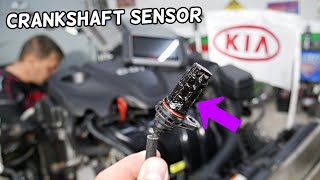
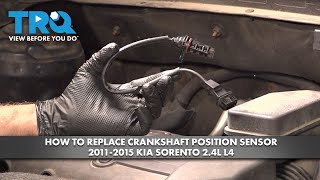
How to confirm: With the engine cranking, use a scan tool to check for an RPM signal. If it reads 0, the sensor or its circuit is faulty. The sensor itself can be tested with a multimeter for resistance (should be approx. 900 Ω), but replacement is often the most practical diagnostic step given the high failure rate. 🎬 Watch: 2011 Sportage crankshaft sensor installation guide
Typical fix: Replace the crankshaft position sensor with a genuine OEM part.
Est. part cost: $25-$130 - Damaged Wiring or Loose Connector 🟡 Medium Probability The sensor's location near the bottom rear of the engine exposes the wiring to potential damage from road debris, oil leaks, and heat from the nearby exhaust.
How to confirm: Visually inspect the entire wiring harness from the sensor to the main loom. Check for frayed wires, melted insulation, or corrosion inside the connector plug. Wiggle the connector while checking for a signal to see if the fault is intermittent.
Typical fix: Repair the damaged section of wire or clean/replace the connector pigtail. Ensure the harness is secured away from heat sources.
Est. part cost: $5-$30
Rare But Worth Checking
- Blown Fuse: Before replacing parts, it's always wise to check the fuses related to the engine sensors (often labeled 'Sensor 2' or similar) in the under-hood fuse box. A blown fuse can cut power to the CKP sensor.
- Failed Powertrain Control Module (PCM): → Shop Engine Control Module (ECM) This is extremely rare. The PCM should only be considered as the cause after the sensor and wiring have been definitively ruled out by proper testing with a multimeter or oscilloscope.
Diagnosis Steps
- Connect an OBD-II scanner and confirm P0322 is present. Note any other codes, especially P0335 or the critical P1326.
- Monitor live data on the scanner while cranking the engine. Look for the 'Engine RPM' PID. If it reads 0 or is erratic, the ECM is not seeing the crank signal, confirming the fault.
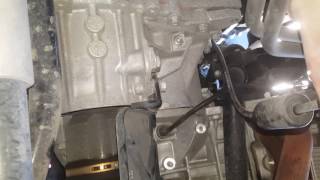
- Safely raise the vehicle and locate the crankshaft position sensor. It is on the rear of the engine block, near the transmission bell housing, close to the exhaust manifold. 🎬 See this video showing the sensor's exact location
- The sensor is typically covered by a small metal heat shield held on by two 10mm bolts. Remove this shield.
- The sensor itself is held in by a single 10mm bolt. Before removing, visually inspect its connector and wiring for obvious damage, melting, or oil contamination.
- If the wiring looks good, the most common and cost-effective next step is to replace the sensor with an OEM part, as it is the most likely point of failure.
- If a new sensor does not fix the issue, use a multimeter to check for proper voltage (typically 5V reference) and ground at the sensor connector with the key on.
- If voltage and ground are present, the final step is to check for a signal from the sensor while cranking, ideally with an oscilloscope. A lack of signal confirms a bad sensor, while a good signal that doesn't reach the ECM points to a wiring issue between the sensor and the ECM.
Parts You'll Likely Need
- Crankshaft Position Sensor (for 2016 QL Generation)
(OEM #39180-2G000)— This is the most common failure part for a P0322 code. The 2016 model year is the first of the 4th generation and uses this specific part number.
Trusted brands: Kia (Genuine), Hyundai (Genuine), Delphi, NGK/NTK, Mando, Hitachi
OEM price range: $90-$130
Aftermarket price range: $30-$65 - Crankshaft Position Sensor (for 2011-2015 SL Generation)
(OEM #39180-25300)— This is the most common failure part for a P0322 code. The 2011-2015 models fall into the 3rd generation and often use this part number, which supersedes 39180-25200. Always verify with VIN.
Trusted brands: Kia (Genuine), Hyundai (Genuine), Mando, Walker Products
OEM price range: $80-$120
Aftermarket price range: $25-$50
Related Codes That Often Appear With This One
- P0335 (Crankshaft Position Sensor 'A' Circuit Malfunction): Often appears with P0322 as a more general fault before the signal is lost completely. 🎬 Watch: How to replace a faulty crankshaft sensor
- P1326 (Knock Sensor Detection System): This is a SEPARATE and more serious issue related to the Theta II engine's known bearing failure problem. If you see P1326, the vehicle is in limp mode due to detected engine self-destruction, and you should stop driving immediately and contact a Kia dealer regarding the lifetime engine warranty.
Technical Service Bulletins (TSBs) & Recalls
- Kia Safety Recall Campaign SC147 - Theta II Engine Inspection and/or Replacement: This is NOT for code P0322. This TSB details the procedure for inspecting for the infamous connecting rod bearing failure on the 2.4L Theta II engine. A failed inspection results in engine replacement under an extended warranty. This mechanical failure causes a knocking noise and eventually code P1326, not P0322.
- Kia Product Improvement Campaign PI1803 - Knock Sensor Detection System (KSDS) Update: This is NOT for code P0322. This campaign installed software on the ECU to 'listen' for the vibrations of a failing connecting rod bearing. If detected, the software triggers code P1326 and puts the car in limp mode to prevent a catastrophic seizure. Having this update is often a prerequisite for the lifetime engine warranty.
Platform-Specific Known Issues
- Owner Experience: Intermittent Stalling Progressing to No-Start: A common story on forums involves the car stalling unexpectedly at a stoplight, especially after it has fully warmed up. It may restart after a few minutes, only to stall again later. Over days or weeks, the problem becomes more frequent until one day the engine just cranks but refuses to start at all. The tachometer will read 0 RPM during the crank-no-start condition. This progression is a classic sign of a heat-soaked, failing crankshaft position sensor.
- DIY Repair Note: Tight Access: Owners who have performed this repair themselves note that access to the sensor on the back of the engine is very tight. It is doable from underneath the vehicle after removing the splash shield. Removing the small heat shield first is key to gaining access to the sensor's 10mm mounting bolt.
Mechanic-Grade Diagnostic Values
- CKP Sensor Internal Resistance — expected: Approximately 900 Ω. Failure: An open circuit (infinite resistance or 'OL' on a multimeter) confirms an internal failure of the sensor coil.
- CKP Sensor Connector Power Supply (Key On, Engine Off) — expected: 5V or 12V DC reference voltage from the PCM.. Failure: 0V or significantly low voltage points to a problem in the wiring harness or the PCM's power supply circuit, not the sensor itself.
- CKP Sensor Connector Ground Circuit — expected: Near 0 Ω resistance when measured between the ground pin and a clean chassis ground.. Failure: High or infinite resistance ('OL') indicates a broken ground wire in the harness.
- CKP Sensor Signal (Oscilloscope) — expected: A clean digital square wave, switching between approximately 0V and 5V as the engine is cranked.. Failure: A flat line at 0V or 5V, or a distorted wave that does not consistently drop near 0V, indicates a failed sensor or a wiring short/open.
Scan Tool Commands That Help
- Kia GDS (or advanced aftermarket scanner): Crankshaft Position (CKP) Variation Learn — This procedure should be performed after replacing the crankshaft position sensor, timing belt/chain, or the PCM. It allows the engine computer to learn the precise pattern of the new sensor and reluctor ring, compensating for minor manufacturing variations to ensure accurate timing and misfire detection.
Wiring & Ground Locations
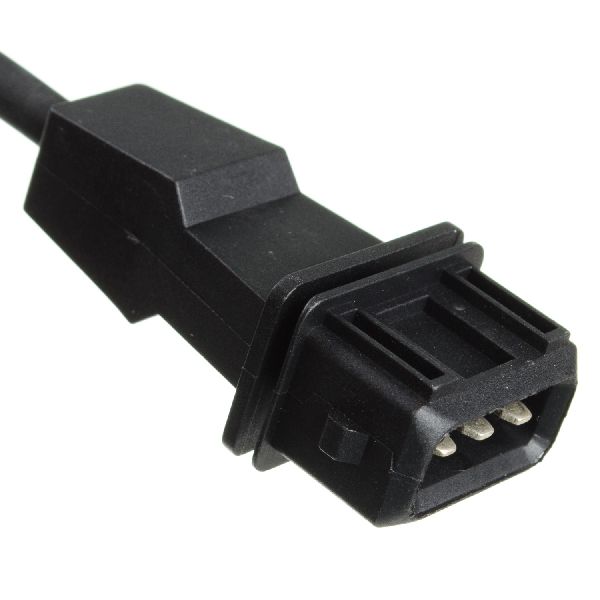
- CKP Sensor Connector Pins — At the crankshaft position sensor, on the rear of the engine block near the transmission bell housing.. Testing the three pins is essential for differentiating a bad sensor from a wiring problem. The pins are typically: Pin 1 - Power (5V or 12V reference from PCM), Pin 2 - Ground, Pin 3 - Signal (sends the square wave back to the PCM). Verifying power and ground are present is the first step before condemning the sensor.
- Engine Ground Wiring Assembly — Main ground straps connecting the engine block to the chassis. For 2011-2013 models, a key part is the 'Wiring Assembly-Engine Ground' (PN 918603W210).. A corroded or loose main engine ground can cause a host of electrical issues, including erratic sensor readings. While not a direct cause of P0322 in most cases, verifying the main grounds are clean and tight is a fundamental step in any electrical diagnosis.
OEM Part Supersession History
39180-25200→39180-25300— Standard part revision and improvement by the manufacturer.
Heads up: Using the original -25200 part if found as new-old-stock is not recommended; always use the latest superseded part number for reliability.
Model Year Variations Within This Range
- 2011-2015 vs 2016: The primary difference is the crankshaft position sensor itself. The 2011-2015 (SL generation) uses part number 39180-25300, while the 2016 (QL generation) uses 39180-2G000. The parts are not interchangeable.
Diagnostic Flowchart
Other Known Issues on This Vehicle
Issues unrelated to this code that are worth knowing about as an owner of this generation:
- Connecting Rod Bearing Failure (Theta II Engine Defect) 🔴 High — Widespread enough to trigger multiple recalls and a class-action lawsuit. Can occur at various mileages. (Ref: Recall SC147; KSDS Update Campaigns (PI1803, SC200); Lifetime Engine Warranty Extension for affected VINs that received the KSDS update.)
- Excessive Oil Consumption 🔴 High — Very common, especially over 80,000 miles. Caused by carbon buildup on piston rings, a known design flaw of the GDI engine. (Ref: Kia TSB ENG222; Hyundai TSB 23-EM-007H. These outline a 'Combustion Chamber Cleaning' procedure, not a free repair or recall.)
- Steering Column Flexible Coupler Disintegration 🟠 Medium — Extremely common across many Hyundai/Kia models of this era. Causes a distinct clicking or clunking noise when turning the steering wheel. (Ref: No specific recall for the Sportage, but it is a widely documented failure. The part is inexpensive, but labor can be 2-3 hours.)
Used vs. New Parts: Buying Guide for This Vehicle
When a used part is the smart pick: For this specific repair (P0322), using a part from a junkyard is NOT recommended. The crankshaft position sensor is a known high-failure electronic component, and a used part has an unknown history and high probability of premature failure, leading to the same stalling or no-start condition.
What to inspect on the donor part:
- Not applicable as used parts are not advised for this component.
OEM-only on this vehicle (don't cheap out):
- Crankshaft Position Sensor: Due to the high failure rate of aftermarket sensors for this specific Kia/Hyundai application, it is almost universally recommended on owner forums and by technicians to use a genuine OEM part from a Kia or Hyundai dealer.
Aftermarket brands forum-validated for this vehicle:
- If an OEM part is absolutely not an option, brands that are often original equipment suppliers to Hyundai/Kia, such as Mando, Delphi, or NGK/NTK, are considered the next best choice.
Brands owners have reported issues with on this vehicle:
- Unnamed, low-cost 'white-box' sensors sold on marketplaces should be avoided. They are frequently cited as being dead-on-arrival or failing within a few weeks or months, repeating the original problem.
Real Owner Stories
Aggregated from forums and TSBs cited above. Mileages and costs reflect what owners reported in those sources.
2011-2015 Kia Sportage 1.6 GDi
Symptoms: The car experienced stalling, a loss of power, and the tachometer stopped working.
What fixed it: The owner replaced the crankshaft position sensor themselves.
Source hint: Kia-Forums.com - Thread title: 'Sportage III 1.6 GDi - stalls, no power, tachometer and klimnot working'
2011-2016 Kia Sportage 2.4L Theta II GDI
Symptoms: The vehicle would stall unexpectedly at stoplights after warming up. It initially restarted after a few minutes, but eventually progressed to a crank-no-start condition where the tachometer stayed at 0 RPM.
What fixed it: Replacement of the heat-soaked crankshaft position sensor.
Source hint: vehicle_specific_issues: Owner Experience: Intermittent Stalling Progressing to No-Start
Kia Soul (Shared Theta II Engine)
Symptoms: Intermittent stalling when the engine is hot, leading eventually to a condition where the engine cranks but will not start.
What fixed it: Replacing the crankshaft position sensor with an OEM part.
Source hint: Reddit r/KiaSoulClub - Multiple threads for cars with shared engines
Related OBD-II Codes
Frequently Asked Questions
Does Kia Safety Recall Campaign SC147 for the Theta II engine cover my P0322 code?
I'm seeing a traction control light along with my Check Engine Light; is this related to P0322?
Can I use an aftermarket sensor to fix the stalling on my 2.4L Sportage?
My Sportage stalls only when the engine is warm. Is this a sign of P0322?
Is there a software update for my Sportage that addresses engine vibrations and limp mode?
Where is the crankshaft position sensor located on the 2.4L Theta II engine?
Helpful Videos

We Have This Part in Stock

The information in this article is provided for general reference and educational purposes only. Vehicle specifications, procedures, and part compatibility can vary by production date, trim level, and region. Always consult your vehicle's factory service manual and verify part numbers before purchasing or performing repairs. Safety-critical components such as airbags, seat belts, and braking systems should be installed by a qualified professional.
- Kia Sportage:
- 🧭 Diagnostic Flowchart
- 🎬 Helpful Videos
- 🛍️ Shop This Part
- What's Unique About the 2011-2016 Kia Sportage
- Symptoms You May Notice
- Most Likely Causes
- Rare But Worth Checking
- Diagnosis Steps
- Parts You'll Likely Need
- Related Codes That Often Appear With This One
- Technical Service Bulletins (TSBs) & Recalls
- Platform-Specific Known Issues
- Mechanic-Grade Diagnostic Values
- Scan Tool Commands That Help
- Wiring & Ground Locations
- OEM Part Supersession History
- Model Year Variations Within This Range
- Other Known Issues on This Vehicle
- Used vs. New Parts: Buying Guide for This Vehicle
- Real Owner Stories
- 2011-2015 Kia Sportage 1.6 GDi
- 2011-2016 Kia Sportage 2.4L Theta II GDI
- Kia Soul (Shared Theta II Engine)
- Related OBD-II Codes
- Frequently Asked Questions
- 🎟️ Get 5% Off