

P0322 on 2010-2014 Subaru Outback 2.5L: Crank Sensor, Stalling, and No-Start Fixes
For a 2010-2014 Subaru Outback, code P0322 is almost always caused by a failed crankshaft position sensor. This can cause the engine to crank but not start, or stall while driving. A new sensor costs around $40-$100 for an aftermarket part or $100-$150 for an OEM part, and it's a relatively easy DIY replacement located under the alternator.
- P0322 on your Outback means the engine isn't getting a signal from the crankshaft position sensor, which is critical for it to run.
- The most common symptoms are severe: the engine may crank but not start, or it could shut off while you're driving.
- The fix is usually straightforward: replace the crankshaft position sensor. It's a high-probability fix and a manageable DIY job for most.
- The sensor is located on the top-front of the engine, just below the alternator, held in by a single 10mm bolt.
- Do not continue to drive the vehicle. A sudden stall can be very dangerous.
What's Unique About the 2010-2014 Subaru Outback
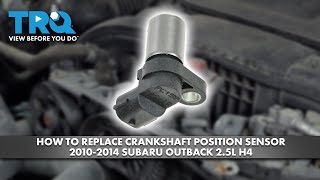
On the EJ253 engine used in the 2010-2012 generation of Outback, the crankshaft position sensor is a very common failure point that leads to a P0322 code. Fortunately, Subaru placed the sensor in a relatively accessible location on the top front of the engine block, directly beneath the alternator, held by a single 10mm bolt. 🎬 Watch this step-by-step crankshaft sensor replacement walkthrough. This makes diagnosis and replacement much easier compared to engines where the sensor is buried deep in the engine bay or requires removing the transmission.
Symptoms You May Notice
- Engine cranks but will not start 🎬 See how to diagnose a Subaru crank-no-start condition.
- Engine stalls suddenly while driving, sometimes after warming up
- Intermittent starting problems, may require multiple attempts
- Check Engine Light is on
- Tachometer needle does not move or behaves erratically during cranking
- Rough idle or engine misfiring
- Loss of power and poor acceleration
- On some models, the cruise control and traction control lights may also illuminate along with the check engine light.
- Replacing the battery or starter for a 'crank-no-start' condition without checking for diagnostic trouble codes first.
- Replacing the camshaft position sensor. While also an important sensor, P0322 specifically points to the loss of the primary engine speed signal, which comes from the crankshaft sensor.
Most Likely Causes
- Failed Crankshaft Position Sensor (CKP) 🔴 High Probability → Shop Engine Crankshaft Position Sensor The crankshaft position sensor is a known high-failure item on this engine due to age and heat cycles. The sensor's internal coil can fail, especially when hot, leading to an intermittent or complete loss of signal.
How to confirm: Check for 0 RPM on a scan tool's live data screen while cranking the engine. If the sensor and wiring test good but there is no signal, the sensor itself is the most likely culprit. An oscilloscope can definitively show the lack of a square wave signal.
Typical fix: Replace the crankshaft position sensor. It is highly recommended to use an OEM sensor (Subaru or Denso) as some aftermarket sensors have been reported to fail prematurely or be dead on arrival.
Est. part cost: $40-$150 - Damaged Wiring or Connector 🟡 Medium Probability The sensor's wiring harness is located in the engine bay and is exposed to heat and vibration, which can cause wires to become brittle, frayed, or connectors to become loose or corroded over time.
How to confirm: Visually inspect the wiring harness leading to the crankshaft position sensor for any signs of damage, melting, or corrosion. Unplug the connector and check for bent or corroded pins. Use a multimeter to check for continuity and proper reference voltage (typically 5V) at the connector.
Typical fix: Repair the damaged section of wiring or replace the connector pigtail.
Est. part cost: $10-$50
Rare But Worth Checking
- Faulty Engine Control Module (ECM): → Shop Engine Control Module (ECM) This is very rare. Before condemning the ECM, you must exhaustively rule out any possibility of a bad sensor or wiring issue. An ECM replacement is expensive and requires programming.
- Damaged Reluctor Wheel: The reluctor wheel (or tone ring) on the crankshaft, which the sensor reads, can be damaged during major engine work. This is highly unlikely unless the engine has been recently disassembled.
- Weak Battery or Charging System Issue: → Shop Vehicle Battery A very weak battery or failing alternator can cause voltage to drop significantly during cranking, which may prevent the sensor from generating a readable signal, temporarily triggering a P0322.
Diagnosis Steps
- Confirm the P0322 code is present 🎬 Watch this quick video explaining P0322 causes and fixes. using an OBD-II scanner.
- Using the scanner's live data function, monitor Engine RPM while cranking the engine. A reading of '0' strongly suggests a problem in the CKP circuit.
- Perform a thorough visual inspection of the crankshaft position sensor and its wiring harness. The sensor is located on the top of the engine block, below the alternator. Look for any obvious signs of damage, melting, or corrosion.
- Disconnect the sensor and inspect the electrical connector for corrosion or bent pins.
- If the visual inspection reveals no issues, the most practical next step for a DIY mechanic is to replace the crankshaft position sensor, as it is the most common cause. Using an OEM part is strongly advised.
- If the new sensor does not resolve the issue, perform a circuit test with a multimeter. Check for the correct reference voltage (usually 5V) and a good ground at the sensor connector with the key on.
- Check for continuity on the signal wire between the sensor connector and the ECM to rule out a broken wire. This requires an ECM pinout diagram, which may only be available in a factory service manual.
- If using an oscilloscope, check for a clean square wave signal from the sensor while cranking the engine. The absence of this signal points to a bad sensor or wiring.
- If all wiring tests pass and a known-good OEM sensor doesn't fix the problem, the ECM may be at fault, but this is extremely rare.
Parts You'll Likely Need
- Crankshaft Position Sensor
(OEM #22053AA071 (supersedes 22053AA070))— This is the most common failure component for a P0322 code on this vehicle, causing a no-start or stalling condition.
Trusted brands: Subaru (Genuine OEM), Denso (OEM supplier), Hitachi, NGK/NTK, Beck/Arnley
OEM price range: $100-$150
Aftermarket price range: $40-$100
Platform-Specific Known Issues
- Owner forums frequently emphasize using a genuine Subaru or Denso-branded sensor for this repair. Many users report that cheaper aftermarket sensors may be faulty out of the box or fail within a short period, causing the P0322 code to return.
Mechanic-Grade Diagnostic Values
- Crankshaft Position Sensor (CKP) Internal Resistance — expected: 1,900 - 2,500 Ohms (1.9 - 2.5 kOhms). Failure: A reading of infinite resistance (open circuit) or zero resistance (short circuit) indicates a failed sensor.
- Crankshaft Position Sensor (CKP) AC Voltage Output — expected: ~0.2 - 2.0 VAC (while cranking). Failure: A reading of 0V AC while the engine is cranking indicates the sensor is not generating a signal.
Scan Tool Commands That Help
- Any OBD-II Scanner: Crankshaft Position Sensor Relearn/Reset — No relearn or reset procedure is required for the crankshaft position sensor on this vehicle. The ECM will recognize the new sensor's signal upon the next startup.
Wiring & Ground Locations
- ECM Location — Behind the glove box, on the right side of the dash.. This is the termination point for the crankshaft position sensor circuit. Advanced diagnosis requires checking for signal continuity between the sensor connector and the ECM connectors.
- Engine Ground (General) — A key ground point is located on the right side of the engine. Other grounds are located on the intake manifold.. A poor engine ground can cause erratic behavior or a complete loss of signal from various engine sensors, including the crankshaft position sensor.
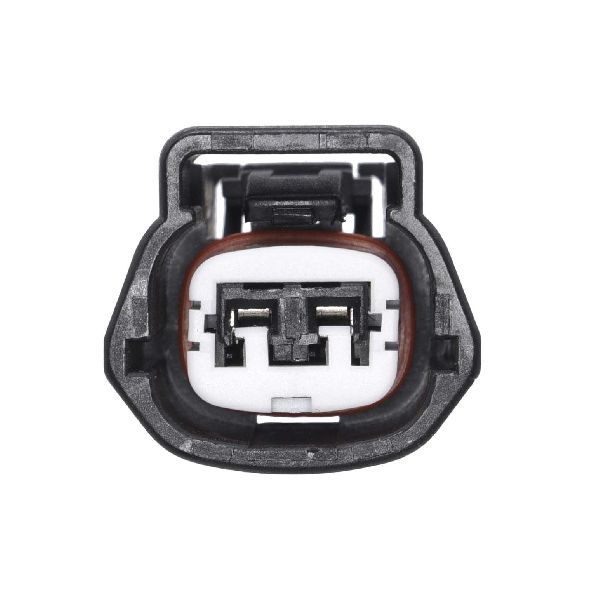
- CKP Sensor Connector Pins — The 2-pin connector on the sensor itself.. Resistance and AC voltage tests are performed across these two pins. Polarity is not critical for these tests on this type of sensor.
Real Owner Repair Stories
- YouTube channel 'FixerGood' (2011 Subaru Outback (with EJ25 timing belt engine)) — Intermittent readings and a stored P0335 code (Crankshaft Position Sensor 'A' Circuit Malfunction), which is functionally identical to P0322 for diagnosis.
❌ Tried (didn't work) The video directly proceeds to diagnosis and replacement, confirming the sensor as the primary suspect.
✅ What actually fixed it The crankshaft position sensor was replaced. The video shows the process of removing the alternator to gain access, unbolting the 10mm fastener, and swapping the sensor, which resolved the issue.
Model Year Variations Within This Range
- 2010-2012: These model years use the EJ253 2.5L engine, which has a timing belt. The P0322 issue is well-documented for this engine.
- 2013-2014: For the 2013 model year, Subaru switched the Outback's 2.5L engine to the FB25. This engine uses a timing chain instead of a belt and has different internal architecture. While a crank sensor can still fail, the specific part number and documented failure patterns are associated with the earlier EJ253 engine.
Diagnostic Flowchart
Other Known Issues on This Vehicle
Issues unrelated to this code that are worth knowing about as an owner of this generation:
- Excessive Oil Consumption 🔴 High — Common in 2013-2014 models with the FB25 engine, but some 2010-2012 EJ25 engines can also consume oil. Can start around 60,000 miles. (Ref: Subaru issued warranty extensions and conducted oil consumption tests for affected vehicles.)
- Head Gasket Failure 🟠 Medium — The SOHC EJ253 engine is noted for external oil and coolant leaks from the head gaskets, typically occurring at higher mileage (100,000+ miles). This is less severe than the internal failures of older DOHC engines but still a common repair.
- CVT Transmission Problems (TR580) 🔴 High — Issues like shuddering, hesitation, and outright failure are reported, sometimes as early as 60,000-80,000 miles. Problems are often related to the valve body, torque converter, or internal chain slip. (Ref: Subaru extended the CVT warranty for some model years due to widespread issues.)
- Front Passenger Airbag Inflator Recall 🔴 High — Affects 2010-2014 models as part of the massive Takata airbag recall. The inflator can rupture during deployment, causing serious injury. (Ref: NHTSA Campaign Number: 19V009000 (and others))
- Steering Wheel Vibration/Shimmy 🟡 Low — A noticeable vibration in the steering wheel at highway speeds was common on 2010-2011 models. (Ref: TSB 05-48-10 was issued to address this concern, involving modifications to suspension and steering components.)
Used vs. New Parts: Buying Guide for This Vehicle
When a used part is the smart pick: For this specific repair, using a used part from a junkyard is NOT recommended. The crankshaft position sensor is a critical electronic component that is inexpensive to buy new and is a known high-failure item due to heat and age. The risk of getting a used part that is already near the end of its life is very high.
What to inspect on the donor part:
- Not applicable, as a used sensor should not be considered for this repair.
OEM-only on this vehicle (don't cheap out):
- Crankshaft Position Sensor
Aftermarket brands forum-validated for this vehicle:
- Denso (OEM supplier)
- Hitachi
- NGK/NTK
Brands owners have reported issues with on this vehicle:
- Generic, unbranded, or 'white-box' sensors from online marketplaces are frequently reported on forums to be dead-on-arrival or fail within a very short time, causing the P0322 code to return.
Real Owner Stories
Aggregated from forums and TSBs cited above. Mileages and costs reflect what owners reported in those sources.
2011 Subaru Outback 2.5L
Symptoms: Intermittent no-start and a dashboard lit up with multiple warning lights including brake, CEL, and traction control.
What fixed it: Replacement of the position sensor.
Source hint: Reddit r/subaru: A thread titled 'What the fuck is wrong with my car' on a 2011 2.5L Outback
2010-2012 Subaru Outback EJ25
Symptoms: Stalling and no-start issues.
What fixed it: Replacing the crankshaft position sensor, specifically using a genuine Subaru or Denso-branded part.
Source hint: subaruoutback.org: Multiple discussions on this forum
Related OBD-II Codes
Frequently Asked Questions
Where is the crankshaft position sensor located on my 2010-2014 Outback 2.5L?
My 2011 Outback has a dashboard lit up with Brake, CEL, and Traction lights; is this related to P0322?
Can I use a cheaper aftermarket sensor to fix the P0322 code?
Is there a TSB for the steering vibration I'm feeling alongside my engine issues?
Could my P0322 no-start condition be related to the Takata airbag recall?
Why does my Outback stall only after the engine has warmed up?
Helpful Videos
We Have This Part in Stock


The information in this article is provided for general reference and educational purposes only. Vehicle specifications, procedures, and part compatibility can vary by production date, trim level, and region. Always consult your vehicle's factory service manual and verify part numbers before purchasing or performing repairs. Safety-critical components such as airbags, seat belts, and braking systems should be installed by a qualified professional.
- Subaru Outback:
- 🧭 Diagnostic Flowchart
- 🎬 Helpful Videos
- 🛍️ Shop This Part
- What's Unique About the 2010-2014 Subaru Outback
- Symptoms You May Notice
- Most Likely Causes
- Rare But Worth Checking
- Diagnosis Steps
- Parts You'll Likely Need
- Platform-Specific Known Issues
- Mechanic-Grade Diagnostic Values
- Scan Tool Commands That Help
- Wiring & Ground Locations
- Real Owner Repair Stories
- Model Year Variations Within This Range
- Other Known Issues on This Vehicle
- Used vs. New Parts: Buying Guide for This Vehicle
- Real Owner Stories
- 2011 Subaru Outback 2.5L
- 2010-2012 Subaru Outback EJ25
- Related OBD-II Codes
- Frequently Asked Questions
- 🎟️ Get 5% Off