

P0322 on 2009-2013 Toyota Corolla: Causes and Fixes for No Engine Speed Signal
P0322 on a 2009-2013 Corolla almost always means the crankshaft position sensor has failed. This can cause a no-start or stalling condition. A new OEM-quality sensor from a brand like Denso costs around $100-$140, and replacement is a straightforward DIY job for many.
- P0322 is a critical code that requires immediate attention as it can leave you stranded.
- The most probable cause by a large margin is a failed crankshaft position sensor.
- The repair is accessible for DIYers with basic tools, located behind the front passenger wheel.
- Always inspect for a leaking water pump when replacing the sensor, as coolant contamination is a common cause of failure on this engine.
- Use a quality OEM (Denso) or reputable aftermarket sensor; cheap parts are known to fail quickly.
What's Unique About the 2009-2013 Toyota Corolla
For the tenth-generation Corolla with the 2ZR-FE engine, the P0322 code is a very direct and common indicator of a failed crankshaft position sensor. Unlike some platforms where this code can be ambiguous, on this Corolla, the diagnostic path is typically straightforward. The sensor is a known wear item that can fail without much warning, leading to a sudden no-start or stalling situation. The good news is that its location is relatively accessible behind the passenger-side front wheel, making it a common DIY repair. Denso is the original equipment manufacturer (OEM) for this sensor.
Symptoms You May Notice
- Engine cranks but will not start.
- Engine stalls suddenly while driving or idling.
- Intermittent starting issues.
- Check Engine Light is on.
- Tachometer may not work or reads 0 RPM while cranking.
- Poor acceleration and engine hesitation.
- Noticeable decrease in fuel economy.
- Replacing the camshaft position sensor, which is a different sensor and typically throws different codes.
- Replacing spark plugs or ignition coils when the root cause is a lack of timing signal, not a lack of spark generation.
- Replacing the starter motor because the engine cranks but won't start.
Most Likely Causes
- Failed Crankshaft Position Sensor (CKP) 🔴 High Probability → Shop Engine Crankshaft Position Sensor The sensor is an electronic component that operates in a high-heat environment and can fail internally over time due to thermal stress. Coolant leaks from the nearby water pump, a common issue on this engine, can also drip onto the sensor and its connector, causing corrosion and premature failure.
How to confirm: After checking wiring, test the sensor's resistance with a multimeter (compare to factory specs, typically between 1,630-2,740 Ohms when cold for this engine). The most definitive test is using an oscilloscope to check for a signal pattern while cranking the engine; a flat line indicates no signal. A simpler method is to replace it with a known good sensor, which is the most common resolution.
Typical fix: Replace the crankshaft position sensor.
Est. part cost: $25-$140 - Wiring Harness or Connector Issue 🟡 Medium Probability The wiring is located near the front passenger wheel well and can be susceptible to damage from road debris, moisture, or oil contamination, leading to corrosion or breaks. Rodent damage is also a known issue on Toyotas, as they can chew through the soy-based wire insulation.
How to confirm: Visually inspect the wiring harness from the sensor to the main loom for any signs of fraying, cuts, melting, or heat damage. Check the electrical connector for corrosion, bent pins, or a loose fit. A wiggle test on the harness while the engine is running (if it starts) may cause stalling, indicating a wiring fault.
Typical fix: Repair the damaged section of wire or clean/replace the connector pigtail. The replacement pigtail connector part number is often 7283-6033-30.
Est. part cost: $5-$30 - Weak Battery or Failing Alternator ⚪ Low Probability → Shop Vehicle Battery
How to confirm: Test the battery voltage with the car off (should be ~12.6V) and while running (should be ~13.5-14.5V). A significant voltage drop during cranking can sometimes trigger this code due to insufficient power to the sensor.
Typical fix: Charge or replace the battery; test and replace the alternator if necessary.
Est. part cost: $150-$400
Rare But Worth Checking
- Failed Engine Control Module (ECM): → Shop Engine Control Module (ECM) This is extremely rare. All other possibilities, especially the sensor and its wiring, should be exhaustively ruled out before considering the ECM as the cause.
- Damaged Reluctor Ring: The crankshaft position sensor reads teeth on a reluctor ring (or tone ring) to determine engine speed. If this ring is damaged, has broken teeth, or is covered in debris, it can cause a loss of signal. This is uncommon but can happen, especially if other engine work was recently performed in that area.
Diagnosis Steps
- Confirm the presence of the P0322 code with an OBD-II scanner. Check for any other codes.
- Visually inspect the area around the crankshaft position sensor for obvious issues like coolant leaks from the water pump, oil leaks, or rodent damage to wiring.
- Disconnect the battery negative terminal.
- Jack up the front passenger side of the vehicle and secure it with a jack stand. Remove the wheel.
- Remove the plastic splash shield clips and bolts to gain access to the crankshaft pulley area.
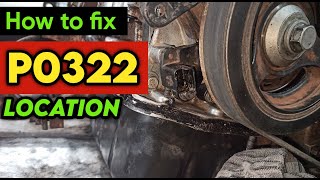
- Locate the crankshaft position sensor on the engine block, near the crankshaft pulley. It is held by a single 10mm bolt.
- Inspect the sensor's connector and wiring harness for any visible damage, corrosion, or loose connections. Ensure the connector is fully seated.
- If wiring looks good, disconnect the sensor and remove the 10mm bolt. Wiggle the sensor to remove it.
- Test the old sensor's resistance with a multimeter. For the 2ZR-FE, it should be between 1,630-2,740 Ohms when cold and 2,065-3,225 Ohms when hot. An open circuit (infinite resistance) or zero resistance indicates a failed sensor.
- Install the new sensor, ensuring the O-ring is lubricated with a little fresh engine oil. Torque the 10mm bolt to 7 ft-lbs (84 in-lbs).
- Reconnect the electrical connector, ensuring it clicks into place. Reassemble the splash shield and wheel.
- Reconnect the battery, clear the code with the scanner, and start the engine to confirm the fix.
Parts You'll Likely Need
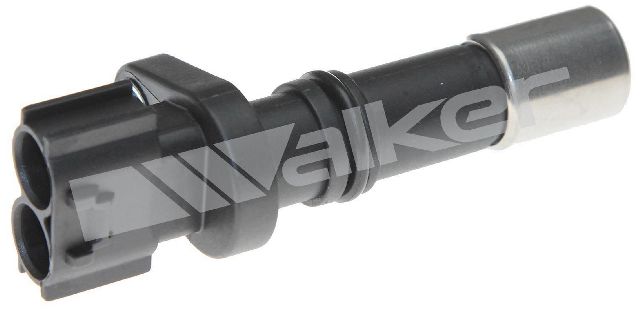
- Crankshaft Position Sensor
(OEM #90919-A5004)— This is the component that fails in the vast majority of P0322 cases on this vehicle, causing a complete loss of the engine speed signal. The original part number was 90919-05070, which has been superseded by 90919-A5004.
Trusted brands: Denso (OEM), Aisan, Holstein, NGK/NTK
OEM price range: $99-$140
Aftermarket price range: $25-$80
Related Codes That Often Appear With This One
- P0335 — P0335 ('Crankshaft Position Sensor 'A' Circuit Malfunction') is a closely related code. P0322 indicates 'No Signal' while P0335 can indicate a range/performance issue or general malfunction. They often point to the same faulty sensor.
Platform-Specific Known Issues
- A known failure point for the crankshaft position sensor on this vehicle is contamination from a leaking water pump, which is a common problem on the 2ZR-FE engine. If replacing the sensor, carefully inspect the water pump (located nearby) for any signs of pink, crusty coolant residue.
Mechanic-Grade Diagnostic Values
- Crankshaft Position Sensor Resistance (Cold) — expected: 1,630 - 2,740 Ohms. Failure: Open circuit (infinite resistance) or short circuit (near zero resistance).
- Crankshaft Position Sensor Resistance (Hot) — expected: 2,060 - 3,225 Ohms. Failure: Resistance outside of this range when the engine is at operating temperature.
- Crankshaft Position Sensor Signal (Cranking) — expected: Pulsing AC Voltage, amplitude increases with RPM. Typically ~0.2–2.0 VAC. (Oscilloscope is best).. Failure: Flat line (0V) or constant DC voltage indicates no signal from the sensor.
- Crankshaft Position Sensor Air Gap — expected: 1.0 - 1.5 mm. Failure: An incorrect air gap between the sensor tip and the reluctor ring can cause a weak or no-signal condition.
Scan Tool Commands That Help
- Toyota Techstream: Live Data > Engine RPM — While cranking the engine, monitor the 'Engine RPM' parameter. If it remains at 0 while the engine is physically turning over, it strongly confirms that the ECM is not receiving a signal from the crankshaft position sensor, pointing directly to the sensor or its circuit as the fault.
Wiring & Ground Locations
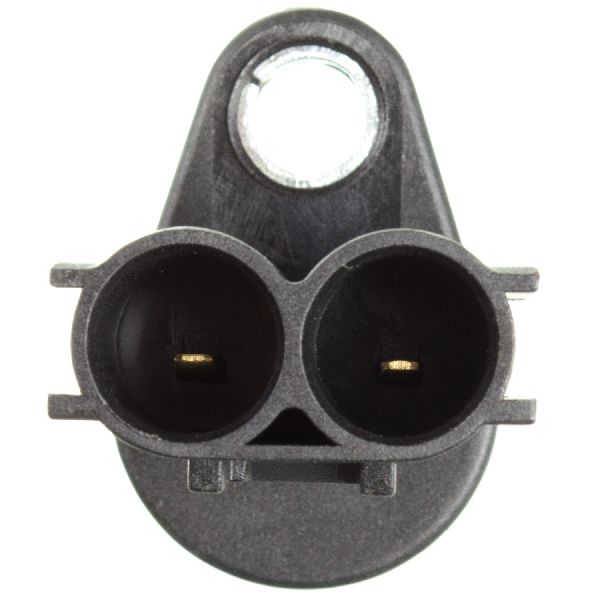
- Crankshaft Position Sensor Connector — On the front of the engine block, near the crankshaft pulley/harmonic balancer. It is a 2-pin connector.. This is the primary connection point for the sensor. The pins are labeled NE+ and NE-. It is a common failure point due to heat, vibration, and potential oil/coolant contamination.
- ECM Pins (NE+, NE-) — At the Engine Control Module (ECM). For the 2ZR-FE, the Crank Position Sensor signals are typically on pins B93 (NE+) and B117 (NE-).. These are the terminal points at the ECM. Checking for continuity between the sensor connector and these pins can rule out a break in the wiring harness.
- Engine Ground Points (AA, AB, etc.) — The 2ZR-FE engine has several key ground points where the engine harness bolts to the chassis and engine block, often designated by two-letter codes like 'AA' and 'AB' on wiring diagrams.. A poor engine ground can cause erratic behavior or a complete loss of signal from various sensors, including the crankshaft position sensor. Verifying these grounds are clean and tight is a crucial step in diagnosing electrical issues.
Real Owner Repair Stories
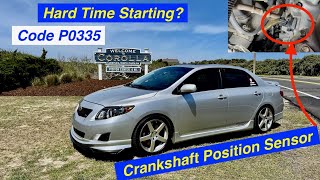
- YouTube - 'Code P0335? || Toyota Corolla Crankshaft Position Sensor Replacement || 2ZR-FE Engine' (2009 Toyota Corolla S (Turbocharged)) — Intermittent starting issue that became a persistent crank-no-start condition.
❌ Tried (didn't work) The owner lived with the intermittent issue for months before it failed completely.
✅ What actually fixed it Replacing the crankshaft position sensor (Part No. 90919-A5004) resolved the no-start condition immediately.
OEM Part Supersession History
90919-05070→90919-A5004— Standard part number update by Toyota. The new part is a direct replacement.
Heads up: None. The parts are fully interchangeable for this vehicle range.
Diagnostic Flowchart
Other Known Issues on This Vehicle
Issues unrelated to this code that are worth knowing about as an owner of this generation:
- Excessive Oil Consumption 🔴 High — Common on 2009-2011 models. Caused by faulty piston ring design. Can lead to needing to add a quart of oil every 1,000-2,000 miles. Toyota issued a warranty enhancement program (ZE7) for this issue. (Ref: T-SB-0094-11 (for the related 2AZ-FE, but the issue is widely documented for the 2ZR-FE as well))
- Water Pump Failure 🟠 Medium — The mechanical water pump is a known wear item, with failures (leaks or bearing noise) often reported between 60,000 and 120,000 miles. A leak can cause overheating or damage nearby components like the crankshaft sensor.
- VVT-i Cam Gear Rattle on Cold Start 🟠 Medium — A brief, loud rattle for 1-2 seconds on a cold start is common, especially on 2009-2010 models. It's caused by a faulty VVT-i intake cam gear lock pin. While often not immediately fatal to the engine, it can eventually cause catastrophic failure if a gear vane breaks. (Ref: T-SB-0087-09)
- Failing Alternator 🟡 Low — Alternator failure is a commonly reported problem at higher mileage (100,000+ miles), leading to a battery light and charging system failure.
Used vs. New Parts: Buying Guide for This Vehicle
When a used part is the smart pick: A used part is generally not recommended for this repair. The crankshaft position sensor is a relatively low-cost electronic wear item. The labor to access it is the main effort, so installing a used sensor with unknown remaining life offers poor value and high risk of premature failure.
Donor-vehicle mileage cap: roughly under 40000 miles for the part to have meaningful remaining life.
What to inspect on the donor part:
- Verify the donor vehicle had low mileage.
- Inspect the sensor's plastic housing for any cracks, melting, or signs of heat stress.
- Check the connector pins for any corrosion or damage.
- If possible, test the resistance of the used sensor with a multimeter before purchasing to ensure it is within spec.
OEM-only on this vehicle (don't cheap out):
- While not strictly 'OEM-only', using the OEM Denso sensor is highly recommended. Forum and mechanic experiences indicate that cheap, unbranded aftermarket sensors have a high failure rate, sometimes within weeks or months of installation.
Aftermarket brands forum-validated for this vehicle:
- Denso (OEM)
- NGK/NTK
- Delphi
- Beck/Arnley
Brands owners have reported issues with on this vehicle:
- Unbranded, 'white-box' parts from online marketplaces are frequently cited as unreliable for this specific component.
Real Owner Stories
Aggregated from forums and TSBs cited above. Mileages and costs reflect what owners reported in those sources.
2010 Toyota Corolla 2ZR-FE 1.8L
Symptoms: The car would not start despite turning over/cranking. There was no spark and the engine would not fire.
What fixed it: Replacement of the crankshaft position sensor after discovering a water pump leak had caused corrosion and premature failure of the sensor.
Source hint: YouTube - 'Car Not Starting Toyota How to Fix Sensor Symptoms Turning Over/Cranking Not Starting No Spark?'
2010 Pontiac Vibe 1.8L
Symptoms: Owner reported a rattle and concerns about whether the issue was the VVT-i system, the starter, or another engine component.
What fixed it: Discussion confirmed shared 2ZR-FE platform issues including VVT-i rattle and sensor reliability.
Source hint: GenVibe Forums - 'is it the vvti rattle, starter, or something else?'
2010 Toyota Corolla 1.8L — ~90000 miles
Symptoms: Troubleshooting a faulty water pump which is a common wear item on pre-2016 2ZR engines.
What fixed it: Identifying the water pump leak as a frequent issue in the same vicinity as the crankshaft position sensor.
Source hint: Reddit r/MechanicAdvice - 'Help Troubleshooting a Faulty Water Pump in 2010 Corolla'
Related OBD-II Codes
Frequently Asked Questions
I have a cold start rattle on my 2009 Corolla; is this related to the P0322 code?
Can a leaking water pump really cause a P0322 crankshaft sensor code?
Is there a specific replacement connector for the crankshaft sensor wiring?
My 2010 Corolla is consuming a lot of oil; does this trigger P0322?
What are the specific resistance specs for testing the 2ZR-FE crankshaft sensor?
Does the 2010 Pontiac Vibe 1.8L have this same sensor issue?
Helpful Videos
We Have This Part in Stock


The information in this article is provided for general reference and educational purposes only. Vehicle specifications, procedures, and part compatibility can vary by production date, trim level, and region. Always consult your vehicle's factory service manual and verify part numbers before purchasing or performing repairs. Safety-critical components such as airbags, seat belts, and braking systems should be installed by a qualified professional.
- Toyota Corolla:
- 🧭 Diagnostic Flowchart
- 🎬 Helpful Videos
- 🛍️ Shop This Part
- What's Unique About the 2009-2013 Toyota Corolla
- Symptoms You May Notice
- Most Likely Causes
- Rare But Worth Checking
- Diagnosis Steps
- Parts You'll Likely Need
- Related Codes That Often Appear With This One
- Platform-Specific Known Issues
- Mechanic-Grade Diagnostic Values
- Scan Tool Commands That Help
- Wiring & Ground Locations
- Real Owner Repair Stories
- OEM Part Supersession History
- Other Known Issues on This Vehicle
- Used vs. New Parts: Buying Guide for This Vehicle
- Real Owner Stories
- 2010 Toyota Corolla 2ZR-FE 1.8L
- 2010 Pontiac Vibe 1.8L
- 2010 Toyota Corolla 1.8L — ~90000 miles
- Related OBD-II Codes
- Frequently Asked Questions
- 🎟️ Get 5% Off