

P0324 on 2014-2017 Cadillac CTS: Knock Control Error Causes and Fixes
On 2016-2017 CTS models with the 3.6L V6 (LGX) engine, code P0324 is very often caused by a failing water pump creating noise that the knock sensor misinterprets. For all engines, check for vacuum leaks (especially loose intake manifold bolts on the 2.0L Turbo) and wiring harness damage before suspecting the knock sensor itself.
- For a 2016-2017 Cadillac CTS 3.6L, suspect the water pump first for a P0324 code.
- For any engine, always check for vacuum leaks and inspect the wiring harness for damage before replacing any sensors.
- P0324 on this vehicle is often a symptom of a mechanical or air-related problem, not a faulty knock sensor.
- Do not replace the knock sensor unless you have ruled out all other possibilities, as it is often not the cause and can be difficult to access.
What's Unique About the 2014-2017 Cadillac CTS
On this specific generation of Cadillac CTS, P0324 is frequently a symptom of another underlying issue, not a simple sensor failure. For the 3.6L V6 (LGX) engine used in 2016 and later models, a GM Technical Service Bulletin (TSB 21-NA-030) directly links this code to noise from a failing water pump being misinterpreted by the knock sensor. For the 2.0L Turbo (LTG) engine, TSB PIP5529B points to loose intake manifold bolts causing unmetered air leaks that can trigger P0324 along with other codes. These known issues make it crucial to diagnose the whole system rather than just replacing the sensor.
Diagnostic Flowchart
Tap your situation to follow the diagnostic path that matches what you're seeing on this vehicle.
Symptoms You May Notice
- Check Engine Light illuminated
- Reduced engine power or acceleration
- Engine hesitation
- Audible engine noise (squeaking or grinding from the water pump, or a pinging/rattling noise)
- Rough idle
- Drop in fuel efficiency
- Replacing the knock sensor(s) without first checking for a noisy water pump (on the 3.6L LGX), vacuum leaks (especially loose intake manifold bolts on the 2.0L LTG), or wiring damage. This often fails to fix the problem and can be expensive and time-consuming, especially on V6 models where the sensors are under the intake manifold.
Most Likely Causes
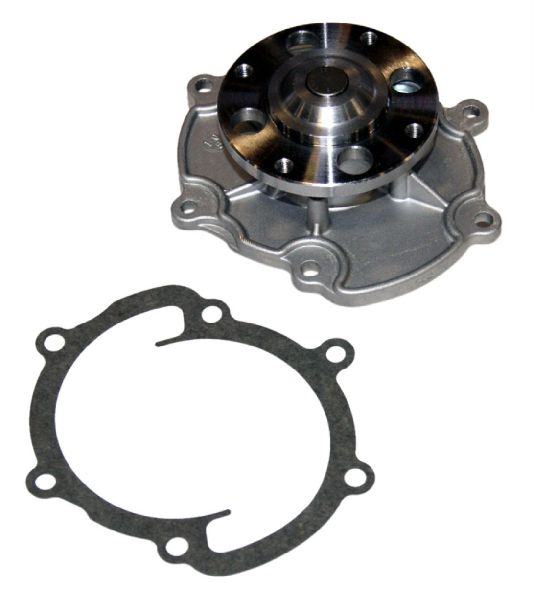
- Failing Water Pump (3.6L LGX Engine, 2016-2017) 🔴 High Probability → Shop Engine Water Pump A widely known issue documented in GM TSB 21-NA-030 (which supersedes PIP5545C). The bearings in the water pump fail and create a grinding or squeaking noise that the highly sensitive knock sensor system detects as engine knock, triggering code P0324.
How to confirm: With the engine running, use a mechanic's stethoscope to listen for noise from the water pump pulley area. The definitive test from the TSB is to monitor the 'knock retard' parameter on a scan tool (like GDS2), then remove the serpentine belt and run the engine briefly (under 30 seconds). If the knock retard value disappears with the belt off, a belt-driven accessory, most commonly the water pump, is the source of the noise.
Typical fix: Replace the water pump and serpentine belt. It is recommended to use the updated water pump kit.
Est. part cost: $150-$350 - Unmetered Air / Vacuum Leak (Especially 2.0L LTG) 🟡 Medium Probability TSB #PIP5529B specifically calls out loose intake manifold bolts on the 2.0L LTG engine as a cause for P0324 and a host of other air/fuel-related codes. A leak in a vacuum line, intake boot, PCV hose, or intake manifold gasket allows unmetered air to enter the engine, leading to a lean condition and unstable combustion that can trigger a P0324.
How to confirm: Perform a smoke test on the intake system to visually identify leaks. For the 2.0L LTG, specifically check the torque of the intake manifold bolts. If they are loose, this is the likely cause. Also, inspect all visible hoses for cracks.
Typical fix: For loose bolts on the LTG, remove one bolt at a time, apply medium-strength threadlocker, and torque to specification in the correct sequence. For other leaks, replace the faulty hose or gasket. Clean the MAF sensor and throttle body as part of the service.
Est. part cost: $10-$200 - Chafed or Damaged Wiring Harness 🟡 Medium Probability GM TSB 21-NA-149 (a general TSB for this era) highlights a common issue where the engine wiring harness can rub against sharp edges on brackets, the shock tower, or other components, causing shorts or open circuits. This can affect the knock sensor circuit, leading to an erroneous P0324 code.
How to confirm: Carefully inspect the entire length of the knock sensor wiring harness, paying close attention to where it passes near metal brackets, the engine block, and the firewall. Look for any signs of rubbing, melting, or exposed wires. Use a multimeter to check for continuity and shorts to ground.
Typical fix: Repair the damaged section of wire using solder and heat shrink. Secure the harness away from the source of friction with zip ties, P-clamps, or new clips.
Est. part cost: $5-$25 - Faulty Knock Sensor ⚪ Low Probability → Shop Ignition Knock (Detonation) Sensor The sensors themselves are generally reliable; external factors are a more common cause of this code.
How to confirm: After ruling out all other causes, test the sensor itself. This involves checking its resistance with a multimeter or observing its voltage output on a scan tool while tapping lightly on the engine block 🎬 Watch: How to test a GM knock sensor for low power near the sensor. An open circuit (infinite resistance) or a resistance value outside the 93k-110k ohm range indicates a failed sensor.
Typical fix: Replace the knock sensor. On the V6 engines, the sensors are located on the exterior of the block (Bank 2 near the starter, Bank 1 near the alternator), making replacement moderately difficult but not requiring intake manifold removal. On the 2.0L LTG, access is also challenging.
Est. part cost: $40-$100
Rare But Worth Checking
- Hydraulic Lash Adjuster (Lifter) Bleed-Down: Per GM document PIP5251A, if a vehicle has been sitting for a long period, the hydraulic lash adjusters (lifters) can bleed down. When the engine is started, the resulting valvetrain noise can be misinterpreted by the ECM as detonation, setting a P0324. The recommended procedure is to verify oil level and let the engine idle for up to an hour, with 5-minute intervals at 2000 RPM, to allow the lifters to pump back up.
- Faulty Engine Control Module (ECM): → Shop Engine Control Module (ECM) This is a last resort. The ECM is rarely the cause of the failure. Before replacing the ECM, all other possibilities, especially wiring issues, must be exhaustively ruled out.
Diagnosis Steps
- Read all stored DTCs with an OBD-II scanner. Note any other codes present, as they are crucial clues (e.g., P0171, P0101).
- If you have a 2016-2017 CTS with the 3.6L LGX engine, immediately investigate the water pump for noise per TSB 21-NA-030. Use a stethoscope and perform the belt-removal test while monitoring 'knock retard' on a scan tool.
- For the 2.0L LTG engine, inspect the intake manifold bolts for proper torque per TSB PIP5529B before searching for other vacuum leaks.
- Perform a smoke test to check for vacuum leaks at the intake manifold gaskets, PCV hoses, and other vacuum lines.
- Thoroughly inspect the knock sensor wiring harness for any signs of chafing, melting, or corrosion, especially where it routes near metal brackets and the engine block.
- If the vehicle has been sitting for an extended time, follow the procedure in PIP5251A to address potential hydraulic lifter noise before proceeding.
- If no other cause is found, test the knock sensor itself using a multimeter to check for correct resistance (93k-110k ohms) and a scan tool to monitor its live data while tapping the block.
- Only consider replacing the ECM if all other possibilities have been definitively ruled out.
Parts You'll Likely Need
- Water Pump Kit (LGX Engine)
(OEM #12707180)— The most likely cause of P0324 on 2016-2017 CTS models with the 3.6L LGX engine, due to noise from bearing failure. TSB 21-NA-030 specifies this kit part number.
Trusted brands: ACDelco
OEM price range: $250-$400
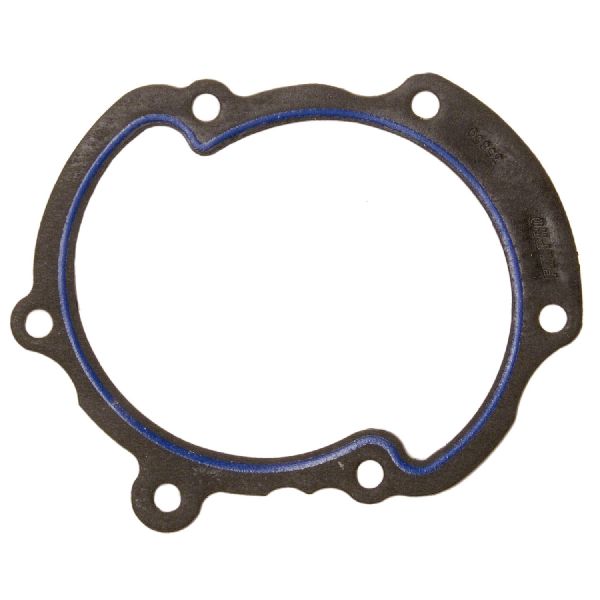
Aftermarket price range: $150-$250 - Intake Manifold Gasket Set — A common source of vacuum leaks that can lead to unstable combustion and trigger P0324. May be needed if retorquing bolts on the LTG engine doesn't solve the leak.
Trusted brands: ACDelco, Fel-Pro
OEM price range: $50-$90
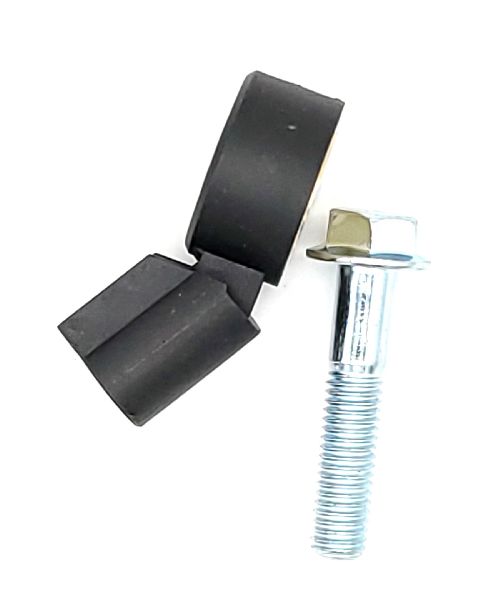
Aftermarket price range: $25-$50 - Knock Sensor
(OEM #12647242)— Replaced only after all other more probable causes (water pump, leaks, wiring) have been ruled out. This part number is for the 3.6L V6; verify for the 2.0L LTG.
Trusted brands: ACDelco, Bosch
OEM price range: $60-$100
Aftermarket price range: $30-$70
Related Codes That Often Appear With This One
- P0326 — This code indicates a performance issue with Knock Sensor 1, which can be triggered by the same root causes as P0324, such as accessory noise or wiring faults.
- P0331 — This code indicates a performance issue with Knock Sensor 2 (on V6 engines), which can be triggered by the same root causes as P0324.
- P0171 — System Too Lean. This code often appears with P0324 if the root cause is a vacuum leak, which throws off the air-fuel mixture and can cause unstable combustion.
- P0101 — Mass Air Flow (MAF) Circuit Range/Performance. This points to an issue with the air metering system, which is a common cause for P0324 as noted in TSB PIP5529B.
- P0506 — Idle Air Control System RPM Lower Than Expected. This can also be caused by a vacuum leak, linking it to P0324 under the conditions described in TSB PIP5529B.
Technical Service Bulletins (TSBs) & Recalls
- 21-NA-030: Supersedes PIP5545C. Details the diagnosis and repair for P0324 caused by noise from a failing water pump on 3.6L LGX and other engines.
- PIP5529B: Addresses a group of codes including P0324 on 2.0L LTG engines, pointing to loose intake manifold bolts as a likely cause.
- PIP5251A: Describes P0324 being set by noisy hydraulic lash adjusters (lifters) after a vehicle has been sitting for an extended period.
- 21-NA-149: General bulletin regarding potential for engine wiring harness chafing on various GM vehicles.
Platform-Specific Known Issues
- On 2016-2017 models with the 3.6L LGX V6, a failing water pump is a known cause for P0324, as documented in TSB 21-NA-030.
Mechanic-Grade Diagnostic Values
- Knock Sensor Resistance — expected: 93,000 to 110,000 ohms (93k-110k Ω). Failure: A reading of open loop (O.L.) or a value significantly outside the expected range.
- Total Knock Retard (via GDS2 Scan Tool) — expected: Below 6.0 degrees during specified test conditions.. Failure: Continuously reading above 6.0 degrees for more than 5 seconds while holding RPMs between 1800-2000 under load.
Scan Tool Commands That Help
- GDS2 (or equivalent professional scanner): Monitor Live Data: 'Total Knock Retard' in the Ignition Data list. — This is a primary diagnostic step for this code, especially for the 3.6L engine. It helps differentiate between real knock, accessory noise (like a water pump), or valvetrain noise by quantifying how much timing the ECM is pulling in response to perceived knock.
- N/A (Manual Procedure): Knock Sensor Relearn Procedure — After replacing knock sensors and/or the harness, if the code returns immediately upon aggressive acceleration. Some technicians report that revving the engine to 5,000 RPM and holding for 3-5 seconds, repeated twice, can force the ECM to 'relearn' and accept the noise profile of the new sensors as the baseline, resolving a persistent code.
Wiring & Ground Locations
- G103 / G104 — On 2014+ models, these critical ECM grounds are located on the right front of the engine compartment. On other GM platforms with similar engines, they can be found at the back of the cylinder heads.. A loose or corroded connection at these main ECM grounds can cause erratic voltage, sensor reading deviations, and false trouble codes, including P0324.
- Engine Harness Chafe Points (per TSB 21-NA-149) — Multiple locations, including the corner of the cylinder head, the ECM/TCM bracket, the upper control arm/shock tower, and the generator bracket.. The knock sensor circuit runs through the main engine harness. A short-to-ground or open circuit at any of these common chafe points can interrupt the signal and trigger a P0324.
Real Owner Repair Stories
- YouTube user comment on a knock sensor video (GM vehicle, symptoms consistent with CTS issue) — Knock sensor code would return immediately after replacing sensors and harness, specifically during acceleration or passing.
❌ Tried (didn't work) Replacing knock sensors, Replacing knock sensor wiring harness
✅ What actually fixed it Performing a manual ECM relearn procedure. The owner started the vehicle, revved it to 5,000 RPM, held it for 3-5 seconds, and repeated this twice. This action reportedly caused the ECM to accept the new sensor's noise range as normal, and the code did not return.
"I Checked Everything" — The Actual Cause
- A cracked flexplate between the engine and transmission can create a rhythmic ticking or knocking sound as the engine rotates. This mechanical noise is easily picked up by the knock sensor and misinterpreted as engine detonation, triggering a P0324 code even though the engine and intake system are perfectly healthy.
- A loose or corroded exhaust heat shield can create a high-frequency rattle, especially at certain RPMs. This vibration can travel through the engine block and be detected by the knock sensor, causing a false knock signal and a P0324 code.
Model Year Variations Within This Range
- 2014-2017 (3.6L LFX/LGX V6): Unlike many older GM V6 engines that hide the knock sensors under the intake manifold, the LFX and LGX V6 engines used in this CTS generation have the knock sensors mounted on the exterior of the engine block. Bank 2 (driver's side) is typically located near the starter, and Bank 1 (passenger's side) is in a similar position on the opposite side, often near the alternator. This makes replacement significantly less labor-intensive.
Helpful Videos
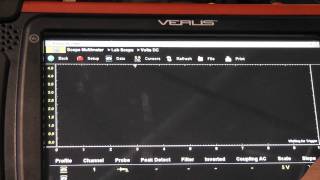
We Have This Part in Stock


The information in this article is provided for general reference and educational purposes only. Vehicle specifications, procedures, and part compatibility can vary by production date, trim level, and region. Always consult your vehicle's factory service manual and verify part numbers before purchasing or performing repairs. Safety-critical components such as airbags, seat belts, and braking systems should be installed by a qualified professional.
- Cadillac CTS:
- 🧭 Diagnostic Flowchart
- 🎬 Helpful Videos
- 🛍️ Shop This Part
- What's Unique About the 2014-2017 Cadillac CTS
- Symptoms You May Notice
- Most Likely Causes
- Rare But Worth Checking
- Diagnosis Steps
- Parts You'll Likely Need
- Related Codes That Often Appear With This One
- Technical Service Bulletins (TSBs) & Recalls
- Platform-Specific Known Issues
- Mechanic-Grade Diagnostic Values
- Scan Tool Commands That Help
- Wiring & Ground Locations
- Real Owner Repair Stories
- "I Checked Everything" — The Actual Cause
- Model Year Variations Within This Range
- 🎟️ Get 5% Off