

P0324 on 2016-2017 Chevrolet Camaro: Knock Control System Error Causes and Fixes
On the 2.0L Turbo Camaro, if P0324 appears with other codes like P0101 or P0106, the cause is likely loose intake manifold bolts, a simple fix requiring only threadlocker and re-torquing. On the 3.6L V6, P0324 is often caused by noise from a failing water pump, per a GM TSB. If P0324 appears alone on any engine, it typically points to a faulty knock sensor or its wiring.
- On a 2.0L Turbo Camaro, if P0324 is accompanied by codes like P0101, P0106, or P0171, check for loose intake manifold bolts before replacing any parts. This is a known issue covered by TSB #PIP5529B.
- If P0324 appears alone, the most likely cause is a faulty knock sensor.
- The knock sensors on all 6th-generation Camaro engines are located on the sides of the engine block, not under the intake manifold, making replacement relatively straightforward.
- Ignoring this code can lead to reduced performance, poor fuel economy, and potentially severe engine damage if a real knock condition goes undetected.
What's Unique About the 2016-2017 Chevrolet CAMARO
For the 2016-2017 Camaro, the cause of P0324 is highly engine-specific. On models with the 2.0L LTG turbo engine, General Motors issued Technical Service Bulletin (TSB) #PIP5529B, which states that P0324, when appearing with other codes, is often caused by loose intake manifold bolts. This creates a vacuum leak that can be fixed by re-torquing the bolts to 89 lb-in (10 Nm). For the 3.6L LGX V6, TSB #21-NA-030 (which supersedes PIP5545C) indicates that a failing water pump can create mechanical noise that the knock sensor misinterprets as engine knock, falsely triggering P0324.
Diagnostic Flowchart
Tap your situation to follow the diagnostic path that matches what you're seeing on this vehicle.
Symptoms You May Notice
- Check Engine Light illuminated
- Reduced engine power and performance
- Hesitation during acceleration
- Engine stalling, especially on 2.0L Turbo models
- Audible engine pinging or knocking noise, especially under load
- Decreased fuel economy
- Rough or erratic idle
- Slight squeak or noise from the front of the engine (on 3.6L LGX models)
- Replacing the knock sensor on a 2.0L model when the true cause is loose intake manifold bolts per TSB #PIP5529B.
- Replacing the knock sensor on a 3.6L model when the true cause is a noisy water pump per TSB #21-NA-030.
- Replacing the Mass Airflow (MAF) or MAP sensor because of related codes (P0101, P0106) without first checking for the TSB #PIP5529B condition on the 2.0L engine.
Most Likely Causes
- Loose Intake Manifold Bolts (2.0L LTG Engine) 🔴 High Probability → Shop Engine Intake Manifold As identified in GM Technical Service Bulletin #PIP5529B, the intake manifold bolts on the 2.0L LTG engine can loosen over time, causing a significant vacuum leak that triggers a cascade of codes.
How to confirm: Check for the presence of other codes listed in the TSB (P0068, P0101, P0106, P0171, P0131, P0137, P0326, P0331, or P0506). Visually and physically inspect the intake manifold bolts to see if they are loose. A smoke test can also confirm the leak.
Typical fix: Remove one bolt at a time, apply medium-strength threadlocker (e.g., Loctite Blue 243), reinstall, and torque all bolts in the correct sequence to 89 lb-in (10 Nm). The gasket usually does not need replacement.
Est. part cost: $5-$15 - Failing Water Pump (3.6L LGX Engine) 🔴 High Probability → Shop Engine Water Pump GM TSB #21-NA-030 identifies that a failing water pump on the 3.6L LGX engine can create mechanical noise and vibrations that the knock sensor mistakes for engine knock, setting code P0324.
How to confirm: Listen to the water pump with a stethoscope for unusual noise. With the engine running, use a scanner (GDS2) to monitor knock retard bank to bank, then remove the serpentine belt and see if the knock retard value changes significantly. If it does, the water pump is the likely source of the noise.
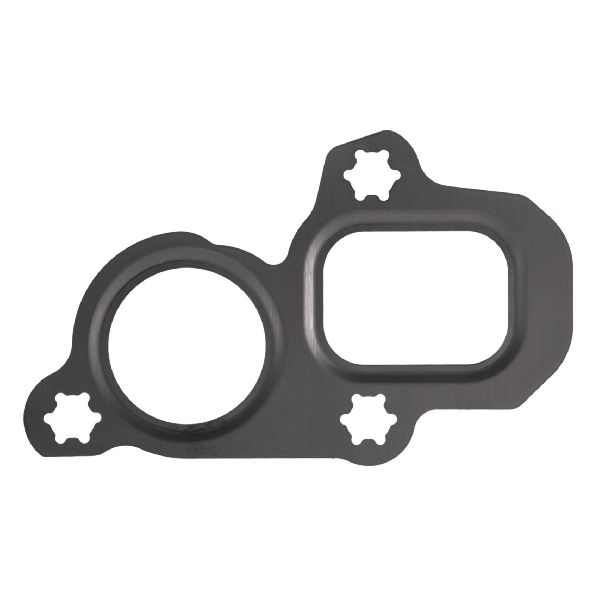
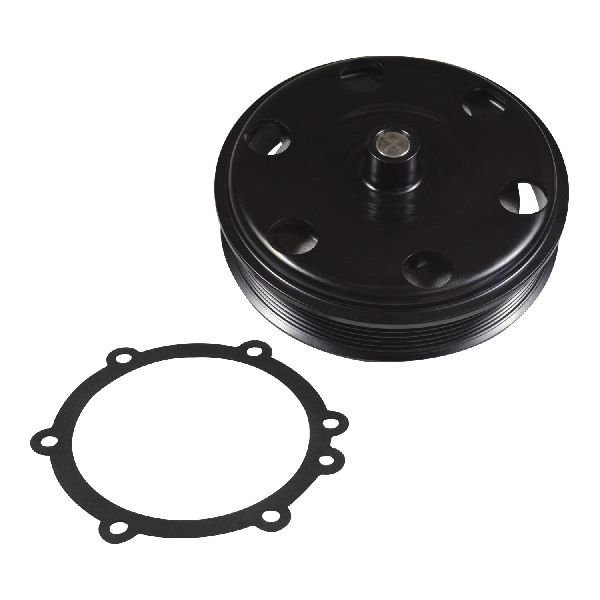
Typical fix: Replace the water pump assembly. The TSB specifies a kit, OEM part number 12707180.
Est. part cost: $150-$300 - Faulty Knock Sensor 🟡 Medium Probability → Shop Ignition Knock (Detonation) Sensor Knock sensors are piezoelectric microphones that can fail or lose sensitivity over time due to heat cycles and vibration. This is a more likely cause if P0324 appears alone.
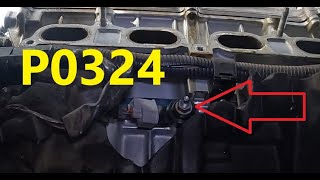
How to confirm: Test the sensor's resistance with a multimeter. 🎬 Watch: A breakdown of common P0324 causes and fixes. For GM sensors of this era, a healthy sensor should read approximately 100k Ohms (between 93k-104k Ohms). A reading far outside this range indicates a failed sensor. Also, check for AC voltage generation by tapping on the engine block near the sensor.
Typical fix: Replace the faulty knock sensor. On all 6th-gen Camaro engines, the sensors are located on the sides of the engine block, making them accessible from underneath the vehicle.
Est. part cost: $30-$100 - Damaged Wiring or Connector ⚪ Low Probability Wiring harnesses near the engine block are exposed to extreme heat, which can make them brittle. Connectors can also become corroded or loose. Splicing knock sensor wires is not recommended as it can alter signal integrity.
How to confirm: Visually inspect the knock sensor wiring harness for any signs of melting, chafing, or breaks. Check the connector for a secure fit and clean pins. Check for a 5V bias voltage at the sensor connector with the key on, 🎬 See this quick DIY method for clearing the P0324 code. engine off.
Typical fix: Repair the damaged section of wire or replace the connector pigtail. Use heat-resistant loom for protection.
Est. part cost: $10-$30
Rare But Worth Checking
- Actual Engine Knock: Sometimes the system sets a fault code because it is being overwhelmed by real, persistent engine knock from other issues like using low-octane fuel, excessive carbon buildup, or cooling system problems. This should be investigated if a new sensor and good wiring don't resolve the code.
- Faulty Powertrain Control Module (PCM): → Shop Engine Control Module (ECM) A PCM failure is extremely rare but possible. This should only be considered after all other possibilities (sensors, wiring, and mechanical issues) have been definitively ruled out.
Diagnosis Steps
- Scan for Codes: Use an OBD-II scanner to confirm P0324 and check for any other stored codes.
- Engine-Specific TSB Check (2.0L LTG): If codes P0068, P0101, P0106, P0171, P0131, P0137, P0326, P0331, or P0506 are present with P0324, immediately suspect loose intake manifold bolts per TSB #PIP5529B. Proceed to Step 3.
- Inspect and Torque Intake Manifold Bolts (2.0L LTG): If the TSB condition applies, physically check the intake manifold bolts. If loose, follow the TSB procedure: remove one at a time, apply threadlocker, and torque to 89 lb-in (10 Nm). Clear codes and test drive.
- Engine-Specific TSB Check (3.6L LGX): If P0324 is present, especially with an engine squeak, suspect a noisy water pump per TSB #21-NA-030. Use a stethoscope to listen to the pump. Monitor knock retard with a scan tool, then remove the drive belt and see if the retard value drops. If it does, replace the water pump.
- Inspect Wiring (If P0324 is Alone): If no TSB conditions apply, visually inspect the knock sensor wiring harness and connector for damage, corrosion, or a loose connection. Ensure the harness is not rubbing against any other components.
- Test the Knock Sensor: If the wiring is intact, test the knock sensor's internal resistance with a multimeter. A good sensor should read between 93k and 104k Ohms. A reading that is out of spec indicates a failed sensor.
- Check for Mechanical Knock: Listen for any audible pinging or knocking from the engine during acceleration. If present, investigate potential causes like fuel quality or carbon buildup.
- Clear Codes and Test Drive: After performing repairs, clear the DTCs and perform a test drive to ensure the code does not return.
Parts You'll Likely Need
- Medium-Strength Threadlocker — Required for the TSB #PIP5529B fix on the 2.0L LTG to prevent the intake manifold bolts from loosening again.
Trusted brands: Loctite, Permatex
OEM price range: $5-$15
Aftermarket price range: $5-$15 - Ignition Knock (Detonation) Sensor
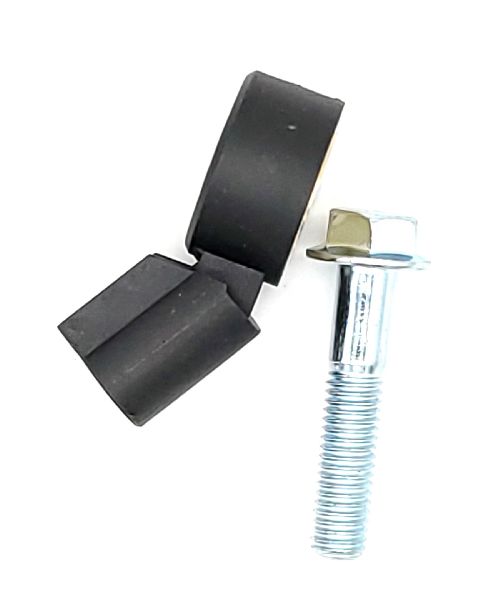
(OEM #12623095)— This is the most likely part to fail if P0324 appears by itself. This part number fits a wide range of GM engines including the LTG, LGX, and LT1. Always verify fitment with VIN.
Trusted brands: ACDelco, Bosch, NTK
OEM price range: $50-$90
Aftermarket price range: $25-$60 - Water Pump Kit (3.6L LGX)
(OEM #12707180)— The most common cause of P0324 on the 3.6L LGX engine, as specified by GM TSB 21-NA-030.
Trusted brands: ACDelco
OEM price range: $150-$300
Aftermarket price range: $100-$200
Related Codes That Often Appear With This One
- P0101 — Mass Airflow (MAF) Sensor Performance. Often seen with P0324 on 2.0L models due to the vacuum leak from loose intake manifold bolts.
- P0106 — Manifold Absolute Pressure (MAP) Sensor Performance. Also caused by the vacuum leak from loose intake manifold bolts per TSB #PIP5529B.
- P0171 — System Too Lean (Bank 1). The unmetered air from a loose intake manifold creates a lean condition, triggering this code alongside P0324.
- P0326 — Knock Sensor 1 Circuit Range/Performance. This code may accompany P0324 as part of the general system fault described in TSB #PIP5529B or from a noisy water pump.
Technical Service Bulletins (TSBs) & Recalls
- PIP5529B: Addresses a stall, hesitation, and MIL illumination with multiple DTCs (including P0324) caused by loose intake manifold bolts on 2.0L LTG engines. Instructs technicians to add threadlocker and torque bolts to 89 lb-in (10 Nm).
- 21-NA-030 (supersedes PIP5545C): Addresses an engine noise/squeak and DTC P0324 caused by a failing water pump on 3.6L LGX engines.
Platform-Specific Known Issues
- A known issue on 2016-2017 Camaros with the 2.0L LTG engine involves the intake manifold bolts becoming loose. This creates a vacuum leak that the PCM cannot reconcile, leading to a cascade of fault codes, including P0324, P0101, P0106, and P0171. The official fix is documented in GM TSB #PIP5529B and involves re-torquing the bolts to 89 lb-in with threadlocker.
- On the 3.6L LGX V6 engine, a failing water pump can generate mechanical noise that is picked up by the knock sensor, causing the ECM to falsely report a knock control system error (P0324). The fix is documented in TSB 21-NA-030 and requires replacing the water pump.
Mechanic-Grade Diagnostic Values
- Knock Sensor Internal Resistance — expected: 93k - 104k Ohms. Failure: A reading significantly outside this range, or an open/short circuit, indicates a faulty sensor. Note that a sensor can pass this test and still be faulty.
- Knock Sensor Bias Voltage (at sensor connector) — expected: ~5V DC (Key On, Engine Off, Sensor Unplugged). Failure: No voltage indicates a wiring or PCM issue. The voltage should drop slightly when the sensor is plugged in.
- Knock Sensor AC Voltage Output (Tapping Test) — expected: A small AC voltage signal should be generated when tapping on the engine block near the sensor.. Failure: No AC voltage produced during tapping suggests a dead sensor.
- Scan Tool Live Data: Knock Retard (3.6L LGX) — expected: Should be near 0 degrees at idle with no noise. When the serpentine belt is removed, the value should not change significantly if the engine is healthy.. Failure: If a high knock retard value is observed with the belt on, and it drops to near 0 with the belt off, it strongly indicates a noisy accessory (like the water pump) is the cause.
Scan Tool Commands That Help
- GDS2 (GM Dealer Scan Tool): Knock Retard Live Data Monitoring — This is the primary diagnostic step for the 3.6L LGX water pump issue per TSB 21-NA-030. By observing the knock retard value with and without the serpentine belt, a technician can confirm if an accessory is creating the noise that triggers P0324.
Wiring & Ground Locations
- E92 ECM Connector X2 (Black) — The E92 ECM is the Engine Control Module. On the 2016-2017 Camaro, it is located in the engine bay. Connector X2 is the black 73-way connector.. The knock sensor circuits terminate here. For V8/V6 models, Knock Sensor 1 signal is on Pin 50 (Dark Blue wire) and the return is on Pin 49 (Light Blue/Dark Blue wire). Knock Sensor 2 signal is on Pin 51 (Light Green wire) and the return is on Pin 52 (Dark Blue/White wire). This is critical for continuity and voltage testing from the ECM.
- Knock Sensor Locations — On all 2016-2017 Camaro engines (2.0L, 3.6L, 6.2L), the knock sensors are located on the sides of the engine block, typically below the exhaust manifolds.. Physical access is required for inspection, testing, and replacement. Knowing they are on the block sides (and not under the intake manifold like older GM V8s) saves significant diagnostic time.
Real Owner Repair Stories
- Camaro6 Forums (2017 Camaro SS (6.2L LT1)) — Check Engine Light with code P0324. No audible knock or performance issues.
❌ Tried (didn't work) The user initially suspected a sensor or wiring issue.
✅ What actually fixed it The dealer diagnosed a faulty water pump causing false knock, a known issue on the related 3.6L LGX engine. Replacing the water pump resolved the P0324 code. This suggests the TSB for the V6 may also apply to V8s experiencing similar accessory noise. - Camaro6 Forums (2016 Camaro 2.0T (LTG)) — Check Engine Light with P0324 and multiple other codes (P0171, P0106, P0507, P0326). Car would stall and run rough.
❌ Tried (didn't work) Initial diagnosis pointed towards MAF or MAP sensors due to the other codes.
✅ What actually fixed it The user found GM TSB #PIP5529B online. Upon inspection, the intake manifold bolts were extremely loose. The user tightened the bolts to the specified torque. This single action fixed all codes and resolved the stalling and rough running issues.
OEM Part Supersession History
N/A→12623095 (ACDelco 213-4523)— This is the current, widely used GM knock sensor for this platform and many others.Unknown→12707180— This is the specific water pump kit recommended by GM in TSB 21-NA-030 to resolve the false knock issue on the 3.6L LGX engine.
Heads up: Using a standard replacement water pump instead of this specific kit may not resolve the noise-related issue.
Model Year Variations Within This Range
- 2016-2017: There are no significant known differences in the knock control system, wiring, or common causes for P0324 between the 2016 and 2017 model years for any of the specified engines. A minor change for 2017 was the introduction of the T87A transmission controller for the automatic, but this does not affect the P0324 diagnosis.
Helpful Videos
![How to Fix P0324 Engine Code in 2 Minutes [1 DIY Method / Only $10.99]](https://img.youtube.com/vi/wkXpTfgZ7Bs/mqdefault.jpg)
We Have This Part in Stock


The information in this article is provided for general reference and educational purposes only. Vehicle specifications, procedures, and part compatibility can vary by production date, trim level, and region. Always consult your vehicle's factory service manual and verify part numbers before purchasing or performing repairs. Safety-critical components such as airbags, seat belts, and braking systems should be installed by a qualified professional.
- Chevrolet CAMARO:
- 🧭 Diagnostic Flowchart
- 🎬 Helpful Videos
- 🛍️ Shop This Part
- What's Unique About the 2016-2017 Chevrolet CAMARO
- Symptoms You May Notice
- Most Likely Causes
- Rare But Worth Checking
- Diagnosis Steps
- Parts You'll Likely Need
- Related Codes That Often Appear With This One
- Technical Service Bulletins (TSBs) & Recalls
- Platform-Specific Known Issues
- Mechanic-Grade Diagnostic Values
- Scan Tool Commands That Help
- Wiring & Ground Locations
- Real Owner Repair Stories
- OEM Part Supersession History
- Model Year Variations Within This Range
- 🎟️ Get 5% Off