

P0324 on 2015-2017 Chevrolet Colorado: Knock Control Error Causes and Fixes
On a 2015-2017 Colorado with the 2.5L engine, P0324 with other codes is almost always caused by loose intake manifold bolts, a fix costing under $20 in threadlocker. On a 2017 3.6L V6, a failing water pump can also trigger it. If the code is alone, suspect a bad knock sensor.
- On a 2.5L Colorado, if P0324 is accompanied by other codes like P0171 or P0106, the most likely cause is loose intake manifold bolts, not a bad sensor.
- On a 2017 3.6L V6, listen for noise from the water pump before assuming the knock sensor is bad.
- If P0324 is the only code present, the problem is more likely a faulty knock sensor or its wiring.
- The fix for the most common cause (loose bolts) is very inexpensive, requiring only threadlocker and proper torque.
- Ignoring the code can lead to reduced power and fuel economy, and potentially engine damage if a true knock condition exists and is not being managed by the PCM.
What's Unique About the 2015-2017 Chevrolet COLORADO
For the 2015-2017 Colorado, P0324 is frequently not a simple sensor failure. On models with the 2.5L LCV engine, GM issued a Technical Service Bulletin (TSB #PIP5529B) because loose intake manifold bolts create a vacuum leak that triggers P0324 along with a cascade of other sensor codes. For 2017 models equipped with the 3.6L LGZ V6, another TSB (#21-NA-030) notes that a failing water pump can create vibrations that the knock sensor mistakes for engine knock, falsely setting the code. These platform-specific issues are more common than a random sensor failure and also affect its twin, the GMC Canyon.
Diagnostic Flowchart
Tap your situation to follow the diagnostic path that matches what you're seeing on this vehicle.
Symptoms You May Notice
- Check Engine Light is on
- Engine hesitation or stalling, especially at idle.
- Reduced engine power.
- Audible engine pinging or knocking, especially under acceleration
- Decreased fuel efficiency
- Engine noise or belt squeak from the front of the engine (if caused by a failing water pump on the 3.6L V6).
- Replacing the knock sensor when the actual cause is loose intake manifold bolts or a failing water pump.
- Replacing the Mass Airflow (MAF) or MAP sensor when the root cause is the vacuum leak from the intake manifold, which is triggering codes for those sensors as well.
Most Likely Causes
- Loose Intake Manifold Bolts 🔴 High Probability → Shop Engine Intake Manifold This is a well-known issue documented in GM Technical Service Bulletin #PIP5529B for the 2.5L LCV engine. The bolts can back out over time, creating a vacuum leak that causes erratic readings across multiple sensors, triggering a host of codes including P0324.
How to confirm: Check for a combination of codes like P0101, P0106, P0171, etc., alongside P0324. Physically check the torque on the intake manifold bolts (10mm heads). A smoke test can also definitively identify a vacuum leak in this area.
Typical fix: Remove one intake manifold bolt at a time, apply medium-strength threadlocker (like Loctite Blue), and torque to 10 Nm (89 lb-in) in a center-outward sequence. The TSB advises against replacing the gasket unless it's proven to be damaged after torquing the bolts.
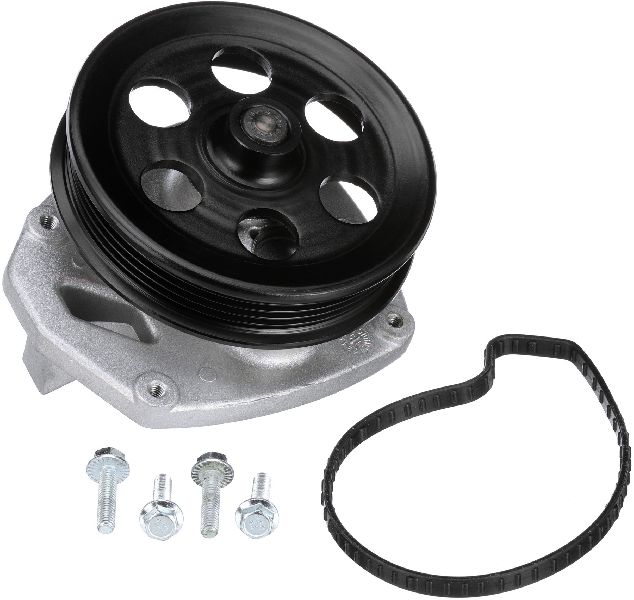
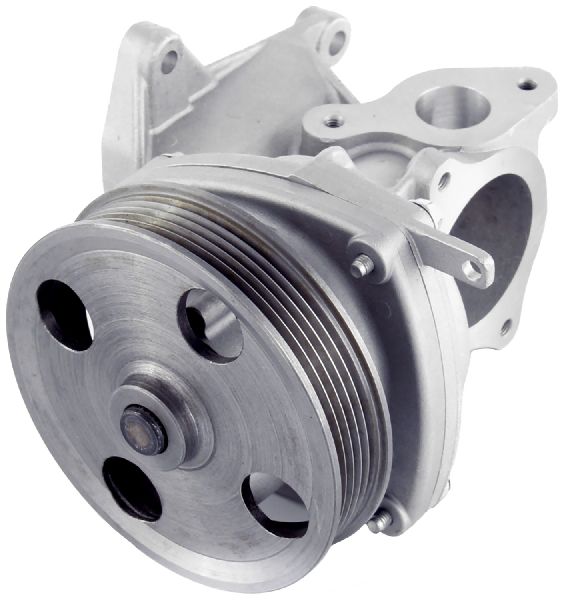
Est. part cost: $10-$20 - Failing Water Pump 🟡 Medium Probability → Shop Engine Water Pump Specific to the 2017 model with the 3.6L LGZ V6, as per GM TSB #21-NA-030. The bearings in the water pump fail and create a vibration/noise that the knock sensor picks up and misinterprets as engine knock.
How to confirm: With the engine running, use a mechanic's stethoscope to listen for grinding or unusual noise from the water pump. The definitive test is to monitor knock retard on a scan tool, then remove the serpentine belt and run the engine briefly. If the knock retard value drops significantly or disappears, the water pump is the source of the noise.
Typical fix: Replace the water pump. The part number for the LGZ engine kit is cited as 12679360 in the TSB.
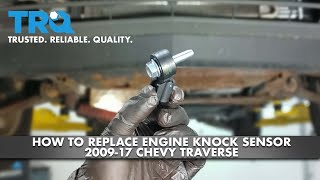
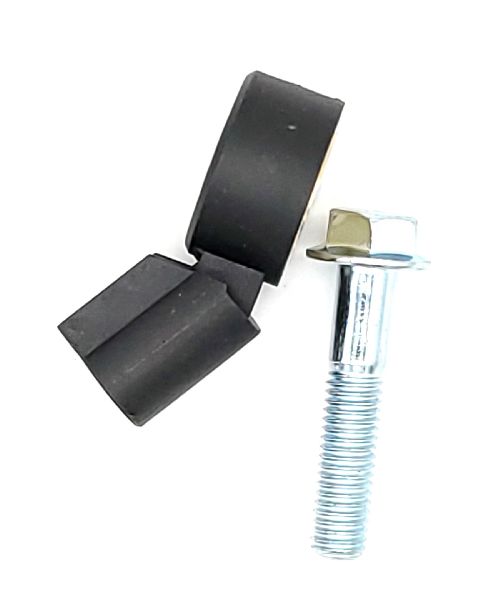
Est. part cost: $100-$250 - Faulty Knock Sensor 🟡 Medium Probability → Shop Ignition Knock (Detonation) Sensor This is a common cause if P0324 appears by itself. The sensor's internal piezoelectric crystal can fail over time. On both the 2.5L and 3.6L engines, the sensor is located under the intake manifold, making replacement labor-intensive. 🎬 Watch: A step-by-step walkthrough of the knock sensor replacement process.
How to confirm: After ruling out other causes, test the sensor's resistance with a multimeter; it should be between 93k-110k Ohms. Check the live sensor data with a scan tool; the voltage should generate an AC voltage spike when tapping on the engine block and not be flatlined.
Typical fix: Replace the knock sensor. It is critical to torque the new sensor to the manufacturer's specification (often around 15 ft-lbs), as 🎬 Watch: Pro tips for installing and torquing your new knock sensor. over-tightening can damage the new sensor. Given the location under the intake manifold, it's wise to replace the harness at the same time.
Est. part cost: $40-$90 - Damaged Wiring or Connector ⚪ Low Probability
How to confirm: Visually inspect the wiring harness leading to the knock sensor for any signs of fraying, melting (especially near exhaust components), or corrosion on the connector pins. Perform a continuity test on the wiring from the sensor connector to the PCM.
Typical fix: Repair the damaged section of the wire or replace the pigtail connector. Clean any corrosion from the connector pins and apply dielectric grease.
Est. part cost: $15-$40
Rare But Worth Checking
- Faulty Powertrain Control Module (PCM): → Shop Engine Control Module (ECM) This is very rare. The PCM should only be considered after all other possibilities, including wiring, have been exhaustively tested and ruled out.
Diagnosis Steps
- Scan the PCM for all stored trouble codes. Note if P0324 appears alone or with a group of other codes (P0101, P0106, P0171, etc.).
- If multiple codes are present on a 2.5L engine, immediately suspect loose intake manifold bolts per TSB PIP5529B. Check the torque of the manifold bolts. They should be torqued to 10 Nm (89 lb-in).
- If the vehicle is a 2017 3.6L and you hear a squeaking or grinding from the front of the engine, investigate the water pump. Use a stethoscope to listen for noise and confirm by removing the serpentine belt to see if knock retard values on a scan tool change.
- If P0324 is the only code, perform a visual inspection of the knock sensor wiring and connector for damage, melting, or corrosion.
- Using a scan tool, monitor the live data from the knock sensor. Check for a responsive voltage signal that changes with engine RPM or when tapping the block.
- If the signal is absent or erratic, and wiring is confirmed good, the sensor is likely faulty. Test the knock sensor's internal resistance with a multimeter; it should be 93k-110k Ohms.
- If the sensor and wiring test good, perform a continuity check on the harness between the sensor and the PCM to rule out an open or shorted wire.
Parts You'll Likely Need
- Medium-Strength Threadlocker — Required for the intake manifold bolt fix on the 2.5L engine as specified by TSB PIP5529B to prevent the bolts from backing out again.
Trusted brands: Loctite, Permatex
OEM price range: $10-$20
Aftermarket price range: $5-$15 - Knock Sensor
(OEM #ACDelco 213-4579 (GM 12642298) for 2.5L LCV)— This is the primary component to fail if P0324 is the only code stored in the PCM and TSBs have been ruled out.
Trusted brands: ACDelco, Delphi, NTK
OEM price range: $70-$110
Aftermarket price range: $40-$90 - Water Pump Kit
(OEM #12679360)— For the 2017 3.6L LGZ V6, a failing water pump is a documented cause of a false P0324 code per TSB 21-NA-030.
Trusted brands: ACDelco
OEM price range: $150-$250
Aftermarket price range: $100-$180 - Intake Manifold Gasket — While TSB PIP5529B advises against replacing it unless it's proven to be leaking after torquing the bolts, it's often replaced as a precaution if the manifold is removed for any reason.
Trusted brands: ACDelco, Fel-Pro
OEM price range: $50-$100
Aftermarket price range: $30-$60
Related Codes That Often Appear With This One
- P0068 — MAP/MAF - Throttle Position Correlation. Often appears with P0324 due to a vacuum leak from loose intake manifold bolts, as noted in TSB PIP5529B.
- P0101 — Mass Air Flow (MAF) Circuit Range/Performance. Caused by unmetered air from an intake manifold leak affecting the MAF sensor's readings. Listed in TSB PIP5529B.
- P0106 — Manifold Absolute Pressure (MAP) Sensor Performance. A vacuum leak directly affects manifold pressure, causing this code to appear with P0324. Listed in TSB PIP5529B.
- P0171 — System Too Lean (Bank 1). A vacuum leak from loose intake bolts allows excess, unmetered air into the engine, creating a lean condition. Listed in TSB PIP5529B.
- P0326 — Knock Sensor 1 Circuit Range/Performance. This is a related knock sensor code, and TSB PIP5529B indicates it can be triggered by the same intake leak issue.
- P0506 — Idle Air Control RPM Lower Than Expected. An intake leak can cause an unstable or low idle, triggering this code. Listed in TSB PIP5529B.
Technical Service Bulletins (TSBs) & Recalls
- TSB #PIP5529B: Details the issue of loose intake manifold bolts on 2.5L LCV engines causing a vacuum leak and a host of DTCs including P0324. The fix is to apply threadlocker and re-torque bolts to 10 Nm (89 lb-in).
- TSB #21-NA-030: Explains how a failing water pump on the 3.6L LGZ V6 can create mechanical noise that the knock sensor misinterprets, falsely triggering code P0324.
- TSB #PIP5545C: An earlier version of the water pump bulletin, also linking P0324 to water pump noise on 3.6L engines.
Platform-Specific Known Issues
- TSB #PIP5529B: On 2.5L LCV engines, loose intake manifold bolts can cause a vacuum leak that triggers P0324 along with many other codes. The official fix is simple and cheap: apply threadlocker and re-torque the bolts to 10 Nm (89 lb-in). GM allocates only 0.4 hours of labor for this repair.
- TSB #21-NA-030: On 2017 3.6L LGZ V6 models, a failing water pump is a known cause of a false P0324. The noise from the bad pump bearing is picked up by the knock sensor. Technicians can confirm this by removing the serpentine belt and checking if the knock retard signal on a scan tool disappears.
Mechanic-Grade Diagnostic Values
- Knock Sensor Internal Resistance — expected: 93,000 to 110,000 Ohms (93-110 kOhms). Failure: An open reading (OL) or a value significantly outside this range.
- Knock Sensor Connector Voltage (Key On, Engine Off) — expected: Approximately 5 Volts (reference signal from PCM). Failure: No voltage or significantly low voltage points to a wiring or PCM issue.
- Knock Sensor AC Voltage (Tapping Test) — expected: Generates AC voltage spikes, typically above 1 Volt when the engine block is tapped near the sensor.. Failure: Little to no AC voltage generated (e.g., less than 10 millivolts) indicates a dead sensor.
- Knock Sensor Mounting Bolt Torque — expected: 15 lb-ft (20 Nm). Failure: An improperly torqued sensor (too loose or too tight) will not detect engine vibrations correctly.
- Intake Manifold Bolt Torque (2.5L LCV Engine) — expected: 89 lb-in (10 Nm). Failure: Loose bolts are the direct cause of the vacuum leak outlined in TSB PIP5529B.
Scan Tool Commands That Help
- GM GDS2 (Global Diagnostic System 2): Monitor Live Data: 'Knock Retard' — This is the primary function for diagnosing this code. For the 3.6L V6, a technician watches the 'Knock Retard' PID, then removes the serpentine belt. If the knock retard value disappears, it confirms the noise is from a belt-driven accessory like the water pump.
- GM GDS2 (Global Diagnostic System 2): Read Freeze Frame Data — When the P0324 code is set, the ECM stores a snapshot of all sensor data at that moment. This data is critical for understanding the engine speed, load, and temperature when the fault occurred, helping to replicate the condition.
Wiring & Ground Locations
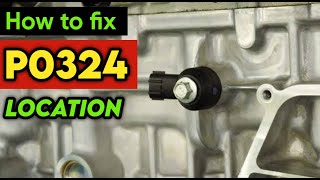
- Knock Sensor (2.5L LCV) — On the back side of the engine, under the intake manifold.. This is the physical location of the sensor. Its placement under the intake makes it labor-intensive to access, emphasizing the need to rule out other causes first.
- Knock Sensors (3.6L LGZ) — In the valley of the engine block, underneath the upper and lower intake manifold assembly.. Like the 2.5L, the sensors are very difficult to access. This is why TSBs point to external causes like the water pump first.
- G103 / G104 — Engine grounds, typically located on the rear of the cylinder heads or on the cowl in the engine compartment above the brake booster.. The ECM and its sensors, including the knock sensor, rely on clean ground connections. A corroded or loose engine ground can introduce electrical noise and cause unstable sensor readings, potentially triggering a false P0324 code.
- Engine to Chassis Ground Strap — A heavy braided cable connecting the engine block to the vehicle's frame or body.. This is the main ground path for the entire engine electrical system. Corrosion or looseness here can cause a wide array of intermittent electrical issues, including faulty sensor performance.
Real Owner Repair Stories
- Aggregated from multiple technical articles summarizing forum posts (2015 Chevrolet Colorado, 2.5L LCV) — Check Engine Light on with multiple codes, including P0324, P0171, and P0106. Engine running rough at idle.
❌ Tried (didn't work) Clearing the codes, only for them to return on the next drive., Considering replacement of the MAF or MAP sensor due to the other codes present.
✅ What actually fixed it Following the procedure in TSB PIP5529B. The owner checked the intake manifold bolts and found several were finger-loose. They removed each bolt one at a time, applied blue threadlocker, and torqued them to 89 lb-in (10 Nm). After clearing the codes, none of the codes returned.
"I Checked Everything" — The Actual Cause
- On the 2017 3.6L LGZ V6, a technician may perform a smoke test to check for vacuum leaks (the most common cause on the 2.5L engine) and find no leaks. The actual cause, as identified in TSB 21-NA-030, is often a failing water pump. The noise from the bad water pump bearing is transmitted through the engine block and misinterpreted by the knock sensor as detonation, setting a false P0324 code.
Model Year Variations Within This Range
- 2015-2017 (2.5L LCV Engine): These models are highly susceptible to loose intake manifold bolts causing a vacuum leak that sets P0324 along with a cluster of other codes (P0101, P0106, P0171, etc.), as documented in TSB PIP5529B. The fix is mechanical (re-torquing bolts with threadlocker), not sensor replacement.
- 2017 (3.6L LGZ V6 Engine): This specific model year and engine is known to set a false P0324 due to mechanical noise from a failing water pump, as documented in TSB 21-NA-030. The diagnostic procedure is completely different, focusing on listening to the water pump and monitoring knock retard with the serpentine belt removed.
Helpful Videos
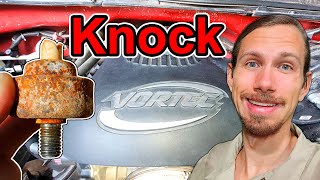
![How to Fix P0324 Engine Code in 2 Minutes [1 DIY Method / Only $10.99]](https://img.youtube.com/vi/wkXpTfgZ7Bs/mqdefault.jpg)
We Have This Part in Stock


The information in this article is provided for general reference and educational purposes only. Vehicle specifications, procedures, and part compatibility can vary by production date, trim level, and region. Always consult your vehicle's factory service manual and verify part numbers before purchasing or performing repairs. Safety-critical components such as airbags, seat belts, and braking systems should be installed by a qualified professional.
- Chevrolet COLORADO:
- 🧭 Diagnostic Flowchart
- 🎬 Helpful Videos
- 🛍️ Shop This Part
- What's Unique About the 2015-2017 Chevrolet COLORADO
- Symptoms You May Notice
- Most Likely Causes
- Rare But Worth Checking
- Diagnosis Steps
- Parts You'll Likely Need
- Related Codes That Often Appear With This One
- Technical Service Bulletins (TSBs) & Recalls
- Platform-Specific Known Issues
- Mechanic-Grade Diagnostic Values
- Scan Tool Commands That Help
- Wiring & Ground Locations
- Real Owner Repair Stories
- "I Checked Everything" — The Actual Cause
- Model Year Variations Within This Range
- 🎟️ Get 5% Off