

P0325 on 2016-2020 Acura ILX: Knock Sensor Circuit Malfunction Causes and Fixes
On a 2016-2020 Acura ILX, code P0325 is most often caused by a faulty knock sensor or damaged wiring. Rodents chewing the soy-based wiring are a surprisingly common cause. The sensor is located under the intake manifold, requiring significant labor to access. Expect to pay around $230-$330 for a professional repair.
- P0325 on your ILX points to a problem in the knock sensor circuit.
- Before buying a new sensor, you MUST inspect the wiring harness for damage, as this is the most common cause, often due to rodents.
- Accessing the sensor and wiring requires removing the intake manifold, making it a moderately difficult DIY job.
- When replacing the sensor, use a quality part and torque it to the correct specification (around 15-18 ft-lbs) to ensure proper function.
- Driving with this code can lead to poor performance and fuel economy, and you should have it repaired promptly.
What's Unique About the 2016-2020 Acura ILX
The 2016-2020 Acura ILX uses the reliable 2.4L K24W7 engine. For this engine family (Honda/Acura K-series), the P0325 code is a well-documented issue. A frequent and notable cause is rodents chewing through the knock sensor wiring harness, as the soy-based wire insulation used by Honda can attract them. The sensor itself is also located on the back of the engine block, under the intake manifold, making access labor-intensive for a DIY repair and providing a sheltered area for rodents to nest.
Symptoms You May Notice
- Check Engine Light is on
- Reduced engine power and sluggish acceleration
- Decreased fuel economy
- Engine hesitation
- Audible engine pinging or knocking noises (in some cases)
- Replacing the knock sensor without first thoroughly inspecting the wiring harness. Many owners replace a perfectly good sensor only to find the problem was chewed wires.
Most Likely Causes
- Damaged Knock Sensor Wiring or Connector 🔴 High Probability → Shop Ignition Knock (Detonation) Sensor Honda/Acura has historically used soy-based wire insulation that can attract rodents, who then chew through the wiring. The location under the intake manifold provides a sheltered spot for this to happen. Forum users on AcuraZine and Reddit consistently report this as the number one cause for P0325 on various Acura models.
How to confirm: Visually inspect the knock sensor wiring harness for signs of being chewed, frayed, or corroded. This requires removing the intake manifold to access the sensor, which is located on the engine block.
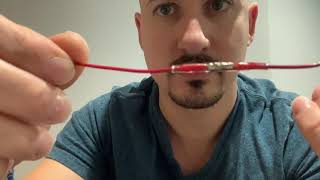
Typical fix: Repair the damaged section of wiring or, more reliably, replace the knock sensor sub-harness. 🎬 Watch: How to easily repair damaged rodent wiring The OEM sub-harness is part number 32113-5G0-A00.
Est. part cost: $30-$60 for an OEM sub-harness - Faulty Knock Sensor 🟡 Medium Probability → Shop Ignition Knock (Detonation) Sensor The sensor is exposed to constant heat cycles and vibrations, which can cause the internal piezoelectric element to fail over time.
How to confirm: After confirming the wiring is intact, test the sensor's resistance with a multimeter against factory specifications. If the reading is out of spec or shows an open circuit, the sensor is bad. The sensor can also be tested for AC voltage output while tapping on the engine block near the sensor (with the engine off).
Typical fix: Replace the knock sensor. It is critical to use an OEM or high-quality Denso replacement and torque it to the manufacturer's specification, typically around 20-24 Nm (15-18 ft-lbs). Over-torquing can make the sensor overly sensitive and cause it to throw codes, while under-torquing can prevent it from detecting real knock.
Est. part cost: $150-$220 for an OEM sensor
Rare But Worth Checking
- Powertrain Control Module (PCM) Fault: → Shop Engine Control Module (ECM) This is very uncommon, but if the sensor and wiring have been tested and confirmed to be good, the PCM's internal circuit for the knock sensor could be the issue. This should be the last resort after all other possibilities are exhausted.
- Cooling System Malfunction: An overheating engine can cause actual engine knock, which might, in some fringe cases, cause issues with the sensor circuit or trigger related codes. Ensure the cooling system is functioning correctly.
- Persistent Engine Knock: In rare cases where the code appears after using low-quality fuel or if there is excessive carbon buildup, the sensor may be functioning correctly and reporting a real, persistent knock condition. A user on AcuraZine with an '04 TSX chased a P0325 code that persisted after replacing the sensor and harness, raising the possibility of a real knock condition being the trigger.
Diagnosis Steps
- Scan the vehicle's computer for the P0325 code and any other stored codes.
- Document the freeze frame data to understand the engine conditions when the code was set.
- Gain access to the knock sensor by removing the upper intake manifold. This involves disconnecting the throttle body, various vacuum lines, and electrical connectors.
- Perform a thorough visual inspection of the knock sensor, its connector, and the sub-harness leading to the main engine harness. Look for any signs of damage, especially from rodents.
- If the wiring looks good, disconnect the sensor and test its internal resistance using a digital multimeter. Compare the reading to the manufacturer's specifications (if available). An open circuit indicates a failed sensor.
- Check for the proper reference voltage (typically around 5V) and ground at the connector coming from the PCM to ensure the circuit is intact. 🎬 See this step-by-step knock sensor diagnostic guide
- If the sensor and wiring are confirmed to be good, the issue may lie with the PCM, though this is rare.
Parts You'll Likely Need
- Knock Sensor
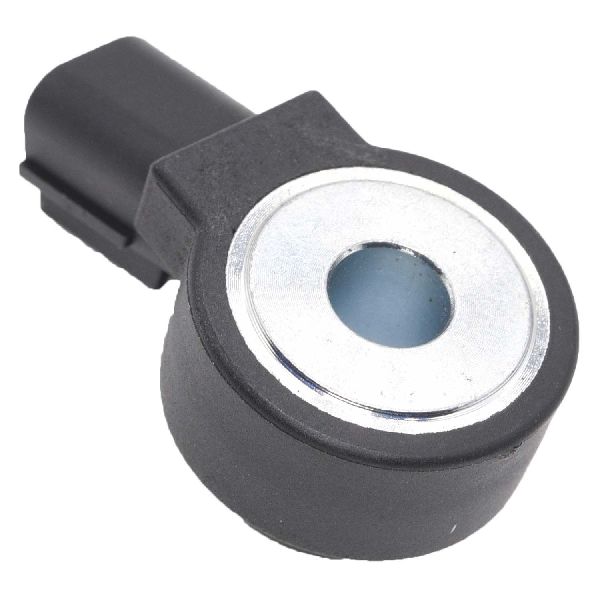
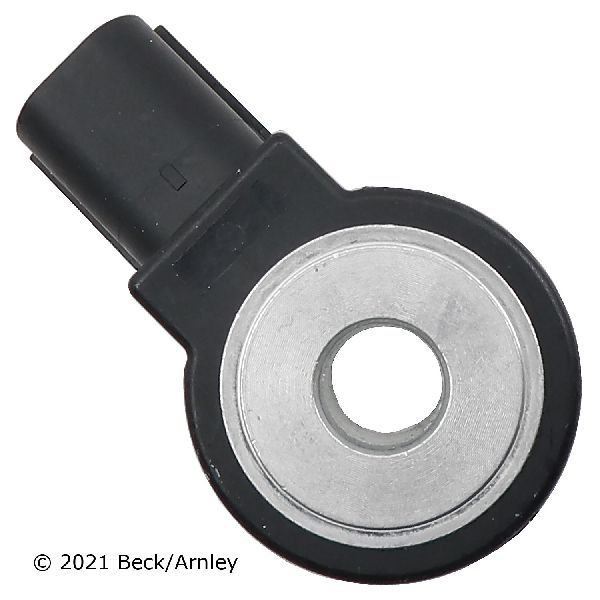
(OEM #30530-R1A-A01)— The sensor itself can fail due to age and heat cycles, causing an incorrect signal to be sent to the PCM.
Trusted brands: Genuine Acura/Honda, Denso
OEM price range: $180-$220
Aftermarket price range: $50-$120 - Knock Sensor Sub-Harness
(OEM #32113-5G0-A00)— This is the most common failure point on many Honda/Acura vehicles due to rodents chewing the soy-based wires.
Trusted brands: Genuine Acura/Honda
OEM price range: $30-$60
Aftermarket price range: $20-$40
Platform-Specific Known Issues
- Intake Manifold Removal Required: → Shop Engine Intake Manifold Unlike some vehicles where the knock sensor is easily accessible, on the K24W7 engine it is located beneath the intake manifold. This adds significant time and complexity to the repair, as the manifold, throttle body, and associated connections must be removed for access.
Mechanic-Grade Diagnostic Values
- Harness Connector Bias Voltage (Key On, Engine Off) — expected: Approximately 4.8-5.0V DC. Failure: Significantly lower or no voltage indicates a problem with the PCM or the wiring between the PCM and the sensor connector.
- Knock Sensor AC Voltage Output (Bench Test) — expected: Generates a small AC voltage when the engine block near it is tapped. A light tap might produce ~2.0V AC.. Failure: No voltage or an erratic signal when tapped indicates a failed internal piezoelectric element.
- Knock Sensor Internal Resistance — expected: Infinite resistance (Open circuit). There should be no continuity between the center pin and the sensor body (ground).. Failure: Any continuity reading indicates the sensor is internally shorted.
Wiring & Ground Locations
- Knock Sensor Signal Wire at PCM — The wire is typically Red with a Blue stripe (RED/BLU) leading to the Powertrain Control Module (PCM).. This is the primary wire that carries the knock signal. Technicians can test for continuity and shorts on this wire directly from the PCM connector to the sensor connector to isolate a wiring fault from a sensor or PCM fault.
- G101 — On many Honda/Acura platforms, G101 is a primary engine ground located on or near the thermostat housing.. The shielded wire for the knock sensor circuit requires a clean ground path to prevent signal interference from the ignition system. The braided shield wire often grounds at G101, and a poor connection here could potentially introduce noise and contribute to a P0325 code.
Real Owner Repair Stories
- YouTube channel 'blacklistedcrv' (Honda CR-V with K24 engine (similar architecture to the ILX's K24W7)) — Persistent P0325 code.
❌ Tried (didn't work) Replacing the knock sensor alone did not always fix the issue.
✅ What actually fixed it The sub-harness that runs the knock sensor wire alongside the starter signal wire failed internally. The permanent fix was to bypass the faulty sub-harness by running a new wire from a new sensor pigtail directly to the main engine harness connector, soldering and heat-shrinking the connection. - Honda Accord Forum user 'tap500' (2001 Honda Accord 2.3L) — P0325 code after finding the original sensor had physically fallen apart.
❌ Tried (didn't work) Replacing the sensor with a cheap eBay part., Replacing the sensor again with a cheap Amazon part.
✅ What actually fixed it The discussion concluded that for Honda/Acura vehicles, using a non-OEM knock sensor is a very common reason for the P0325 code to persist even after replacement. The solution is to use a Genuine Honda/OEM sensor.
OEM Part Supersession History
30530-R1A-A01→30530-5PA-A01— Standard part number update by the manufacturer.
Heads up: The new part number is a direct replacement and is compatible.
Diagnostic Flowchart
Other Known Issues on This Vehicle
Issues unrelated to this code that are worth knowing about as an owner of this generation:
- Harsh Downshifts from 8-Speed DCT 🟠 Medium — Common on 2016-2017 models. A distinct 'bump' or 'lurch' when coming to a stop. (Ref: TSB 17-015 describes a PCM software update and clutch break-in procedure to fix the issue.)
- Brake Master Cylinder Leak 🔴 High — Affects all 2016-2020 models, leading to a recall. (Ref: NHTSA Recall 23V858000 (Honda recall RN5). Contaminated brake fluid can cause a seal to deform, leading to a fluid leak, reduced pedal firmness, and increased stopping distance.)
- Denso Fuel Pump Failure 🔴 High — Part of a massive Honda/Acura recall affecting many models, including the ILX. The fuel pump impeller can deform and fail, causing the engine to stall. (Ref: Part of a broad recall affecting over 708,000 Honda and Acura vehicles.)
- Steering Wheel Rattles or Clicks 🟡 Low — Some owners report various noises from the steering wheel area when turning. (Ref: TSB B16-025 addresses a creaking, rattling, or clicking noise from the driver's airbag area.)
Used vs. New Parts: Buying Guide for This Vehicle
When a used part is the smart pick: A used OEM knock sensor sub-harness (pigtail) from a junkyard is a viable option if it is in excellent physical condition with no signs of brittleness, corrosion, or rodent damage. The sensor itself is an electronic component subjected to intense heat and vibration; buying new is strongly recommended.
Donor-vehicle mileage cap: roughly under 80000 miles for the part to have meaningful remaining life.
What to inspect on the donor part:
- For the wiring harness, check for flexible, intact insulation without any cracks or chew marks.
- Ensure the plastic connector is not brittle and the locking tab is intact.
- Verify the donor vehicle shows no signs of a front-end fire or excessive engine bay heat.
OEM-only on this vehicle (don't cheap out):
- Knock Sensor
Aftermarket brands forum-validated for this vehicle:
- Denso (often the Original Equipment Manufacturer)
- NTK
Brands owners have reported issues with on this vehicle:
- Cheap, unbranded sensors from eBay or Amazon are frequently reported by owners to be dead-on-arrival or fail shortly after installation, causing the P0325 code to return immediately.
Real Owner Stories
Aggregated from forums and TSBs cited above. Mileages and costs reflect what owners reported in those sources.
2005 Acura RSX-S (K-Series)
Symptoms: Engine code P0325 present.
What fixed it: An Acura technician confirmed the knock sensor sub-harness had been chewed through by rodents.
Source hint: Reddit - r/Cartalk - '2005 Acura RSX-S P0325 engine code'
3G Acura TL
Symptoms: P0325 code appeared after the vehicle was in long-term storage.
What fixed it: Rodent damage to the wire located under the intake manifold.
Source hint: AcuraZine - 3G TL Problems & Fixes - 'Error Code 0325 (knock sensor circuit malfunction) - caused by old fuel/storage, or ?'
2004 Acura TSX (K-Series)
Symptoms: P0325 code would not go away even after replacing the sensor and the pigtail.
What fixed it: The owner faced a significant diagnostic challenge when the cause wasn't simple wiring damage, requiring deeper investigation into the circuit.
Source hint: AcuraZine - 1G TSX Problems & Fixes - '04 TSX Knock Sensor P0325 will not go away!'
Related OBD-II Codes
Frequently Asked Questions
Why is the knock sensor wiring on my 2016-2020 Acura ILX so prone to rodent damage?
Can I access the knock sensor on my ILX without removing major components?
What is the specific part number for the knock sensor wiring repair?
Is there a specific torque setting I should use when installing a new sensor?
Are there any recalls for the 2016-2020 Acura ILX that I should be aware of while fixing the P0325 code?
Which aftermarket brands are considered reliable for the ILX knock sensor?
Helpful Videos
We Have This Part in Stock


The information in this article is provided for general reference and educational purposes only. Vehicle specifications, procedures, and part compatibility can vary by production date, trim level, and region. Always consult your vehicle's factory service manual and verify part numbers before purchasing or performing repairs. Safety-critical components such as airbags, seat belts, and braking systems should be installed by a qualified professional.
- Acura ILX:
- 🧭 Diagnostic Flowchart
- 🎬 Helpful Videos
- 🛍️ Shop This Part
- What's Unique About the 2016-2020 Acura ILX
- Symptoms You May Notice
- Most Likely Causes
- Rare But Worth Checking
- Diagnosis Steps
- Parts You'll Likely Need
- Platform-Specific Known Issues
- Mechanic-Grade Diagnostic Values
- Wiring & Ground Locations
- Real Owner Repair Stories
- OEM Part Supersession History
- Other Known Issues on This Vehicle
- Used vs. New Parts: Buying Guide for This Vehicle
- Real Owner Stories
- 2005 Acura RSX-S (K-Series)
- 3G Acura TL
- 2004 Acura TSX (K-Series)
- Related OBD-II Codes
- Frequently Asked Questions
- 🎟️ Get 5% Off