

P0325 on 2016-2024 Chevrolet Malibu 1.5L Turbo: Knock Sensor Circuit Causes and Fixes
On a 2016-2024 Malibu 1.5L, code P0325 is most often a failed knock sensor or its wiring. For 2018 models specifically, check TSB 19-NA-032, as the fix may be a simple ECM reprogram or wiring swap. A replacement sensor costs about $40-$90. The sensor is very difficult to access, located on the back of the engine block under the intake manifold.
- For 2018 Malibu 1.5L models, your first step must be to investigate TSB 19-NA-032, as you may not need to replace any parts.
- For all other years, the most likely cause is a faulty knock sensor, followed by damaged wiring.
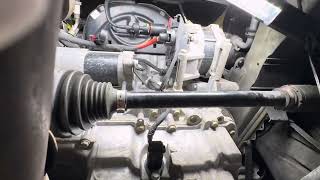
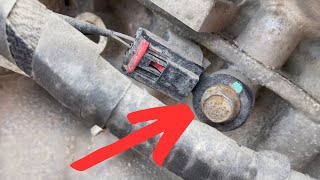
- The knock sensor is located on the back side of the engine block under the intake manifold and is very difficult to access, making replacement a labor-intensive job.
- When replacing the sensor, it is critical to use a quality part and torque it to the correct specification to ensure proper function.
What's Unique About the 2016-2024 Chevrolet Malibu
For the 1.5L turbo engine in the Malibu, the most significant issue is a Technical Service Bulletin (TSB 19-NA-032) for the 2018 model year. This TSB notes that P0325 can be caused by a software glitch fixed with an ECM update, or a wiring configuration issue at the ECM connector that requires re-pinning, not replacing the sensor. For other years, the causes are more typical, usually revolving around the sensor itself or its wiring failing from heat and vibration. Accessing the sensor is a major challenge, as it is located on the rear of the engine block, under the intake manifold, and is best accessed from underneath the vehicle.
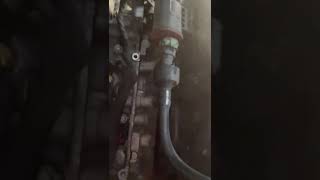
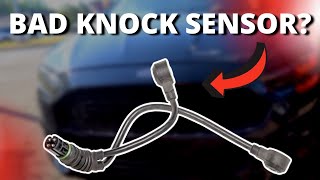
🎬 Watch: See the sensor location and replacement process from underneath.Symptoms You May Notice
- Check Engine Light is on
- Reduced engine power and sluggish acceleration
- Hesitation, especially when the engine is warm
- Noticeably worse fuel economy
- Audible engine knocking or pinging in some cases
- Jerking or stumbling when accelerating from a stop 🎬 See a breakdown of common bad knock sensor symptoms.
- Replacing the knock sensor on a 2018 Malibu without first checking for TSB 19-NA-032, which may only require a software update or wiring change.
Most Likely Causes
- Software Anomaly or ECM Connector Wiring (2018 Models) 🔴 High Probability A specific issue identified by GM in Technical Service Bulletin 19-NA-032 for 2018 models with the 1.5L LFV engine.
How to confirm: Check the vehicle's VIN. If it's a 2018 Malibu, consult a dealer or use a professional scan tool to check for the applicability of TSB 19-NA-032. The fix depends on the VIN range.
Typical fix: For VINs JF190216 and above, the ECM needs to be reprogrammed with the latest software. For VINs JF190215 and below, the fix involves swapping specific wires at the ECM's X2 connector: pin 28 is swapped with pin 29, and pin 42 is swapped with pin 43.
Est. part cost: $0 - Faulty Knock Sensor 🔴 High Probability → Shop Ignition Knock (Detonation) Sensor The sensor is mounted directly to the engine block, where it is exposed to constant heat and vibration, leading to eventual failure. Its location on the back of the engine, under the intake manifold, makes it extremely difficult to access, requiring work from underneath the car.
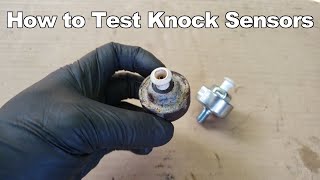
How to confirm: After ruling out the TSB, inspect the sensor. If there's no visible damage, it can be tested with a multimeter for proper resistance (a generic value is often 🎬 Watch: How to test a good vs. bad knock sensor. between 93-100 kOhms, but service manual specs are best). A scan tool can also monitor its output while tapping lightly on the engine block near the sensor; a lack of signal suggests failure.
Typical fix: Replace the knock sensor. It is critical to torque the new sensor to the manufacturer's specification (typically around 18 lb-ft for GM vehicles), as incorrect torque can lead to improper readings. Due to the difficult access, this can be a labor-intensive job.
Est. part cost: $40-$90 - Damaged Wiring or Connector 🟡 Medium Probability The wiring harness leading to the knock sensor is routed in a hot, tight space behind the engine and above the starter, where it can become brittle, frayed, or corroded from heat and exposure to the elements.
How to confirm: Visually inspect the entire length of the wiring from the sensor to the ECM. Check the connector at the sensor for corrosion, damage, or a loose fit. Use a multimeter to check for continuity and shorts in the circuit.
Typical fix: Repair the damaged section of wire or replace the pigtail connector if it is faulty.
Est. part cost: $15-$30
Rare But Worth Checking
- Engine Control Module (ECM) Malfunction: → Shop Engine Control Module (ECM) This is rare, but possible if all other causes have been ruled out. The TSB for 2018 models shows that the ECM is involved, even if it's just a software or pinout issue, proving the circuit's sensitivity to ECM logic.
- Internal Engine Mechanical Problems: Severe carbon buildup or other mechanical issues can cause true engine knock, which the sensor will report. This usually triggers other codes in addition to P0325. The 1.5L LFV engine is known for potential piston damage from pre-ignition, which would create a true knock condition.
Diagnosis Steps
- Read the code with an OBD-II scanner to confirm P0325 is present.
- (2018 Models Only): Check your VIN against TSB 19-NA-032. This is the most important first step for this model year. If the VIN is JF190216 or higher, have a dealer reprogram the ECM. If the VIN is JF190215 or lower, perform the wire swap at the ECM X2 connector (swap pins 28-29 and 42-43) as detailed in the TSB.
- (All other models): Perform a visual inspection of the knock sensor and its wiring harness from underneath the vehicle. The sensor is located on the back of the engine block, above the starter and CV axle. Look for any obvious signs of damage, melting, or corrosion. Ensure the connector is secure.
- Using a multimeter, disconnect the sensor and check its resistance. Compare the reading to the manufacturer's specifications. Also, check the wiring harness for continuity from the sensor connector to the ECM pins and ensure there is no short to ground.
- If wiring and the sensor itself test okay, the issue could be a poor connection at the ECM. Inspect the ECM connector pins related to the knock sensor circuit for damage or corrosion.
- If a scan tool is available, monitor the knock sensor data stream. Lightly tap the engine block near the sensor with a wrench; you should see a signal response on the scan tool. A lack of response points to a bad sensor or circuit.
- If the sensor is replaced, ensure it is torqued to the correct specification (e.g., 18 lb-ft). Clear the code and perform a test drive to see if the code returns.
Parts You'll Likely Need
- Ignition Knock (Detonation) Sensor
(OEM #12672789)— This is the most common part to fail, causing a circuit malfunction code. The TSB for 2018 models is an exception.
Trusted brands: ACDelco (OEM), Delphi, NGK/NTK, Standard Motor Products
OEM price range: $60-$90
Aftermarket price range: $40-$70
Related Codes That Often Appear With This One
- P0330 — P0330 is for 'Knock Sensor 2 Circuit Malfunction'. The 1.5L engine in the Malibu uses two knock sensors. TSB 19-NA-032 explicitly lists both P0325 and P0330 as potential codes for the same software/wiring issue on 2018 models.
Technical Service Bulletins (TSBs) & Recalls
- 19-NA-032: Lack of Power and/or Hesitation After Vehicle Has Reached Operating Temperature, Malfunction Indicator Lamp (MIL) Illuminated - DTC P0325 and/or P0330 May Set.
Platform-Specific Known Issues
- TSB 19-NA-032 was issued for some 2018 Chevrolet Malibu models with the 1.5L engine for P0325/P0330. The fix is either an ECM software update or swapping wires at the ECM connector, depending on the vehicle's VIN.
Mechanic-Grade Diagnostic Values
- Knock Sensor Internal Resistance — expected: 93k - 110k Ohms. Failure: An open circuit (O.L.) or a reading significantly outside this range.
- Knock Sensor Circuit Bias Voltage — expected: ~2.5 Volts DC (Key On, Engine Off, sensor connected). Failure: Voltage significantly higher (e.g., > 4V) or lower (e.g., < 1V) suggests a faulty sensor or circuit issue.
- Knock Sensor Signal (Dynamic Test) — expected: A small, fluctuating AC millivolt signal when the engine block is lightly tapped near the sensor.. Failure: No AC voltage signal produced during tapping indicates a dead sensor.
- Knock Sensor Mounting Bolt Torque — expected: 15-18 lb-ft. Failure: Over or under-tightening the sensor bolt will alter its sensitivity and can cause false signals or a lack of signal, leading to the code returning even with a new part.
Scan Tool Commands That Help
- GDS2 (GM Global Diagnostic System 2): Knock Sensor Data Display — To monitor the live data from the knock sensors. A technician can observe the 'Knock Retard' PID. While tapping the block, a response should be seen. A lack of response or a constantly high value at idle can help pinpoint whether the issue is the sensor, wiring, or actual engine noise.
- GDS2 (GM Global Diagnostic System 2): Module Programming (SPS) — For 2018 models with VIN JF190216 and above, as per TSB 19-NA-032, the ECM must be reprogrammed with the latest software to correct the software anomaly causing P0325/P0330.
- Any OBD-II Scanner: Clear DTCs / Reset ECU — After replacing the knock sensor or repairing the wiring, the stored fault codes must be cleared. Some sources also recommend a full ECU reset (by disconnecting the battery for 15-30 minutes) to clear adaptive memory, followed by a drive cycle to allow the ECU to relearn engine parameters with the new sensor input.
Wiring & Ground Locations
- ECM Connector X2 (2018 Models) — The X2 connector on the Engine Control Module (ECM).. For 2018 models with VINs JF190215 and below, TSB 19-NA-032 requires swapping wires at this specific connector to fix the P0325/P0330 issue. Pin 28 is swapped with pin 29, and pin 42 is swapped with pin 43.
- Main Engine Ground Strap — Typically a braided metal strap connecting the engine block to the vehicle's frame or firewall. On many GM vehicles, it's located near the back of the engine or transmission.. A poor or corroded engine ground can introduce electrical noise into various sensor circuits. The knock sensor circuit is particularly sensitive to this noise, which can be misinterpreted by the ECM as a circuit fault or false knock, potentially triggering a P0325 code even if the sensor and its dedicated wiring are good.
OEM Part Supersession History
12672789→12714658 (ACDelco 213-4681)— Standard part evolution, likely for improved durability or manufacturing consistency. The new part number is the current service replacement.
Model Year Variations Within This Range
- 2018: A specific TSB (19-NA-032) applies only to this year. Depending on the VIN, the fix is either an ECM reprogram (VINs JF190216 and above) or a physical wire swap at the ECM connector (VINs JF190215 and below). This is the most significant variation for this code within the generation.
Diagnostic Flowchart
Other Known Issues on This Vehicle
Issues unrelated to this code that are worth knowing about as an owner of this generation:
- Cracked Pistons from Pre-Ignition 🔴 High — Common on 2016-2017 models. Addressed by GM Customer Satisfaction Program N182195660 and TSB 19-NA-122. Caused by Stochastic Pre-Ignition (SPI). (Ref: N182195660, TSB 19-NA-122 (replaces PIP5421G))
- 'Shift to Park' Message / Battery Drain 🟠 Medium — Very common on 2016-2019 models. The vehicle fails to detect it is in Park, preventing shutdown and causing battery drain. (Ref: TSB 19-NA-206, TSB 23-NA-119)
- Failed Mechanical Brake Vacuum Pump 🔴 High — A known weak point across many model years. Failure causes a hard brake pedal and can lead to catastrophic engine damage if the pump disintegrates and sends metal debris into the cylinder head.
- Clogged PCV Orifice in Valve Cover 🟠 Medium — Common across all years. The non-serviceable orifice clogs, causing high crankcase pressure, oil leaks, and triggering codes like P1101 and P0171. Requires valve cover replacement. (Ref: TSB 20-NA-047)
Used vs. New Parts: Buying Guide for This Vehicle
When a used part is the smart pick: A used knock sensor is generally not recommended. The part is relatively inexpensive new, and its failure is often due to age, heat, and vibration. A used sensor from a junkyard has unknown remaining life and is located in a very difficult-to-access spot, making the labor cost of a potential repeat failure far outweigh the savings on the part.
Donor-vehicle mileage cap: roughly under 50000 miles for the part to have meaningful remaining life.
What to inspect on the donor part:
- Ensure the plastic connector is not brittle, cracked, or showing signs of heat damage.
- Check that the metal body of the sensor is free from corrosion or physical damage.
- If possible, test the resistance with a multimeter before purchase; it should fall within the 93k-110k Ohm range.
OEM-only on this vehicle (don't cheap out):
- While not strictly 'OEM-only', using a reputable brand for the knock sensor is critical. Cheap, unbranded sensors are known to be improperly calibrated or fail quickly, leading to the code returning.
Aftermarket brands forum-validated for this vehicle:
- ACDelco (GM Original Equipment)
- Delphi
- NGK/NTK
- Standard Motor Products (SMP)
Brands owners have reported issues with on this vehicle:
- Unbranded, low-cost sensors from online marketplaces should be avoided due to high failure rates and the high labor cost of replacement.
Real Owner Stories
Aggregated from forums and TSBs cited above. Mileages and costs reflect what owners reported in those sources.
2020 Chevrolet Malibu 1.5L
Symptoms: Loss of power when accelerating from a stop, intermittent check engine light, and a little jerking when letting off the throttle at about 2,000 RPMs.
What fixed it: The owner was seeking the location of the knock sensor to perform a replacement after experiencing these symptoms.
Source hint: Reddit r/AskMechanics - '2020 Chevy Malibu P0325'
2018 Chevrolet Malibu 1.5L
Symptoms: Lack of power and/or hesitation after the vehicle has reached operating temperature with the Malfunction Indicator Lamp (MIL) illuminated.
What fixed it: Depending on the VIN, either an ECM software update or swapping wires at the ECM X2 connector (pins 28 to 29 and 42 to 43).
Source hint: TSB 19-NA-032
2019 Chevrolet Malibu
Symptoms: An owner reported that the drive gear was delayed, requiring them to move from park to drive repeatedly to engage. While driving up an incline, the car stopped moving forward and began reversing, with P0325 stored alongside codes P0505, P0507, P0700, P1101, and P2714.
Source hint: NHTSA ODI #11721239
Related OBD-II Codes
Frequently Asked Questions
Does TSB 19-NA-032 apply to my 2018 Chevrolet Malibu 1.5L?
Where is the knock sensor located on the 1.5L LFV engine?
Why is my Malibu jerking and losing power when accelerating from a stop?
What is the correct torque specification for a new knock sensor on this vehicle?
Could my P0325 code be related to the 'Shift to Park' message or cracked pistons?
Can I test the knock sensor myself before replacing it?
Helpful Videos
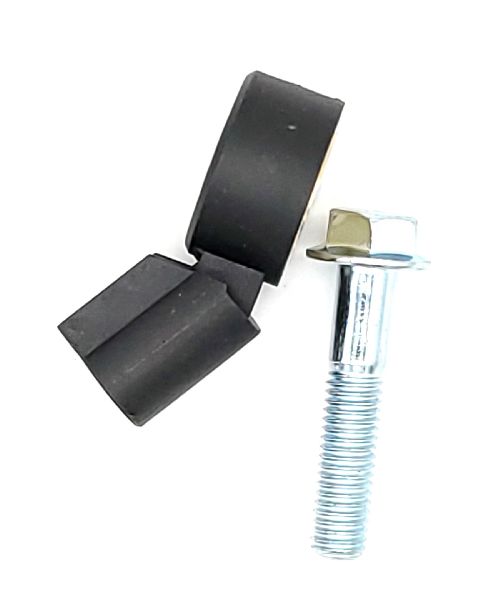
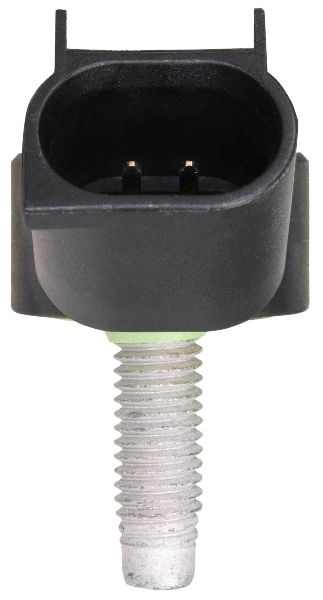
We Have This Part in Stock

The information in this article is provided for general reference and educational purposes only. Vehicle specifications, procedures, and part compatibility can vary by production date, trim level, and region. Always consult your vehicle's factory service manual and verify part numbers before purchasing or performing repairs. Safety-critical components such as airbags, seat belts, and braking systems should be installed by a qualified professional.
- Chevrolet Malibu:
- 🧭 Diagnostic Flowchart
- 🎬 Helpful Videos
- 🛍️ Shop This Part
- What's Unique About the 2016-2024 Chevrolet Malibu
- Symptoms You May Notice
- Most Likely Causes
- Rare But Worth Checking
- Diagnosis Steps
- Parts You'll Likely Need
- Related Codes That Often Appear With This One
- Technical Service Bulletins (TSBs) & Recalls
- Platform-Specific Known Issues
- Mechanic-Grade Diagnostic Values
- Scan Tool Commands That Help
- Wiring & Ground Locations
- OEM Part Supersession History
- Model Year Variations Within This Range
- Other Known Issues on This Vehicle
- Used vs. New Parts: Buying Guide for This Vehicle
- Real Owner Stories
- 2020 Chevrolet Malibu 1.5L
- 2018 Chevrolet Malibu 1.5L
- 2019 Chevrolet Malibu
- Related OBD-II Codes
- Frequently Asked Questions
- 🎟️ Get 5% Off