

P0325 on 2018 Chevrolet Malibu 1.5L: Knock Sensor Circuit Causes and Fixes
On a 2018 Malibu 1.5L, code P0325 is very often caused by a software or wiring issue covered by GM Technical Service Bulletin #19-NA-032. Before replacing the knock sensor, check with a dealer to see if this TSB applies, as the fix may be a simple ECM reprogram or wiring swap at no cost under the federal emissions warranty.
- First, check if TSB 19-NA-032 applies to your 2018 Malibu; this is the most probable fix and may be covered by the 8-year/80,000-mile emissions warranty.
- Do not replace the knock sensor until you have ruled out the TSB.
- Symptoms include a Check Engine Light, hesitation, and poor fuel economy.
- If the sensor does need replacement, it is located on the back of the engine under the intake manifold and is a moderately difficult DIY job.
What's Unique About the 2018-2018 Chevrolet Malibu
For the 2018 Malibu with the 1.5L LFV engine, this code is frequently not a failed sensor. General Motors issued a specific Technical Service Bulletin (TSB 19-NA-032) acknowledging that a software anomaly or a wiring configuration issue at the ECM is a common cause for P0325. This makes it critical to investigate the TSB before assuming the knock sensor itself is bad, potentially saving significant time and money. The TSB outlines a VIN-specific repair procedure.
Symptoms You May Notice
- Check Engine Light illuminated
- Lack of power or hesitation, especially when the engine is warm
- Reduced fuel economy
- Audible engine knocking or pinging sounds
- Sluggish or poor acceleration
- Replacing the knock sensor without first checking for TSB 19-NA-032. The issue is very often related to the software or ECM wiring, not the sensor itself on this vehicle.
Most Likely Causes
- ECM Software or Wiring Anomaly (TSB 19-NA-032) 🔴 High Probability A documented issue by GM for this specific model year and engine, affecting vehicles in North America and Israel. The bulletin was created to address customer complaints of hesitation and lack of power when the engine is at operating temperature.
How to confirm: Contact a Chevrolet dealership and provide your VIN. Ask if TSB #19-NA-032 is open for your vehicle. They can confirm the required procedure based on your VIN.
Typical fix: The fix is dependent on the vehicle's VIN. For vehicles with VIN JF190216 and above, the ECM is reprogrammed with updated software. For vehicles with VIN JF190215 and below, specific wires (pins 28/29 and 42/43) are swapped at the ECM's X2 connector. This repair may be covered under the 8-year/80,000-mile federal emissions warranty.
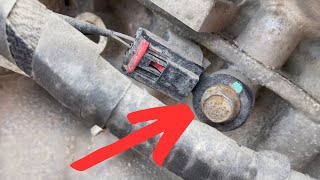
Est. part cost: $0 - Faulty Knock Sensor 🟡 Medium Probability → Shop Ignition Knock (Detonation) Sensor The sensor is located on the engine block and is subject to constant heat and vibration, which can lead to internal failure over time. A YouTube video shows the sensor located on the back of the engine, under the intake manifold, confirming its exposure to harsh conditions.
How to confirm: After ruling out the TSB, the sensor can be tested. Disconnect the sensor and check its internal resistance with a multimeter. An out-of-spec reading (open or shorted) indicates failure. A visual inspection may also reveal cracks or physical damage.
Typical fix: Replace the knock sensor. It is located on the back of the engine, under the intake manifold. The mounting bolt is typically a 13mm. Proper torque on the new sensor is critical for correct operation.
Est. part cost: $27-$75 - Damaged Wiring or Connector ⚪ Low Probability Engine bay heat can make wiring insulation brittle over time. Rodents can also chew on wires, causing a short or open circuit. The harness leading to the sensor is a common failure point on some GM engines.
How to confirm: Visually inspect the wiring harness leading to the knock sensor for any signs of damage, melting, corrosion, or insecure connections. Check for a secure connection at the sensor and at the ECM.
Typical fix: Repair the damaged section of wire or replace the connector pigtail. Ensure the repair is sealed from moisture.
Est. part cost: $10-$30
Rare But Worth Checking
- Faulty Engine Control Module (ECM): → Shop Engine Control Module (ECM) This is very rare, but a documented case on a 2018 Malibu showed an internal short in the ECM blowing a fuse and causing related issues. This should only be considered after all other possibilities, especially TSB 19-NA-032, have been exhausted.
Diagnosis Steps
- Scan the vehicle for any other stored trouble codes to check for related issues.
- Crucial First Step: Contact a Chevrolet dealer with your VIN to determine if TSB #19-NA-032 applies to your vehicle. This is the most likely cause and the fix may be covered under warranty.
- If the TSB has been performed or does not apply, proceed with physical diagnosis.
- Visually inspect the knock sensor wiring harness and connector for any signs of damage, melting, corrosion, or loose connections.
- Locate the knock sensor on the back of the engine, below the intake manifold.
- Disconnect the sensor and test its resistance with a multimeter. Compare the reading to the manufacturer's specification. A reading that is open (infinite resistance) or shorted (zero resistance) indicates a bad sensor.
- If the sensor and wiring appear good, check for a stable reference voltage from the ECM at the sensor connector with the key on, engine off.
- If the sensor has been replaced and the wiring is confirmed to be good, the issue may be with the ECM, but this is extremely rare.
Parts You'll Likely Need
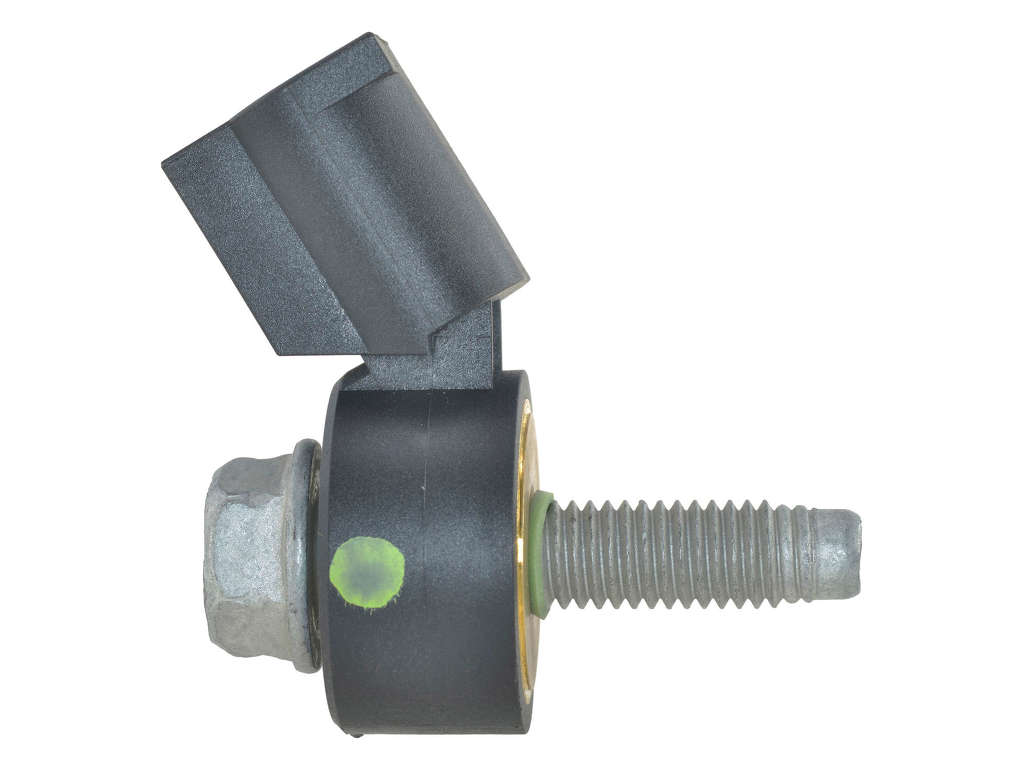
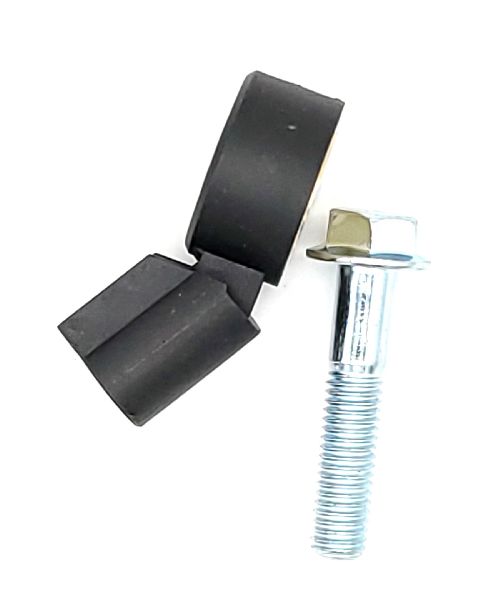
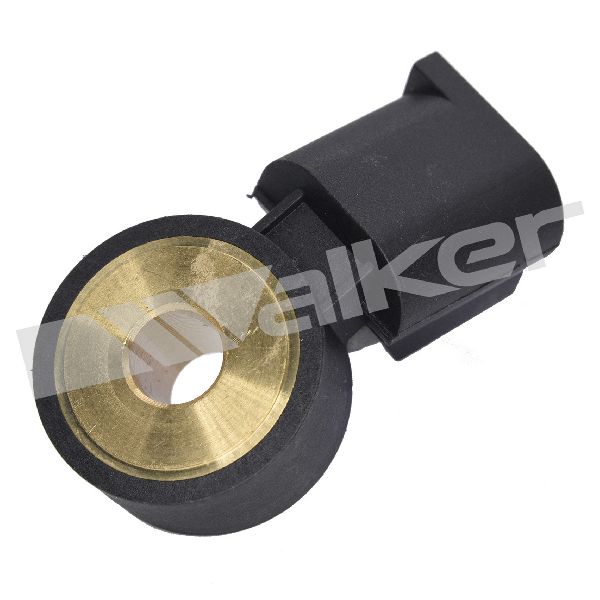
- Ignition Knock (Detonation) Sensor
(OEM #12636736)— If the cause is not the TSB, the sensor itself is the next most likely component to fail due to heat and vibration. Cross-references suggest this part number is compatible.
Trusted brands: ACDelco (GM Genuine), Delphi, Standard Motor Products (KS374), NTK
OEM price range: $52-$75
Aftermarket price range: $22-$65
Related Codes That Often Appear With This One
- P0330 — This code is for 'Knock Sensor 2 Circuit'. TSB 19-NA-032 explicitly mentions that P0325 and P0330 may set together due to the same software/wiring anomaly.
- P1101 — This code for 'Intake Air Flow System Performance' can appear alongside knock sensor codes if there are underlying air induction issues, such as a disconnected charge air cooler (CAC) tube, which is another known issue on the 1.5L engine.
Technical Service Bulletins (TSBs) & Recalls
- 19-NA-032: Addresses a lack of power/hesitation and MIL illumination with DTC P0325 and/or P0330 due to a software anomaly or ECM wiring issue. Provides VIN-specific repair instructions (reprogram or wire swap).
Platform-Specific Known Issues
- The 1.5L LFV engine has a known issue documented in TSB 19-NA-032 where a software or wiring anomaly at the ECM can trigger code P0325, often without any actual fault in the knock sensor itself.
- A Reddit user with a 2020 Malibu with P0325 described a loss of power and jerking, highlighting that the symptoms are felt by owners.
- Cross-manufacturer data from NHTSA ODI #11680315 notes that a P0325 fault can be accompanied by a slight metallic rattle sound and a MIL that may intermittently go away after restarting.
- NHTSA ODI #11669525 describes multiple occurrences of sluggish performance with this code, creating a safety risk when entering into traffic.
Mechanic-Grade Diagnostic Values
- Knock Sensor Internal Resistance — expected: 93kΩ - 110kΩ (93,000 - 110,000 Ohms). Failure: A reading of OL (Open Loop/infinite resistance) or near zero Ohms indicates a failed sensor.
- Knock Sensor AC Voltage Output — expected: A fluctuating AC voltage signal (e.g., >1 volt) when the engine block is tapped near the sensor.. Failure: No voltage or a very low, non-responsive voltage (e.g., <10mV) when tapping indicates a dead sensor.
- ECM Bias Voltage at Sensor Connector — expected: ~5V DC (with sensor disconnected, key on, engine off). Failure: 0V or significantly less than 5V indicates a problem with the ECM or the wiring between the ECM and the sensor connector.
Scan Tool Commands That Help
- GDS2 (GM Global Diagnostic System 2): Monitor 'Knock Retard' Live Data PID — During a test drive or while tapping on the engine block, a technician would watch this parameter. If the sensor is working, tapping the block should cause the Knock Retard value to increase as the ECM pulls timing. If there is no change, it suggests the ECM is not receiving a valid signal.
- SPS (Service Programming System): Engine Control Module Reprogramming — This is the specific software function used to perform the fix outlined in TSB 19-NA-032 for vehicles with VIN JF190216 and above. It updates the ECM with new logic to prevent the false P0325 code.
Wiring & Ground Locations
- K20 Engine Control Module (ECM) — Located in the engine bay, typically near the battery or firewall.. This is the module that sets code P0325 and is the location of the wiring swap for the TSB fix.
- ECM Connector X2 — This is one of the large multi-pin connectors plugging into the K20 ECM.. TSB 19-NA-032 requires swapping wires at pins 28/29 and 42/43 on this specific connector for certain VINs. Pinout diagrams show knock sensor signal and low reference wires are located here.
- ECM Main Ground — A primary ground for the ECM is located on the back of the cylinder head, secured by a 10mm bolt.. A poor ground connection at this point can cause a variety of electrical issues and incorrect sensor readings, including a false P0325 code. This should be checked for tightness and corrosion if circuit issues are suspected.
OEM Part Supersession History
12636736→12729597— Part consolidation and potential design update for improved reliability or manufacturing.
Heads up: The new part number 12729597 is the correct current service replacement for 12636736, 12605738, and 12692505.
Model Year Variations Within This Range
- 2018: A hard VIN cutoff dictates the repair for TSB 19-NA-032. Vehicles with VIN JF190215 and below require a physical wire swap at the K20 ECM's X2 connector. Vehicles with VIN JF190216 and above require an ECM software reprogram via SPS.
Diagnostic Flowchart
Other Known Issues on This Vehicle
Issues unrelated to this code that are worth knowing about as an owner of this generation:
- Cracked High-Pressure Fuel Pump 🔴 High — Common enough to warrant a customer satisfaction program (N182199610) from GM. (Ref: N182199610)
- Sudden Loss of Power / Stalling 🔴 High — Widespread enough to trigger a safety recall (N192221960) for an ECM software error that could disable fuel injectors. (Ref: N192221960)
- Charge Air Cooler (CAC) Tube Detachment 🟠 Medium — A very common issue on the 1.5L turbo engine, causing a sudden loss of power and setting codes like P1101, P0299, and P0101. (Ref: TSB 22-NA-224 / PIP5651F)
- Transmission Shudder or Harsh Shifting 🟠 Medium — Owners report issues like shuddering, hesitation, and hard shifts, sometimes setting a P0700 code. Regular fluid changes are recommended to mitigate wear.
- Carbon Buildup on Intake Valves/Throttle Body 🟡 Low — As a direct-injection engine, the 1.5L LFV is prone to carbon buildup over time, which can lead to rough idle and hesitation. Throttle body cleaning is a common maintenance item.
- Shift to Park Message 🟡 Low — A common electrical issue where the vehicle does not recognize it is in Park, preventing the driver from shutting it off completely.
Used vs. New Parts: Buying Guide for This Vehicle
When a used part is the smart pick: A used Engine Control Module (ECM) can be a cost-effective alternative to a new one, especially if the vehicle is older. However, it is NOT a plug-and-play part and will require professional programming to your vehicle's VIN.
Donor-vehicle mileage cap: roughly under 100000 miles for the part to have meaningful remaining life.
What to inspect on the donor part:
- For a used ECM, ensure the donor vehicle was not in a flood or fire.
- Verify the part number on the used ECM matches the original exactly.
- Purchase from a reputable salvage yard with a return policy.
OEM-only on this vehicle (don't cheap out):
- Engine Control Module (ECM): While a used OEM unit can work if programmed, avoid aftermarket/rebuilt ECMs for this platform as they can have compatibility and longevity issues. Stick to a new or used genuine GM part.
Aftermarket brands forum-validated for this vehicle:
- For the knock sensor itself: ACDelco (GM Genuine), Delphi, NTK, and Standard Motor Products are trusted brands that meet OEM specifications.
Brands owners have reported issues with on this vehicle:
- Unnamed, no-brand sensors from online marketplaces (e.g., Amazon, eBay). These often use lower-quality piezoelectric crystals and can fail prematurely or provide inaccurate readings, leading to the code returning.
Real Owner Stories
Aggregated from forums and TSBs cited above. Mileages and costs reflect what owners reported in those sources.
2020 Chevrolet Malibu 1.5L
Symptoms: The owner described a loss of power and jerking while driving.
What fixed it: The issue was identified as a knock sensor circuit fault (P0325).
Source hint: Reddit - r/AskMechanics thread titled '2020 Chevy Malibu P0325'
2018 Chevrolet Malibu 1.5L
Symptoms: Severe hesitation during acceleration, though initially no check engine light was present.
What fixed it: The symptoms are associated with the 1.5L platform's known acceleration and transmission issues.
Source hint: Reddit - r/MechanicAdvice thread titled 'Chevy Malibu 2018 Having Acceleration issue?!?'
2019 Chevrolet Malibu
Symptoms: The owner reported that the car stopped moving forward and started reversing while driving up an incline after experiencing delayed gear engagement. Multiple codes were present, including P0325, P0700, and P1101.
What fixed it: Documented in NHTSA ODI #11721239.
Chevrolet Cruze Owner
Symptoms: An owner reported that the engine retards itself and throws a P0325 code. Despite checking the wiring and replacing the knock sensor twice, the issue persisted.
What fixed it: Documented in NHTSA ODI #11384952.
Chevrolet Cruze Owner
Symptoms: The vehicle experienced a sudden loss of speed followed by a P0325 code. The owner noted that improper detonation regulation is dangerous.
What fixed it: The vehicle required all four pistons to be replaced, as documented in NHTSA ODI #11469699.
Related OBD-II Codes
Frequently Asked Questions
Does TSB 19-NA-032 apply to my 2018 Chevrolet Malibu 1.5L LFV?
Will the repair for P0325 be covered under warranty for my 2018 Malibu?
How do I know if my 2018 Malibu needs an ECM reprogram or a wiring swap?
Where is the knock sensor located on the 1.5L LFV engine if I need to replace it?
Are there other common issues on the 1.5L Malibu that cause a sudden loss of power like P0325?
Can I use an aftermarket knock sensor for my 2018 Malibu?
Helpful Videos
We Have This Part in Stock


The information in this article is provided for general reference and educational purposes only. Vehicle specifications, procedures, and part compatibility can vary by production date, trim level, and region. Always consult your vehicle's factory service manual and verify part numbers before purchasing or performing repairs. Safety-critical components such as airbags, seat belts, and braking systems should be installed by a qualified professional.
- Chevrolet Malibu:
- 🧭 Diagnostic Flowchart
- 🎬 Helpful Videos
- 🛍️ Shop This Part
- What's Unique About the 2018-2018 Chevrolet Malibu
- Symptoms You May Notice
- Most Likely Causes
- Rare But Worth Checking
- Diagnosis Steps
- Parts You'll Likely Need
- Related Codes That Often Appear With This One
- Technical Service Bulletins (TSBs) & Recalls
- Platform-Specific Known Issues
- Mechanic-Grade Diagnostic Values
- Scan Tool Commands That Help
- Wiring & Ground Locations
- OEM Part Supersession History
- Model Year Variations Within This Range
- Other Known Issues on This Vehicle
- Used vs. New Parts: Buying Guide for This Vehicle
- Real Owner Stories
- 2020 Chevrolet Malibu 1.5L
- 2018 Chevrolet Malibu 1.5L
- 2019 Chevrolet Malibu
- Chevrolet Cruze Owner
- Chevrolet Cruze Owner
- Related OBD-II Codes
- Frequently Asked Questions
- 🎟️ Get 5% Off