

P0325 on 2012-2018 Ford Focus: Knock Sensor Circuit Malfunction Causes and Fixes
For a 2012-2018 Ford Focus with the 2.0L GDI engine, code P0325 almost always points to a failed knock sensor. The sensor is notoriously difficult to access, located under the intake manifold, making replacement labor-intensive. Expect to pay around $60-$85 for the part and $250-$450 for professional installation. Before committing to the repair, 2012-2014 models should be inspected for wiring harness chafing per TSB 18-2062.
- P0325 on a 2012-2018 Focus indicates an electrical fault with the knock sensor circuit, not necessarily engine knock.
- The most likely cause is a failed knock sensor itself.
- Replacement is a difficult, labor-intensive job due to the sensor's location under the intake manifold, requiring removal of the starter or intake manifold.
- For 2012-2014 models, inspect the wiring harness near the G103 ground stud for chafing as identified in Ford TSB 18-2062 before replacing the sensor.
- Due to the high labor cost, professional diagnosis is recommended, and it's wise to use a high-quality OEM (Motorcraft DY-1123) or reputable aftermarket sensor to avoid repeat repairs.
What's Unique About the 2012-2018 Ford Focus
On the 2.0L GDI engine in the third-generation (MK3) Ford Focus, the knock sensor is located on the back of the engine block, underneath the intake manifold. This location makes it extremely difficult to access, turning what would be a simple sensor swap on many other vehicles into a multi-hour job that often requires removing the starter (for access from below) or the entire intake manifold (for access from above). Additionally, early models (built on or before Feb 4, 2014 for automatics, and Feb 19, 2014 for manuals) were subject to a Technical Service Bulletin (TSB 18-2062) regarding a wiring harness that could chafe near the G103 ground stud. This can cause an open or short, triggering P0325 and a host of other electrical fault codes like P0327, P0344, and P2135.
Generation note: The 2012-2018 Ford Focus is part of the third generation (MK3). The information provided is consistent across this entire generation for the 2.0L GDI engine.
Symptoms You May Notice
- Check Engine Light is on
- Reduced engine power and acceleration
- Poor fuel economy
- Engine may hesitate or run rough
- Pinging or knocking sounds from the engine (less common with this specific circuit code, as the sensor is not reporting data correctly)
- Replacing spark plugs or ignition coils, assuming the performance issue is a misfire without checking codes.
- Assuming there is a mechanical engine knock problem. P0325 specifically refers to an electrical circuit fault, not the presence of actual engine knock.
Most Likely Causes
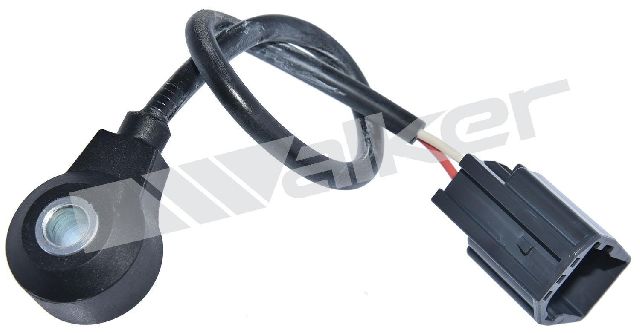
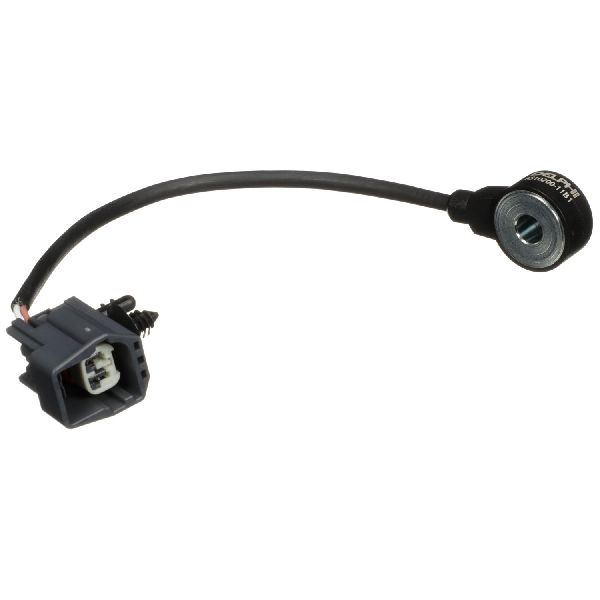
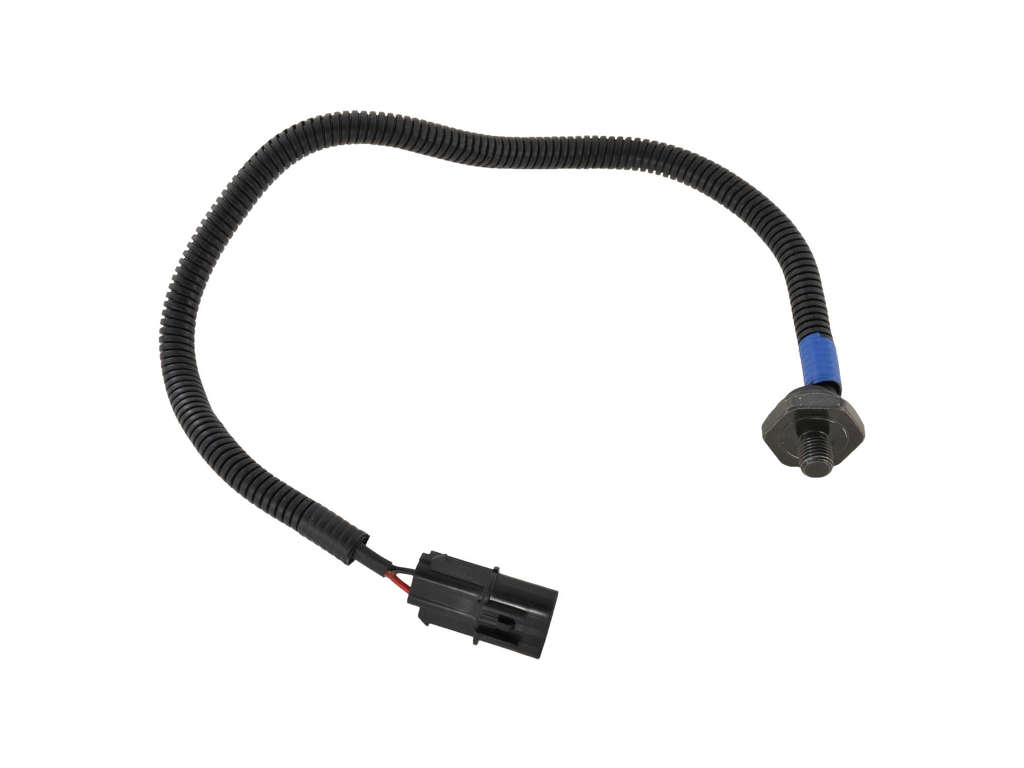
- Failed Knock Sensor 🔴 High Probability → Shop Ignition Knock (Detonation) Sensor The sensor is a sensitive electronic component exposed to high engine temperatures and vibrations, leading to eventual failure. Its location under the intake manifold subjects it to significant heat soak.
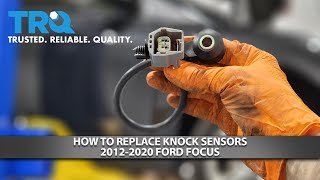
How to confirm: After verifying the wiring is intact, the most definitive test is to replace the sensor. Resistance tests can be performed, but access is extremely limited without significant disassembly. 🎬 See this walkthrough for locating and replacing the knock sensors. Due to the high labor involved, many owners and shops replace it once access is gained.
Typical fix: Replace the knock sensor. It is critical to clean the mounting surface on the engine block and torque the new sensor to the correct specification (often around 15-20 lb-ft, but verify for your specific model) to ensure it can properly detect vibrations.
Est. part cost: $60-$85 - Damaged Wiring or Connector 🟡 Medium Probability For 2012-2014 models, TSB 18-2062 identified a wiring harness chafe point near the G103 ground stud that could cause an open or short in the knock sensor circuit. The harness connector (C109) can also become brittle from heat cycles and fail.
How to confirm: Visually inspect the wiring harness leading to the knock sensor for any signs of chafing, melting, or corrosion, particularly around the back of the intake manifold and near the G103 ground stud on the driver's side of the engine. Check the connector (C109) for damage or a loose connection.
Typical fix: Repair the damaged section of the wiring harness with solder and heat shrink, then secure it away from any chafe points using convoluted tubing or electrical tape as per the TSB. Replace the connector pigtail if it is damaged.
Est. part cost: $20-$50
Rare But Worth Checking
- Powertrain Control Module (PCM) Fault: → Shop Engine Control Module (ECM) This is very rare. The PCM should only be considered after all other possibilities, including the sensor and its entire circuit, have been exhaustively tested and ruled out.
Diagnosis Steps
- Scan the vehicle for OBD-II codes to confirm P0325 is the primary code. Note any other codes, as they may be related (see TSB 18-2062).
- For 2012-2014 models, inspect the engine wiring harness for visible damage near the back of the intake manifold and the G103 ground stud area, per TSB 18-2062.
- Decide on an access method: from below or from above. Access from below is often considered slightly easier.
- Method A (From Below): Disconnect the battery. Safely raise and support the vehicle. Remove the starter motor. This will provide direct visual access to the knock sensor and its connector on the back of the engine block.
- Method B (From Above): Disconnect the battery. Remove the air intake assembly, throttle body, and finally the entire intake manifold. This provides wide-open access but requires replacing the intake manifold gaskets.
- Once access is gained, inspect the knock sensor connector (C109) for damage, corrosion, or a loose fit.
- Disconnect the sensor. Test the resistance across its terminals. While specific values for Ford are hard to find, a reading that is open (infinite resistance) or shorted (zero resistance) indicates a failed sensor.
- Check for continuity and shorts in the wiring harness between the sensor connector and the PCM.
- If wiring and sensor are confirmed good, the issue may be with the PCM, but this is highly unlikely.
- The most common and practical diagnosis is to to replace the sensor once you have gone through the labor of accessing it. Ensure the mounting surface is clean and the new sensor is torqued correctly.
Parts You'll Likely Need
- Knock Sensor
(OEM #1S7A-12A699-BB (often sold as Motorcraft DY-1123))— This is the most common failure point for the P0325 code on this vehicle.
Trusted brands: Motorcraft, Bosch, NTK, Standard Motor Products
OEM price range: $70-$90
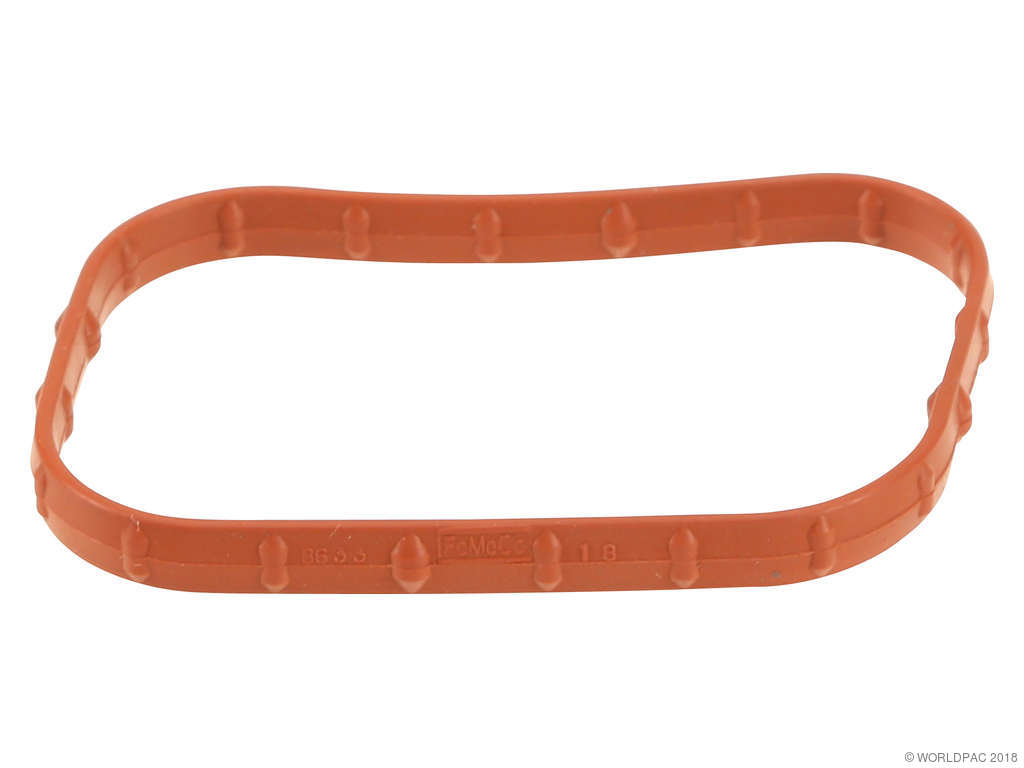
Aftermarket price range: $45-$75 - Intake Manifold Gaskets
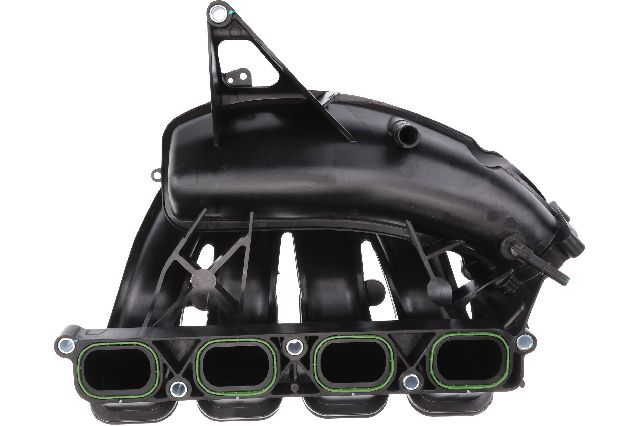
(OEM #CM5208)— Required if the intake manifold is removed to access the knock sensor from above. These are single-use and must be replaced.
Trusted brands: Fel-Pro, Mahle, Motorcraft
OEM price range: $30-$50
Aftermarket price range: $15-$30
Related Codes That Often Appear With This One
- P0327 (Knock Sensor 1 Circuit Low Input)
- P0344 (Camshaft Position Sensor 'A' Circuit Intermittent)
- P2135 (Throttle/Pedal Position Sensor/Switch 'A'/'B' Voltage Correlation) - Note: P0327, P0344, and P2135 are all listed in TSB 18-2062 as potential codes caused by the same wiring harness chafe issue on 2012-2014 models.
Technical Service Bulletins (TSBs) & Recalls
- TSB 18-2062 / 15-0036: Addresses a wiring harness chafe point near the G103 ground on 2012-2014 models (built on or before early 2014). This can cause rough running, no-start, and numerous DTCs including P0325, P0327, P0344, and P2135. The fix involves repairing the wires and adding protective convolute.
Platform-Specific Known Issues
- The knock sensor is located in a very difficult-to-access position under the intake manifold, making replacement a labor-intensive job.
- TSB 18-2062 (superseding 15-0036) applies to 2012-2014 models and points to a wiring harness that can chafe near the G103 ground stud, causing a short or open circuit that can trigger P0325.
Mechanic-Grade Diagnostic Values
- Knock Sensor Circuit Bias Voltage — expected: ~2.5V DC. Failure: Voltage is significantly higher or lower than 2.5V, or reads 0V, indicating a short or open circuit.
- Knock Sensor Internal Resistance — expected: 120 kΩ to 280 kΩ at 68°F (20°C). Failure: A reading of infinite resistance (Open Loop) or near-zero resistance (short) indicates a failed sensor. Note: Ford does not publish an official spec, so this is based on similar piezoelectric sensors.
- Knock Sensor Bolt Torque — expected: 14.5–18 lb-ft (20–25 Nm). Failure: Over-torquing can crush the piezoelectric crystal, leading to false signals or no signal. Under-torquing can prevent the sensor from detecting true engine knock.
Hidden / Shadow Codes Worth Checking
- Mode 6, Test ID $81: This test monitor tracks the knock sensor circuit. A failure in this monitor can point to an intermittent fault even if the P0325 code is not currently active. (see via A professional scan tool capable of reading Ford's Mode 6 data.)
Wiring & Ground Locations
- G103 — A ground stud located on the top left (driver's side) of the engine compartment, near the valve cover.. TSB 18-2062 for 2012-2014 models identifies this area as a critical chafe point for the engine wiring harness. A compromised wire near this ground can cause an open or short in the knock sensor circuit, triggering P0325.
- C109 — The electrical connector for the knock sensor itself, located on the back of the engine block, underneath the intake manifold.. This is the primary connection point for the sensor. It is exposed to high heat and vibration, making it a potential point of failure due to brittle plastic, corrosion, or a poor connection. Access is extremely difficult.
- Knock Sensor PCM Pins — The specific pins on the Powertrain Control Module (PCM) connector that correspond to the knock sensor circuit.. For advanced diagnosis, a technician would test for continuity and voltage directly at the PCM pins to isolate a wiring fault from a sensor or PCM fault. The exact pin numbers can be found in the vehicle's specific wiring diagram.
Real Owner Repair Stories
- Focus Fanatics Forum (2012 Ford Focus) — Check Engine Light with code P0325.
❌ Tried (didn't work) Initial diagnosis was uncertain due to the difficult access to the sensor.
✅ What actually fixed it The owner confirmed that replacing the knock sensor, despite the difficult labor, ultimately resolved the P0325 code.
OEM Part Supersession History
1S7A-12A699-BB→Motorcraft DY-1123— Motorcraft DY-1123 is the service part number for the original engineering number 1S7A-12A699-BB. They are the same part.
Heads up: Some parts catalogs incorrectly list DY-1123 as a Vehicle Speed Sensor (VSS) for older Ford models. For the 2012-2018 Focus 2.0L GDI, it is the knock sensor.
Model Year Variations Within This Range
- 2012-2014: These earlier MK3 models are specifically mentioned in TSB 18-2062 for a wiring harness that is prone to chafing near the G103 ground stud. While wiring damage can occur on any year, it is a documented pattern failure for these specific years, making a wiring inspection the absolute first step before condemning the sensor.
Diagnostic Flowchart
Other Known Issues on This Vehicle
Issues unrelated to this code that are worth knowing about as an owner of this generation:
- DPS6 PowerShift Dual-Clutch Transmission Failure 🔴 High — Extremely common on 2012-2016 models. Symptoms include shuddering, hesitation, jerking, and complete failure to engage gears. Multiple class-action lawsuits and warranty extensions (up to 10 years/150,000 miles on certain components) were issued. (Ref: Multiple TSBs and warranty extensions, subject of class-action lawsuits.)
- Sticking Canister Purge Valve 🟠 Medium — Common across 2012-2018 models. A stuck-open valve causes rough idle, stalling (especially after refueling), and difficulty starting. Can lead to a deformed fuel tank if not addressed. (Ref: NHTSA Recall 18V735000 (Ford 18S32) was issued to reprogram the PCM and, if necessary, replace the valve and fuel tank.)
- Failed Passenger-Side Engine Mount 🟠 Medium — Common failure item. The hydraulic mount collapses, causing the engine to sag and transmit excessive vibration and harshness into the cabin, especially at idle.
- Electronic Power Steering Failure 🔴 High — More prevalent on earlier 2012-2014 models. Can result in a sudden loss of power steering assist while driving, making the vehicle very difficult to steer. (Ref: Subject of numerous complaints and investigations, but no single comprehensive recall for all affected vehicles.)
- Wiring Harness Chafing 🟠 Medium — Specifically noted on 2012-2014 models. The harness can rub against a ground stud or other components, causing a wide range of electrical faults and DTCs. (Ref: TSB 18-2062)
Used vs. New Parts: Buying Guide for This Vehicle
When a used part is the smart pick: For this repair, a used part is NOT recommended. The knock sensor is an inexpensive electronic component, and the labor to access it is very high. Installing a used sensor with an unknown history is a significant risk that could lead to repeating the entire multi-hour repair job. The intake manifold gaskets must always be new.
OEM-only on this vehicle (don't cheap out):
- Knock Sensor
Aftermarket brands forum-validated for this vehicle:
- Motorcraft (OEM)
- Bosch
- NTK / NGK
- Standard Motor Products (SMP)
Brands owners have reported issues with on this vehicle:
- No-name, unbranded sensors from online marketplaces should be avoided due to the high labor cost of replacement if the part fails prematurely.
Real Owner Stories
Aggregated from forums and TSBs cited above. Mileages and costs reflect what owners reported in those sources.
2012 Ford Focus 2.0L GDI
Symptoms: Check engine light on with code P0325. Discussion confirmed the sensor is in a difficult location under the intake manifold.
What fixed it: Replacing the knock sensor resolved the code.
Source hint: Focus Fanatics Forum thread titled 'P0325 knock sensor 1 circuit malfunction bank 1'
Ford Focus ST
Symptoms: Experienced a P0325 code while cruising on the highway, resulting in sluggish performance. The owner had recently used lower octane fuel.
What fixed it: Clearing the code and refueling with high-octane gas; the issue did not return.
Source hint: Reddit r/FocusST post by user 'nutsackGadgets'
Related OBD-II Codes
Frequently Asked Questions
Does TSB 18-2062 apply to my 2015 Ford Focus?
Where is the knock sensor located on the 2.0L GDI engine, and can I reach it easily?
What is the specific wiring issue mentioned for the 2012-2014 Focus models?
Is there a specific torque requirement for the new knock sensor on this Ford engine?
Can low-quality fuel cause a P0325 code on my Focus ST?
If I have to remove the intake manifold to reach the sensor, do I need any extra parts?
Helpful Videos
We Have This Part in Stock


The information in this article is provided for general reference and educational purposes only. Vehicle specifications, procedures, and part compatibility can vary by production date, trim level, and region. Always consult your vehicle's factory service manual and verify part numbers before purchasing or performing repairs. Safety-critical components such as airbags, seat belts, and braking systems should be installed by a qualified professional.
- Ford Focus:
- 🧭 Diagnostic Flowchart
- 🎬 Helpful Videos
- 🛍️ Shop This Part
- What's Unique About the 2012-2018 Ford Focus
- Symptoms You May Notice
- Most Likely Causes
- Rare But Worth Checking
- Diagnosis Steps
- Parts You'll Likely Need
- Related Codes That Often Appear With This One
- Technical Service Bulletins (TSBs) & Recalls
- Platform-Specific Known Issues
- Mechanic-Grade Diagnostic Values
- Hidden / Shadow Codes Worth Checking
- Wiring & Ground Locations
- Real Owner Repair Stories
- OEM Part Supersession History
- Model Year Variations Within This Range
- Other Known Issues on This Vehicle
- Used vs. New Parts: Buying Guide for This Vehicle
- Real Owner Stories
- 2012 Ford Focus 2.0L GDI
- Ford Focus ST
- Related OBD-II Codes
- Frequently Asked Questions
- 🎟️ Get 5% Off