

P0325 on 2006-2010 Hummer H3: Knock Sensor Circuit Malfunction Causes and Fixes
On the Hummer H3, code P0325 points to a knock sensor circuit failure. For 5.3L V8 engines, this is almost always a corroded knock sensor and wiring harness under the intake manifold due to water intrusion, requiring a labor-intensive repair. For 3.5L/3.7L I5 engines, the single sensor is on the side of the block and much easier to access. Always replace the harness with the sensor(s) and use quality parts (ACDelco/Delphi) to avoid repeat failure.
- P0325 on an H3 points to a failed knock sensor or harness, almost always due to water corrosion under the intake manifold.
- This is not a simple repair; the intake manifold must be removed, making it labor-intensive.
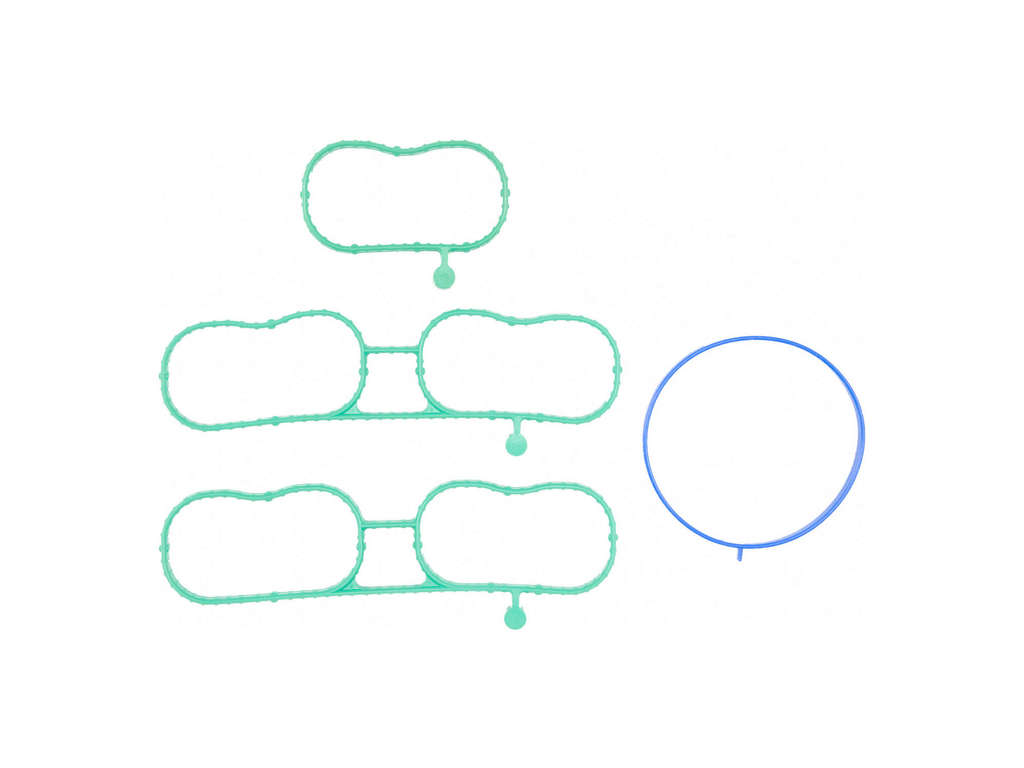
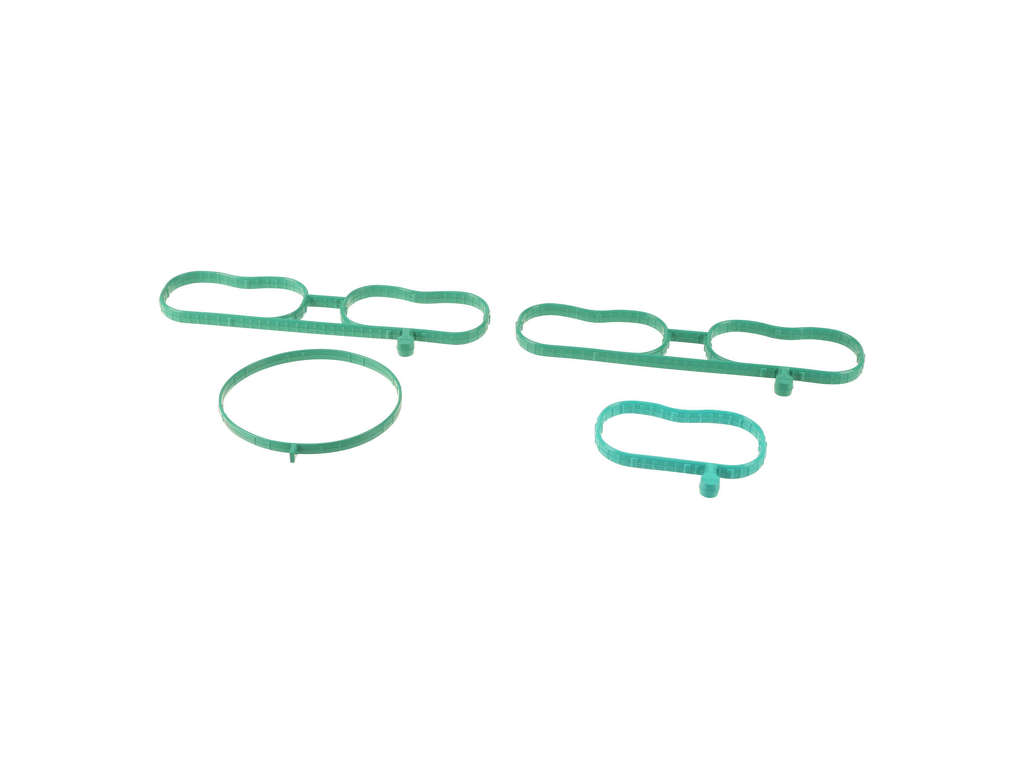
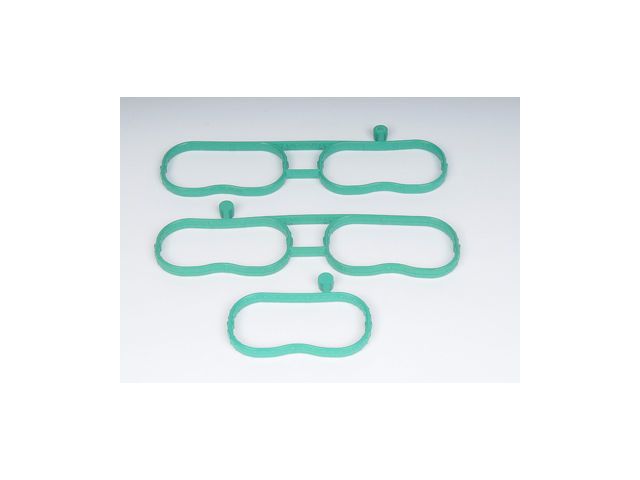
- To ensure a lasting fix, ALWAYS replace the knock sensor(s), the wiring harness, and the intake manifold gaskets at the same time.
- Use only high-quality OEM or premium aftermarket parts (ACDelco, Delphi) as the high labor cost makes repeat repairs for a cheap failed part very expensive.
- Consider applying RTV silicone around the new sensor seals to help prevent future water damage.
What's Unique About the 2006-2010 Hummer H3
The defining issue for the Hummer H3 V8 models with code P0325 is the physical location of the two knock sensors. On the 5.3L LH8 V8, the sensors are mounted in the engine valley, underneath the intake manifold. This location is a known trap for water, dirt, and debris from rain or engine washing, which leads to chronic corrosion and failure of both the knock sensors and their wiring harness. In contrast, the 3.5L and 3.7L I5 engines have a single knock sensor on the driver's side of the engine block, which is far less prone to this specific water-pooling issue and is significantly easier to service. The V8's design flaw makes a relatively simple sensor failure a much more labor-intensive repair job.
Symptoms You May Notice
- Check Engine Light is on
- Reduced engine power and sluggish acceleration
- Noticeably decreased fuel economy
- Hesitation or stumbling during acceleration
- In rare cases, an audible pinging or knocking sound from the engine, especially under load
- Replacing only the knock sensor(s) but not the wiring harness on the V8. The harness is a frequent point of failure and leaving the old one in place often leads to the code returning shortly after the repair.
- Assuming the engine has a mechanical knock problem. P0325 is an electrical circuit code; if the engine were mechanically knocking severely, other symptoms and possibly misfire codes would likely be present.
- Using cheap, no-name aftermarket sensors. Forum members strongly advise using OEM ACDelco or high-quality Delphi parts, as cheaper sensors are known to fail quickly, forcing a repeat of the labor-intensive V8 repair.
Most Likely Causes
- Failed Knock Sensor(s) 🔴 High Probability → Shop Ignition Knock (Detonation) Sensor On V8 models, the sensor sits in a recess in the engine valley that collects water, causing the sensor body to rust and the electronics to fail. On all engines, years of extreme heat cycles can also cause internal failure. Aftermarket sensors are reported to fail more frequently.
How to confirm: After accessing the sensor, test its resistance with a multimeter. A good GM knock sensor of this type should read between 93 kOhms and 110 kOhms (with a common target of 100 kOhms). Visual inspection on V8s will often show obvious rust and corrosion. Given the high labor for V8s, testing is often skipped in favor of automatic replacement.
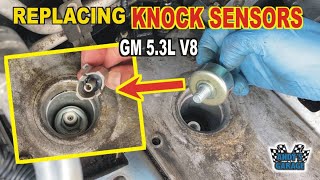
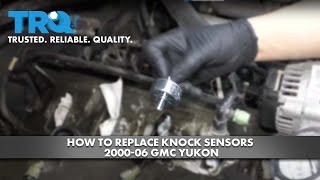
Typical fix: Replace the knock sensor(s). On the 5.3L V8, it is highly recommended to replace both sensors and the harness simultaneously. 🎬 Watch: Step-by-step guide to replacing V8 knock sensors and harness. On the I5, replace the single sensor.
Est. part cost: $30-$80 per sensor - Failed Knock Sensor Wiring Harness 🔴 High Probability → Shop Engine Wiring Harness On V8 models, the harness sits in the same engine valley as the sensors, where it is exposed to trapped moisture and heat, causing the connectors and wires to corrode, become brittle, and fail. This is considered a primary point of failure.
How to confirm: Visual inspection after removing the intake manifold (V8) will likely show signs of corrosion (green or white powder), brittleness, or physical damage on the harness connectors and wiring.
Typical fix: Replace the knock sensor wiring harness. This is considered a mandatory step when replacing the sensors on the V8.
Est. part cost: $25-$50 - Loose or Damaged Connector 🟡 Medium Probability The plastic connectors can become brittle from heat cycles and fail to make a secure connection, or the locking tabs may break during service. This applies to the sensor connector and where the sub-harness meets the main engine harness.
How to confirm: Visually inspect the connector for a secure fit and check for any corrosion on the pins. Wiggle the connector with the engine running to see if it affects performance or triggers the code.
Typical fix: Clean the connector terminals if corroded using electrical contact cleaner. If the connector body is damaged, splice in a new pigtail connector.
Est. part cost: $15-$30
Rare But Worth Checking
- Powertrain Control Module (PCM) Issue: → Shop Engine Control Module (ECM) This is very rare. The PCM is robust. All other possibilities, especially the sensor(s) and harness, should be exhaustively ruled out before considering a PCM replacement. In some other GM vehicles, a software anomaly has been known to cause false P0325/P0330 codes, requiring an ECM reprogram, though this specific TSB is not for the H3.
Diagnosis Steps
- Scan the vehicle for any other diagnostic trouble codes to ensure P0325 is the primary issue.
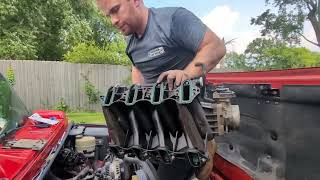
- Determine your engine. If 3.5L/3.7L I5, locate the single sensor on the driver's side of the block. If 5.3L V8, plan for intake manifold removal to access 🎬 See this walkthrough for removing the intake manifold on GM engines. the two sensors in the engine valley.
- For V8 models: Once the intake manifold is removed, closely inspect the knock sensors and the wiring harness. Expect to find water, rust, and corrosion, especially in the rear sensor cavity.
- Due to the high probability of failure and the labor involved (on V8s), the standard and recommended repair is to replace all related components at this stage.
- Replace the knock sensor(s). The I5 has one; the V8 has two. Always replace both on a V8.
- Replace the knock sensor wiring harness (mandatory on V8).
- IMPORTANT: Thoroughly clean the knock sensor mounting holes in the engine block and vacuum out any debris or water before installing the new sensors.
- Torque the new knock sensor(s) to the manufacturer's specification, which is 20 N·m (15 lb-ft) for these GM engines. Incorrect torque can affect sensor performance.
- PRO-TIP (V8): Apply a bead of high-temp RTV silicone around the new knock sensor harness grommets/seals to create a 'dam'. This helps prevent future water intrusion into the sensor cavities. Some owners also notch the rear foam block to allow water to drain out.
- Install a new intake manifold gasket set. Never reuse the old gaskets.
- Reassemble the intake manifold and all other components.
- Clear the P0325 code with a scan tool and perform a test drive to ensure the repair was successful and that performance/fuel economy has returned to normal.
Parts You'll Likely Need
- Ignition Knock Sensor
(OEM #12589867)— This is the primary sensor that fails due to corrosion (V8) or heat/age. The I5 engine uses one, the V8 uses two.
Trusted brands: ACDelco (GM Genuine 213-3521), Delphi, NGK/NTK
OEM price range: $40-$70
Aftermarket price range: $25-$50 - Knock Sensor Wiring Harness (V8 Only)
(OEM #12601822)— This harness is a common failure point on the V8 due to heat and moisture damage under the intake. It is considered essential to replace with the sensors.
Trusted brands: ACDelco, Dorman (917-033)
OEM price range: $35-$50
Aftermarket price range: $25-$40 - Intake Manifold Gasket Set
(OEM #89017872 (for 3.5L/3.7L I5), 89060413 (for 5.3L V8))— The intake manifold must be removed for the repair on V8s, and the gaskets are single-use items that must be replaced to prevent vacuum leaks.
Trusted brands: Fel-Pro (MS 96440-2 for I5, MS 96587 for V8), ACDelco, Mahle
OEM price range: $40-$80
Aftermarket price range: $25-$50
Related Codes That Often Appear With This One
- P0330 — On 5.3L V8 models, P0330 indicates a fault with the Knock Sensor 2 circuit. It is extremely common to see both codes together if the shared wiring harness under the intake has failed or if both sensors have corroded due to pooled water.
Technical Service Bulletins (TSBs) & Recalls
- GM TSB #19-NA-032: While for a 2018 Malibu, this TSB discusses P0325/P0330 codes caused by a software anomaly requiring an ECM reprogram. It shows that GM is aware of software-related issues causing these codes, which could be a rare possibility on other platforms.
Platform-Specific Known Issues
- The V8 engine valley's design allows water to pool around the knock sensors and harness, making corrosion and subsequent failure the number one cause for code P0325 on this platform.
- Owners on forums report that after washing the engine bay or after heavy rain, the P0325/P0330 codes can appear on V8 models, confirming the water intrusion issue.
Mechanic-Grade Diagnostic Values
- Knock Sensor Resistance — expected: 93,000 to 110,000 Ohms (93-110 kΩ) at room temperature.. Failure: A reading of open loop (O.L.) or a value significantly outside the specified range indicates a failed internal resistor in the sensor.
- Knock Sensor AC Voltage Output (Dynamic Test) — expected: A small AC voltage signal (e.g., >1 volt) should be generated when the engine block near the sensor is lightly tapped with a hammer (engine off).. Failure: No AC voltage signal or a very weak signal (e.g., less than 10 millivolts) when tapping indicates the sensor's piezoelectric crystal is no longer functioning.
- Knock Sensor Torque Specification — expected: 20 N·m or 15 lb-ft.. Failure: Over-torquing can damage the sensor's internal crystal. Under-torquing can lead to improper vibration transfer, making the sensor unable to detect knock correctly. Both can lead to a P0325 code.
Scan Tool Commands That Help
- Tech 2 / GDS2: Live Data Monitoring (Knock Retard) — While not a bidirectional command, a technician would use a Tech 2 to monitor the 'Knock Retard' PID. With a P0325 code, this value will typically be zero or fixed, as the PCM cannot trust the sensor input. After repair, observing the Knock Retard value change dynamically under load confirms the system is working.
Wiring & Ground Locations
- G102 / G103 / G104 — On the lower left side of the engine block, near the starter. G102 is rearward of G103, and G104 is in front of the starter.. These are the primary engine block grounds. A corroded or loose connection at these points can introduce electrical noise or create a poor ground reference for various sensors, including the knock sensor circuit, potentially causing a false P0325 code.
- G100 / G105 — Located on the left front inner fender, behind the battery.. This is a main chassis ground. While less direct, a poor chassis ground can cause unpredictable electrical issues throughout the vehicle. It's a critical point to check for corrosion when diagnosing any electrical fault.
- PCM Connectors (C1, C2, C3) — The Engine Control Module (ECM/PCM) is located in the right rear corner of the engine compartment.. The knock sensor signal wire and low reference wire terminate at the PCM. A full circuit diagnosis requires checking for continuity and voltage at the specific PCM pins, ruling out a break in the harness between the sensor and the module.
OEM Part Supersession History
10456603→12589867 (ACDelco 213-3521)— Standard part evolution and potential design improvements for reliability.
Heads up: The original part 10456603 is no longer available from GM and has been fully replaced by 12589867. They are functionally interchangeable for this application.12575869, 12597415→12601822 (Dorman 917-033 is an aftermarket equivalent)— Consolidation of part numbers for the V8 knock sensor wiring harness.
Heads up: Various part numbers for the same harness exist in catalogs, but 12601822 is the most current GM number for this application. They are all physically and functionally identical for the Gen III/IV V8 engine valley.
Model Year Variations Within This Range
- 2006-2007 vs 2008-2010: The 3.5L L52 I5 engine was used in 2006, and was replaced by the 3.7L LLR I5 for 2007-2010. The 5.3L LH8 V8 was introduced in 2008. While the P0325 diagnosis is similar for both I5 engines (single, side-mounted sensor), the V8 is a completely different architecture (two sensors under the intake). Technicians must first identify the engine before proceeding with diagnosis.
Diagnostic Flowchart
Used vs. New Parts: Buying Guide for This Vehicle
When a used part is the smart pick: For this specific repair, using used parts is not recommended for the sensors or wiring harness. These components fail due to heat, age, and moisture, so a used part has a high probability of having limited life or being faulty already. A used intake manifold could be a sensible purchase if the original was damaged during removal.
Donor-vehicle mileage cap: roughly under 80000 miles for the part to have meaningful remaining life.
What to inspect on the donor part:
- For a used intake manifold, ensure all threaded inserts are intact.
- Check for cracks or damage, especially around the mounting flanges.
- Verify it is from the correct engine type (I5 vs V8).
OEM-only on this vehicle (don't cheap out):
- Ignition Knock Sensor
- Knock Sensor Wiring Harness
Aftermarket brands forum-validated for this vehicle:
- Delphi (often the original OEM supplier)
- NGK/NTK
Brands owners have reported issues with on this vehicle:
- Unbranded or 'white-box' sensors from online marketplaces are frequently reported to fail quickly, sometimes within weeks of installation, forcing a repeat of the entire labor-intensive repair on V8 models.
Real Owner Stories
Aggregated from forums and TSBs cited above. Mileages and costs reflect what owners reported in those sources.
2008 Hummer H3 5.3L V8
Symptoms: Owner experienced knock sensor circuit codes after finding the rear knock sensor completely submerged in water in the engine valley.
What fixed it: Replaced both knock sensors and the wiring harness, using ACDelco parts and sealing the new harness grommets with RTV to prevent future water intrusion.
Source hint: HummerForums.com - Thread: 'Knock sensors replaced' (2019)
2009 Hummer H3 5.3L V8
Symptoms: The P0325 and P0330 codes appeared after washing the engine bay or after periods of heavy rain, indicating a water intrusion problem.
What fixed it: The implied repair, based on the common failure mode, was the replacement of the water-damaged knock sensors and harness located in the engine valley.
Source hint: Vehicle_specific_issues section, citing owner reports from Hummer forums
Related OBD-II Codes
Frequently Asked Questions
Why is my 5.3L V8 Hummer H3 so prone to the P0325 knock sensor code?
I'm replacing the knock sensors on my V8. What other parts must I replace at the same time?
My Check Engine Light with code P0325 came on right after I washed my engine. Is that a coincidence?
Is there a trick to prevent the new knock sensors on my V8 from failing again due to water damage?
Are cheap aftermarket knock sensors from online marketplaces a good idea for this repair?
What is the correct torque specification for the knock sensors on my Hummer H3?
I have the 3.7L I5 engine, not the V8. Is the P0325 repair different?
Helpful Videos
Used OEM Parts in Stock
New Aftermarket Parts Available


The information in this article is provided for general reference and educational purposes only. Vehicle specifications, procedures, and part compatibility can vary by production date, trim level, and region. Always consult your vehicle's factory service manual and verify part numbers before purchasing or performing repairs. Safety-critical components such as airbags, seat belts, and braking systems should be installed by a qualified professional.
- Hummer H3:
- 🧭 Diagnostic Flowchart
- 🎬 Helpful Videos
- 🛍️ Shop This Part
- What's Unique About the 2006-2010 Hummer H3
- Symptoms You May Notice
- Most Likely Causes
- Rare But Worth Checking
- Diagnosis Steps
- Parts You'll Likely Need
- Related Codes That Often Appear With This One
- Technical Service Bulletins (TSBs) & Recalls
- Platform-Specific Known Issues
- Mechanic-Grade Diagnostic Values
- Scan Tool Commands That Help
- Wiring & Ground Locations
- OEM Part Supersession History
- Model Year Variations Within This Range
- Used vs. New Parts: Buying Guide for This Vehicle
- Real Owner Stories
- 2008 Hummer H3 5.3L V8
- 2009 Hummer H3 5.3L V8
- Related OBD-II Codes
- Frequently Asked Questions
- 🎟️ Get 5% Off