

P0325 on 2017-2018 Kia Forte: Knock Sensor Circuit Malfunction Causes and Fixes
On a 2017-2018 Kia Forte, P0325 most often means the knock sensor has failed. This is a critical issue for this specific vehicle because the sensor is part of a system designed to detect catastrophic engine failure. Replacement is labor-intensive, as the sensor is under the intake manifold, with shop costs ranging from $250-$450.
- P0325 on this Forte is more serious than on other cars; it disables a critical safety system designed to prevent catastrophic engine failure.
- Before any repair, contact a Kia dealer to verify if your vehicle has received the free KSDS software update (PI1803), which includes an extended engine warranty.
- The most likely cause is a failed knock sensor, but the repair is labor-intensive because the intake manifold must be removed for access.
- Do not ignore this code. Continued driving without a functional knock sensor puts your engine at risk of severe, un-warned damage.
What's Unique About the 2017-2018 Kia Forte
The 2.0L Nu GDI engine in this Forte is part of a Kia Product Improvement Campaign (PI1803) to address potential connecting rod bearing failure. Dealers install a Knock Sensor Detection System (KSDS) software update that uses the knock sensor with increased sensitivity to 'listen' for the specific vibrations of a failing engine. If it detects this problem, it triggers a different code (P1326) and puts the car in a protective limp mode with RPMs limited to 1800-2000. A P0325 code is especially serious on this car because it means the KSDS is blind; the very sensor needed to protect your engine from a known, catastrophic failure is not working.
Symptoms You May Notice
- Check Engine Light is on
- Reduced engine performance and acceleration
- Decreased fuel economy
- Engine may hesitate or feel sluggish
- In some cases, an audible pinging or knocking noise from the engine
- Vehicle may not enter limp mode when it should, masking a severe engine problem
- Replacing spark plugs or ignition coils. While these can cause performance issues, they typically set misfire codes (P030x) and do not directly cause a P0325 circuit code. However, severe misfires can sometimes be misinterpreted by a functioning knock sensor.
Most Likely Causes
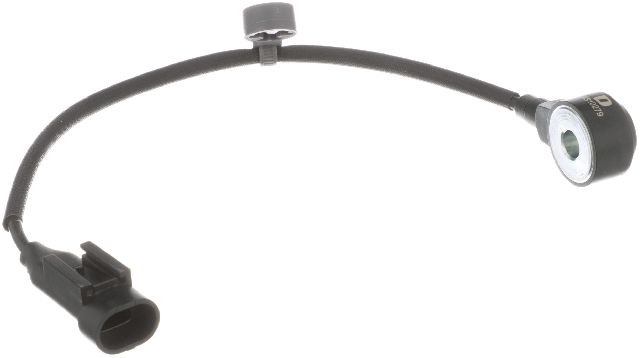
- Faulty Knock Sensor 🔴 High Probability → Shop Ignition Knock (Detonation) Sensor The sensor is a sensitive piezoelectric component mounted directly to the engine block, where it is exposed to constant heat and vibration, leading to eventual failure. The increased sensitivity required by the KSDS update may also cause marginal sensors to fail and set a P0325 code.
How to confirm: After verifying the wiring is intact, the sensor itself can be tested with a multimeter for proper resistance according to manufacturer specifications. However, due to its location under the intake manifold, physical access is difficult, and replacement is often performed based on the code and wiring inspection. 🎬 Watch: How to diagnose P1326 and replace the knock sensor.
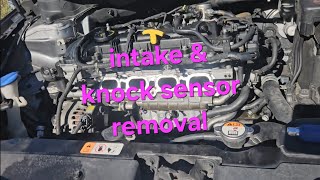
Typical fix: Replace the knock sensor. This requires removing the intake manifold to gain access, and it is highly recommended to replace the intake manifold gaskets at the same time. 🎬 See this walkthrough for removing the intake and knock sensor.
Est. part cost: $80-$250 - Wiring Harness or Connector Damage 🟡 Medium Probability The wiring harness to the knock sensor can become brittle from heat cycles or damaged by rodents, causing an open or short in the circuit. In some cases, signal interference within the main harness can trigger knock-related codes, leading Kia to sometimes install a separate, shielded harness.
How to confirm: Visually inspect the entire length of the wiring from the sensor to the PCM for breaks, chafing, or corrosion at the connector. Perform a continuity test with a multimeter to check for opens or shorts in the circuit.
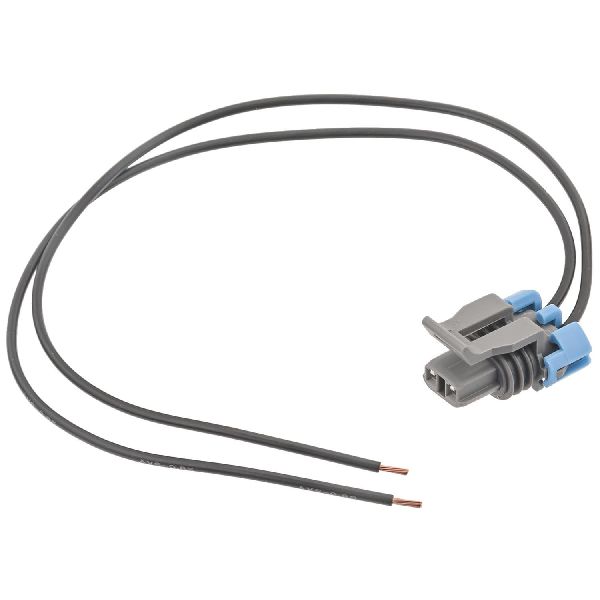
Typical fix: Repair the damaged section of wire or replace the connector pigtail. In cases of persistent signal interference, a dealer may install an updated harness kit.
Est. part cost: $10-$50 for a pigtail, much more for a full harness.
Rare But Worth Checking
- Powertrain Control Module (PCM) Fault: → Shop Engine Control Module (ECM) This is very rare. The PCM is the last item to suspect after thoroughly testing the sensor and its entire circuit. An ECU update may be required in some cases.
Diagnosis Steps
- Check with a Kia dealer to see if the Knock Sensor Detection System (KSDS) software update (Product Improvement Campaign PI1803) has been performed on your vehicle. This is a free and critical update. 🎬 Learn more about the KSDS recall and reduced power mode.
- Scan the vehicle for any other trouble codes. Address other codes first, especially those related to engine temperature or misfires.
- Perform a thorough visual inspection of the knock sensor's wiring harness and connector. Look for any signs of damage, melting, corrosion, or loose connections.
- If the wiring appears intact, the next step is to test the sensor itself. This is difficult due to its location under the intake manifold.
- If you can access the connector, use a multimeter to test the sensor's internal resistance and compare it to the manufacturer's specification.
- Test the wiring harness for continuity and check for shorts to power or ground between the PCM and the sensor connector.
- If the wiring and sensor test good, the fault may lie within the PCM, which requires advanced diagnostics. Some owners on forums have reported needing multiple dealer visits where both the sensor and harness were replaced to resolve the issue.
Parts You'll Likely Need
- Knock Sensor
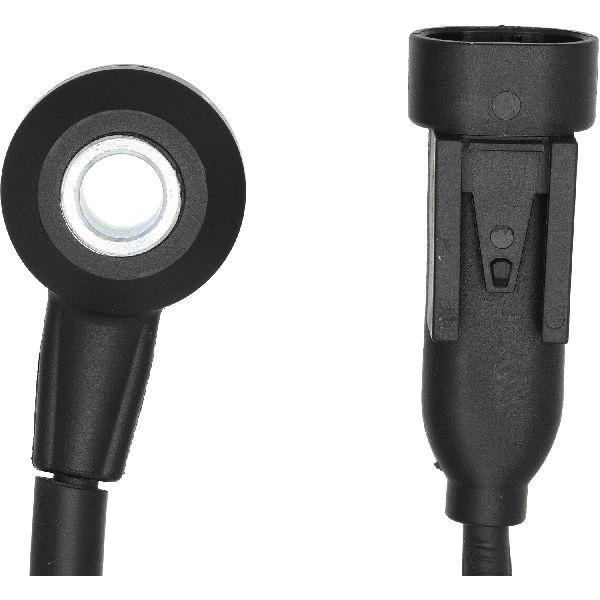
(OEM #39250-2E000)— This sensor is the most common point of failure in the circuit, often failing due to long-term exposure to engine heat and vibration. This part number is widely used across many Kia and Hyundai 1.8L and 2.0L Nu engines.
Trusted brands: Kia (OEM), Bosch, NTK
OEM price range: $150-$250
Aftermarket price range: $80-$150 - Intake Manifold Gasket
(OEM #28411-2E000)— This is a 'replace-if-removed' part. Since the intake manifold must be taken off to access the knock sensor, the gasket should always be replaced to prevent vacuum leaks.
Trusted brands: Kia (OEM), Fel-Pro, Mahle
OEM price range: $20-$40
Aftermarket price range: $10-$25
Related Codes That Often Appear With This One
- P1326 — P0325 and P1326 are critically related. P1326 is triggered by the KSDS when it *detects* bearing failure. P0325 means the sensor circuit is broken, so the KSDS *cannot* detect the failure and will not set a P1326. Owners often report one code or the other as they deal with the underlying engine issues.
- P0327 — Indicates 'Knock Sensor 1 Circuit Low Input,' which is a specific type of electrical fault within the same circuit, often caused by a short to ground.
- P0328 — Indicates 'Knock Sensor 1 Circuit High Input,' which is a specific type of electrical fault within the same circuit, often caused by an open circuit or a short to power.
Technical Service Bulletins (TSBs) & Recalls
- Product Improvement Campaign PI1803: Details the KSDS software update procedure and explains its function in detecting connecting rod bearing wear to trigger 'Limp Home Mode' and code P1326.
- TSB ENG208: An ECU logic update for 2017-2018 Forte models to improve misfire detection, which can be related to overall engine health monitoring.
- TSB SA321: A service action for 2017-2018 Forte 2.0L MPI engines to replace ignition coils due to high failure rates, a potential source of engine vibration that could be misinterpreted by the knock sensor system.
Platform-Specific Known Issues
- This vehicle is subject to Kia Product Improvement Campaign PI1803 to install Knock Sensor Detection System (KSDS) software. This update is designed to detect early signs of engine bearing failure, a known issue with the 2.0L Nu GDI engine.
- Completing the KSDS update provides an extended warranty for the engine's short block assembly to 15 years or 150,000 miles for connecting rod bearing damage, but only if the failure is detected by the KSDS and throws code P1326. A working knock sensor is required for this system to function.
- Some owners have reported persistent knock sensor codes even after replacing the sensor, sometimes requiring a new wiring sub-harness to be installed by the dealer to resolve signal interference issues.
Mechanic-Grade Diagnostic Values
- Knock Sensor AC Voltage (Tap Test) — expected: A small AC voltage spike, as low as 0.006V (6mV) up to ~10mV, when the engine block near the sensor is tapped with the key on, engine off.. Failure: No voltage spike when tapping indicates a dead piezoelectric element in the sensor.
- Knock Sensor Internal Resistance — expected: No specific value is consistently provided for this OEM sensor. General guides suggest a very high resistance, possibly in the 100s of kOhms, but this is not a reliable test without manufacturer data.. Failure: An open circuit (infinite resistance) or a short (zero resistance) would indicate a definite failure. However, a reading within a 'normal' but incorrect range is possible.
Scan Tool Commands That Help
- Kia GDS (Global Diagnostic System): Reset Adaptive Values — After replacing the knock sensor or repairing its circuit, this function should be used to clear the ECU's learned memory, forcing it to re-adapt to the new, correctly functioning sensor.
Wiring & Ground Locations
- Knock Sensor — Bolted to the back of the engine block, underneath the plastic intake manifold.. This is the location of the sensor itself. Its difficult-to-access location makes testing and replacement labor-intensive.
- Knock Sensor Sub-Harness — A short wiring pigtail that connects the knock sensor to the main engine harness, routed under the intake manifold.. This specific section of wiring is exposed to the highest heat and vibration and is a common failure point, becoming brittle and causing an open or short in the circuit.
- Engine Ground Strap (e.g., 91860-A7140) — Typically connects the engine block or timing cover to the chassis/frame rail in the engine bay.. A poor or corroded main engine ground can introduce electrical noise into the entire system. While not a direct cause, it can interfere with the low-voltage signal from the knock sensor, potentially contributing to intermittent circuit codes.
Real Owner Repair Stories
- Go-Parts research article citing owner reports (2016 Kia Sportage 2.4L GDI (similar Nu/Theta engine family), ~110,000 miles) — Check Engine Light with P0325, concern about driving with the warning light on.
❌ Tried (didn't work) The owner did not report trying other fixes first.
✅ What actually fixed it A repair shop confirmed a bad knock sensor circuit and replaced both the knock sensor and the wiring sub-harness to resolve the issue. - NHTSA ODI #11671686 (Kia Optima, similar engine family) — An owner reported that after being unable to drive more than 20mph, a shop identified error code P0325 and determined the engine had seized.
OEM Part Supersession History
39250-2E000→39250-2E000 (no supersession found)— This part number appears to be stable for the specified vehicle range.
Heads up: CRITICAL: Do not use similar-looking knock sensors from other Kia/Hyundai engine families (e.g., 39250-2G700 for Theta II, 39250-2B020 for 1.6L Gamma). They are not interchangeable and will not function correctly. Always verify the part number by VIN.
Diagnostic Flowchart
Other Known Issues on This Vehicle
Issues unrelated to this code that are worth knowing about as an owner of this generation:
- Connecting Rod Bearing Failure 🔴 High — Widespread enough to trigger a class-action lawsuit and the KSDS Product Improvement Campaign (PI1803). Failure can occur at various mileages. (Ref: PI1803, NHTSA Recall 21V260000 (SC210))
- Excessive Oil Consumption 🟠 Medium — Frequently reported by owners, often becoming noticeable after 60,000 miles. Kia considers up to 1 quart per 1,000 miles to be 'normal'. Can be caused by faulty piston rings or a clogged PCV valve. (Ref: TSB ENG222 (for diagnosis))
- Steering Coupler Failure 🟡 Low — A clicking or knocking sound from the steering column when turning is a very common issue caused by a small, degradable plastic coupler in the power steering motor. (Ref: TSB CHA074)
- Ignition Coil Failure 🟠 Medium — These models are known for ignition coil failures that can cause misfires (e.g., P030x codes). It is common enough that a specific service action was issued. (Ref: SA321)
Used vs. New Parts: Buying Guide for This Vehicle
When a used part is the smart pick: NEVER. The knock sensor is a sensitive electronic component buried under the intake manifold. The labor cost (2-3.5 hours) to access it is significant. Installing a used part with unknown remaining life is a major gamble that is very likely to result in having to do the entire job over again.
What to inspect on the donor part:
- Not applicable, do not use a salvaged knock sensor for this repair.
OEM-only on this vehicle (don't cheap out):
- Knock Sensor: While not strictly 'OEM-only', using the genuine Kia part (39250-2E000) is the most reliable way to ensure compatibility with the sensitive KSDS software. The cost difference is small compared to the potential for repeat labor.
Aftermarket brands forum-validated for this vehicle:
- If an OEM part is unavailable, brands like NTK and Bosch are reputable Tier 1 suppliers and are generally considered the most reliable aftermarket options.
Brands owners have reported issues with on this vehicle:
- Avoid unbranded, low-cost sensors from online marketplaces like Amazon or eBay. Forum users and mechanics frequently report that these parts fail quickly or are dead-on-arrival, leading to the code returning immediately.
Real Owner Stories
Aggregated from forums and TSBs cited above. Mileages and costs reflect what owners reported in those sources.
2018 Kia Forte 2.0L
Symptoms: Owner experienced a 'grueling experience' trying to get a P0325 code diagnosed under warranty, involving multiple trips to the dealer.
What fixed it: The owner eventually replaced the sensor themselves before the dealer would escalate the issue to Kia for further diagnostic support.
Source hint: Reddit r/kia: Thread titled 'Knock sensor engine warranty extension on 2.0 grueling experience so far'
2017-2018 Kia Forte 2.0L Nu GDI
Symptoms: Persistent knock sensor codes and signal interference following the KSDS product improvement campaign update.
What fixed it: The dealer installed a new, separate wiring harness to eliminate signal interference that was triggering the codes.
Source hint: Reddit r/kia: Thread titled 'Knock sensor issues following product improvement campaign.'
2018 Kia Forte5 EX 2.0L
Symptoms: Long-term battle with limp mode and P1326 codes, including multiple knock sensor replacements.
What fixed it: The issue was eventually discovered to be cylinder scoring, highlighting that sensor codes can sometimes mask deeper mechanical engine failures.
Source hint: Reddit r/kia: Thread titled '2018 Kia forte5 ex'
Related OBD-II Codes
Frequently Asked Questions
Does Product Improvement Campaign PI1803 apply to my 2017-2018 Kia Forte 2.0L Nu GDI?
Will the KSDS update give me a warranty extension on my engine?
Why did my mechanic recommend replacing the intake manifold gaskets for a P0325 code?
Can I use a used knock sensor from a salvage yard to save money?
My dealer mentioned a 'shielded harness' for my knock sensor; is this a real part?
Could my failing ignition coils be related to my knock sensor code?
Helpful Videos
We Have This Part in Stock



The information in this article is provided for general reference and educational purposes only. Vehicle specifications, procedures, and part compatibility can vary by production date, trim level, and region. Always consult your vehicle's factory service manual and verify part numbers before purchasing or performing repairs. Safety-critical components such as airbags, seat belts, and braking systems should be installed by a qualified professional.
- Kia Forte:
- 🧭 Diagnostic Flowchart
- 🎬 Helpful Videos
- 🛍️ Shop This Part
- What's Unique About the 2017-2018 Kia Forte
- Symptoms You May Notice
- Most Likely Causes
- Rare But Worth Checking
- Diagnosis Steps
- Parts You'll Likely Need
- Related Codes That Often Appear With This One
- Technical Service Bulletins (TSBs) & Recalls
- Platform-Specific Known Issues
- Mechanic-Grade Diagnostic Values
- Scan Tool Commands That Help
- Wiring & Ground Locations
- Real Owner Repair Stories
- OEM Part Supersession History
- Other Known Issues on This Vehicle
- Used vs. New Parts: Buying Guide for This Vehicle
- Real Owner Stories
- 2018 Kia Forte 2.0L
- 2017-2018 Kia Forte 2.0L Nu GDI
- 2018 Kia Forte5 EX 2.0L
- Related OBD-II Codes
- Frequently Asked Questions
- 🎟️ Get 5% Off