

P0325 on 2013-2020 Lincoln MKZ 2.0L: Knock Sensor Circuit Malfunction Causes and Fixes
This code indicates a problem with the knock sensor circuit. On the 2.0L MKZ, this is most often due to a failed knock sensor or damaged wiring. The sensor is located under the intake manifold, making replacement moderately difficult. Rodent damage to the harness is a known possibility.
- P0325 indicates an electrical fault in the knock sensor circuit, not necessarily engine knock.
- The most common causes are a failed knock sensor or damaged wiring/connector, with rodent damage being a notable possibility.
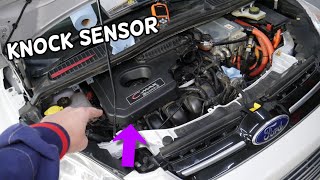
- The sensor is located on the front of the engine block, under the intake manifold.
- Access is tight, but it may be possible to replace the sensor without removing the intake manifold, saving on labor costs.
- Always inspect the wiring and connector thoroughly before replacing the sensor.
- Ensure the sensor mounting surface is clean and the new sensor is torqued to specification (approx. 18 lb-ft).
What's Unique About the 2013-2020 Lincoln MKZ
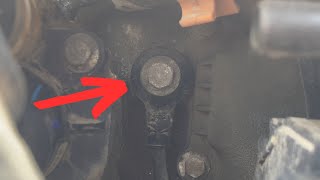
The Lincoln MKZ from 2013-2020 shares its platform and 2.0L engine with the Ford Fusion. This means that issues and repairs are often identical between the two models. 🎬 Watch: Location and replacement guide for MKZ and Fusion hybrids For this engine, the knock sensor is located on the engine block, underneath the intake manifold. While some vehicles require complete removal of the manifold for access, on the MKZ and its platform mates it is often possible, though difficult, to replace the sensor without removing the intake manifold, which can save significant labor time.
🎬 See this walkthrough for replacing the sensor on 2.0L enginesSymptoms You May Notice
- Check Engine Light is on
- Reduced engine power and sluggish acceleration
- Decreased fuel economy
- Audible engine pinging or knocking, especially under load (though this is a symptom of actual knock, not just the sensor fault)
- Hesitation during acceleration
- Replacing the knock sensor without first checking the wiring and connector for damage, especially for signs of rodent activity.
- Assuming the engine has a mechanical knock problem when P0325 specifically points to an electrical circuit fault.
- Replacing the sensor without cleaning the mounting surface on the engine block, which can lead to improper readings and a recurring code.
Most Likely Causes
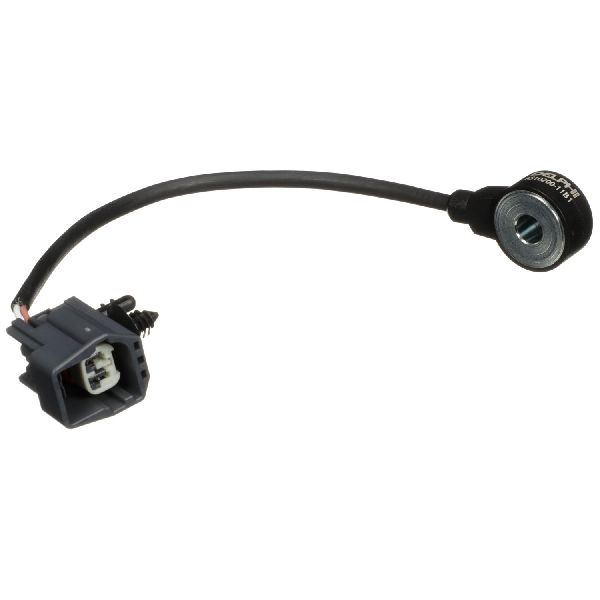
- Faulty Knock Sensor 🔴 High Probability → Shop Ignition Knock (Detonation) Sensor Sensors are electronic components that can fail over time due to extreme heat cycles and constant vibration. Cracks can form in the sensor housing, allowing moisture to enter and damage the internal piezoelectric element.
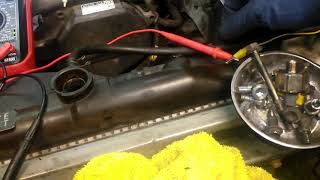
How to confirm: After verifying the wiring is intact, the sensor itself is the most likely culprit. It can be tested with a multimeter for proper resistance, though specifications can be hard to find. Replacement is often the most practical diagnostic step if the wiring is good. 🎬 Watch: How to test a knock sensor using a multimeter
Typical fix: Replace the knock sensor.
Est. part cost: $40-$100 - Damaged Wiring or Connector 🟡 Medium Probability The wiring harness is located in a high-heat area of the engine bay, making it susceptible to brittleness, corrosion, or damage. Rodents are also known to chew on the wiring in the valley under the intake manifold, causing an open or short circuit. A TSB for a different Ford EcoBoost engine (3.5L) also points to wire chafing as a cause for this code.
How to confirm: Visually inspect the wiring harness leading to the knock sensor for any signs of breaks, chafing, melting, or corrosion at the connector. Use a multimeter to check for continuity between the PCM and the sensor connector, and verify there is no short to ground or power.
Typical fix: Repair the damaged section of the wiring harness or replace the connector pigtail.
Est. part cost: $15-$50
Rare But Worth Checking
- Powertrain Control Module (PCM) Fault: → Shop Engine Control Module (ECM) This is very rare. The PCM should only be considered after all other possibilities, including the sensor and wiring, have been exhaustively tested and ruled out. A Reddit user with multiple sensor codes was advised to investigate the PCM, but this is an outlier case.
- Loose Sensor Mounting: The knock sensor is a microphone that must be torqued correctly to the engine block to detect vibrations properly. If the bolt is loose, it can't 'hear' the engine correctly, which may trigger a circuit code. Ensure the mounting surface is clean and the sensor is torqued to specification, which is typically around 18 lb-ft (25 N.m) for similar engines.
Diagnosis Steps
- Retrieve the stored trouble code(s) with an OBD-II scanner to confirm P0325 is present.
- Visually inspect the knock sensor wiring harness and connector. The sensor is located on the front of the engine block, under the intake manifold. Look for any obvious signs of damage, melting, rodent chew marks, or corrosion.
- If the wiring looks good, disconnect the sensor and check the connector terminals for a clean, tight fit.
- Using a digital multimeter, check for the correct reference voltage and ground at the connector (refer to a service manual for specific values for your vehicle).
- Test the continuity of the wiring between the PCM connector and the knock sensor connector to rule out an open or short in the harness.
- If the wiring and connector are confirmed to be good, the knock sensor itself is the most likely cause of the fault.
- Replace the knock sensor. It is critical to clean the mounting surface on the engine block thoroughly before installation to ensure proper contact. Torque the new sensor's retaining bolt to the manufacturer's specification (approx. 18 lb-ft or 25 N.m). Do not overtighten.
- Clear the trouble code and perform a test drive, putting the engine under various loads to ensure the fault does not return.
Parts You'll Likely Need
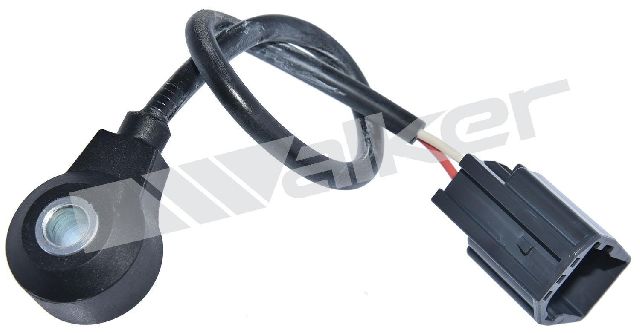
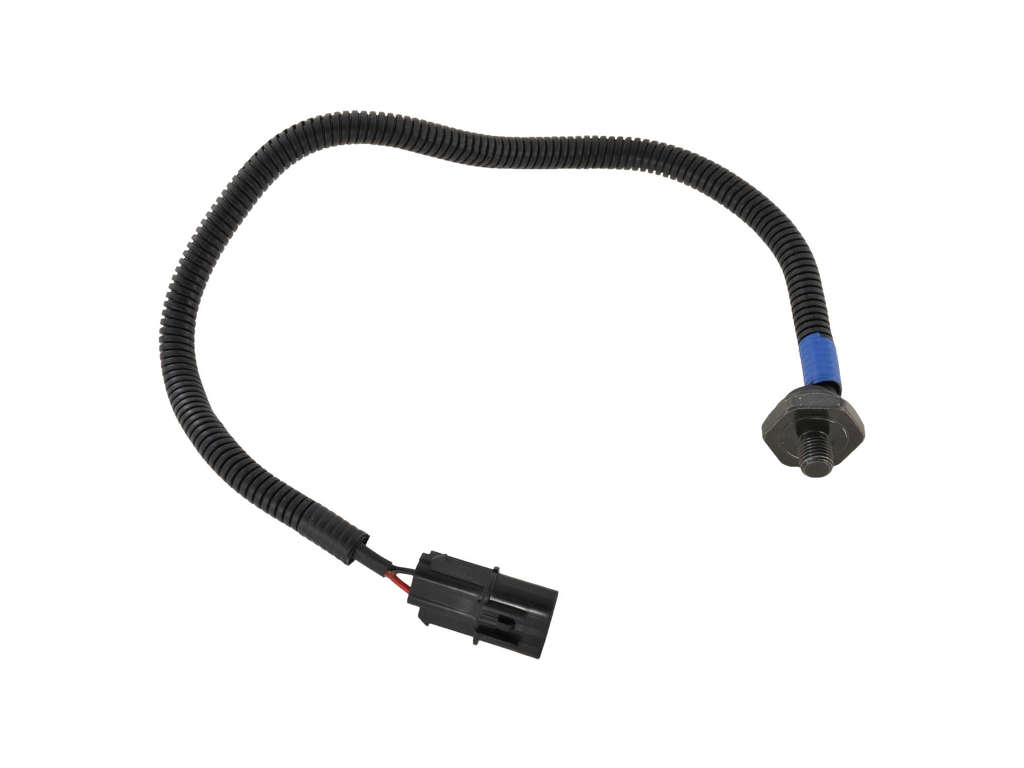
- Knock Sensor
(OEM #Motorcraft KS-31 (Ford P/N: 7T4Z-12A699-A))— This is the most common component to fail in the knock sensor circuit, triggering the P0325 code.
Trusted brands: Motorcraft, Bosch, NTK, Duralast
OEM price range: $60-$90
Aftermarket price range: $30-$70
Technical Service Bulletins (TSBs) & Recalls
- While no TSB exists specifically for P0325 on the 2.0L MKZ, Ford TSB 18-2367 was issued for the 3.5L EcoBoost engine for the same code (P0325/P0327). The cause was identified as a wire chafing condition near a connector. This reinforces the importance of thoroughly inspecting the wiring harness for damage as a primary diagnostic step.
Platform-Specific Known Issues
- Rodent Damage: The location of the wiring harness under the intake manifold makes it an attractive place for rodents to build nests, and they often chew through the knock sensor wires. This is a common finding when diagnosing P0325 on Ford/Lincoln vehicles.
Mechanic-Grade Diagnostic Values
- Knock Sensor (KS) circuit voltage to Signal Return (SIG RTN) circuit — expected: 1.0 - 4.0 Volts. Failure: Voltage is less than 1.0V or greater than 4.0V, indicating an open or short in the harness or a faulty PCM.
- Knock Sensor input voltage at PCM (General OBD-II logic) — expected: Between 0.2V and 4.8V with engine speed > 2000 RPM. Failure: Voltage is above 4.8V (short to power) or below 0.2V (short to ground/open circuit).
- Knock Sensor AC Voltage Generation — expected: A small AC voltage is generated on a multimeter set to millivolts when the engine block is tapped near the sensor.. Failure: No voltage is generated, indicating a dead sensor.
Wiring & Ground Locations
- G101 — Left front of the engine compartment.. A poor engine ground can introduce electrical noise or cause voltage drops, potentially affecting sensor readings and triggering circuit fault codes.
- G106 — Right front of the engine compartment.. Serves as a primary ground point for various engine components. Corrosion or looseness here can lead to intermittent and hard-to-diagnose electrical faults.
- G109 — Rear of the engine block.. Being located directly on the engine, this ground is critical for sensors mounted to the block. A faulty ground here could directly impact the knock sensor circuit's integrity.
- G110 — Right front of the engine on 2.0L models.. Ensures a solid ground path for the engine assembly to the chassis, which is essential for all engine electronics, including the knock sensor circuit.
OEM Part Supersession History
7T4Z-12A699-AB→7T4Z-12A699-A— Part revision or manufacturer change.7T4Z-12A699-AA→7T4Z-12A699-A— Part revision or manufacturer change.
Model Year Variations Within This Range
- 2017-2020: The Lincoln MKZ received a major facelift for the 2017 model year, including a new grille and the introduction of an optional 3.0L V6. However, for vehicles equipped with the 2.0L EcoBoost or 2.0L Hybrid engines, the knock sensor part, location, and diagnostic procedure for P0325 remained unchanged from the 2013-2016 models.
Diagnostic Flowchart
Used vs. New Parts: Buying Guide for This Vehicle
When a used part is the smart pick: A used wiring harness connector pigtail is a reasonable choice if the original is damaged by heat or rodents. It is a simple component that can be visually inspected for integrity.
Donor-vehicle mileage cap: roughly under 80000 miles for the part to have meaningful remaining life.
What to inspect on the donor part:
- For a wiring pigtail, ensure the plastic is not brittle and the locking tab is intact.
- Check connector pins for any signs of green or white corrosion.
- For a sensor, inspect the plastic housing for any cracks and ensure the metal mounting surface is flat and undamaged.
OEM-only on this vehicle (don't cheap out):
- Powertrain Control Module (PCM)
Aftermarket brands forum-validated for this vehicle:
- NTK
- Bosch
- Motorcraft (OEM)
Real Owner Stories
Aggregated from forums and TSBs cited above. Mileages and costs reflect what owners reported in those sources.
2014 Lincoln MKZ 2.0L I4 Ecoboost — 100000 miles
Symptoms: The Check Engine Light came on with 'tons of error codes for nearly every sensor in the vehicle,' including P0325. The owner also noted 'errors for advance track.'
What fixed it: No resolution was reported. The owner was asking for diagnostic advice, questioning whether to replace individual sensors or suspect a larger PCM or wiring harness issue.
Source hint: Reddit r/AskMechanics - '2014 Lincoln MKZ with a litany of error codes, I need help!'
2.0L EcoBoost engine (shared family) — 49000 miles
Symptoms: A knock sensor code appeared, prompting a visit to the dealer.
What fixed it: The final repair was not specified, but the owner noted that the dealer quoted 6 hours of labor for the job, highlighting the potential cost due to the sensor's location under the intake manifold.
Source hint: MaverickTruckClub.com - 'Knock Sensors fail at 49k???'
EcoBoost engine (shared family)
Symptoms: The owner had a P0332 code, which is the Bank 2 equivalent of P0325.
What fixed it: The issue was not resolved after replacing the sensor twice. The owner ultimately suspected a wiring issue was the true root cause of the fault.
Source hint: Mustang6G.com - 'Knock sensor low voltage issue'
Related OBD-II Codes
Frequently Asked Questions
Where is the knock sensor located on my 2013-2020 Lincoln MKZ?
Is there a Technical Service Bulletin (TSB) for code P0325 on the 2.0L MKZ?
Why is rodent damage a common cause for this code on my Lincoln?
What is the correct torque specification when installing a new knock sensor?
I have an MKZ Hybrid. Does this P0325 information still apply?
I replaced the knock sensor, but the P0325 code came back. What should I check next?
Helpful Videos
We Have This Part in Stock


The information in this article is provided for general reference and educational purposes only. Vehicle specifications, procedures, and part compatibility can vary by production date, trim level, and region. Always consult your vehicle's factory service manual and verify part numbers before purchasing or performing repairs. Safety-critical components such as airbags, seat belts, and braking systems should be installed by a qualified professional.
- Lincoln MKZ:
- 🧭 Diagnostic Flowchart
- 🎬 Helpful Videos
- 🛍️ Shop This Part
- What's Unique About the 2013-2020 Lincoln MKZ
- Symptoms You May Notice
- Most Likely Causes
- Rare But Worth Checking
- Diagnosis Steps
- Parts You'll Likely Need
- Technical Service Bulletins (TSBs) & Recalls
- Platform-Specific Known Issues
- Mechanic-Grade Diagnostic Values
- Wiring & Ground Locations
- OEM Part Supersession History
- Model Year Variations Within This Range
- Used vs. New Parts: Buying Guide for This Vehicle
- Real Owner Stories
- 2014 Lincoln MKZ 2.0L I4 Ecoboost — 100000 miles
- 2.0L EcoBoost engine (shared family) — 49000 miles
- EcoBoost engine (shared family)
- Related OBD-II Codes
- Frequently Asked Questions
- 🎟️ Get 5% Off