

P0325 on 2014-2021 Mazda 6 Skyactiv-G 2.5L: Knock Sensor Circuit Malfunction Guide
P0325 on a 2014-2021 Mazda 6 almost always means the knock sensor has failed or its wiring is damaged. Rodent damage to the harness is a surprisingly common cause. The sensor is buried under the intake manifold, making replacement labor-intensive. Expect to pay $350-$650 for a professional repair, with most of the cost being labor.
- P0325 indicates an electrical fault in the knock sensor circuit, not necessarily active engine knocking.
- The most common causes are a failed knock sensor or damaged wiring, with rodent damage being a frequent culprit in the engine valley.
- The sensor is located under the intake manifold, making this a labor-intensive repair with a DIY difficulty of 4 out of 5.
- Always replace the four intake manifold gaskets (Part No. PY01-13-111) when replacing the knock sensor to prevent future vacuum leaks.
- Ensure the new knock sensor bolt is tightened to the correct torque specification (15 ft-lbs / 20 Nm) to ensure proper function.
What's Unique About the 2014-2021 Mazda 6
On the Skyactiv-G 2.5L engine, the P0325 code is a straightforward issue with a difficult solution. The primary challenge is not diagnosis, but access. Mazda placed the knock sensor on the engine block directly underneath the plastic intake manifold. This design choice turns a simple sensor swap into a more involved repair that requires removing the manifold, which is why labor costs are significantly higher than the cost of the part itself. This location also makes the wiring a target for rodents seeking shelter in the engine valley.
Symptoms You May Notice
- Check Engine Light is on
- Reduced engine power and sluggish acceleration.
- Decreased fuel economy.
- Engine hesitation.
- Audible pinging or knocking sounds from the engine (in some cases). 🎬 Watch: Learn more about P0325 causes and symptoms
- Replacing spark plugs or ignition coils. While these can cause performance issues, P0325 is specifically a circuit code for the knock sensor system. Address the P0325 code first.
Most Likely Causes
- Failed Knock Sensor 🔴 High Probability → Shop Ignition Knock (Detonation) Sensor The sensor is located in a high-heat area under the intake manifold, and like any electronic component, it can fail over time due to heat cycles and vibration. Corrosion from moisture is another potential cause of failure.
How to confirm: After verifying the wiring is intact, this is the most likely cause. The sensor can be tested with a multimeter for resistance, but given the labor to access it, replacement is often done once the intake manifold is removed.
Typical fix: Replace the knock sensor. It is highly recommended to also replace the four intake manifold gaskets at the same time to prevent vacuum leaks.
Est. part cost: $60-$90 - Damaged Wiring or Connector 🟡 Medium Probability The wiring harness runs in a tight, hot space in the engine valley between the cylinder banks. Rodents are known to chew on wiring in this specific area, which can cause an open or short in the circuit. The connector itself can also become loose or corroded.
How to confirm: Visually inspect the wiring harness leading to the knock sensor for any signs of chewing, fraying, or melting. A flashlight and inspection mirror can help. Check the connector for corrosion or damage. Test for continuity from the sensor connector to the PCM.
Typical fix: Repair the damaged section of wire or replace the connector pigtail. In cases of extensive rodent damage, a new engine harness may be required. Some auto insurance policies may cover rodent damage.
Est. part cost: $15-$40 for a pigtail, potentially more for harness repair.
Rare But Worth Checking
- Powertrain Control Module (PCM) Fault: → Shop Engine Control Module (ECM) This is very uncommon. The PCM should only be considered a potential cause after the sensor and its entire circuit have been thoroughly tested and confirmed to be in good working order.
Diagnosis Steps
- Read the code with an OBD-II scanner to confirm P0325 is present.
- Use a flashlight and inspection mirror to visually inspect the area around and under the intake manifold for any signs of rodent activity (chewed wires, nests, droppings). This is a common point of failure.
- If access is possible without full disassembly, inspect the knock sensor connector for damage, corrosion, or a loose connection.
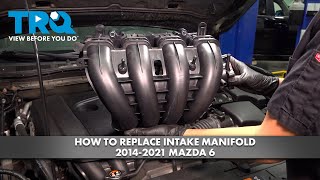
- If the visual inspection reveals no issues, the next step is to remove the intake manifold to gain access to the sensor and its wiring. A detailed video guide shows this process.
- Once the manifold is off, perform a thorough inspection of the knock sensor wire and connector.
- Test the circuit's integrity. Using a digital multimeter, check for continuity on the signal and ground wires between the sensor connector and the PCM connector to rule out a wire break. Based on data for the shared Skyactiv engine, the relevant PCM pins are likely 1H and 1D.
- Test the sensor's internal resistance. With the sensor disconnected, measure resistance between its two pins. A good sensor should read between 504 and 616 kΩ. An open circuit (infinite resistance) or short (zero resistance) indicates a failed sensor. 🎬 Watch: How to test a knock sensor before replacing it
- If the wiring is confirmed to be good, the knock sensor itself is the most likely culprit and should be replaced.
- When installing the new sensor, be sure to clean the mounting surface on the engine block. Tighten the mounting bolt to the correct torque specification, which is 20 Nm or approximately 15 ft-lbs. Over-tightening can damage the new sensor or cause incorrect readings.
- Install new intake manifold gaskets before reinstalling the manifold. Torque the intake manifold bolts to 13 ft-lbs in a crisscross pattern, starting from the center.
- Reassemble all components, clear the trouble code, and perform a test drive to ensure the repair was successful.
Parts You'll Likely Need
- Knock Sensor
(OEM #PE01-18-921)— This is the most common failure point for the P0325 code due to its location and function.
Trusted brands: Mazda (OEM), NGK/NTK, Delphi, Standard Motor Products
OEM price range: $65-$85
Aftermarket price range: $30-$60 - Intake Manifold Gasket Set
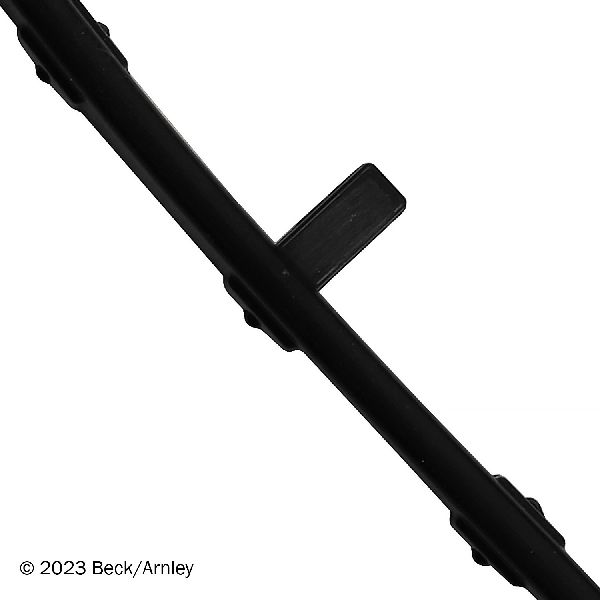
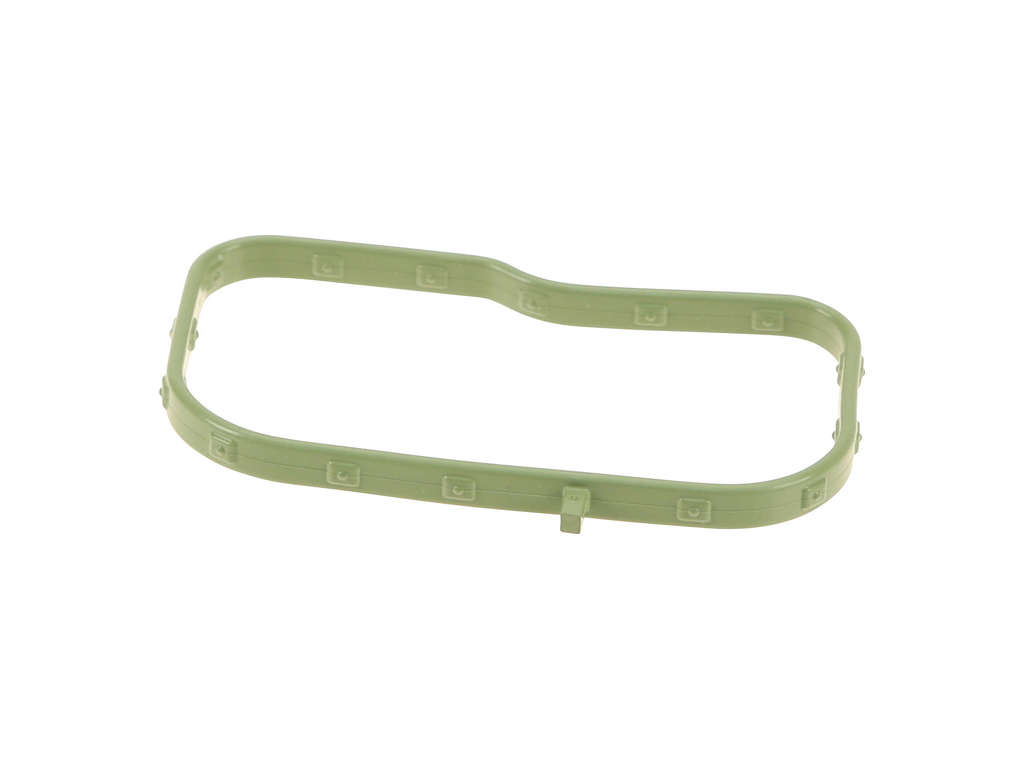
(OEM #PY01-13-111)— The intake manifold must be removed for this repair. The gaskets are single-use and must be replaced to prevent vacuum leaks. Four are required.
Trusted brands: Mazda (OEM), Mahle, Beck/Arnley, Victor Reinz
OEM price range: $8-$12 each
Aftermarket price range: $15-$30 for a set of four
Platform-Specific Known Issues
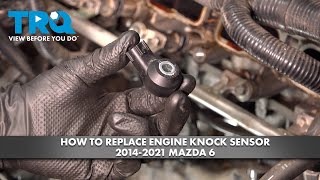
- A detailed DIY video from 1A Auto for the 2014-2021 Mazda 6 shows the complete process of removing the intake manifold to access and replace the knock sensor, confirming the 15 ft-lb torque spec. 🎬 See this step-by-step knock sensor replacement video
Mechanic-Grade Diagnostic Values
- Knock Sensor Internal Resistance — expected: 504 - 616 kΩ (measured between the two pins on the disconnected sensor). Failure: An infinite reading (open circuit) or near-zero reading (short circuit) indicates a failed sensor.
- Knock Sensor Circuit Voltage at PCM — expected: Between 0.2V and 4.8V (with engine speed above 2000 RPM). Failure: A voltage reading below 0.2V or above 4.8V will trigger the P0325 code, indicating an open or short in the circuit.
- Knock Sensor Functional Test (AC Voltage) — expected: Small AC voltage spikes should be visible on a multimeter when the engine block near the sensor is lightly tapped with a wrench (engine off).. Failure: No AC voltage produced when tapping indicates a dead piezoelectric element inside the sensor.
Wiring & Ground Locations
- PCM Terminals 1H and 1D — At the main Powertrain Control Module (PCM) electrical connector. The PCM is located in the engine bay.. These are the specific pins for the two wires from the knock sensor. A technician can test for continuity between the sensor connector (under the intake) and these pins to confirm if the wiring harness is intact without having to visually trace the entire length of the wire.
- Engine Block Ground — The knock sensor grounds through its mounting bolt to the engine block. The engine block itself has several large ground straps connecting it to the chassis and battery negative terminal.. A poor engine ground could potentially cause electrical noise or an unstable ground reference for the sensor, although this is a very rare cause for a P0325. More importantly, the mounting surface on the block must be clean and the bolt torqued correctly for the sensor to function.
Real Owner Repair Stories
- Mazdas247 Forum user 'CombatSailor' (2015 Mazda CX-5 Sport 2.5L (platform mate with identical engine and issue)) — Check Engine Light with knock sensor code.
✅ What actually fixed it Replaced the knock sensor with a '$30 knock sensor off of rockauto.com' along with new intake gaskets. The error code cleared itself immediately after starting the car without needing a scanner to clear it. - Reddit user 'jetta720' (Mazda Tech) (Mazda CX-5 (platform mate)) — Rodent damage to engine wiring harnesses.
❌ Tried (didn't work) Dealerships often quote full harness replacement, costing thousands and requiring an insurance claim.
✅ What actually fixed it As a cheaper alternative to harness replacement, a technician can repair the specific chewed wires for a few hundred dollars. After repairing, wrap the harness section with Honda's capsaicin-infused 'rodent tape' (part number 4019-2317) and use a deterrent spray in the engine bay to prevent recurrence.
Diagnostic Flowchart
Other Known Issues on This Vehicle
Issues unrelated to this code that are worth knowing about as an owner of this generation:
- Infotainment System Glitches ('Ghost Touch', Reboots) 🟠 Medium — Widespread issue affecting many 2014-2021 models. Can occur at any mileage. A class-action lawsuit was filed regarding this issue. (Ref: Multiple TSBs exist, including SSPB9 for some models, and a lawsuit settlement provides reimbursement for repairs.)
- Cracked Cylinder Head (2.5L Turbo and Cylinder Deactivation NA models) 🔴 High — More common on 2018-2019 models, particularly the 2.5T engine, but also documented on the naturally aspirated 2.5L with cylinder deactivation. Can cause coolant loss. (Ref: Mazda issued TSB 01-002/23 and extended the warranty (CSP11) for some turbo models.)
- Intake Valve Carbon Buildup 🟠 Medium — A known characteristic of all Skyactiv-G direct injection engines. Becomes problematic typically after 60,000-80,000 miles, causing potential misfires and reduced fuel economy. (Ref: Mazda has procedures for chemical cleaning, but no recall. Preventative cleaning is recommended.)
- Premature Wheel Bearing Failure 🟡 Low — Reports of noisy wheel bearings needing replacement at lower-than-expected mileage (e.g., before 100,000 miles) are common for this generation.
- Failing High-Pressure Fuel Pump 🟠 Medium — Can cause stalling or loss of power while driving. Not extremely common, but a documented failure point on the Skyactiv-G engine.
Used vs. New Parts: Buying Guide for This Vehicle
When a used part is the smart pick: For the knock sensor itself, a used OEM part from a low-mileage donor vehicle is a reasonable choice, as they are not a high-wear item. However, given the low cost of new aftermarket sensors and the high labor cost, most owners opt for a new part. A used wiring harness pigtail is a very common and smart repair for rodent damage.
Donor-vehicle mileage cap: roughly under 80000 miles for the part to have meaningful remaining life.
What to inspect on the donor part:
- For a used sensor, ensure the plastic connector is not brittle or cracked.
- For a wiring pigtail, ensure there is at least 6-8 inches of clean, un-chewed wire to work with.
- Check the donor vehicle's history to ensure it wasn't in a front-end collision or engine fire.
OEM-only on this vehicle (don't cheap out):
- Intake Manifold Gaskets: These are inexpensive and critical for preventing vacuum leaks. Always buy these new, either OEM or from a reputable brand like Mahle or Fel-Pro.
Aftermarket brands forum-validated for this vehicle:
- NGK/NTK
- Delphi
- Standard Motor Products (SMP)
- Denso
Brands owners have reported issues with on this vehicle:
- Unnamed, no-brand sensors from online marketplaces can be a gamble. While some owners report success with very cheap parts, failure can mean paying for the expensive labor all over again.
Real Owner Stories
Aggregated from forums and TSBs cited above. Mileages and costs reflect what owners reported in those sources.
2014-2021 Mazda 6 Skyactiv-G 2.5L
Symptoms: A detailed DIY process was required to address the knock sensor which is buried under the intake manifold.
What fixed it: Removal of the intake manifold and replacement of the knock sensor, ensuring the 15 ft-lb torque spec was followed.
Source hint: 1A Auto detailed DIY video for the 2014-2021 Mazda 6
2013-present Mazda CX-5 Skyactiv-G 2.5L
Symptoms: P0325 code triggered by rodent damage to the wiring harness in the engine valley.
What fixed it: Repair of the wiring harness or replacement of the connector pigtail.
Source hint: Mazdas247 forum discussion regarding Skyactiv engine architecture and rodent damage
2006 Mazda (General)
Symptoms: Electrical fault code P0325 present.
What fixed it: Diagnostic procedure involving checking for continuity between the sensor and the PCM to confirm the electrical nature of the fault.
Source hint: Mazdas247 forum thread from 2006
Related OBD-II Codes
Frequently Asked Questions
Where is the knock sensor located on my 2014-2021 Mazda 6 Skyactiv-G 2.5L?
Is there a specific torque specification I should use when installing the new sensor on my Mazda 6?
Should I replace any other parts while fixing the P0325 code on my Skyactiv engine?
Why is my Mazda 6 prone to wiring damage in the area of the knock sensor?
Can I test the knock sensor on my Mazda 6 with a multimeter before replacing it?
Are there specific PCM pins I should check for continuity to rule out a wiring break?
Helpful Videos
We Have This Part in Stock


The information in this article is provided for general reference and educational purposes only. Vehicle specifications, procedures, and part compatibility can vary by production date, trim level, and region. Always consult your vehicle's factory service manual and verify part numbers before purchasing or performing repairs. Safety-critical components such as airbags, seat belts, and braking systems should be installed by a qualified professional.
- Mazda 6:
- 🧭 Diagnostic Flowchart
- 🎬 Helpful Videos
- 🛍️ Shop This Part
- What's Unique About the 2014-2021 Mazda 6
- Symptoms You May Notice
- Most Likely Causes
- Rare But Worth Checking
- Diagnosis Steps
- Parts You'll Likely Need
- Platform-Specific Known Issues
- Mechanic-Grade Diagnostic Values
- Wiring & Ground Locations
- Real Owner Repair Stories
- Other Known Issues on This Vehicle
- Used vs. New Parts: Buying Guide for This Vehicle
- Real Owner Stories
- 2014-2021 Mazda 6 Skyactiv-G 2.5L
- 2013-present Mazda CX-5 Skyactiv-G 2.5L
- 2006 Mazda (General)
- Related OBD-II Codes
- Frequently Asked Questions
- 🎟️ Get 5% Off