

P0325 on 2012-2016 Mercedes-Benz E-Class M276: Knock Sensor Circuit Malfunction Causes and Fixes
This code indicates a fault in the Bank 1 knock sensor circuit. On the M276 engine, the sensors are located under the intake manifold, making replacement labor-intensive. The most common fix is replacing the faulty knock sensor and its wiring harness, which is a difficult DIY job. The issue is often the sensor itself or the wiring harness which degrades from heat in the engine valley.
- P0325 on a Mercedes M276 engine points to an electrical fault with the Bank 1 (passenger side) knock sensor.
- The primary cause is usually a failed sensor or its wiring harness, degraded by intense heat in the engine valley.
- The biggest challenge is the sensor's location under the intake manifold, which makes this a difficult and costly repair.
- Due to the high labor involved, it is strongly recommended to replace both knock sensors and the connecting harness as a set, along with the single-use intake manifold gaskets.
What's Unique About the 2010-2016 Mercedes-Benz E-Class
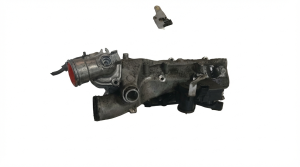
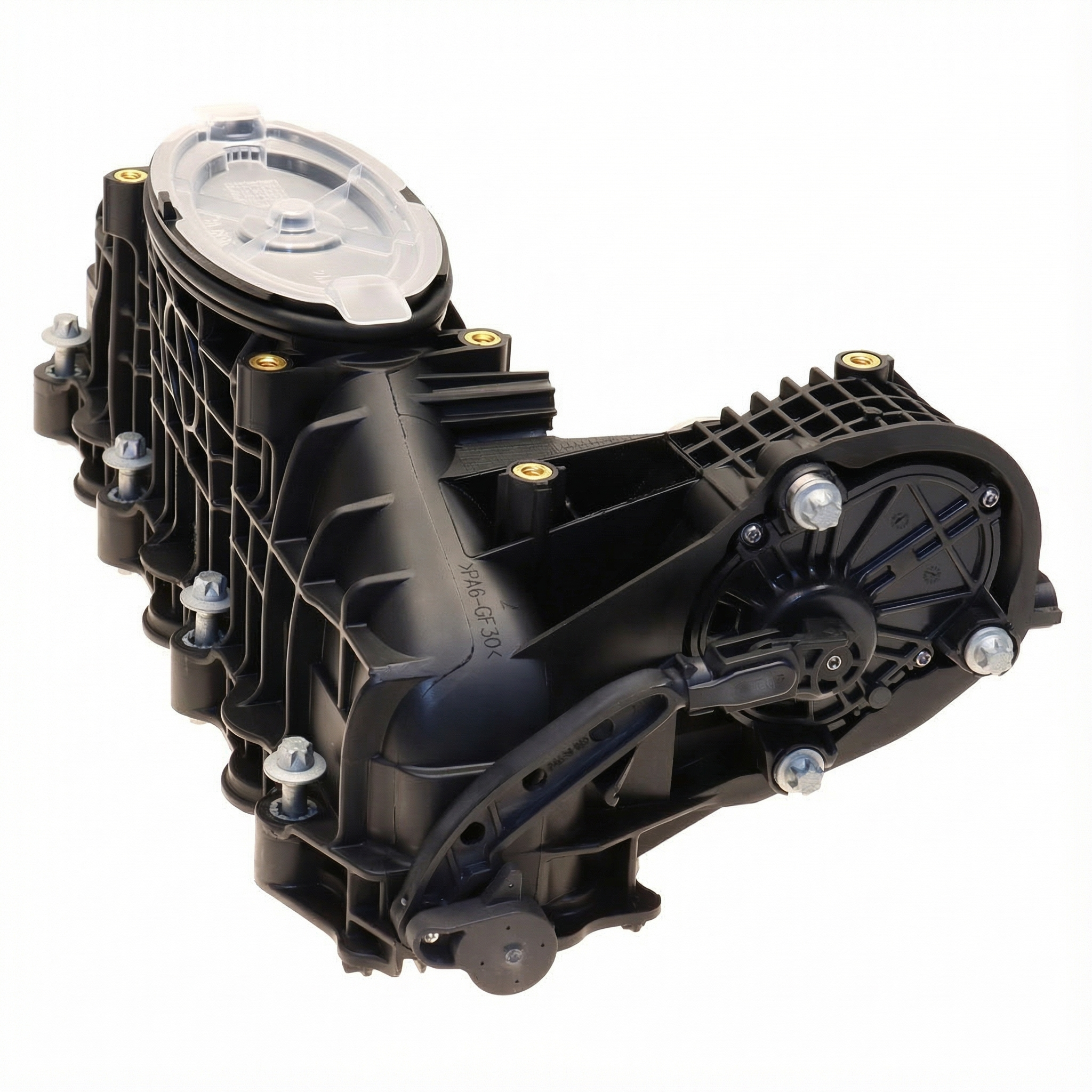
The M276 V6 engine, used from the 2012 model year onwards in this E-Class generation, has two knock sensors. P0325 refers to the sensor on Bank 1 (the passenger side in the US). The primary challenge with this engine is the location of the knock sensors; they are buried in the 'V' of the engine, underneath the entire intake manifold. This makes what would be a simple sensor swap on many other engines a significantly more complex and labor-intensive job, as the manifold, fuel rails, and injectors must be removed to gain access.
Generation note: The 2010-2016 E-Class is a single generation (W212/C207/A207). However, the M276 engine specified was introduced for the 2012 model year, replacing the M272 V6. This guide is therefore most relevant for 2012-2016 models. The repair process for the earlier M272 is similar as the sensors are also under the intake manifold.
Symptoms You May Notice
- Check Engine Light is on
- Reduced engine power and sluggish acceleration
- Decreased fuel economy
- Engine may make a pinging or knocking sound, though often no sound is present
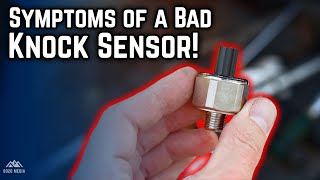
- Hesitation during acceleration 🎬 Watch: Common symptoms of a failing knock sensor
- Replacing spark plugs or ignition coils without diagnosing the knock sensor circuit first.
- Assuming the engine has a major internal problem without first testing the sensor and wiring.
- Replacing only the failed knock sensor and not the harness or the other sensor, leading to a repeat repair when the other original parts fail later.
Most Likely Causes
- Faulty Knock Sensor 🔴 High Probability → Shop Ignition Knock (Detonation) Sensor The sensor is located in a high-heat area in the engine valley, which can lead to heat-cycle fatigue and failure over time. The piezoelectric element inside the sensor degrades, leading to incorrect or no signal.
How to confirm: After accessing the sensor, testing its internal resistance with a multimeter is often inconclusive for modern piezoelectric sensors. A more definitive test involves using a multimeter set to AC millivolts or an oscilloscope to check for a signal while tapping lightly on the engine block near the sensor. Given the labor to access it, most owners and shops opt to replace it preventatively.
Typical fix: Replace the knock sensor. It is highly recommended to replace both sensors (Bank 1 and Bank 2) and the wiring harness at the same time due to the high labor cost to access them.
Est. part cost: $50-$150 per sensor - Damaged Wiring or Connector 🟡 Medium Probability The wiring harness sits in the hot engine valley, making it susceptible to damage from heat, oil leaks, or rodents looking for shelter. The plastic insulation and connectors can become brittle and crack, leading to shorts or open circuits. Oil leaks from other common M276 failure points like camshaft position sensors can also contaminate the harness.
How to confirm: Visually inspect the wiring harness leading to the knock sensor for any signs of fraying, melting, or chewing. Perform a continuity test on the wires between the sensor connector and the ECM. Wiggle the harness while monitoring the signal to check for intermittent breaks.
Typical fix: Repair the damaged section of wire or replace the knock sensor wiring harness pigtail. Given the location and the cost of labor, replacing the small harness that connects the two sensors is the preferred method.
Est. part cost: $30-$70 for a harness
Rare But Worth Checking
- Engine Control Module (ECM) Fault: → Shop Engine Control Module (ECM) This is very rare. The ECM should only be considered a potential cause after all other possibilities (sensor, wiring) have been exhaustively tested and ruled out. A faulty ECM driver for the knock sensor circuit is possible but unlikely.
- Severe Engine Mechanical Issues: Sometimes, an actual engine problem (e.g., from using the wrong oil filter leading to oil starvation) can cause severe knocking that the sensor correctly reports, but the system may flag a circuit fault if the signal is extreme or constant. This is usually accompanied by other serious symptoms and codes.
- Loose Knock Sensor: → Shop Ignition Knock (Detonation) Sensor The knock sensor must be torqued to a precise specification to function correctly. If the bolt is loose, the sensor can vibrate and send an erratic signal, triggering a P0325 code even if the sensor itself is good. The specified torque for the M276/M272 is 20 Nm (15 ft-lbs).
Diagnosis Steps
- Read the fault codes with an OBD-II scanner to confirm P0325 is present and check for any other codes.
- Visually inspect the top of the engine for any obvious issues like oil leaks or rodent damage that could affect wiring under the manifold.
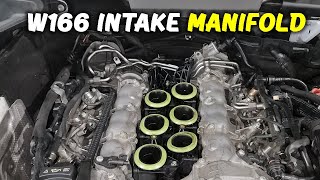
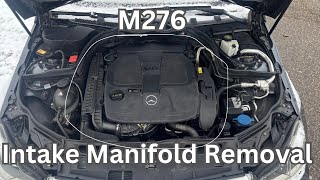
- Plan for intake manifold removal. 🎬 Watch: Step-by-step M276 intake manifold removal guide This is a significant job requiring disconnection of the battery, air intake, various vacuum lines, electrical connectors, and the fuel rail.
- Once the intake manifold is removed, locate the Bank 1 knock sensor (passenger side in US).
- Visually inspect the sensor and its wiring harness for any physical damage, corrosion, or melted plastic.
- Disconnect the sensor and test the wiring harness for continuity back to the ECM. Check for shorts to ground or power.
- Test the knock sensor itself. You can check its resistance with a multimeter, but this is not a reliable test for piezoelectric sensors. An oscilloscope is the best tool to verify its output. Given the labor involved, replacement is often the most practical choice.
- If the sensor or wiring is found to be faulty, replace it. It is best practice to replace both knock sensors and the harness at the same time.
- Ensure the new knock sensor is torqued to the correct specification (critically important, typically 20 Nm or 15 ft-lbs for Mercedes engines). Overtightening or undertightening will impair its function. Always verify the spec with a service manual.
- Reassemble the intake manifold using new gaskets, reconnect the fuel system, and all other components. Clear the codes and perform a test drive to confirm the fix.
Parts You'll Likely Need
- Knock Sensor
(OEM #A2769050300 (or 276-905-03-00))— This is the most common failure point for this code. Due to the high labor involved, it's recommended to replace both sensors even if only one has failed.
Trusted brands: Bosch, Continental, Genuine Mercedes-Benz
OEM price range: $120-$180
Aftermarket price range: $50-$100 - Intake Manifold Gaskets
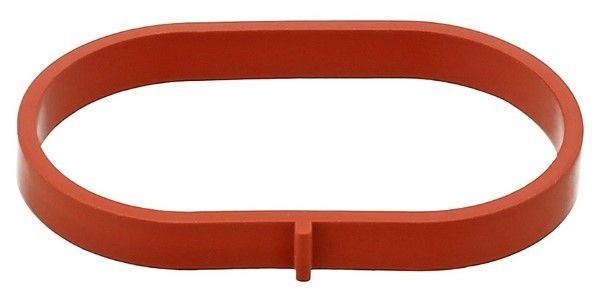
(OEM #A2761410180 (or 2761410180))— These are single-use gaskets and must be replaced anytime the intake manifold is removed to prevent vacuum leaks. Six are required for the M276 engine.
Trusted brands: Victor Reinz, Elring, Genuine Mercedes-Benz
OEM price range: $40-$60 (set)
Aftermarket price range: $20-$40 (set) - Knock Sensor Wiring Harness — The short harness connecting the two sensors in the engine valley is a frequent failure point due to heat. It is often not sold separately from the main engine harness, so technicians may use pigtail repair kits or a compatible harness from another application.
Trusted brands: Genuine Mercedes-Benz (as part of a larger harness), Aftermarket Pigtail Kits
OEM price range: N/A
Aftermarket price range: $30-$70
Related Codes That Often Appear With This One
- P0330 — P0330 is the same 'Knock Sensor Circuit Malfunction' code but for Bank 2. Since the sensors and harness are located together and exposed to the same conditions, it's common for them to fail around the same time. It is standard practice to replace both sensors and the harness as a set.
Technical Service Bulletins (TSBs) & Recalls
- While not directly for P0325, TSB LI05.10-P-056435 is highly relevant for M276 owners. It addresses a common startup rattle caused by faulty timing chain tensioners on early-production engines, an issue that is often researched alongside other engine-related codes.
Platform-Specific Known Issues
- Oil Contamination of Harness: The M276 engine is known for potential oil leaks from the camshaft position sensors and front timing covers. This leaking oil can drip down into the engine valley, saturating the knock sensor harness and causing the insulation to degrade, leading to short circuits that can trigger a P0325 code.
Mechanic-Grade Diagnostic Values
- Knock Sensor Mounting Bolt Torque — expected: 20 Nm (15 ft-lbs). Failure: An over or under-torqued sensor will not read vibrations correctly, leading to false signals or no signal.
- Knock Sensor Signal Generation (Dynamic Test) — expected: A small AC voltage (millivolts) should be generated when the engine block is lightly tapped near the sensor. The voltage should increase with the intensity of the tapping.. Failure: No voltage signal produced during tapping indicates a dead sensor.
Scan Tool Commands That Help
- Mercedes-Benz XENTRY: Guided Tests / Test Function — When a P0325 is present, XENTRY can initiate a guided test for the knock sensor circuit. The software provides step-by-step instructions and expected values to help a technician systematically check the sensor, wiring, and ECM inputs, which is more efficient than manual diagnosis.
Wiring & Ground Locations
- W11 — On the engine block, part of the main engine harness ground.. This is a primary ground point for the engine control module and its associated sensors. A poor connection at W11 can cause erratic sensor readings and various engine management faults, including a P0325.
- Main Engine-to-Chassis Ground Strap — A large cable running from the engine block/bell housing area to the vehicle's chassis, often near the transmission.. This is the most critical ground path for the entire engine's electrical system, including the starter, alternator, and ECM. Corrosion or looseness here can introduce significant electrical noise and voltage drops, leading to a host of difficult-to-diagnose issues, including sensor circuit faults.
- W16/4 — In the engine compartment, on the left wheelhouse, often under or near the battery tray (on RHD cars).. This is a major ground distribution point in the engine bay. While not directly for the knock sensor, other systems grounding here can create electrical noise that affects sensitive sensor circuits if the connection is poor.
Diagnostic Flowchart
Other Known Issues on This Vehicle
Issues unrelated to this code that are worth knowing about as an owner of this generation:
- Timing Chain Startup Rattle 🔴 High — Common on early M276 engines (approx. 2011-2014). A rattling noise for 2-10 seconds on cold start indicates loss of oil pressure in the secondary chain tensioners. (Ref: TSB LI05.10-P-056435 was issued to remedy this by installing updated tensioners and new check valves to hold oil pressure.)
- High-Pressure Fuel Pump (HPFP) Failure 🟠 Medium — Becoming more common as vehicles age. Symptoms include long crank times, stalling, rough idle, and hesitation. Replacement is labor-intensive as it is also located in the engine valley.
- Oil Leaks from Timing Covers / Cam Sensors 🟠 Medium — Fairly common. Leaks can develop from the front upper timing covers or the camshaft position sensors. A critical concern is oil wicking from the cam sensors through the wiring harness, potentially damaging the engine control unit (ECU).
- Intake Valve Carbon Buildup 🟡 Low — A long-term consequence of all direct-injection engines. Occurs gradually over 80,000-100,000+ miles, leading to reduced performance and potential misfires. Not a 'failure' but a maintenance item (walnut blasting) for optimal performance.
Used vs. New Parts: Buying Guide for This Vehicle
When a used part is the smart pick: Due to the extremely high labor cost to access the knock sensors, using a used sensor is not recommended. The risk of a premature failure of the used part outweighs the small cost savings, as the entire intake manifold would need to be removed again for replacement.
Donor-vehicle mileage cap: roughly under 40000 miles for the part to have meaningful remaining life.
What to inspect on the donor part:
- If a used sensor must be considered, source it from a vehicle with the lowest possible mileage.
- Ensure there is no physical damage, corrosion on the connector, or cracks in the sensor housing.
- Avoid parts from vehicles that show signs of overheating or major engine oil leaks.
OEM-only on this vehicle (don't cheap out):
- Knock Sensor: While OEM-supplier brands like Bosch are excellent, avoid no-name, unverified aftermarket sensors. The sensor's sensitivity is critical, and incorrect readings can impair engine performance and safety.
- Intake Manifold Gaskets: These are critical for preventing vacuum leaks. While quality aftermarket brands are available, OEM is a guaranteed fit and material quality.
Aftermarket brands forum-validated for this vehicle:
- Bosch: Bosch is the original equipment manufacturer (OEM) for many Mercedes-Benz sensors, including knock sensors. A Bosch-branded part is often identical to the Genuine Mercedes part, but without the Mercedes logo and at a lower cost.
- Victor Reinz / Elring: These are well-regarded German brands for gaskets and seals, and their intake manifold gaskets for the M276 are considered reliable alternatives to OEM.
Brands owners have reported issues with on this vehicle:
- Generic unbranded parts: For critical engine sensors like the knock sensor, it is widely advised in enthusiast communities to avoid cheap, unbranded parts from online marketplaces, as their quality and calibration are uncertain.
Real Owner Stories
Aggregated from forums and TSBs cited above. Mileages and costs reflect what owners reported in those sources.
2010 Mercedes-Benz W202
Symptoms: The wiring harness was failing specifically when it reached a certain heat level.
What fixed it: Replacement of the wiring harness.
Source hint: MBWorld.org Forums - Thread 'knock sensor'
Mercedes-Benz C-Class W203 M111
Symptoms: P0325 code present for Bank 1 knock sensor.
What fixed it: Diagnostic focus on the 'bank' designation and checking for harness issues.
Source hint: MBWorld.org Forums - Thread 'PO325 Knock Sensor Bank 1'
Related OBD-II Codes
Frequently Asked Questions
Does TSB LI05.10-P-056435 for the M276 engine address the P0325 knock sensor code?
Can oil leaks from my camshaft position sensors cause a P0325 code on my E-Class?
Why is the labor so expensive to replace a knock sensor on the M276 V6?
Should I replace both knock sensors if only Bank 1 (P0325) is failing?
Is there a specific torque requirement for the new knock sensor on my Mercedes?
Are other Mercedes models like the C350 or ML350 affected by this same P0325 issue?
Helpful Videos
Used OEM Parts in Stock
New Aftermarket Parts Available

The information in this article is provided for general reference and educational purposes only. Vehicle specifications, procedures, and part compatibility can vary by production date, trim level, and region. Always consult your vehicle's factory service manual and verify part numbers before purchasing or performing repairs. Safety-critical components such as airbags, seat belts, and braking systems should be installed by a qualified professional.
- Mercedes-Benz E-Class:
- 🧭 Diagnostic Flowchart
- 🎬 Helpful Videos
- 🛍️ Shop This Part
- What's Unique About the 2010-2016 Mercedes-Benz E-Class
- Symptoms You May Notice
- Most Likely Causes
- Rare But Worth Checking
- Diagnosis Steps
- Parts You'll Likely Need
- Related Codes That Often Appear With This One
- Technical Service Bulletins (TSBs) & Recalls
- Platform-Specific Known Issues
- Mechanic-Grade Diagnostic Values
- Scan Tool Commands That Help
- Wiring & Ground Locations
- Other Known Issues on This Vehicle
- Used vs. New Parts: Buying Guide for This Vehicle
- Real Owner Stories
- 2010 Mercedes-Benz W202
- Mercedes-Benz C-Class W203 M111
- Related OBD-II Codes
- Frequently Asked Questions
- 🎟️ Get 5% Off