

P0325 on 2012-2019 Porsche 911: Knock Sensor 1 Circuit Malfunction Causes and Fixes
This code means there's an electrical problem with the knock sensor on Bank 1 (cylinders 1-3). The most likely cause is a failed sensor or its wiring. On the 911, this sensor is under the alternator, making replacement moderately difficult but less complex than the Bank 2 sensor.
- P0325 is an electrical fault code for the Bank 1 knock sensor circuit, not a direct measurement of engine knock.
- The most common fixes are replacing the knock sensor itself or repairing its wiring harness, which is often damaged by rodents.
- On a 2012-2019 Porsche 911, the Bank 1 sensor is located under the alternator.
- Proper installation is critical: the new sensor must be torqued to exactly 23 Nm (17 ft-lb) and maintain its original orientation to function correctly.
What's Unique About the 2012-2019 Porsche 911
On the Porsche 911's flat-six engine, the two knock sensors are in difficult-to-access locations in the hot engine valley. The Bank 1 sensor (P0325) is located under the alternator, requiring its removal for access. The Bank 2 sensor (P0330) is buried even deeper under the intake manifold, often requiring a partial engine drop for access. Because of the high heat in the engine bay and the precision required for installation—the sensor must be torqued to exactly 23 Nm (17 ft-lb) and maintain its original clocking/orientation—failures are not uncommon and repair can be complex. Incorrect torque can alter the sensor's sensitivity and lead to premature failure or persistent codes.
Generation note: This range covers the entire Porsche 911 991 generation, including the 991.1 (2012-2016) with naturally aspirated 3.4L and 3.8L engines, and the 991.2 (2017-2019) with primarily 3.0L twin-turbocharged engines. The function and general location of the knock sensors are similar across both generations, though part numbers may vary. The 991.1 uses the MA1.04 (3.4L) and MA1.03 (3.8L) engines, while the 991.2 uses a new 3.0L twin-turbo engine.
Symptoms You May Notice
- Check Engine Light is on.
- Reduced engine power and sluggish acceleration (limp mode).
- Hesitation during acceleration.
- Decreased fuel economy.
- In rare cases, an audible engine pinging or knocking sound under load.
- Replacing the spark plugs or ignition coils. While these can cause performance issues, they typically set different codes (e.g., misfire codes). P0325 is specifically an electrical circuit code for the knock sensor.
- Assuming the engine is knocking. This code points to a problem with the sensor's electrical circuit, not necessarily a mechanical knock issue. 🎬 Watch: Diagnosing P0325 knock sensor codes The DME can't trust the sensor's signal.
Most Likely Causes
- Failed Knock Sensor (Bank 1) 🔴 High Probability → Shop Ignition Knock (Detonation) Sensor The sensor is located in a high-heat area of the engine bay, and failures can occur due to age and repeated heat cycles causing the internal piezoelectric crystal to fail.
How to confirm: After checking wiring, test the sensor's internal resistance with a multimeter and compare it to the manufacturer's specification (often an open circuit indicates failure). A more advanced test involves using an oscilloscope to check the signal pattern while tapping the engine block near the sensor. A piezoelectric sensor should generate a small AC voltage when tapped.
Typical fix: Replace the Bank 1 knock sensor. It is located under the alternator. It is highly recommended to replace both sensors (Bank 1 and Bank 2) at the same time due to the high labor cost of access.
Est. part cost: $40-$120 - Damaged Wiring or Connector 🟡 Medium Probability Engine heat can make wiring insulation brittle over time, leading to cracks and shorts. Vibrations can cause chafing. Rodents are a surprisingly common issue, as they are attracted to the soy-based compound used in the wire sheathing of many modern cars, including Porsche. They build nests in the engine valley and chew on the wires, causing an open or short circuit.
How to confirm: Visually inspect the wiring harness leading to the knock sensor for any signs of melting, chafing, breaks, or tell-tale signs of rodent activity (droppings, nesting material). Check the connector for corrosion or loose pins. Perform a continuity test from the sensor connector to the DME connector.
Typical fix: Repair the damaged section of the wiring harness or replace the connector pigtail. In cases of rodent damage, the engine harness may need significant repair or replacement.
Est. part cost: $10-$500+ - Loose or Improperly Torqued Knock Sensor ⚪ Low Probability → Shop Ignition Knock (Detonation) Sensor While unlikely if never serviced before, an improperly torqued sensor from a previous repair can cause issues. The sensor must be torqued to a precise value to function correctly.
How to confirm: Physically check if the knock sensor is securely bolted to the engine block. The bolt should be torqued to exactly 23 Nm (17 ft-lb). A sensor that is too loose or too tight will not read vibrations correctly.
Typical fix: Re-torque the knock sensor mounting bolt to the correct specification. Do not use any washers or grease.
Est. part cost: $0
Rare But Worth Checking
- Faulty Engine Control Module (DME): → Shop Engine Control Module (ECM) This is very rare. The DME should only be considered a potential cause after the sensor and its entire circuit have been thoroughly tested and confirmed to be in perfect working order.
Diagnosis Steps
- Read the fault codes with a Porsche-specific scanner (like PIWIS) or a high-quality OBD-II scanner to confirm P0325 is present and check for any other related codes.
- Disconnect the battery.
- Remove the alternator to gain access 🎬 See: How to remove a 991.1 alternator to the Bank 1 knock sensor.
- Visually inspect the sensor and its wiring harness for any obvious damage, such as cracks, melting, frayed wires, or signs of rodent activity.
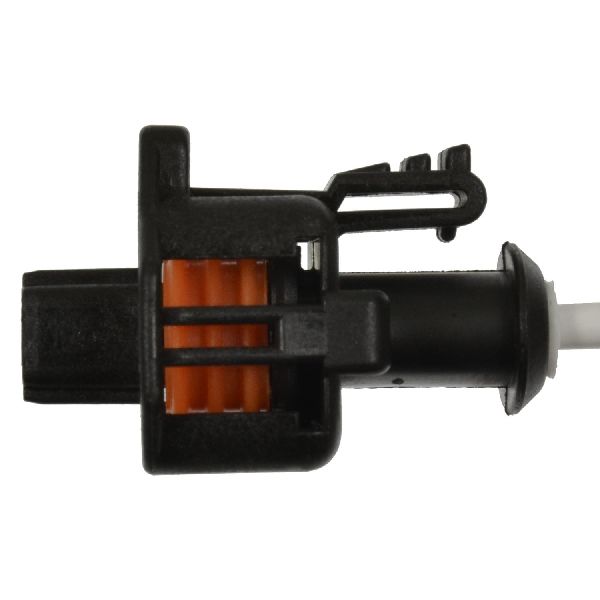
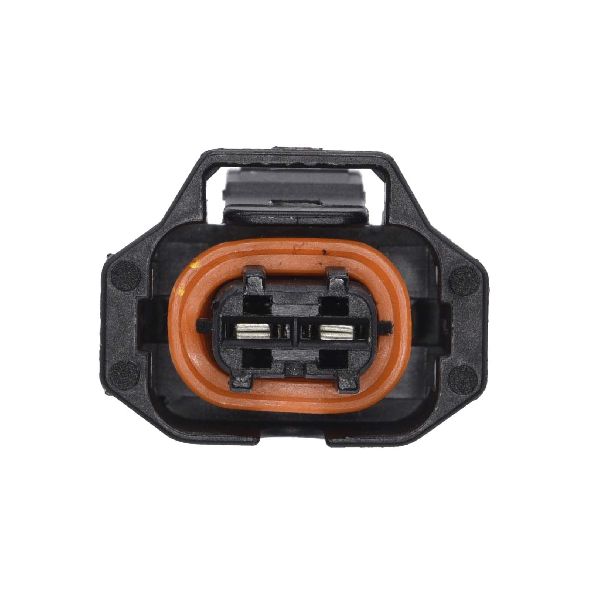
- Disconnect the sensor and inspect the electrical connector for corrosion, moisture, or damaged pins.
- Using a multimeter, check the resistance of the knock sensor itself. Compare the reading to the manufacturer's specifications. An open circuit (infinite resistance) or a dead short indicates a failed sensor. Note that this test is not always conclusive for piezoelectric sensors.
- Check the wiring harness for continuity from the sensor connector back to the DME connector to rule out a break in the wire. For a 991.1, check continuity between sensor connector pin 1 and DME connector A, pin 5, and between sensor connector pin 2 and DME connector A, pin 20.
- Check for a short to ground or a short to power in the wiring harness.
- If the wiring and sensor test good, ensure the sensor is torqued correctly to the engine block at 23 Nm (17 ft-lb). Also verify it is installed in the correct orientation (clocking), which should be marked before removing the old sensor.
- If all other components check out, the issue may lie with the DME, though this is extremely rare and requires professional diagnosis.
Parts You'll Likely Need
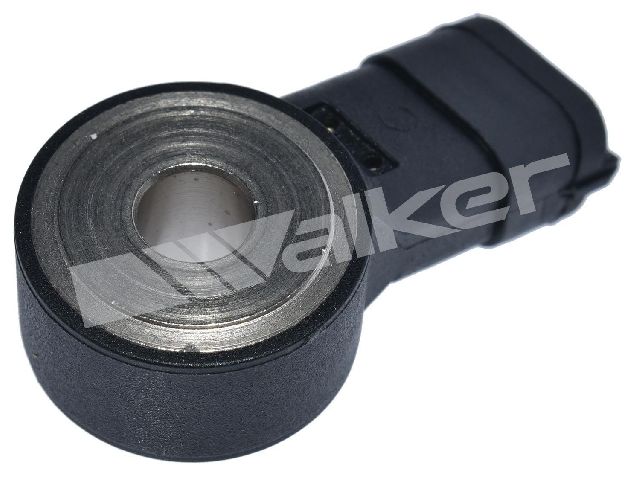
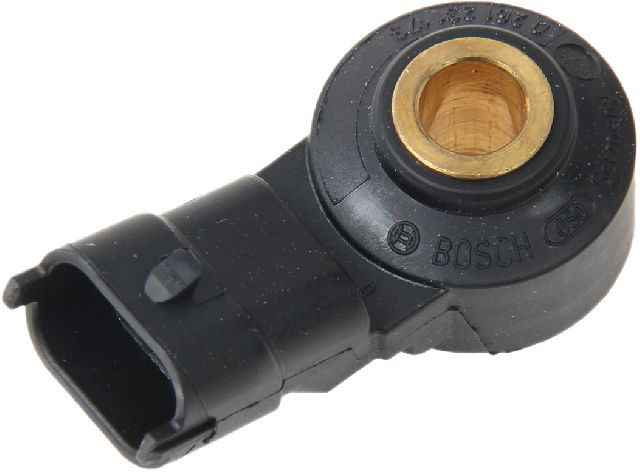
- Knock Sensor
(OEM #99760612100)— This sensor is the primary component in the circuit and is prone to failure from heat and age. The OEM part is manufactured by Bosch.
Trusted brands: Bosch (OEM), Meyle
OEM price range: $80-$120
Aftermarket price range: $40-$70
Related Codes That Often Appear With This One
- P0330 — P0330 is the identical 'Knock Sensor 2 Circuit Malfunction (Bank 2)' code. If both sensors or their shared wiring are failing due to age, heat, or rodent damage, you may see both codes together. It is common practice to replace both sensors at once due to the labor involved.
Platform-Specific Known Issues
- Rodent Damage to Wiring Harness: Multiple owners on forums and repair sites report that rodents are attracted to the soy-based wiring insulation used on these cars. They build nests in the warm engine valley and chew through the knock sensor wires, which are in an accessible location for them. This is a common cause of P0325/P0330 codes and can lead to expensive harness repairs if not caught early.
- Critical Importance of Torque and Orientation: DIY guides and technician resources repeatedly stress the importance of correct installation. The sensor bolt must be torqued to exactly 23 Nm (17 ft-lb). Over- or under-torquing changes the sensor's resonant frequency and its ability to detect knock correctly. Additionally, the sensor must be installed in the same rotational position (clocking) as the original part; it's recommended to mark the position of the old sensor before removal.
Mechanic-Grade Diagnostic Values
- Knock Sensor AC Voltage Generation — expected: A small AC voltage (millivolts) should be generated when the engine block near the sensor is tapped with a wrench.. Failure: No voltage is generated when tapping, indicating a dead sensor.
- Knock Sensor Internal Resistance — expected: Piezoelectric sensors do not have a standard resistance value like other sensors. Some may show very high resistance (Mega-ohms), but many healthy sensors will read as an open circuit (infinite resistance).. Failure: A low resistance reading (a short circuit) indicates a definite failure. However, an open circuit reading is not a reliable indicator of a good sensor.
- Wiring Harness Continuity (991.1) — expected: Less than 1.0 Ohm of resistance.. Failure: High resistance or an open circuit (O.L.) indicates a break in the wire.
Scan Tool Commands That Help
- PIWIS (Porsche Integrated Workshop Information System): Live Data Monitoring — To observe the real-time voltage output from the knock sensor. A healthy sensor will show a low, stable voltage at idle that spikes when the engine is revved. A flatline or erratic reading indicates a fault.
- PIWIS: Reset Engine Adaptations — After replacing the knock sensor and clearing fault codes, resetting adaptations forces the DME to immediately re-learn fuel and timing trims using the data from the new, functional sensor.
Wiring & Ground Locations
- Knock Sensor 1 (Bank 1) DME Pins (991.1) — On the main DME/ECU connector block.. For testing continuity: Pin 1 (Signal) on the sensor harness connects to Pin 5 of DME Connector A. Pin 2 (Ground/Return) connects to Pin 20 of DME Connector A. The cable shield is also grounded at the DME. A fault in this wiring will directly cause P0325.
- Main Engine Ground Strap — Typically a braided copper strap connecting the transmission case to the vehicle chassis.. A corroded or loose main ground can introduce electrical noise and create a floating ground reference for multiple sensors. While it would likely cause other codes too, it can contribute to erratic sensor readings and is a worthwhile check for persistent, hard-to-diagnose electrical issues.
Real Owner Repair Stories
- Rennlist Forum Member (Porsche 991.1 GT3) — Recurring P0325 and P0330 codes, even after sensor replacement.
❌ Tried (didn't work) Replacing both knock sensors.
✅ What actually fixed it A full engine wiring harness replacement. The insulation had become brittle from engine heat, causing intermittent shorts that were nearly impossible to trace individually. This resolved the codes permanently. - Forum Reports (Porsche 991.1 Carrera S) — P0325 appeared immediately after a service appointment.
❌ Tried (didn't work) Clearing the code (it returned immediately).
✅ What actually fixed it The mechanic found the knock sensor's electrical connector was not fully seated and locked. Re-seating the connector properly fixed the issue. - Multiple Forum Reports (Porsche 991) — P0325 and/or P0330, along with evidence of nesting material in the engine bay.
❌ Tried (didn't work) Initially suspecting the sensor itself.
✅ What actually fixed it Splicing in a new connector pigtail or repairing the chewed section of the wiring harness leading to the knock sensor. Rodents had chewed through the wires, causing an open circuit.
OEM Part Supersession History
99760612100→Current— This part number is used for the 991.1 generation (and previous 997). It is sometimes cross-referenced with 9A160612100.9A260612100→Current— This is the part number for the 991.2 generation (2017-2019) with the 3.0L twin-turbo engine.
Heads up: The 991.1 sensor (99760612100) and 991.2 sensor (9A260612100) are not interchangeable.
Model Year Variations Within This Range
- 2012-2016 (991.1): Uses knock sensor part number 99760612100 (or equivalent 9A160612100).
- 2017-2019 (991.2): Uses a different knock sensor, part number 9A260612100, for the new 3.0L twin-turbocharged engines.
Diagnostic Flowchart
Other Known Issues on This Vehicle
Issues unrelated to this code that are worth knowing about as an owner of this generation:
- Change-Over Valve (COV) Failure 🟠 Medium — Very common on early 991.1 models (2012-2014). Multiple revisions of the part exist. Failure can cause CEL, loss of heat, or issues with sport exhaust (PSE). (Ref: A service campaign (#WC43) was issued for early vehicles, but failures of replacement parts also occurred.)
- High-Pressure Fuel Pump (HPFP) Failure 🔴 High — A known issue on the direct-injection 991.1 engines. Failure leads to long cranks, rough idle, limp mode, and can reoccur if not diagnosed properly.
- Warping/Delaminating Interior Door Panels 🟡 Low — Common on 991.1 and 981 models, especially in hot climates. The glue fails, causing the top leather/vinyl section of the door card to lift and warp. (Ref: Porsche TSB #2314.1 addresses this, noting it should be covered under CPO warranty as an operational, not cosmetic, defect.)
- Hydraulic Belt Tensioner Leak 🟠 Medium — The hydraulic tensioner for the serpentine belt can leak over time (typically 6+ years / 60k+ miles), losing its ability to maintain belt tension. Often caught during routine belt service.
- Faulty Dynamic Engine Mounts 🟠 Medium — The optional dynamic engine mounts can fail, leading to fault messages and requiring expensive replacement.
Used vs. New Parts: Buying Guide for This Vehicle
When a used part is the smart pick: Never. The knock sensor is a relatively low-cost electronic component that fails due to age and heat cycles. The labor to access it is very high. Installing a used sensor carries a significant risk of premature failure, forcing you to pay for the expensive labor all over again.
What to inspect on the donor part:
- Not applicable, as used purchase is not recommended.
OEM-only on this vehicle (don't cheap out):
- Knock Sensor
Aftermarket brands forum-validated for this vehicle:
- Bosch (This is the Original Equipment Manufacturer)
Brands owners have reported issues with on this vehicle:
- Unbranded or 'white-box' sensors. The potential for incorrect sensitivity or premature failure is too high given the labor cost to replace.
Real Owner Stories
Aggregated from forums and TSBs cited above. Mileages and costs reflect what owners reported in those sources.
2012-2016 Porsche 911 (991.1)
Symptoms: Check engine light for P0325/P0330. Found evidence of nesting material and droppings in the engine valley.
What fixed it: Repair of the engine wiring harness due to rodent damage; the animals had chewed through the soy-based wire insulation.
Source hint: Rennlist Forums
2012-2016 Porsche 911 (991.1)
Symptoms: P0325 code present. The sensor was found to be failing due to repeated heat cycles in the high-heat area of the engine bay.
What fixed it: Replacement of both Bank 1 and Bank 2 knock sensors while the alternator was removed for access.
Source hint: Pelican Parts Technical Articles & Video
Related OBD-II Codes
Frequently Asked Questions
Where is the Bank 1 knock sensor located on my 911, and is it a DIY-friendly repair?
I heard rodents are attracted to Porsche wiring; could this cause a P0325 code?
Should I replace both knock sensors if only Bank 1 (P0325) is failing?
Does TSB #2314.1 relate to my P0325 engine code?
Can I use grease or a washer when installing the new sensor to prevent it from seizing?
Is there a service campaign for engine-related failures on early 991.1 models?
Helpful Videos
We Have This Part in Stock


The information in this article is provided for general reference and educational purposes only. Vehicle specifications, procedures, and part compatibility can vary by production date, trim level, and region. Always consult your vehicle's factory service manual and verify part numbers before purchasing or performing repairs. Safety-critical components such as airbags, seat belts, and braking systems should be installed by a qualified professional.
- Porsche 911:
- 🧭 Diagnostic Flowchart
- 🎬 Helpful Videos
- 🛍️ Shop This Part
- What's Unique About the 2012-2019 Porsche 911
- Symptoms You May Notice
- Most Likely Causes
- Rare But Worth Checking
- Diagnosis Steps
- Parts You'll Likely Need
- Related Codes That Often Appear With This One
- Platform-Specific Known Issues
- Mechanic-Grade Diagnostic Values
- Scan Tool Commands That Help
- Wiring & Ground Locations
- Real Owner Repair Stories
- OEM Part Supersession History
- Model Year Variations Within This Range
- Other Known Issues on This Vehicle
- Used vs. New Parts: Buying Guide for This Vehicle
- Real Owner Stories
- 2012-2016 Porsche 911 (991.1)
- 2012-2016 Porsche 911 (991.1)
- Related OBD-II Codes
- Frequently Asked Questions
- 🎟️ Get 5% Off