

P0325 on 2003-2010 Porsche Cayenne V8: Knock Sensor Circuit Malfunction Causes and Fixes
This code indicates a fault with knock sensor 1 on bank 1. On Cayenne V8s, the sensors are buried under the intake manifold. The most common cause is not the sensor itself, but brittle wiring or coolant leaks in the engine valley damaging the harness. Due to the high labor involved, it's critical to replace all four knock sensors, the wiring harness, and inspect/upgrade the notorious plastic coolant pipes at the same time.
- P0325 on a Cayenne V8 points to a problem with the knock sensor circuit, but the cause is often the wiring, not the sensor itself.
- The sensors and wiring are located under the intake manifold, a high-heat area prone to coolant leaks from failing plastic pipes, which is the root cause of many failures.
- This is not a simple DIY repair. Accessing the sensors is labor-intensive, requiring several hours and removal of the intake manifold and fuel rail.
- Due to the high labor cost, always replace all four knock sensors, the wiring sub-harness, and the intake manifold gaskets at the same time.
- Consider upgrading the failure-prone plastic coolant pipes to a more durable aluminum set while the intake manifold is off.
What's Unique About the 2003-2010 Porsche Cayenne
On the first-generation Cayenne V8 (955/957), the four knock sensors are located deep in the 'V' of the engine valley, underneath the intake manifold. This location is a known failure point because it's prone to extreme heat that makes wiring insulation brittle and it's directly under plastic coolant pipes that are notorious for leaking. Coolant often pools in this valley, flooding the sensors and connectors, leading to corrosion and circuit failures. As a result, the root cause is frequently the wiring harness or coolant contamination, not just the sensor itself. This location also makes replacement a very labor-intensive job.
Symptoms You May Notice
- Illuminated Check Engine Light
- Significant loss of engine power and sluggish acceleration
- Poor throttle response
- Vehicle may enter a 'reduced power' or 'limp' mode
- Increased fuel consumption
- Rough or poorly timed automatic gear shifts
- In rare cases, an audible engine pinging or knocking noise
- Replacing only one knock sensor. The labor to access the sensors is extensive, so replacing just the one that triggered the code is a false economy. The others have been subjected to the same harsh conditions and are likely to fail soon after.
- Replacing the sensor without replacing the brittle wiring harness. Often, the harness is the actual point of failure, and a new sensor will not fix a circuit issue in the wiring.
- Fixing the sensor and harness but ignoring evidence of coolant leaks. If the root cause (leaking coolant pipes) is not addressed, the new parts will fail again prematurely.
Most Likely Causes
- Damaged Knock Sensor Wiring Harness 🔴 High Probability → Shop Engine Wiring Harness The harness is located in the hot engine valley, where heat cycles make the insulation brittle and prone to cracking. Leaking coolant pipes in the same area often flood the harness, causing shorts and corrosion. Owners on forums frequently report this as the root cause.
How to confirm: After removing the intake manifold, visually inspect the entire knock sensor sub-harness for cracked insulation, exposed wires, or signs of coolant contamination (white/pink crust) and corrosion on the connectors.
Typical fix: Replace the knock sensor wiring sub-harness. This is often done preventatively whenever the sensors are replaced. The OEM part number for the harness is often cited as 948-106-061-05, though aftermarket pigtail connectors are also available.
Est. part cost: $100-$200 - Failed Knock Sensor(s) 🟡 Medium Probability → Shop Ignition Knock (Detonation) Sensor The sensors themselves fail from prolonged exposure to extreme heat and vibration, as well as from coolant contamination from leaking pipes above them.
How to confirm: After confirming the wiring is good, the sensor is the next logical point of failure. A Porsche-specific scanner (PIWIS) can sometimes isolate the fault, but given the labor, it's best to replace all of them regardless.
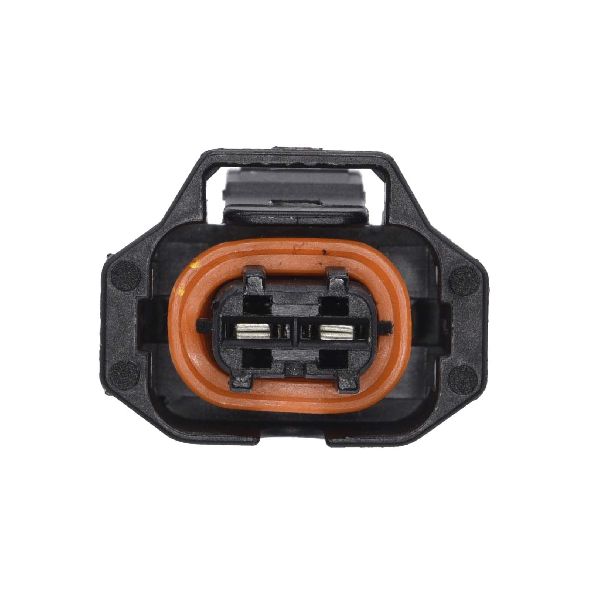
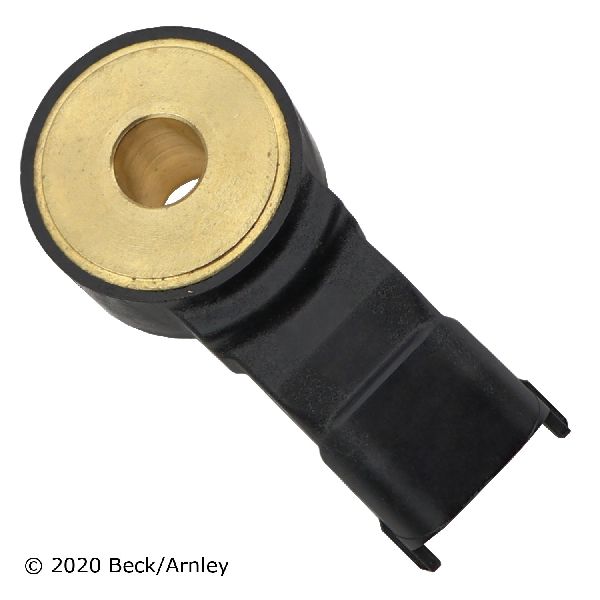
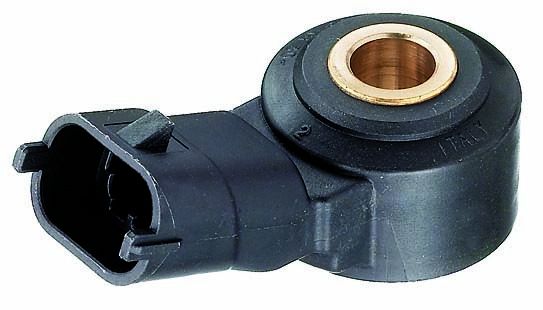
Typical fix: Replace all four knock sensors. Due to the high labor cost to access them, it is strongly recommended to replace all sensors at once. The OEM part is made by Bosch (part number 0 261 231 171) and the Porsche part number is often listed as 955-606-125-00 or a superseding number.
Est. part cost: $50-$120 per sensor - Leaking Coolant Pipes 🔴 High Probability The original plastic coolant pipes running through the engine valley are a well-known weak point on the 955/957 Cayenne V8. They degrade and crack, or the glued-in fittings fail, leaking coolant directly onto the knock sensors and wiring. This issue was so prevalent it led to a class-action lawsuit.
How to confirm: When the intake manifold is removed, look for signs of old, dried coolant (white or pink residue) or active coolant puddles in the engine valley.
Typical fix: Replace the plastic coolant pipes with upgraded aluminum versions while the intake manifold is off. This is a critical 'while you're in there' upgrade. Some owners also opt to 'pin' the fittings by drilling and tapping for a set screw as a preventative measure.
Est. part cost: $150-$500 for an upgraded pipe kit or replacement parts
Rare But Worth Checking
- Incorrect Sensor Installation: The knock sensor mounting bolts are single-use and must be torqued to a precise specification of 23 Nm (17 ft-lbs). Over or under-torquing the sensor can alter its sensitivity and cause it to send incorrect signals to the ECU, triggering a fault code even with a new part.
- Powertrain Control Module (PCM/ECU) Fault: → Shop Engine Control Module (ECM) In very rare instances, the internal circuit in the engine computer that processes the knock sensor signal can fail. This should only be considered after all other possibilities (sensors, wiring, connectors) have been exhaustively ruled out.
Diagnosis Steps
- Confirm the presence of P0325 using an OBD-II scanner. Check for any other related codes like P0330, P0327, or P0332.
- Due to the sensor location, external visual inspection is not possible. The job requires removal of the intake manifold.
- Disconnect the battery before starting work, as the starter motor terminal in the valley is live.
- Remove the air intake assembly, throttle body, fuel rail, and intake manifold to gain access to the engine valley. Label all connectors and vacuum lines.
- Thoroughly inspect the engine valley for signs of coolant leaks (pink/white residue or puddles). If found, plan to replace the coolant pipes.
- Carefully inspect the entire knock sensor wiring harness for any signs of cracking, melting, or corrosion, especially at the connectors.
- Even if the wiring looks okay, it is highly recommended to replace all four knock sensors, the wiring sub-harness, and any suspect coolant pipes due to the labor involved.
- Use new, single-use mounting bolts for the new sensors. Using needle-nose pliers to hold the sensors in place can be helpful.
- Torque the new sensor bolts to exactly 23 Nm (17 ft-lbs). Do not over-tighten.
- Replace intake manifold gaskets upon reassembly to prevent vacuum leaks.
- Reassemble all components in the reverse order of removal.
- Clear the fault codes with the OBD-II scanner and perform a test drive to ensure the code does not return.
Parts You'll Likely Need
- Knock Sensor
(OEM #955-606-125-00 (or superseding numbers like 955-606-125-21))— This is the primary component related to the code. Due to heat and coolant exposure, the sensors fail. It is critical to replace all four at once.
Trusted brands: Bosch (OEM supplier, P/N: 0 261 231 171), Porsche (OEM)
OEM price range: $90-$150
Aftermarket price range: $50-$100 - Knock Sensor Wiring Harness
(OEM #948-106-061-05 (verify by VIN))— Often the root cause of the failure. The harness becomes brittle from heat and is damaged by leaking coolant.
Trusted brands: Porsche (OEM), Dorman (aftermarket options may exist)
OEM price range: $120-$220
Aftermarket price range: $80-$150 - Upgraded Coolant Pipe Kit
(OEM #N/A (Aftermarket solution))— The original plastic/glued pipes are a primary failure point that causes the knock sensor issue. Upgrading to a metal pipe kit is a crucial preventative measure.
Trusted brands: Eurowise, URO Parts, Vaico
OEM price range: N/A
Aftermarket price range: $150-$500 - Intake Manifold Gaskets
(OEM #948-107-215-02 (verify by VIN))— These are single-use gaskets and must be replaced anytime the intake manifold is removed to prevent vacuum leaks.
Trusted brands: Victor Reinz
Related Codes That Often Appear With This One
- P0330 — P0330 is for 'Knock Sensor 2 Circuit Malfunction (Bank 2)'. Since the wiring harness and sensors for both banks are in the same harsh environment and often part of the same sub-harness, it's common for both to have circuit issues simultaneously.
- P0327 — P0327 is 'Knock Sensor 1 Circuit Low Input'. This is a more specific version of the circuit fault and often points directly to a wiring short, a failed sensor, or a corroded connector.
- P0332 — P0332 is 'Knock Sensor 2 Circuit Low Input', the Bank 2 equivalent of P0327. It frequently appears alongside the Bank 1 codes for the same reasons.
Technical Service Bulletins (TSBs) & Recalls
- While no specific TSB for P0325 was found, Porsche did issue documents acknowledging manufacturing quality issues with the adhesive application on coolant pipe fittings in related engines, which is the root cause of many P0325 faults. For example, TSB 1/08 2440 addresses coolant hose issues in the V-space of the engine for some models, highlighting the known problem area.
Platform-Specific Known Issues
- The plastic coolant pipes located in the engine valley above the knock sensors are a very common failure point. They become brittle and crack, or the factory-glued fittings debond, leaking coolant directly onto the sensors and wiring. This is a primary cause for this fault code on the Cayenne V8. This design flaw was the subject of a class-action lawsuit against Porsche for both the Cayenne and Panamera.
Mechanic-Grade Diagnostic Values
- Knock Sensor AC Voltage Output (Dynamic Test) — expected: A small AC voltage should be generated when the engine block near the sensor is tapped with a wrench (engine off). The voltage should increase with the intensity of the tap.. Failure: No AC voltage is produced, indicating a dead sensor.
- Knock Sensor Waveform (Oscilloscope) — expected: A visible vibration waveform should appear on the oscilloscope when the engine block is tapped. The signal should be clean and correspond to the taps. A similar Bosch sensor specifies a frequency response range of 3 to 25 kHz.. Failure: A flat line (no signal) or a line with excessive noise/interference suggests a failed sensor or wiring issue.
- Knock Sensor Resistance (Ohm Test) — expected: This test is generally considered unreliable for modern piezoelectric knock sensors. Unlike older sensors, they may not show a specific resistance value.. Failure: An open or shorted reading might indicate a failure, but a lack of a specific Ohm reading is not a definitive sign of a bad sensor.
Scan Tool Commands That Help
- Porsche PIWIS Tester: Fault Memory / Actual Values — Used to read the specific Porsche fault description and to monitor live data from the knock control system. While it may not have a specific bidirectional test, it can show if the ECU is detecting a signal and what adjustments it is making (or failing to make).
Wiring & Ground Locations
- DME Connector (2008-2010, 957, 4.8L) — The DME (ECU) is located in the plenum chamber (water box) at the base of the passenger side windshield. The knock sensor wiring can be tested at the connector pins.. For the Bosch DME 7.8, Knock Sensor 1 ground is at Connector III, Pin 50. This allows for end-to-end continuity and short-to-ground testing of the harness without the sensor being connected.
- DME Connector (2003-2006, 955, 4.5L) — The Bosch Motronic ME 7.1.1 DME is also in the plenum chamber. It uses a different connector configuration than the later 957 models.. Pinouts for the VAG-equivalent ME 7.1.1 DME are available, which are highly likely to correspond to the Porsche application. This is essential for testing the harness on early models.
- Engine Block Ground Points — There are several critical ground points on the engine. One major ground is on the rear of the engine block, below the heater control valve, near the firewall. Another is on the bell housing.. These grounds are shared by multiple sensors, including the DME itself. A corroded or loose engine ground can introduce noise or cause voltage drops in the sensor circuits, potentially triggering a false P0325 code. Access often requires intake manifold removal.
Real Owner Repair Stories
- YouTube channel 'VAG Doctor' (2011 Porsche Cayenne S (958, but demonstrates identical 957 V8 engine valley issue)) — Check Engine Light with codes P0332 and P033C (Bank 2 Low Input and Quiet).
❌ Tried (didn't work) Initial diagnosis was uncertain due to lack of common information online for these specific codes.
✅ What actually fixed it The technician performed a full diagnostic. After removing the intake manifold, he tested the wiring harness from the DME connector to the sensor plugs for continuity and shorts to ground, confirming the harness was good. Despite the harness testing good, the plastic connector tabs were brittle and broke upon removal. The final fix was replacing the two rear knock sensors (Bank 2). The video highlights the extreme heat and brittleness of all components in the engine valley.
OEM Part Supersession History
955-606-125-00→955-606-125-10, 955-606-125-21— Standard part evolution and minor revisions by the manufacturer.
Heads up: The base sensor (Bosch 0 261 231 171) is physically and functionally identical across the 2003-2010 V8 model range. The supersessions are generally cross-compatible. Always verify with VIN, but issues are rare.
Model Year Variations Within This Range
- 2003-2006 (955): These models use the 4.5L port-injected V8 with a Bosch Motronic ME 7.1.1 DME. The original plastic coolant pipes are highly prone to failure. Cylinder bore scoring is also a more prominent issue on the 4.5L engine.
- 2008-2010 (957): These models use the updated 4.8L direct-injected V8 with a newer Bosch DME (e.g., ME 7.8). While the knock sensors are in the same location, the DME pinouts for testing are different. The coolant pipes were revised but can still leak, though less frequently than on the 955.
Diagnostic Flowchart
Used vs. New Parts: Buying Guide for This Vehicle
When a used part is the smart pick: For this specific repair, using used parts is strongly discouraged. The failure is caused by heat and fluid degradation over time. A used sensor or wiring harness from a junkyard has been exposed to the same conditions and has a high likelihood of premature failure, wasting the significant labor cost.
What to inspect on the donor part:
- Not applicable. Do not use used sensors or wiring for this repair.
OEM-only on this vehicle (don't cheap out):
- Knock Sensor: While the OEM part is made by Bosch, it is critical to use either the Genuine Porsche part or the direct Bosch equivalent (0 261 231 171). Using unbranded, no-name sensors is a major risk given the high labor cost to replace them if they fail.
- Knock Sensor Wiring Harness: Due to the extreme heat in the engine valley, the OEM harness is the only reliable choice to ensure proper heat shielding and material quality.
Aftermarket brands forum-validated for this vehicle:
- Bosch (for the sensors, as they are the Original Equipment Manufacturer)
- Eurowise (for upgraded aluminum coolant pipes)
- URO Parts (for upgraded aluminum coolant pipes)
- Victor Reinz (for intake manifold gaskets)
Brands owners have reported issues with on this vehicle:
- Any unbranded or generic 'white-box' knock sensors or wiring harnesses. The potential for premature failure and having to repeat the 8+ hour repair job is too high.
Real Owner Stories
Aggregated from forums and TSBs cited above. Mileages and costs reflect what owners reported in those sources.
2008 Cayenne Turbo S
Symptoms: Owner was trying to diagnose a notorious coolant leak in the engine valley.
What fixed it: The owner was in the process of diagnosing the coolant leak, which is a primary cause of knock sensor circuit faults.
Source hint: Rennlist: '08 09 10 Cayenne TTS 957 Coolant leak hunt, any advice?'
2009 Cayenne (4.8L DFI engine)
Symptoms: Failure of the glued-in hose barbs on the water distributor in the engine valley.
What fixed it: The owner discussion centered on performing a DIY 'pinning' solution to secure the fittings as a preventative fix.
Source hint: 6speedonline: 'Cayenne 957 - Coolant Pipe Issue - Water Distributor'
2006 Porsche Cayenne
Symptoms: Experienced a catastrophic coolant leak originating from the crossover manifold.
What fixed it: The owner was quoted repair estimates that required complete engine removal to address the leak.
Source hint: Rennlist: 'Coolant repair advice'
Related OBD-II Codes
Frequently Asked Questions
My Cayenne V8 has a P0325 code. What is the most likely cause, the sensor or the wiring?
I'm removing the intake manifold to fix P0325. What other parts should I replace at the same time?
Why are leaking coolant pipes related to my P0325 knock sensor code?
What are the correct part numbers for the knock sensors and harness for this repair?
What is the correct torque specification for the knock sensor bolts on my Cayenne?
Is this P0325 issue common on other vehicles besides the Porsche Cayenne?
Used OEM Parts in Stock
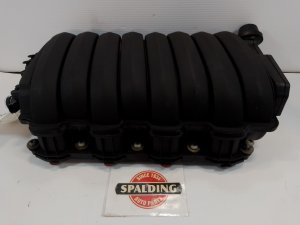
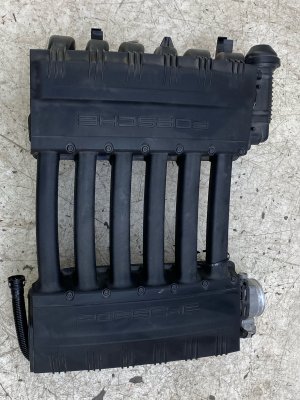
New Aftermarket Parts Available

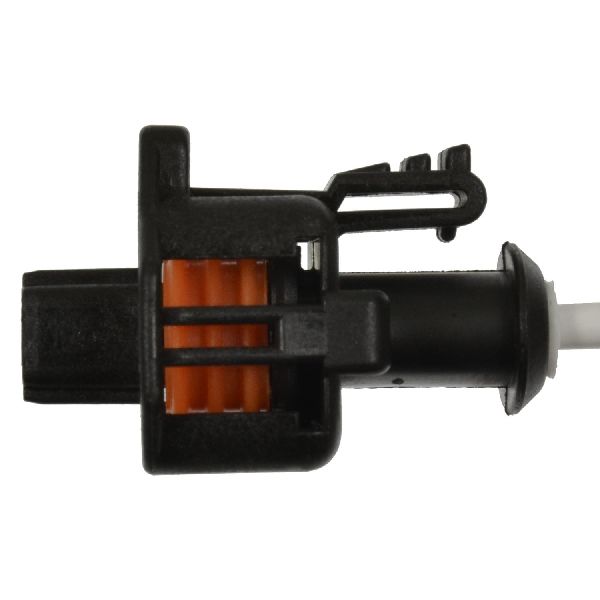

The information in this article is provided for general reference and educational purposes only. Vehicle specifications, procedures, and part compatibility can vary by production date, trim level, and region. Always consult your vehicle's factory service manual and verify part numbers before purchasing or performing repairs. Safety-critical components such as airbags, seat belts, and braking systems should be installed by a qualified professional.
- Porsche Cayenne:
- 🧭 Diagnostic Flowchart
- 🛍️ Shop This Part
- What's Unique About the 2003-2010 Porsche Cayenne
- Symptoms You May Notice
- Most Likely Causes
- Rare But Worth Checking
- Diagnosis Steps
- Parts You'll Likely Need
- Related Codes That Often Appear With This One
- Technical Service Bulletins (TSBs) & Recalls
- Platform-Specific Known Issues
- Mechanic-Grade Diagnostic Values
- Scan Tool Commands That Help
- Wiring & Ground Locations
- Real Owner Repair Stories
- OEM Part Supersession History
- Model Year Variations Within This Range
- Used vs. New Parts: Buying Guide for This Vehicle
- Real Owner Stories
- 2008 Cayenne Turbo S
- 2009 Cayenne (4.8L DFI engine)
- 2006 Porsche Cayenne
- Related OBD-II Codes
- Frequently Asked Questions
- 🎟️ Get 5% Off