

P0325 on 2005-2009 Subaru Outback 2.5L: Knock Sensor Circuit Malfunction Causes and Fixes
On a 2005-2009 Subaru Outback with the 2.5L EJ253 engine, code P0325 almost always means the knock sensor itself has failed. The plastic housing of the sensor cracks due to age and engine heat, allowing moisture in. It's a common and relatively inexpensive fix, with a new quality sensor costing between $40 and $90. Replacement is a straightforward DIY job, but correct torque (17.7 ft-lbs) is critical.
- P0325 on a 2005-2009 Outback almost always means the knock sensor itself has failed due to a cracked plastic housing.
- The repair is DIY-friendly and can typically be completed in under an hour with basic tools.
- Using the correct torque (17.7 ft-lbs) and orientation for the new sensor is critical to prevent the code from returning.
What's Unique About the 2005-2009 Subaru Outback
On this generation of Subaru Outback with the SOHC EJ253 engine, the P0325 code is an extremely common issue. The primary cause is the original knock sensor's plastic housing becoming brittle from years of heat cycles and eventually cracking. This allows moisture to enter and damage the internal piezoelectric element, causing a circuit failure. It's so common that for most owners, the diagnosis is as simple as visually inspecting the sensor for cracks. The issue is shared across other Subarus of the era using the same engine, including the Forester and Impreza.
Symptoms You May Notice
- Check Engine Light is on
- Reduced engine power and sluggish acceleration
- Decreased fuel economy
- Hesitation during acceleration
- Engine may make a pinging or knocking noise, though this is a symptom of the engine running without proper knock detection, not a direct symptom of the code itself.
- Replacing spark plugs or ignition coils. While these can cause performance issues, they will not set a P0325 circuit code. The poor performance is a result of the code, not the cause of it.
- Assuming the engine has a severe internal knock. P0325 is an electrical circuit fault code; it does not necessarily mean the engine is actively knocking.
- Relocating the sensor to a more convenient location. Some owners try moving the sensor to an intake manifold bolt, but this is not a valid repair. The ECM expects to hear specific frequencies from the block, and the absence of this expected background noise can also trigger the code.
Most Likely Causes
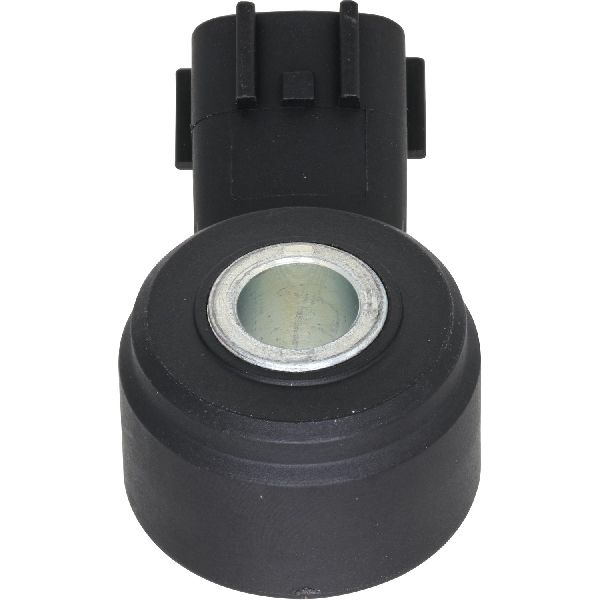
- Failed Knock Sensor 🔴 High Probability → Shop Ignition Knock (Detonation) Sensor The original sensor's plastic housing is known to crack from repeated exposure to engine heat, allowing moisture intrusion and causing internal failure. This is the most common reason for P0325 on this engine.
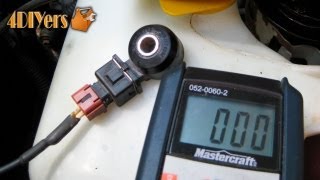
How to confirm: Visually inspect the knock sensor's plastic body for cracks. The sensor is located on top of the engine block, under the intake manifold runners, near the throttle body. If cracked, it needs replacement. If no cracks are visible, you can test the sensor's internal resistance with a multimeter. Disconnect the sensor and measure between the single pin and the metal body. A good sensor should have a resistance of around 560k ohms (560,000 ohms). An open circuit (infinite resistance) or a short (near zero) confirms failure.
Typical fix: Replace the knock sensor. This involves removing a single 12mm bolt, disconnecting the electrical connector, and installing the new sensor. It is critical to clean the mounting surface on the engine block and torque the new sensor's bolt to the correct specification, which is 17.7 ft-lbs (24 Nm). The sensor must also be oriented correctly, with the connector angled at approximately 60 degrees relative to the back of the engine (pigtail pointing towards roughly 10 o'clock).
Est. part cost: $20-$90 - Damaged Wiring or Connector ⚪ Low Probability The wiring and connector are located in a hot area of the engine and can become brittle over time. The connector's locking tab can break, leading to a loose connection. Rodent damage is also a possibility, as wires in this area can be chewed.
How to confirm: Inspect the single wire leading to the knock sensor for any signs of fraying, melting, or breaks. Check the connector to ensure it is securely plugged in and that the locking tab is intact. Check for corrosion on the connector pins. A user on the Ultimate Subaru Message Board found their P0325 was caused by a previous owner's improper wire splice.
Typical fix: Repair the damaged section of wire or replace the connector pigtail. Ensure the connection is secure and protected from heat.
Est. part cost: $10-$30
Rare But Worth Checking
- Loose or Over-torqued Knock Sensor Bolt: → Shop Ignition Knock (Detonation) Sensor If the sensor's retaining bolt has loosened, it won't properly 'listen' to the engine block. Conversely, over-tightening the bolt can damage the sensor's internal crystal and cause it to fail or give false readings. Always verify the torque is exactly 17.7 ft-lbs (24 Nm) before assuming other parts have failed.
- Engine Control Module (ECM) Fault: → Shop Engine Control Module (ECM) In very rare instances, the ECM itself can have a fault in the knock sensor circuit. This should only be considered after all other possibilities, including the sensor, wiring, and connections, have been exhaustively ruled out.
Diagnosis Steps
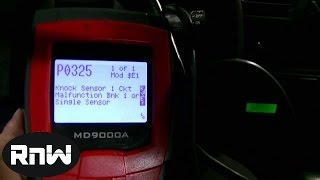
- Confirm the code P0325 is present using an OBD-II scanner.
- Locate the knock sensor on the top of the engine block, to the right of the throttle body (when facing the engine).
- Visually inspect the sensor's black plastic housing for any cracks. This is the most common point of failure and often the only diagnostic step needed.
- If the sensor is cracked, replace it. The superseding part number is often 22060AA140.
- If no cracks are found, inspect the wiring harness and connector for damage, corrosion, or a loose connection. Ensure the connector clicks securely into place.
- If the visual inspection reveals no issues, test the sensor with a multimeter. Disconnect the sensor and measure the resistance between the pin and the sensor body. A good sensor should read approximately 560k Ohms.
- Verify the sensor bolt is torqued correctly to 17.7 ft-lbs (24 Nm) using a torque wrench.
- Clear the trouble code with the scanner and perform a test drive to see if the code returns.
Parts You'll Likely Need
- Knock Sensor
(OEM #22060AA100 (may be superseded by 22060AA140))— This is the most common failure item for a P0325 code on this vehicle due to the original part's tendency to crack over time. Using a genuine Subaru part or a reputable OEM supplier is highly recommended.
Trusted brands: Subaru (Genuine), Denso, NGK/NTK, Beck/Arnley
OEM price range: $70-$100
Aftermarket price range: $20-$80
Related Codes That Often Appear With This One
- P0327 — Stands for 'Knock Sensor 1 Circuit Low'. This can be caused by the same failures, such as a short in the wiring or an internal failure of the sensor.
- P0328 — Stands for 'Knock Sensor 1 Circuit High'. This often points to an open circuit, which can be caused by a cracked sensor, a broken wire, or a disconnected connector.
Platform-Specific Known Issues
- The location of the sensor on the EJ253 engine is on top of the block, making it relatively accessible with a 12mm socket and a long extension, unlike some other engines where the intake manifold must be removed.
- Correct torque (17.7 ft-lbs / 24 Nm) and proper orientation of the sensor are critical for its function. The connector should point towards the driver's side at roughly a 10 o'clock position. Over or under-tightening can lead to incorrect readings and the code returning.
Mechanic-Grade Diagnostic Values
- Knock Sensor Internal Resistance — expected: Approx. 560k Ohms (kilo-ohms). Failure: A reading near zero ohms (short circuit) or infinite/open circuit (OL) indicates a failed sensor. Some sources state a wider acceptable range of 400kΩ to 700kΩ.
- Harness Voltage (Key On, Engine Off) — expected: ~5V DC. Failure: Significantly low or no voltage at the harness connector (unplugged from sensor) points to a wiring issue or a problem with the ECM's reference voltage circuit.
- Harness-to-ECM Continuity — expected: Near 0 Ohms. Failure: High resistance or an open circuit (OL) between the sensor connector pin and the corresponding ECM pin indicates a break in the wire.
- Sensor Mounting Bolt Torque — expected: 17.7 ft-lbs (24 Nm). Failure: Incorrect torque (either too loose or too tight) can prevent the sensor from detecting vibrations correctly or damage the internal piezoelectric element, leading to a recurring code.
Wiring & Ground Locations
- Knock Sensor Connector — On top of the engine block, under the intake manifold runners, just to the right (passenger side for LHD) of the throttle body. It is a single-wire connector.. This is the primary point for testing both the sensor and the harness. The plastic connector and its locking tab are known to become brittle from heat and can easily break during disconnection.
- ECM Connector B136, Pin 14 — The ECM is located under the driver's side dashboard, to the left of the steering column. The knock sensor signal wire terminates at Pin 14 of the B136 connector (on a 2005 model).. This is the termination point for the knock sensor circuit. Testing for continuity between this pin and the sensor connector in the engine bay can definitively confirm if the wiring is intact.
- Sensor Ground — The knock sensor grounds directly to the engine block through its metal base and the mounting bolt.. Corrosion or debris on the engine block's mounting surface or the sensor's base can create a poor ground, leading to incorrect readings and triggering a P0325 code. The surface must be cleaned thoroughly during replacement.
Real Owner Repair Stories
- Subaru Enthusiasts Car Club of the Sierras Forum (1997 Subaru Impreza L (with similar EJ engine and knock sensor design)) — Intermittent Check Engine Light with code P0325 for 2-3 months.
❌ Tried (didn't work) The owner first identified the original sensor was cracked and replaced it with a new one.
✅ What actually fixed it The P0325 code immediately returned and stayed on constantly with the new sensor. Upon testing, the brand new aftermarket sensor showed a resistance of only 780 ohms, far below the required 400k+ ohms specification. The new sensor was faulty out of the box. The resolution was to replace the faulty new sensor with another, good sensor.
OEM Part Supersession History
22060AA100→22060AA140— Part consolidation and likely minor improvements to durability or material composition to address the common cracking issue.
Heads up: The newer part number 22060AA140 is the correct, backward-compatible replacement for the 2005-2009 Outback EJ253. Using older stock (22060AA100) is not recommended as it may have the original design prone to cracking.
Diagnostic Flowchart
Other Known Issues on This Vehicle
Issues unrelated to this code that are worth knowing about as an owner of this generation:
- Head Gasket Failure 🔴 High — Very common, typically between 80,000 and 150,000 miles. The single-layer composite gasket on the EJ253 is prone to external oil and coolant leaks.
- Catalytic Converter Failure (P0420) 🟠 Medium — Common at higher mileage (100,000+ miles), leading to a P0420 'Catalyst System Efficiency Below Threshold' code.
- Oil Leaks (Valve Covers, Oil Pan, AVLS Switch) 🟡 Low — Frequent but typically minor leaks develop over time from valve cover gaskets, the oil pan, and the oil pressure switch for the AVLS (Active Valve Lift System).
- Cooling System Problems 🟠 Medium — Radiators with plastic end tanks can crack, and thermostats can fail, leading to overheating which can accelerate head gasket failure.
- Ignition Switch Recall 🔴 High — A recall (NHTSA Campaign Number: 19V333000) was issued for replacement ignition switches where the switch could move from 'Run' to 'Accessory' while driving, shutting off the engine. (Ref: Subaru Recall WUF-91)
- Takata Airbag Recall 🔴 High — This model range is affected by the massive Takata airbag recall, where inflators can rupture during deployment. (Ref: Multiple NHTSA Recalls, e.g., 19V008000)
Used vs. New Parts: Buying Guide for This Vehicle
When a used part is the smart pick: Buying a used knock sensor for this vehicle is strongly discouraged. The primary failure mode is the plastic housing cracking due to age and heat cycles. A used part from a donor vehicle of similar age will have experienced the same thermal stress and is likely to fail soon, if it hasn't already.
What to inspect on the donor part:
- If buying used is unavoidable, visually inspect for any hairline cracks in the black plastic housing.
- Test the resistance with a multimeter; it must be within the 400k-700k Ohm range.
- Only consider a used part if it is confirmed to be the newer superseded part number (22060AA140).
OEM-only on this vehicle (don't cheap out):
- Knock Sensor
Aftermarket brands forum-validated for this vehicle:
- Denso
- NGK/NTK
Brands owners have reported issues with on this vehicle:
- Unnamed, no-brand 'white box' parts from online marketplaces have a higher risk of being faulty out of the box, as documented in forum posts.
Real Owner Stories
Aggregated from forums and TSBs cited above. Mileages and costs reflect what owners reported in those sources.
1998 Subaru Forester EJ engine
Symptoms: P0325 code present; investigation revealed a previous owner's improper wire splice in the knock sensor harness.
What fixed it: Repaired the damaged section of the wiring harness to ensure a proper connection.
Source hint: ultimatesubaru.org
2005-2009 Subaru Outback 2.5L
Symptoms: Check Engine Light on; the knock sensor was identified as a common failure point alongside other platform issues like head gaskets.
What fixed it: Replacement of the knock sensor, which is a straightforward DIY job on this platform.
Source hint: reddit.com/r/subaruoutback thread titled '05-09 Outback issues'
2005-2009 Subaru Outback 2.5L
Symptoms: P0325 code; visual inspection revealed cracks in the sensor's black plastic housing.
What fixed it: Replaced the knock sensor with the updated part number 22060AA140 and torqued to 17.7 ft-lbs.
Source hint: subaruoutback.org
Related OBD-II Codes
Frequently Asked Questions
What is the correct torque specification for the knock sensor on my 2.5L EJ253 engine?
Is there a specific orientation the knock sensor needs to be in for the 2005-2009 Outback?
What is the recommended replacement part number for the knock sensor on this vehicle?
Can I test the knock sensor with a multimeter before buying a new one?
Does the 2005-2009 Outback have any active recalls I should check while fixing P0325?
Why does the knock sensor fail so frequently on the EJ253 engine?
Helpful Videos
We Have This Part in Stock


The information in this article is provided for general reference and educational purposes only. Vehicle specifications, procedures, and part compatibility can vary by production date, trim level, and region. Always consult your vehicle's factory service manual and verify part numbers before purchasing or performing repairs. Safety-critical components such as airbags, seat belts, and braking systems should be installed by a qualified professional.
- Subaru Outback:
- 🧭 Diagnostic Flowchart
- 🎬 Helpful Videos
- 🛍️ Shop This Part
- What's Unique About the 2005-2009 Subaru Outback
- Symptoms You May Notice
- Most Likely Causes
- Rare But Worth Checking
- Diagnosis Steps
- Parts You'll Likely Need
- Related Codes That Often Appear With This One
- Platform-Specific Known Issues
- Mechanic-Grade Diagnostic Values
- Wiring & Ground Locations
- Real Owner Repair Stories
- OEM Part Supersession History
- Other Known Issues on This Vehicle
- Used vs. New Parts: Buying Guide for This Vehicle
- Real Owner Stories
- 1998 Subaru Forester EJ engine
- 2005-2009 Subaru Outback 2.5L
- 2005-2009 Subaru Outback 2.5L
- Related OBD-II Codes
- Frequently Asked Questions
- 🎟️ Get 5% Off