

P0325 on 2015-2017 Subaru WRX: Knock Sensor Circuit Malfunction Causes and Fixes
On a 2015-2017 Subaru WRX, the P0325 code is almost always caused by a failed knock sensor, often due to moisture getting into the connector. The sensor for Bank 1 (P0325) is located on the passenger side of the engine block under the intercooler. The most common fix is to replace the sensor with an updated OEM part (22060AA180). Expect to pay around $150-$175 for the OEM sensor, and the job is moderately difficult for a DIYer as it requires removing the intercooler.
- P0325 on a 2015-2017 WRX is most likely a failed knock sensor due to water getting into the connector.
- The recommended fix is to replace the sensor with the updated OEM part number 22060AA180.
- When replacing the sensor, it is critical to clean the mounting surface and torque the bolt to exactly 17.7 ft-lbs (24 Nm).
- Applying dielectric grease to the new connector can help prevent the problem from recurring.
- This repair requires removing the intercooler but is a manageable DIY job for those with moderate mechanical skill.
What's Unique About the 2015-2017 Subaru WRX
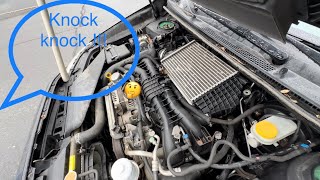
The 2015-2017 WRX uses the 2.0L FA20DIT direct-injection turbocharged engine. A key design characteristic of this platform is the location of the knock sensors on the engine block, underneath the top-mount intercooler. This area is a valley that is prone to collecting water, especially after heavy rain or engine washing. This moisture can seep into the knock sensor's connector, causing corrosion and leading to a circuit malfunction that triggers the P0325 code or related codes like P0327 (Circuit Low) and P0328 (Circuit High). This is a widely documented issue among owners and was addressed by Subaru with an updated sensor design.
Symptoms You May Notice
- Check Engine Light is on
- Reduced engine performance and acceleration
- Hesitation or sluggishness, especially under load
- Decreased fuel economy
- In some cases, an audible engine knocking or pinging noise
- Replacing spark plugs or ignition coils without diagnosing the knock sensor circuit first.
- Assuming the engine has a severe internal problem when the code is only indicating an electrical circuit fault.
- Relocating the knock sensor to an easier-to-access location, which is highly discouraged as it prevents the sensor from functioning correctly.
Most Likely Causes
- Failed Knock Sensor (due to moisture) 🔴 High Probability → Shop Ignition Knock (Detonation) Sensor The sensor is located in a recess on the engine block under the intercooler where water can pool, leading to corrosion of the sensor and its electrical connector. Subaru acknowledged durability issues with the original sensors and released an updated part.
How to confirm: Visually inspect the knock sensor and its connector for signs of water intrusion, corrosion, or physical damage after removing the intercooler. Test the sensor's internal resistance with a multimeter; an out-of-spec reading (Subaru sensors are often in the 530k-580k ohm range) or an open/short circuit indicates failure.
Typical fix: Replace the faulty knock sensor with the updated OEM part (Part No. 22060AA180). Ensure the mounting surface on the engine block is clean and torque the new sensor to the factory specification of 17.7 ft-lbs (24 Nm) without anti-seize compound. Applying dielectric grease to the connector can help prevent future moisture issues.
Est. part cost: $150-$175 - Damaged Wiring or Connector 🟡 Medium Probability The wiring harness is in a high-heat area and can become brittle over time. Rodents can also chew on the wires, a common issue for sensors located in engine valleys. The connector itself is the most common failure point due to the moisture issue described above.
How to confirm: Inspect the wiring harness leading to the knock sensor for any signs of breaks, melting, or rodent damage. Check the connector pins for corrosion, moisture, or a loose fit. Perform a continuity test on the wiring from the sensor connector to the ECM.
Typical fix: Repair the damaged section of wire or replace the connector pigtail if it is corroded. Ensure a secure, weather-proof connection.
Est. part cost: $15-$40
Rare But Worth Checking
- Engine Control Module (ECM) Malfunction: → Shop Engine Control Module (ECM) This is very rare. All other possibilities, especially the sensor and wiring, should be thoroughly ruled out before considering the ECM as the cause.
- Severe Engine Mechanical Issues: If the engine is actually knocking severely due to other problems (e.g., bad fuel, carbon buildup), it could potentially cause issues with the sensor's readings, though this would typically be accompanied by other codes and obvious performance problems.
Diagnosis Steps
- Read the trouble code with an OBD-II scanner to confirm P0325 is present and check for any other codes.
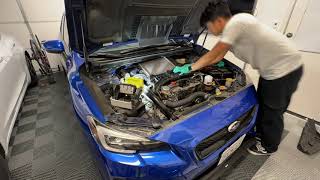
- Remove the top-mount intercooler to gain access to the knock sensors. 🎬 See this video on how to remove the intercooler Bank 1 (P0325) is on the passenger side of the engine; Bank 2 (P0330) is on the driver's side.
- Visually inspect the Bank 1 knock sensor and its electrical connector for any signs of moisture, green or white corrosion, or physical damage.
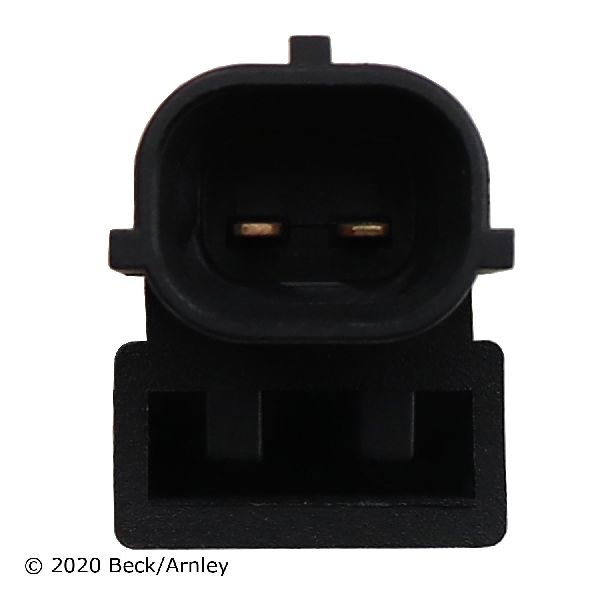
- Disconnect the sensor and inspect the connector pins on both the sensor and harness side.
- If corrosion is present, the sensor and likely the connector pigtail should be replaced.
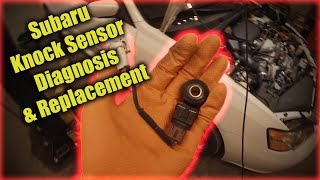
- If no visible damage is found, use a multimeter to test the resistance of the knock sensor. Compare the reading to the manufacturer's specification (typically around 530k-580k ohms for this sensor type). An open circuit (infinite resistance) or short circuit (zero resistance) confirms a failed sensor. 🎬 Watch: How to diagnose and test a Subaru knock sensor
- Check the wiring harness for continuity from the sensor connector to the ECM. Check for shorts to ground or power.
- If the sensor and wiring test good, the issue may be with the ECM, but this is highly unlikely.
Parts You'll Likely Need
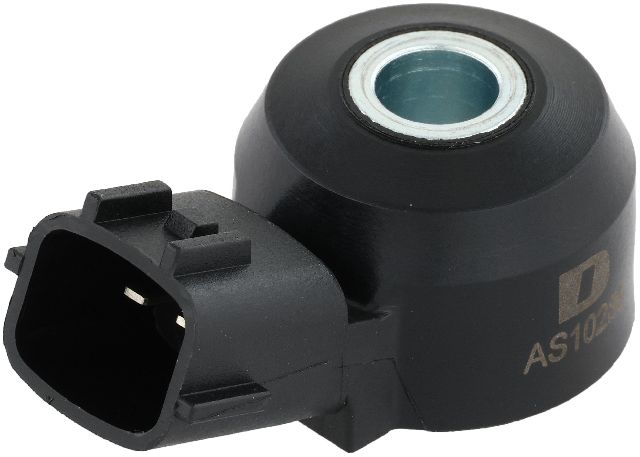
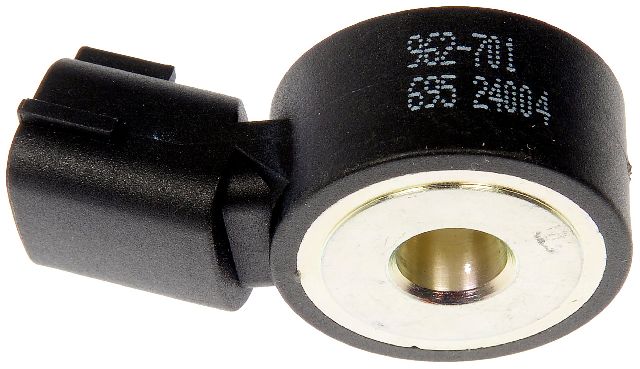
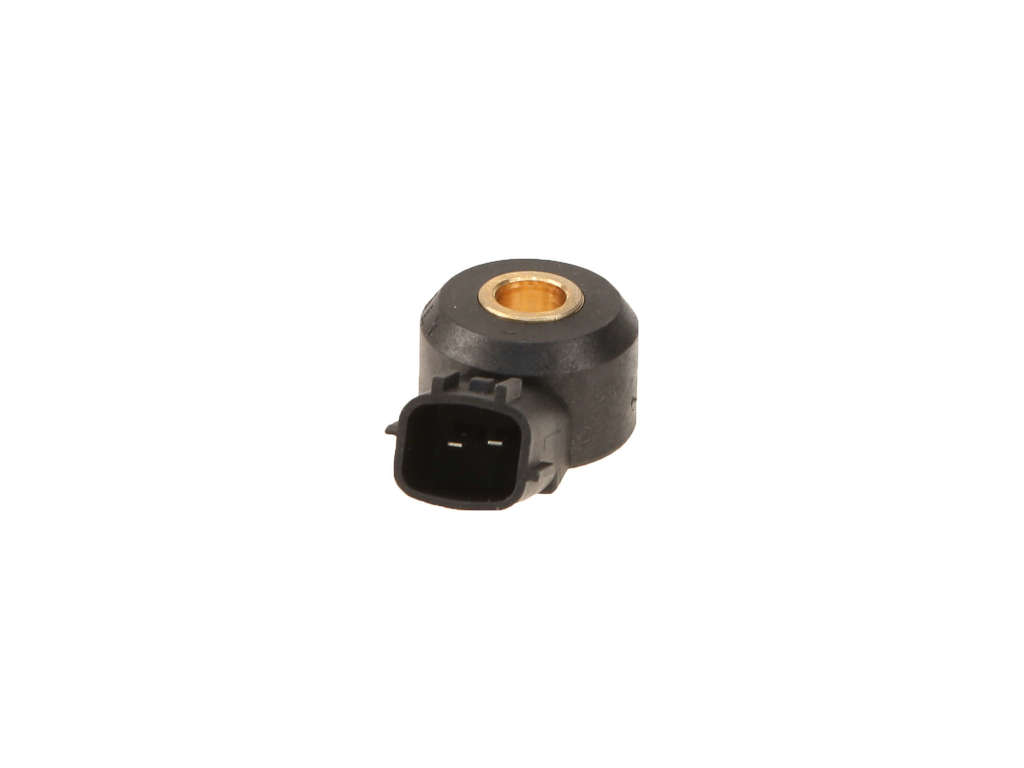
- Ignition Knock (Detonation) Sensor
(OEM #22060AA180)— This is the most common failure point. Subaru issued a TSB (07-133-18R) and updated the sensor design for better durability and resistance to heat and moisture. This part number supersedes the original 22060AA160.
Trusted brands: Subaru (Genuine), Bosch, Delphi, NGK
OEM price range: $150-$175
Aftermarket price range: $40-$125
Related Codes That Often Appear With This One
- P0327 — This code indicates 'Knock Sensor 1 Circuit Low' and is often caused by the same water intrusion issue shorting the circuit. This code is explicitly mentioned in the related TSB.
- P0328 — This code indicates 'Knock Sensor 1 Circuit High' and can be caused by a corroded, open circuit from the same moisture-related failure. This code is also explicitly mentioned in the related TSB.
Technical Service Bulletins (TSBs) & Recalls
- 07-133-18R: Announces a design change for the knock sensor to improve durability and resistance to heat, recommending the use of an updated part (22060AA180) for repairs related to knock sensor DTCs. It also confirms the torque spec of 17.7 ft-lbs (24 Nm).
Platform-Specific Known Issues
- Subaru Technical Service Bulletin (TSB) 07-133-18R addresses the high failure rate of knock sensors due to heat and moisture, recommending replacement with an updated, more durable sensor. While this TSB specifically lists codes P0327, P0328, P0332, and P0333, the root cause and solution are directly applicable to the P0325 circuit malfunction code, as confirmed by owner experiences and the nature of the failure.
Mechanic-Grade Diagnostic Values
- Knock Sensor Internal Resistance — expected: 530kΩ - 580kΩ. Failure: A reading of 0Ω (short), infinity/OL (open), or significantly outside the expected range. Note that a sensor can pass this test when cold and still be faulty.
- Knock Sensor Harness Voltage (KOEO, Unplugged) — expected: ~5.0 Volts DC. Failure: A reading of 0V suggests an open wire or an ECM fault. A reading significantly below 5V can indicate a wiring issue.
- Knock Sensor Bias Voltage (KOEO, Plugged In) — expected: ~2.5 Volts DC. Failure: A reading of 5V indicates an open in the sensor or connector. A reading of 0V indicates a short to ground.
- Knock Sensor AC Voltage (Tapping Test) — expected: A small, fluctuating AC voltage signal when the engine block near the sensor is tapped with a wrench.. Failure: No AC voltage produced when tapping indicates a dead piezoelectric element inside the sensor.
Scan Tool Commands That Help
- Subaru Select Monitor (or advanced aftermarket scanner): Live Data Monitoring - 'Knocking Correction' — While not a direct test for a P0325 circuit code, monitoring the 'Knocking Correction' PID can show if the ECM is actively retarding timing. If the value is consistently high, it may indicate real knock that the sensor is detecting, whereas a static or zero value when the engine is under load could point to a non-responsive sensor circuit.
Wiring & Ground Locations
- Engine Block Ground — The mounting base of the knock sensor itself.. The knock sensor grounds through its metal body directly to the engine block. A clean, rust-free mounting surface and the correct torque of 17.7 ft-lbs are absolutely critical for a proper ground and accurate signal transmission. A loose sensor or corrosion on the mounting pad can cause a faulty signal, triggering a P0325.
- E14 — The electrical connector at the knock sensor.. This is the factory wiring diagram identifier for the connector. Knowing this helps a technician locate the correct pinouts for testing continuity and voltage between the sensor and the ECM. The primary failure point on this vehicle is moisture intrusion at this specific connector.
Real Owner Repair Stories
- YouTube channel Boosted & Shutterd (2015+ Subaru WRX) — Check Engine Light with P0327 (Circuit Low) that would only appear during or after rainfall.
❌ Tried (didn't work) Initial diagnostics were inconclusive as the code was intermittent.
✅ What actually fixed it The owner allowed the engine bay and sensor valley to dry out completely, which made the code disappear temporarily. This confirmed water intrusion was the root cause. The final fix was replacing the knock sensor and applying dielectric grease to the new connector to seal it from moisture. - Reddit /r/WRX user report (2015 WRX) — P0332 (Bank 2 Knock Sensor Circuit Low) that would appear every time it rained.
❌ Tried (didn't work) Clearing the code would work until the next rainfall.
✅ What actually fixed it The owner found Subaru TSB 07-133-18R, which described the issue. Replacing the original knock sensor with the updated part number (22060AA180) permanently resolved the issue.
OEM Part Supersession History
22060AA160→22060AA180— The original sensor design was prone to cracking from heat cycles and allowing moisture intrusion. The updated part features a more robust housing and improved durability to better resist heat and moisture, as acknowledged in TSB 07-133-18R.
Model Year Variations Within This Range
- 2015 - Mid-2017: These models were equipped from the factory with the original, failure-prone knock sensor (22060AA160). A production change was made during the 2017 model year to the updated, more durable sensor (22060AA180). Vehicles built after VIN H9830255 should have the updated sensor.
Diagnostic Flowchart
Other Known Issues on This Vehicle
Issues unrelated to this code that are worth knowing about as an owner of this generation:
- Intake Valve Carbon Buildup 🟠 Medium — A known issue for all direct-injection (DIT) engines. Significant buildup can occur by 40,000-60,000 miles, causing reduced performance, rough idle, and misfires.
- Clutch Throw-Out Bearing Failure 🟠 Medium — Common on manual transmission models, particularly early in the generation (2015-2017). Symptoms include a squeaking or chirping noise when the clutch pedal is depressed. Many owners report failures at low mileage. (Ref: TSB 03-79-18R, TSB 03-82-18)
- Turbocharger Air Intake Duct Cracking 🔴 High — Affects 2015-2016 models built before April 10, 2015. A cracked duct can cause a vacuum leak, leading to rough idling or stalling. (Ref: Recall NHTSA 16V162000)
- Rod Bearing and Piston Ringland Failures 🔴 High — While not as widespread as on the previous EJ-series engines, failures of rod bearings and ringlands can occur, especially on modified or aggressively driven vehicles.
Used vs. New Parts: Buying Guide for This Vehicle
When a used part is the smart pick: Never. Given that the original part number is known to be defective and the cause of the P0325 code is a design flaw, installing a used sensor is highly likely to result in the same failure recurring. The cost of labor to access the sensor (removing the intercooler) makes it impractical to risk using a part with an unknown history.
What to inspect on the donor part:
- Not applicable, do not use a salvaged part for this repair.
OEM-only on this vehicle (don't cheap out):
- Ignition Knock (Detonation) Sensor
Aftermarket brands forum-validated for this vehicle:
- While some owners may have success with brands like Denso or NTK, the overwhelming consensus in forums and from technicians is to use the Genuine Subaru OEM updated part (22060AA180) to guarantee a permanent fix.
Brands owners have reported issues with on this vehicle:
- Unbranded, low-cost sensors from online marketplaces are strongly discouraged as they may not be calibrated correctly for the FA20DIT engine's specific frequency, potentially leading to incorrect timing adjustments or premature failure.
Real Owner Stories
Aggregated from forums and TSBs cited above. Mileages and costs reflect what owners reported in those sources.
2015 Subaru WRX 2.0L FA20DIT
Symptoms: Owner reported a P0326 code (knock sensor performance) on a 2015-mid 2017 model.
What fixed it: The dealer replaced both knock sensors under the TSB guidelines.
Source hint: Reddit /r/WRX - '2015+ Owners TSB Knock Sensors!'
2015-2017 Subaru WRX 2.0L FA20DIT
Symptoms: Water intrusion causing P0325/P0327/P0328 codes on the FA20DIT engine.
What fixed it: Replacement of the sensor and application of dielectric grease to the connector to prevent future moisture issues.
Source hint: NASIOC Forum discussions
Related OBD-II Codes
Frequently Asked Questions
Does TSB 07-133-18R apply to my 2015-2017 Subaru WRX even though it lists different codes?
What is the specific updated part number I should use to fix P0325 on my WRX?
Where is the Bank 1 knock sensor located on the FA20DIT engine?
What is the correct torque specification for the new knock sensor?
Can I use a used knock sensor from a salvage yard to save money?
Does the 2014-2018 Forester XT share this same P0325 issue?
Helpful Videos
We Have This Part in Stock


The information in this article is provided for general reference and educational purposes only. Vehicle specifications, procedures, and part compatibility can vary by production date, trim level, and region. Always consult your vehicle's factory service manual and verify part numbers before purchasing or performing repairs. Safety-critical components such as airbags, seat belts, and braking systems should be installed by a qualified professional.
- Subaru WRX:
- 🧭 Diagnostic Flowchart
- 🎬 Helpful Videos
- 🛍️ Shop This Part
- What's Unique About the 2015-2017 Subaru WRX
- Symptoms You May Notice
- Most Likely Causes
- Rare But Worth Checking
- Diagnosis Steps
- Parts You'll Likely Need
- Related Codes That Often Appear With This One
- Technical Service Bulletins (TSBs) & Recalls
- Platform-Specific Known Issues
- Mechanic-Grade Diagnostic Values
- Scan Tool Commands That Help
- Wiring & Ground Locations
- Real Owner Repair Stories
- OEM Part Supersession History
- Model Year Variations Within This Range
- Other Known Issues on This Vehicle
- Used vs. New Parts: Buying Guide for This Vehicle
- Real Owner Stories
- 2015 Subaru WRX 2.0L FA20DIT
- 2015-2017 Subaru WRX 2.0L FA20DIT
- Related OBD-II Codes
- Frequently Asked Questions
- 🎟️ Get 5% Off