

P0326 on 2015-2022 Chevrolet Colorado: Knock Sensor Fixes & Causes
On 2015-2022 Colorados, P0326 often points to a software issue requiring an ECM/TCM reflash by a dealer, as noted in TSBs PIP5303B and PIP5303A. Before replacing the knock sensor, check for available software updates, as this is a common and documented fix for false knock readings, especially on 2015-2016 models with the 3.6L V6 engine. Also, inspect wiring and connectors, particularly connector X160 on newer models, as poor connections are another known cause.
- For a 2015-2022 Colorado, P0326 is very often a software issue, not a bad sensor.
- Before buying parts, have a dealer or qualified shop check for available ECM and TCM software updates related to TSBs PIP5303B or PIP5273.
- If you do replace the sensor, ensure the wiring is in good condition and torque the new sensor to the correct specification to ensure accurate readings.
- Check for poor connections at the sensor and at the intermediate connector X160, as noted in TSB PIP5985.
- Do not immediately assume the knock sensor is bad; it might be correctly detecting a real mechanical engine problem.
What's Unique About the 2015-2022 Chevrolet COLORADO
For the second-generation Chevrolet Colorado (and its platform-mate, the GMC Canyon), P0326 is frequently not a hardware problem with the sensor itself. Multiple Technical Service Bulletins (TSBs) issued by GM (PIP5303B, PIP5303A, PIP5273) reveal that software calibration issues can cause the ECM to incorrectly interpret sensor data, leading to a false P0326 code. These bulletins often recommend reprogramming the Engine Control Module (ECM) and Transmission Control Module (TCM) as the primary solution, especially if symptoms include a rough idle, harsh cruise control engagement, or a chugging sensation at low speeds.
Diagnostic Flowchart
Tap your situation to follow the diagnostic path that matches what you're seeing on this vehicle.
Symptoms You May Notice
- Check Engine Light is on
- Audible engine pinging or knocking, especially under load or on acceleration.
- Reduced engine power and performance.
- Hesitation or stumbling during acceleration.
- Rough idle.
- Decreased fuel economy.
- Harsh feeling when cruise control engages or disengages (as noted in TSB PIP5303B).
- Chugging or lack of power at low speeds (12-40 mph), particularly on a slight grade.
- Immediately replacing the knock sensor without checking for software updates. Given the numerous TSBs, a software reflash is a very common solution and should be investigated first to avoid unnecessary parts replacement, especially on 2015-2016 V6 models.
Most Likely Causes
- Engine Control Module (ECM) or Transmission Control Module (TCM) Software Calibration Issue 🔴 High Probability → Shop Engine Control Module (ECM) Documented by GM in multiple TSBs (PIP5303B, PIP5303A, PIP5273) for this specific vehicle and year range, particularly 2015-2016 models with the 3.6L LFX V6 engine. The factory software can be overly sensitive or misinterpret normal vibrations as engine knock.
How to confirm: A GM dealer or a shop with a subscription to GM's service information system can check the vehicle's VIN for open TSBs and available software updates for the ECM and TCM. The cost for a dealer to perform the reflash is typically between $150 and $250.
Typical fix: Reprogramming both the ECM and TCM with the latest calibration from the manufacturer. TSBs specifically recommend programming both modules during the same visit for the best results.
Est. part cost: $0 - Wiring or Connector Issue 🟡 Medium Probability The knock sensor wiring harness can be exposed to heat and vibration, leading to chafing, breaks, or corrosion in the connectors. TSB PIP5985 specifically calls out a poor connection at connector X160 as a potential cause on 2023-2024 models. TSB PIP5273 also advises checking for loose connections at the sensor and ECM on 2015 models.
How to confirm: Visually inspect the wiring harness from the sensor to the ECM for any signs of damage, melting, or corrosion. Check for a secure connection at the sensor and at intermediate connectors like X160. A multimeter can be used to check for the 5-volt reference signal at the connector with the key on, engine off.
Typical fix: Repair the damaged section of wiring or clean/replace the faulty connector. Ensure the connector is fully seated and the locking tab is engaged.
Est. part cost: $5-$25 - Faulty Knock Sensor 🟡 Medium Probability → Shop Ignition Knock (Detonation) Sensor Sensors can fail over time due to heat cycles and vibration. They are piezoelectric devices that can degrade. On V6 models, the sensors are located on the engine block, sometimes under the exhaust manifold or starter, making them susceptible to heat damage.
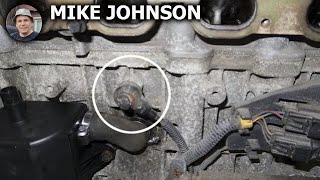
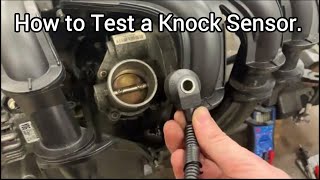
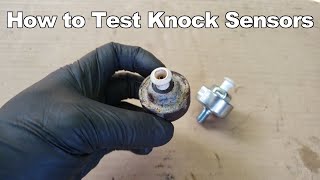
How to confirm: After ruling out software and wiring issues, test the sensor. A common test is to tap the engine block near the sensor with a wrench while monitoring its signal on a scan tool; a healthy sensor will show a voltage spike. You can also check the sensor's internal resistance with a multimeter 🎬 See this guide on how to test a knock sensor. against the specs in a repair manual.
Typical fix: Replace the knock sensor. It's crucial to torque the new sensor to the manufacturer's specification (typically 15-20 ft-lbs) as over or under-tightening can cause incorrect readings.
Est. part cost: $40-$90
Rare But Worth Checking
- Internal Engine Problem: Sometimes the knock sensor is doing its job perfectly by detecting a real mechanical issue, such as a bad rod bearing, piston slap, or excessive carbon buildup from low-quality fuel. This is less common but should be considered if other fixes fail and an audible knock is present.
- Faulty Engine Control Module (ECM): → Shop Engine Control Module (ECM) While rare, the ECM's internal circuit for processing the knock sensor signal can fail. TSB PIP5273 specifically advises against replacing the ECM for this code unless all other diagnostics have been exhausted. An ECM replacement is a last resort and can be costly, often over $1,000.
Diagnosis Steps
- Check for other DTCs. Address any other codes first, as they may be the root cause of the knock.
- Check for Technical Service Bulletins (TSBs). Contact a dealer or use a professional database to see if TSBs like PIP5303B, PIP5303A, or PIP5273 apply to your VIN. If so, an ECM/TCM reflash is the likely solution.
- Inspect Wiring and Connectors. Visually inspect the knock sensor wiring for any signs of damage, chafing, or melting. Check that the connector is clean and securely fastened. Per TSB PIP5985 (on newer models), pay special attention to connector X160 to ensure it is fully seated.
- Listen for Actual Engine Knock. Use a mechanic's stethoscope to listen to the engine block. If you can hear a distinct mechanical knocking or pinging, the sensor may be functioning correctly and detecting a real problem.
- Test the Knock Sensor Circuit. Using a multimeter, check for a 5-volt reference at the sensor connector with the ignition on.
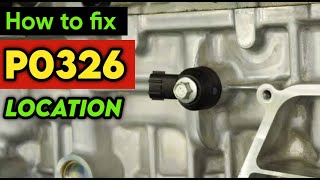
- Test the Knock Sensor Function (Tap Test). If the circuit is good, reconnect the sensor. Monitor its live data on a scan tool while lightly tapping the engine block near the sensor with a wrench. A healthy sensor will register these taps as voltage spikes. 🎬 Watch: How to fix P0326 circuit range performance codes.
- Replace the Knock Sensor. If the sensor is confirmed to be faulty, replace it. Ensure the mounting surface is clean and the new sensor is torqued to the correct specification (e.g., 17 ft-lbs).
- Investigate Mechanical Issues. If the code persists after replacing the sensor and updating software, a deeper investigation into the engine's mechanical health is required.
Parts You'll Likely Need
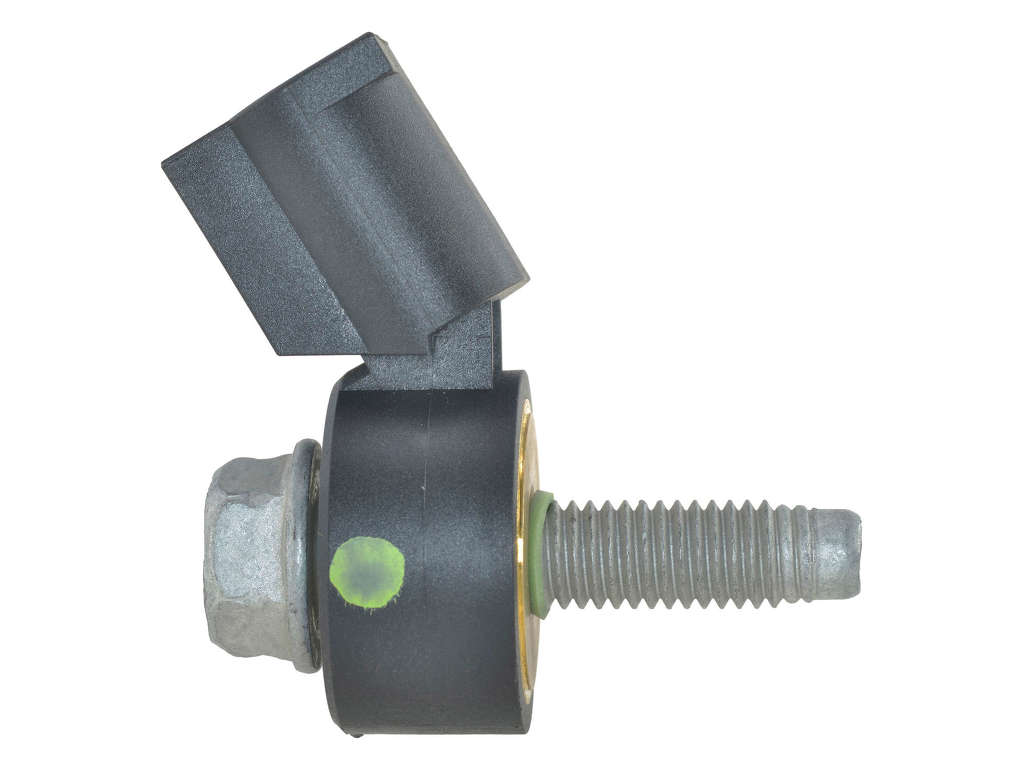
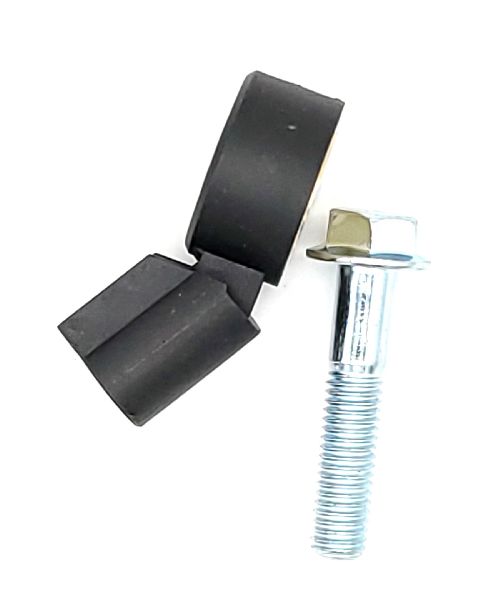
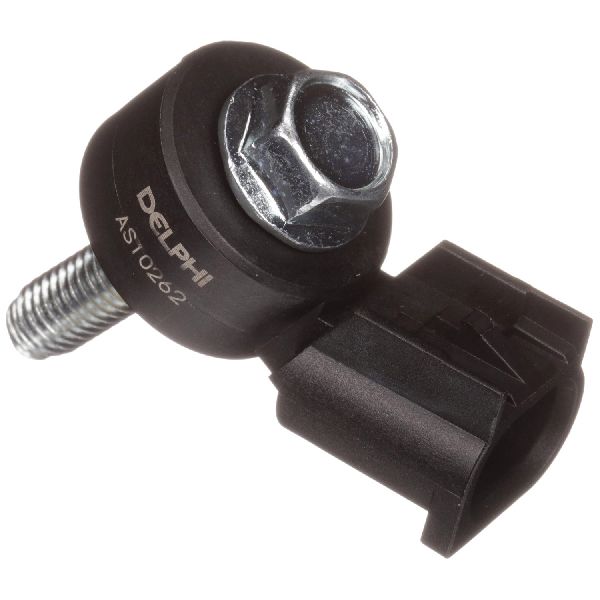
- Knock Sensor
(OEM #12646524)— This is the sensor that directly triggers the code if it fails internally or provides an erratic signal. This part number is specific to the 3.6L V6 engine.
Trusted brands: ACDelco, Bosch, Delphi, NTK
OEM price range: $60-$90
Aftermarket price range: $40-$70
Related Codes That Often Appear With This One
- P0331 — This is the code for Knock Sensor 2 Performance (Bank 2). TSBs PIP5303B, PIP5529B, and PIP5273 all list P0326 and P0331 together, indicating the underlying cause (often software or a shared connector issue) affects both engine banks.
Technical Service Bulletins (TSBs) & Recalls
- PIP5303B / PIP5303A: Addresses P0326 with symptoms of rough idle or harsh cruise engagement on 2015 3.6L models, recommending an ECM/TCM reprogram.
- PIP5273: Acknowledged false P0326 codes on 2015 models and advised against replacing parts, pointing to a software issue.
- PIP5420: Links P0326 to customer complaints of audible spark knock under light load.
- PIP5529B / PIP5529A: Lists P0326 among a group of codes that can cause a malfunction indicator lamp.
- PIP5985: Points to a poor connection at connector X160 as a possible cause for P0326 on 2023-2024 models.
Platform-Specific Known Issues
- A known issue on 2015 models with the 3.6L LFX engine was a false P0326 code setting in history. TSB PIP5273 advised technicians not to replace parts but to check connections and wait for a software fix, which was later released.
- TSB PIP5303B directly links P0326 to complaints of a rough idle or a harsh 'bump' when cruise control engages on 2015 models, with the fix being an ECM/TCM reprogram.
- TSB PIP5420 notes that P0326 may be stored in history when customers complain of a spark knock noise on slight acceleration, particularly uphill.
- On 2023-2024 models with the 2.7L engine, TSB PIP5985 points to a poor terminal connection or a connector not being fully seated at connector X160 as a primary cause for P0326 and P0331.
Mechanic-Grade Diagnostic Values
- Knock Sensor Internal Resistance — expected: 93,000 to 110,000 Ohms (93k-110k Ω). Failure: A reading of OL (Open Loop), near-zero Ohms (short), or a value significantly outside the expected range.
- Knock Sensor Bolt Torque — expected: 15 ft-lbs (20 N·m). Failure: An over-tightened or loose sensor will not correctly sense engine block vibrations, leading to inaccurate signals and performance codes.
- Knock Sensor Circuit Bias Voltage — expected: ~2.5 Volts DC (Key On, Engine Off). Failure: A reading of 0V or 5V suggests a short to ground or an open circuit in the wiring or ECM.
- Knock Sensor AC Voltage (Tap Test) — expected: Generates AC voltage spikes, typically above 1 Volt, when the engine block near the sensor is tapped with a wrench.. Failure: Little to no AC voltage is generated (e.g., less than 10 millivolts), indicating a dead sensor.
Scan Tool Commands That Help
- GM GDS2 (or equivalent advanced scan tool): Live Data > Ignition Data > Total Knock Retard — Use this during a test drive to see if the ECM is actively pulling timing. If the P0326 code is set but the 'Total Knock Retard' value remains at or near 0 degrees, it strongly suggests a circuit integrity fault or a bad sensor, rather than a true engine knock condition.
- GM GDS2 (or equivalent advanced scan tool): Read Freeze Frame / Failure Records — This is a critical first step. It captures a snapshot of all engine parameters (RPM, load, temperature, etc.) at the exact moment the P0326 code was triggered. This data helps a technician replicate the specific conditions that cause the fault.
Wiring & Ground Locations
- G103 / G104 — Typically located on the rear of the cylinder heads on the V6 engines.. These are primary engine ground points for the ECM and its sensors. A loose or corroded connection at these studs can introduce electrical noise into the system, causing unstable sensor readings and potentially triggering a false P0326 code.
- Connector X160 — An inline engine harness connector, relevant on 2019+ 2.7L L3B engines.. TSB 21-NA-149 specifically calls out inspecting for poor terminal tension at this connector as a cause for multiple DTCs. A loose pin connection for the knock sensor circuit passing through this connector can cause the intermittent signal fault of P0326.
- Engine Harness Chafe Points (2.7L Engine) — On 2019+ models with the 2.7L engine, inspect the harness for chafing against the ECM/TCM bracket, the driver's side upper control arm, and the shock tower.. TSB 21-NA-149 documents that engine movement can cause the harness to rub through on sharp metal edges in these areas, shorting out various circuits, including the knock sensor circuit. This is a known pattern for intermittent electrical faults on these specific models.
Real Owner Repair Stories
- ColoradoFans.com Forum User (2016 Chevrolet Colorado 3.6L V6) — Recurring P0326 and P0331 codes, check engine light.
❌ Tried (didn't work) Dealer replaced one of the knock sensors.
✅ What actually fixed it After the code returned post-sensor replacement, a second visit to the dealer for an ECM/TCM software update (reflash) as per the TSB finally resolved the issue permanently. This highlights the importance of checking for software updates before replacing hardware.
"I Checked Everything" — The Actual Cause
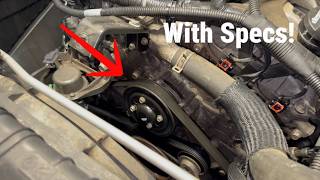
- A known pattern for the 3.6L LGZ engine (2017-2022) is a failing water pump causing a P0324 (Knock Sensor System Performance) code, which can be related to P0326. The failing pump bearing creates a noise that the knock sensor correctly detects as an abnormal vibration. Technicians may chase a sensor or wiring issue, but the root cause is the noisy water pump. TSB 21-NA-030 advises listening to the water pump with a stethoscope and monitoring knock retard on a scan tool while removing the serpentine belt to see if the noise (and knock retard value) disappears.
Model Year Variations Within This Range
- 2015-2016: These years use the 3.6L LFX V6. They are the primary focus of TSBs like PIP5303B, which address overly sensitive software causing false P0326/P0331 codes. The most common fix is an ECM/TCM reflash. On this engine, the knock sensors are located in the engine valley, under the intake manifold, making replacement a labor-intensive job.
- 2017-2022: These years use the updated 3.6L LGZ V6. While less prone to the specific software bug from earlier years, they can suffer from false knock codes caused by noisy components like a failing water pump (per TSB 21-NA-030). The knock sensors on the LGZ are located on the sides of the engine block, making them easier to access than on the LFX.
- 2019-2022 (with 2.7L L3B Engine): Models with the 2.7L Turbo engine have specific issues documented in TSB 21-NA-149. Causes for P0326 are often related to the engine wiring harness chafing on the ECM/TCM bracket or other components, or poor terminal tension at the inline connector X160. Diagnosis should focus on harness inspection in these known areas.
Helpful Videos
We Have This Part in Stock


The information in this article is provided for general reference and educational purposes only. Vehicle specifications, procedures, and part compatibility can vary by production date, trim level, and region. Always consult your vehicle's factory service manual and verify part numbers before purchasing or performing repairs. Safety-critical components such as airbags, seat belts, and braking systems should be installed by a qualified professional.
- Chevrolet COLORADO:
- 🧭 Diagnostic Flowchart
- 🎬 Helpful Videos
- 🛍️ Shop This Part
- What's Unique About the 2015-2022 Chevrolet COLORADO
- Symptoms You May Notice
- Most Likely Causes
- Rare But Worth Checking
- Diagnosis Steps
- Parts You'll Likely Need
- Related Codes That Often Appear With This One
- Technical Service Bulletins (TSBs) & Recalls
- Platform-Specific Known Issues
- Mechanic-Grade Diagnostic Values
- Scan Tool Commands That Help
- Wiring & Ground Locations
- Real Owner Repair Stories
- "I Checked Everything" — The Actual Cause
- Model Year Variations Within This Range
- 🎟️ Get 5% Off