

P0326 on 2014-2017 Chevrolet Impala: Knock Sensor and Vacuum Leak Fixes
On a 2014-2017 Impala, P0326 is often caused by more than just a bad knock sensor. A very common cause, especially if other codes are present, is loose intake manifold bolts creating a vacuum leak (GM TSB #PIP5529B). If it's just the sensor, expect to pay $30-$70 for the part, and replacement is an easy DIY job.
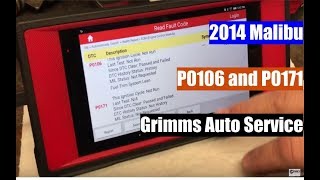
- Before buying any parts, check for other trouble codes. If you see codes like P0101, P0106, or P0171, the problem is very likely loose intake manifold bolts, per GM TSB #PIP5529B.
- The fix for the TSB issue is cheap and simple: re-torquing the intake bolts with threadlocker.
- If P0326 appears alone, the most likely causes are a faulty knock sensor or its wiring connector.
- On the 2014-2017 Impala, the knock sensors are on the outside of the engine block and are relatively easy to replace, making this a manageable DIY job.
- Always use a torque wrench when installing a new knock sensor to ensure it reads correctly.
What's Unique About the 2014-2017 Chevrolet IMPALA
For this generation of Chevrolet Impala, a P0326 code has a well-documented, non-obvious cause. A General Motors Technical Service Bulletin (TSB #PIP5529B) points to 🎬 Watch: Diagnosing the loose intake manifold issue on a 2.5L loose intake manifold bolts as a frequent culprit, particularly on the 2.5L engine. This creates a vacuum leak that causes the engine to run lean and detonate, which the knock sensor correctly reports. Technicians may mistakenly replace the sensor when the real issue is simply re-torquing the manifold bolts. Additionally, unlike many older GM engines where sensors were buried under the intake, the knock sensors on both the 2.5L and 3.6L engines are mounted externally on the block, making them significantly easier to access and replace.
Diagnostic Flowchart
Tap your situation to follow the diagnostic path that matches what you're seeing on this vehicle.
Symptoms You May Notice
- Check Engine Light illuminated
- Reduced engine power and sluggish acceleration
- Noticeable decrease in fuel economy
- Engine hesitation or stumbling, especially under load
- Audible metallic pinging or knocking noise from the engine during acceleration
- Engine may stall in rare cases, as noted in TSB PIP5529B
- Replacing the knock sensor when the actual cause is a vacuum leak from a loose intake manifold, especially on the 2.5L engine.
- Replacing spark plugs or ignition coils expecting to fix the performance issue without addressing the knock sensor circuit fault.
- Replacing the Mass Airflow (MAF) sensor when lean codes appear alongside P0326, without first checking for the TSB-related intake leak.
Most Likely Causes
- Loose Intake Manifold Bolts 🔴 High Probability → Shop Engine Intake Manifold Documented in GM Technical Service Bulletin #PIP5529B, this issue primarily affects the 2.5L LKW engine and can cause a lean condition from a vacuum leak, leading to detonation that triggers the knock sensor code.
How to confirm: Check for the presence of other codes like P0068, P0101, P0106, or P0171. Inspect and check the torque of the intake manifold mounting bolts. A smoke test of the intake system can also confirm a leak in this area.
Typical fix: Per TSB PIP5529B, remove one bolt at a time, apply medium-strength threadlocker, and torque all bolts to the manufacturer's specification (typically 89 lb-in or 10 Nm for the 2.5L) in the correct sequence. The intake gasket should only be replaced if it's found to be leaking after the bolts are properly torqued. This is a 0.4-hour labor job under warranty.
Est. part cost: $5-$15 (for threadlocker) - Faulty Knock Sensor 🟡 Medium Probability → Shop Ignition Knock (Detonation) Sensor Sensors can fail over time due to heat cycles and vibration. Internal piezoelectric elements can degrade, causing erratic signals.
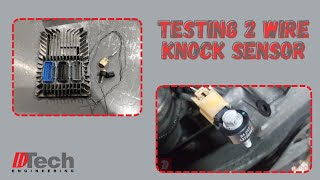
How to confirm: After ruling out other causes, test the sensor's resistance with a multimeter (should be high, around 93k-107k ohms for OBD-II) or observe its output on a scan tool/oscilloscope while tapping the engine block near the sensor. A functioning sensor should show a voltage spike on the scan tool during the tap test.
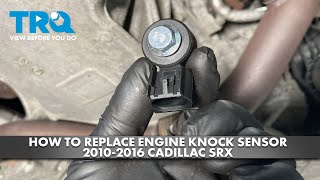
Typical fix: Replace the knock sensor. 🎬 Watch this walkthrough on replacing a GM knock sensor It is critical to tighten the new sensor to the specified torque value, as incorrect torque can lead to false readings (too sensitive or not sensitive enough). The typical torque spec for this style of sensor is 15-18 lb-ft (20-24 Nm).
Est. part cost: $30-$70 - Damaged Wiring or Connector 🟡 Medium Probability The wiring harness and connector are exposed to engine heat and vibration, which can lead to frayed wires, loose pins, or corrosion. Oil contamination can also degrade the connection.
How to confirm: Visually inspect the wiring harness leading to the knock sensor for any signs of damage, melting, or corrosion. Check that the connector is securely plugged in and that the pins are clean and not backed out. Test for 5 volts at the sensor connector with the key on, engine off.
Typical fix: Repair the damaged section of wiring or replace the pigtail connector.
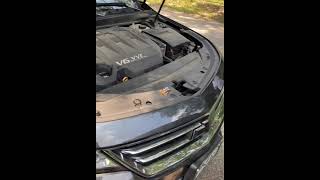
Est. part cost: $15-$30 - Cracked Intake Air Duct (3.6L V6) ⚪ Low Probability On the 3.6L V6, the flexible rubber intake air duct between the air filter box 🎬 See how to find and fix a cracked intake duct and the throttle body is known to crack, especially in the accordion sections. This creates an unmetered air leak (vacuum leak).
How to confirm: Visually inspect the entire intake air duct for cracks or tears, especially on the underside. With the engine running, you can sometimes hear a hissing sound or spray the area with brake cleaner and listen for a change in engine RPM. This will typically set a P0171/P0174 lean code, but could contribute to conditions that trigger P0326.
Typical fix: Replace the intake air duct assembly.
Est. part cost: $50-$100
Rare But Worth Checking
- Internal Engine Problems: While rare, excessive carbon buildup on direct injection intake valves, worn bearings, or other mechanical issues can cause true engine knock that is beyond the ECM's ability to correct with timing adjustments, setting this code.
- Faulty Engine Control Module (ECM): → Shop Engine Control Module (ECM) This is very uncommon, but the internal circuitry of the ECM that processes the knock sensor signal can fail. This should only be considered after all other possibilities have been exhausted.
Diagnosis Steps
- Scan for all DTCs. If codes P0101, P0106, P0171, or P0324 are present with P0326 on a 2.5L engine, immediately suspect loose intake manifold bolts per TSB #PIP5529B.
- For 2.5L engines, inspect and check the torque on the intake manifold bolts. The spec is 89 lb-in (10 Nm). If loose, follow the TSB procedure of applying threadlocker and re-torquing in sequence.
- For 3.6L engines, thoroughly inspect the rubber intake air duct between the air filter housing and throttle body for cracks or tears that would cause a vacuum leak.
- If no other codes are present, perform a thorough visual inspection of the knock sensor, its connector, and the wiring harness for any signs of physical damage, melting, or oil contamination.
- Check the connector for a secure fit and for any pins that may have backed out or are corroded. Test for a 5-volt reference at the connector with the key on, engine off.
- If the wiring looks good, test the knock sensor circuit. Check for correct resistance at the sensor terminals. A good OBD-II sensor will typically have high resistance (e.g., 93k-107k ohms).
- With a scan tool, monitor the knock sensor signal while lightly tapping on the engine block near the sensor. A functioning sensor should produce a voltage signal spike in response to the taps.
- If the sensor and wiring test good, investigate other potential causes of real engine knock, such as incorrect fuel octane, excessive carbon buildup on intake valves (common on direct injection engines), or other mechanical engine noise.
- If the sensor fails testing, replace it. Ensure the mounting surface is clean and torque the new sensor to 15-18 lb-ft (20-24 Nm). Over or under-torquing will impair its function.
Parts You'll Likely Need
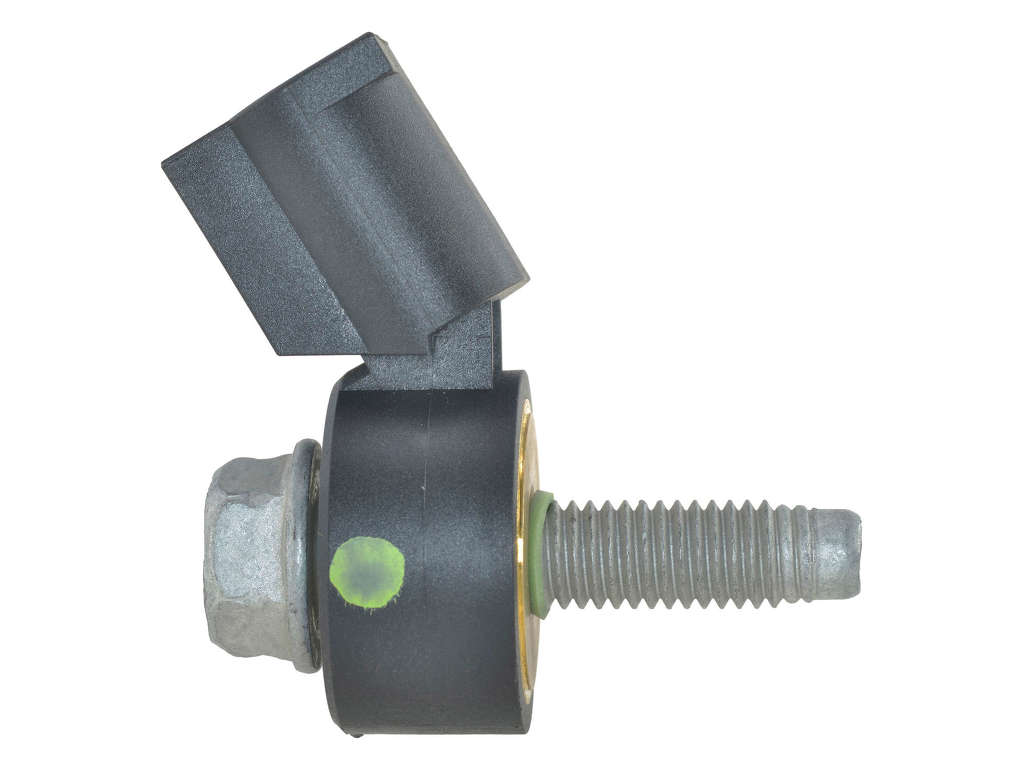
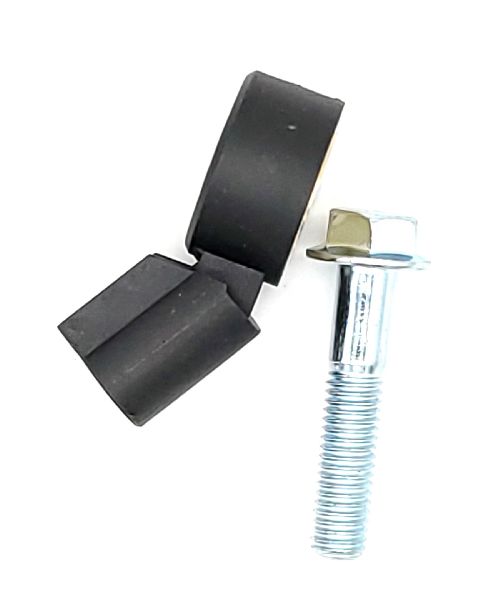
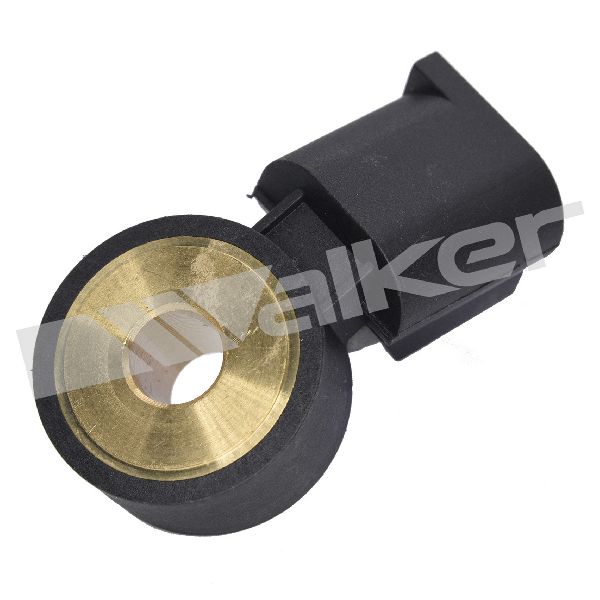
- Knock Sensor (3.6L V6)
(OEM #12622522)— This is the sensor for Bank 1 on the V6 engine. It may fail internally, causing the P0326 code.
Trusted brands: ACDelco, Delphi, NGK/NTK
OEM price range: $50-$80
Aftermarket price range: $30-$60 - Knock Sensor (2.5L I4)
(OEM #12647750)— The 2.5L engine has a single knock sensor. It can fail and cause erratic signal readings.
Trusted brands: ACDelco, Delphi, Bosch
OEM price range: $60-$90
Aftermarket price range: $35-$65 - Knock Sensor Connector Pigtail — The plastic connector can become brittle from heat and break, or the wiring can fail, necessitating a replacement pigtail.
Trusted brands: ACDelco, Dorman
OEM price range: $25-$40
Aftermarket price range: $15-$30
Related Codes That Often Appear With This One
- P0101 — Mass Air Flow (MAF) Sensor Performance. Often appears with P0326 due to a vacuum leak from loose intake manifold bolts, causing conflicting airflow readings.
- P0106 — Manifold Absolute Pressure (MAP) Sensor Performance. Also related to the loose intake manifold TSB, as a vacuum leak directly affects MAP sensor readings.
- P0171 — System Too Lean (Bank 1). A direct result of unmetered air entering the engine from a vacuum leak, which can cause the detonation that triggers P0326.
- P0324 — Knock Control System Error. This is a more general knock system fault that can be logged alongside the specific P0326 code, as noted in TSB PIP5529B.
Technical Service Bulletins (TSBs) & Recalls
- PIP5529B
Platform-Specific Known Issues
- A known issue, documented in TSB #PIP5529B, is that loose intake manifold bolts on the 2.5L LKW engine can cause a vacuum leak, triggering P0326 along with a host of other seemingly unrelated codes. The fix is to re-torque the bolts (to 89 lb-in) with threadlocker, not necessarily replace parts.
- On the 3.6L V6, a cracked air intake hose between the MAF sensor and throttle body is a common cause for lean codes (P0171/P0174) which can create engine performance issues that might be misconstrued as a knock sensor problem.
Mechanic-Grade Diagnostic Values
- Knock Sensor Signal Voltage (Live Data) — expected: 0.5V - 1.0V at idle, with spikes to 1.0V - 4.0V when the engine block is tapped lightly.. Failure: Voltage is stuck at 0V, a constant high value, or does not respond to tapping the engine block.
- Knock Sensor Circuit Reference Voltage — expected: 5 Volts at the sensor connector with ignition on, engine off.. Failure: Significantly lower than 5V or no voltage indicates a wiring or ECM problem.
- Knock Sensor Torque Specification — expected: 15-18 lb-ft (20-24 Nm).. Failure: N/A - This is a critical installation value. Incorrect torque can make the sensor too sensitive or not sensitive enough, causing false codes.
Scan Tool Commands That Help
- GDS2 / Professional Scan Tool: Knock Sensor Live Data Monitoring — Used during a 'tap test'. While monitoring the knock sensor PID, a technician can tap the engine block near the sensor with a wrench. A healthy sensor will show a clear voltage spike on the scan tool graph, confirming the sensor itself is responsive.
Wiring & Ground Locations
- G120 (3.6L V6) — Left side of the engine, below the starter motor.. This is a primary engine ground. A poor connection here can introduce electrical noise or cause floating ground issues for various sensors, including the knock sensor, leading to erratic readings.
- J104 (Engine Harness Junction) — On the 2.5L, it's in the engine harness, 6.5 cm from the main bundle between the ECM and connector X115. On the 3.6L, it's 18.1 cm from the breakout to connector X115.. This is a splice pack or junction point within the harness. Corrosion or a loose connection inside this junction could affect multiple sensor circuits, including the knock sensor signal and reference voltage.
- Knock Sensor 1 (Bank 1) - 3.6L V6 — On the rear cylinder bank (the bank closer to the firewall).. This is the specific sensor referenced by code P0326 on the V6 engine. Its location is important for inspection and testing.
Real Owner Repair Stories
- Reddit user Right_Plastic8527 (2016 Impala V6, 113,000 miles) — Not specified for P0326, but reported multiple electronic issues.
❌ Tried (didn't work) Not specified
✅ What actually fixed it The user reported needing to replace the transmission control module, fuel evap valves, and was having issues with the fuel pump. While not a direct P0326 story, it highlights that other module failures can occur on this platform and could potentially cause related diagnostic codes.
Model Year Variations Within This Range
- 2014-2017: For the V6 engine, Chevrolet used the 3.6L LFX engine consistently through the 2017 model year for the Impala. Unlike some other GM models that switched to the newer LGX V6, the Impala retained the LFX, meaning the parts and common issues related to the engine, including the knock sensors, are consistent across this vehicle's year range.
Helpful Videos
We Have This Part in Stock


The information in this article is provided for general reference and educational purposes only. Vehicle specifications, procedures, and part compatibility can vary by production date, trim level, and region. Always consult your vehicle's factory service manual and verify part numbers before purchasing or performing repairs. Safety-critical components such as airbags, seat belts, and braking systems should be installed by a qualified professional.
- Chevrolet IMPALA:
- 🧭 Diagnostic Flowchart
- 🎬 Helpful Videos
- 🛍️ Shop This Part
- What's Unique About the 2014-2017 Chevrolet IMPALA
- Symptoms You May Notice
- Most Likely Causes
- Rare But Worth Checking
- Diagnosis Steps
- Parts You'll Likely Need
- Related Codes That Often Appear With This One
- Technical Service Bulletins (TSBs) & Recalls
- Platform-Specific Known Issues
- Mechanic-Grade Diagnostic Values
- Scan Tool Commands That Help
- Wiring & Ground Locations
- Real Owner Repair Stories
- Model Year Variations Within This Range
- 🎟️ Get 5% Off