

P0326 on 2013-2017 Chevrolet Malibu: Knock Sensor Performance Guide
This code indicates a problem with the knock sensor's signal. Most often, the fix is replacing the knock sensor itself, which costs about $30-$60 for an aftermarket part. Other common causes include damaged wiring or, less frequently, an actual mechanical issue causing engine knock, such as using low-octane fuel or timing chain rattle.
- P0326 on a 2013-2017 Malibu most likely means the knock sensor has failed.
- Before replacing the sensor, always inspect the wiring and connector for damage, and rule out actual engine knock from low-octane fuel.
- On Ecotec engines, be aware that this code can be a symptom of a more serious timing chain issue, especially if accompanied by codes P0016/P0017 and a rattling noise.
What's Unique About the 2013-2017 Chevrolet MALIBU
For the 2013-2017 Malibu, which spans the end of the 8th generation and the start of the 9th, the knock sensor is a common failure point. While the sensor itself can fail, it's also important to consider issues that can mimic a sensor fault. One documented case on a 2015 Malibu with this code was caused by a loose motor mount creating excessive vibrations that the sensor misinterpreted. Additionally, GM has issued Technical Service Bulletins (TSBs) like #PIP5529B, which group P0326 with many other electrical codes. This suggests that wiring harness chafing, connector corrosion, or poor ground connections can be a root cause for what appears to be a simple sensor problem. [TSB #PIP5529B, TSB #PIP5529A] The Ecotec engines in these vehicles are also known for timing chain issues, which can create a rattling noise that the knock sensor may pick up, triggering a P0326 code alongside timing correlation codes.
Diagnostic Flowchart
Tap your situation to follow the diagnostic path that matches what you're seeing on this vehicle.
Generation note: This range covers the eighth generation (2013-2016 'Limited' models) and the ninth generation (starting in 2016). The 8th gen used a 2.5L or 2.0L Turbo engine, while the 9th gen introduced a 1.5L Turbo. The function of the knock sensor is similar across these engines, but its physical location varies. On the 2.5L engine, the sensor is often on the side of the engine block. On the 1.5L Turbo, it is located on the back of the engine, above the starter and underneath the intake manifold, making it more difficult to access.
Symptoms You May Notice
- Check Engine Light is on
- Reduced engine power or sluggish acceleration.
- Engine hesitation, especially under load.
- Audible engine pinging or knocking noise.
- Decreased fuel economy.
- Engine running rough or misfiring.
- Replacing the knock sensor without checking for actual engine knock. The sensor might be accurately reporting a real mechanical problem like a stretched timing chain.
- Replacing the sensor when the actual fault is in the wiring harness or connector. A simple continuity and voltage check can prevent this.
Most Likely Causes
- Faulty Knock Sensor 🔴 High Probability → Shop Ignition Knock (Detonation) Sensor The sensor is exposed to constant engine heat and vibration, leading to an internal failure of the piezoelectric element over time, typically after 80,000 miles.
How to confirm: After checking wiring, test the sensor's internal resistance with a multimeter. For many GM sensors, the expected range is 93-107 kOhms, but consult a repair manual for your specific part. An open circuit (infinite resistance) or a reading far outside the spec indicates failure. Another test is to check for a small AC voltage signal from the sensor while lightly tapping the engine block near it with a wrench.
Typical fix: Replace the knock sensor. It is critical to torque the new sensor to the manufacturer's specification (e.g., 17 ft-lbs), as over or under-tightening can affect its sensitivity.
Est. part cost: $30-$80 - Wiring or Connector Issue 🟡 Medium Probability The wiring harness to the sensor can become brittle from heat, or the connector pins can corrode from moisture, disrupting the signal. The harness can also chafe against engine components, causing a short or open circuit.
How to confirm: Visually inspect the wiring for any signs of fraying, melting, or rodent damage. Unplug the connector and check for corrosion, moisture, or bent pins. Check for a 5-volt reference signal at the connector with the key on, engine off. If the voltage is near 5V, it may indicate an open circuit in the sensor or wiring.
Typical fix: Repair the damaged section of wire or clean/replace the connector pigtail.
Est. part cost: $5-$50 - Actual Engine Knock ⚪ Low Probability Using low-octane fuel (below the recommended 87 octane), excessive carbon buildup in the cylinders of these direct-injection engines, or other engine mechanical problems can cause real detonation. The sensor is doing its job, but the knock is so persistent it sets a performance code.
How to confirm: Listen for an audible pinging or knocking sound from the engine, especially during acceleration. Ensure you are using the correct octane fuel. If the sound persists, the issue is mechanical.
Typical fix: Switch to the recommended octane fuel. If knock persists, a professional diagnosis is needed to check for carbon buildup (which may require induction cleaning services) or internal engine issues.
Est. part cost: $0-$1000+
Rare But Worth Checking
- Loose Engine Components: A case on a 2015 Malibu showed that a loose motor mount caused vibrations that the ECM interpreted as a knock sensor fault, triggering P0326. Check for any loose brackets, heat shields, or accessories on the engine that could be rattling and creating noise picked up by the sensor.
- Faulty Engine Control Module (ECM): → Shop Engine Control Module (ECM) This is very rare. The ECM's internal circuit for processing the knock sensor signal can fail. This should only be considered after all other possibilities, including sensor, wiring, and mechanical noises, have been thoroughly exhausted.
Diagnosis Steps
- Check for any other stored trouble codes. Address timing-related codes (P0016/P0017) or misfire codes (P0300-P0308) first, as they are likely the root cause.
- Listen for any audible mechanical knocking or rattling from the engine. If a rattle is present on startup, suspect a timing chain tensioner issue. If pinging occurs under load, verify you are using the correct octane fuel.
- Visually inspect the knock sensor, its connector, and the wiring harness for any obvious damage, corrosion, or loose connections. Pay close attention to where the harness may rub against the engine block or other components.
- With the key on and engine off, disconnect the sensor and check for a 5V reference signal at the harness connector using a multimeter.
- If voltage is present, measure the sensor's internal resistance. Compare the reading to the factory specification (often ~100 kOhms for GM). An out-of-spec reading indicates a bad sensor.
- If the sensor tests good, perform a 'tap test'. Reconnect the sensor, start the engine, and monitor knock sensor data on a scan tool while lightly tapping the engine block near the sensor with a wrench. You should see a signal spike. No reaction indicates a faulty sensor or circuit.
- If the sensor and wiring are confirmed to be good, and no mechanical noises are present, the issue may be a rare ECM fault or a subtle mechanical noise (e.g., from a loose motor mount) being picked up by the sensor.
Parts You'll Likely Need
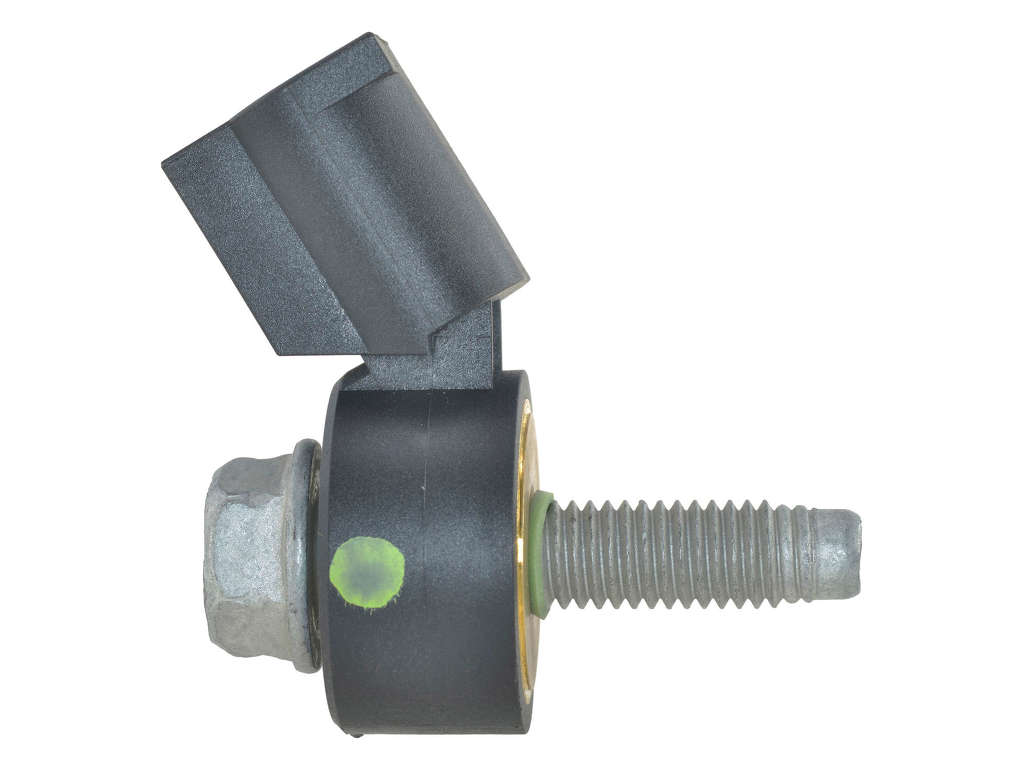
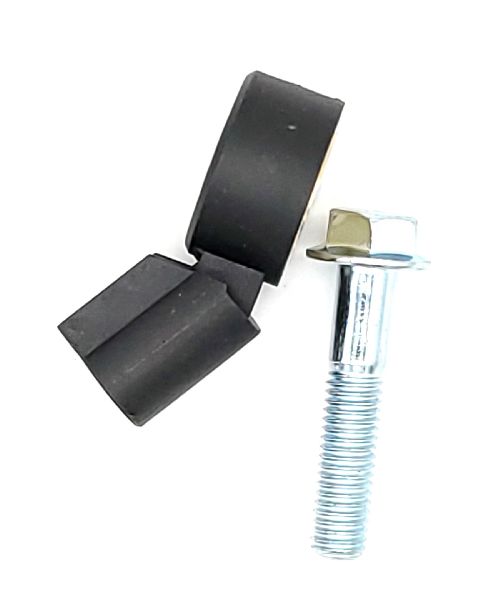
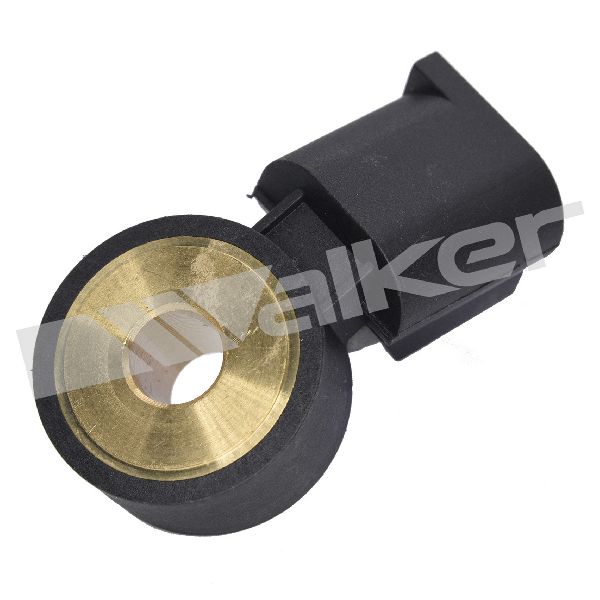
- Knock Sensor
(OEM #12692505)— This is the most common failure point for code P0326 due to wear from heat and vibration. This specific part number is listed for many 2.5L Ecotec engines in this generation.
Trusted brands: ACDelco (OEM), Bosch, Delphi, NGK/NTK
OEM price range: $50-$90
Aftermarket price range: $30-$60
Related Codes That Often Appear With This One
- P0300-P0308 — If the engine is truly knocking or misfiring, a random (P0300) or cylinder-specific (P0301, etc.) misfire code may accompany the knock sensor code.
- P0016 / P0017 — On these GM Ecotec engines, worn timing chain guides or a faulty tensioner can cause the chain to slap or rattle. The knock sensor is sensitive enough to pick up this noise and interpret it as engine knock, triggering P0326 along with camshaft/crankshaft correlation codes like P0016 and P0017. This is a well-documented issue.
Technical Service Bulletins (TSBs) & Recalls
- PIP5529B: Mentions P0326 in a long list of DTCs that may be resolved by addressing a common electrical issue, often related to a poor ground connection or harness problem.
- PIP5529A: An earlier version of the same bulletin, also including P0326 in a list of potential codes due to an electrical fault.
Platform-Specific Known Issues
- Technical Service Bulletins #PIP5529B and #PIP5529A list P0326 among a wide array of other electrical codes that can be caused by a single underlying issue, pointing towards potential wiring harness or ECM problems on these vehicles. [TSB #PIP5529B, TSB #PIP5529A]
- A documented case on a 2015 Malibu traced a P0326 code to a loose motor mount, which created vibrations that fooled the sensor.
- The Ecotec engines used in this generation are known for timing chain stretch and tensioner failures. The resulting rattle is a common cause for a P0326 code when no actual engine knock is present. A user on Reddit with a 2012 Malibu reported P0326 along with timing codes P0016 and P0017, a classic sign of this issue.
Mechanic-Grade Diagnostic Values
- Knock Sensor Bias Voltage (Signal Wire) — expected: ~2.5V DC with key on, engine off (KOEO). Failure: A voltage near 0V suggests a short to ground. A voltage near 5V suggests an open circuit in the sensor or low reference wire.
- Knock Sensor AC Voltage (Tap Test) — expected: Small, sharp spikes of 0.1V to 0.5V AC when tapping the engine block near the sensor with a wrench (engine idling).. Failure: No voltage spike during the tap test indicates a dead sensor or an open circuit.
- Scan Tool 'Knock Retard' PID — expected: Should be 0 degrees at idle with no audible knock. May show degrees of retard under heavy load.. Failure: A high degree of knock retard (e.g., >10 degrees) at idle or light load without any audible engine noise points to a hypersensitive sensor or electrical noise in the circuit.
Hidden / Shadow Codes Worth Checking
- P0326 with Symptom Byte: GM uses symptom bytes to provide more detail. Common bytes for P0326 include '5A' for Range/Performance, '01' for Short to Battery, '02' for Short to Ground, or '04' for Open Circuit. (see via A professional scan tool like a GM GDS2/Tech2 is required to view these symptom bytes.)
Scan Tool Commands That Help
- GM GDS2 / Tech2: Knock Sensor Learn Reset — This function should be performed after replacing the knock sensor or the ECM. It resets the learned noise profile of the engine, which is necessary for the new sensor to report data correctly.
Wiring & Ground Locations
- Knock Sensor Circuit — The sensor uses a two-wire connector. One wire is the signal (often Dark Blue) and the other is a low reference/ground (often Tan). Both wires run directly to the ECM; the sensor is not grounded to the engine block through its wiring.. A fault on either the signal or the low reference wire can cause the code. Technicians must test both for continuity back to the ECM.
- G122 — On the rear of the cylinder head (for 2.5L LCV engine).. This is a primary engine control ground. A loose or corroded connection at G122 can introduce electrical noise into the system, which may be misinterpreted by the ECM as engine knock, triggering P0326.
- G103 — On the cowl in the engine compartment, above the brake booster.. While not a direct engine ground, this ground serves the BCM and other modules. TSB #PIP5529 specifically points to widespread electrical issues from poor grounds, and while it often refers to a transmission stud ground, checking all major grounds like G103 is a valid step when multiple codes are present.
Real Owner Repair Stories
- ChevyMalibuForum user (2014 Chevrolet Malibu) — P0326 code, Check Engine Light on.
❌ Tried (didn't work) Replacing the knock sensor.
✅ What actually fixed it The pigtail connector for the knock sensor was replaced. The original connector had an internal fault that was not visually apparent, causing a poor connection that persisted even with a new sensor. - CruzeTalk forum user (similar Ecotec engine) (Chevrolet Cruze with 1.4L Turbo engine) — P0326 code present.
❌ Tried (didn't work) Replacing the knock sensor., Checking the wiring harness for faults.
✅ What actually fixed it A faulty ignition coil on one cylinder was creating electromagnetic interference (EMI/RFI noise). The knock sensor circuit was picking up this electrical noise, which the ECM interpreted as a knock signal, triggering the P0326 code. Replacing the bad coil resolved the issue.
When the Usual Fixes Don't Work
- In several documented cases, replacing the knock sensor for P0326 did not fix the issue. The actual cause was often found in the wiring, specifically the pigtail connector which can fail internally without visible damage. In another case involving a similar GM engine, the root cause was electrical noise from a failing ignition coil, which demonstrates that technicians should investigate sources of EMI before condemning the sensor or ECM.
OEM Part Supersession History
12672785→12714658— Internal design/material improvements for durability and signal accuracy.
Model Year Variations Within This Range
- 2013-2016 (8th Gen): Primarily equipped with the 2.5L LCV engine. The knock sensor (PN 12692505) is located on the side of the engine block. The relevant engine ground is G122 on the rear of the cylinder head.
- 2016-2017 (9th Gen): Primarily equipped with the 1.5L LFV turbo engine. The knock sensor (PN 12672785, later 12714658) is in a more difficult location under the intake manifold. TSB #PIP5529B specifically calls out 2016-2017 models for potential issues related to loose intake bolts or grounds.
Helpful Videos
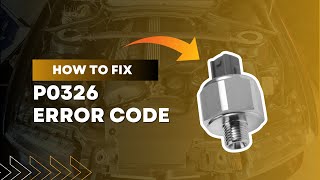
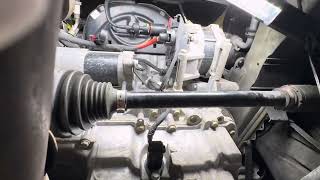
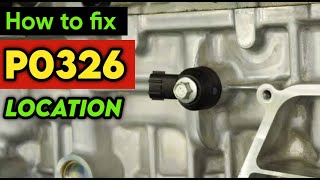
We Have This Part in Stock


The information in this article is provided for general reference and educational purposes only. Vehicle specifications, procedures, and part compatibility can vary by production date, trim level, and region. Always consult your vehicle's factory service manual and verify part numbers before purchasing or performing repairs. Safety-critical components such as airbags, seat belts, and braking systems should be installed by a qualified professional.
- Chevrolet MALIBU:
- 🧭 Diagnostic Flowchart
- 🎬 Helpful Videos
- 🛍️ Shop This Part
- What's Unique About the 2013-2017 Chevrolet MALIBU
- Symptoms You May Notice
- Most Likely Causes
- Rare But Worth Checking
- Diagnosis Steps
- Parts You'll Likely Need
- Related Codes That Often Appear With This One
- Technical Service Bulletins (TSBs) & Recalls
- Platform-Specific Known Issues
- Mechanic-Grade Diagnostic Values
- Hidden / Shadow Codes Worth Checking
- Scan Tool Commands That Help
- Wiring & Ground Locations
- Real Owner Repair Stories
- When the Usual Fixes Don't Work
- OEM Part Supersession History
- Model Year Variations Within This Range
- 🎟️ Get 5% Off