

P0326 on 2017 Fiat 500: Knock Sensor Performance, Causes, and Fixes
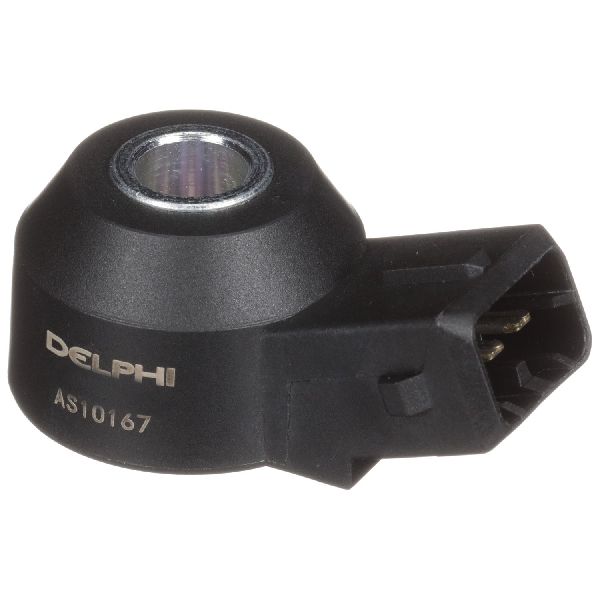
On a 2017 Fiat 500, P0326 indicates a problem with the knock sensor's signal. This is often caused by a faulty sensor or wiring. However, a known software glitch can incorrectly display code P0000 instead of P0326, requiring a dealer PCM update. A sensor replacement is a common fix, costing around $40-$90 for the part, which is identified as Mopar part #68070745AB.
- For a 2017 Fiat 500, P0326 or even a P0000 code with performance issues points towards the knock sensor circuit.
- Your first step should be to check if the vehicle's PCM software is up-to-date, as per Fiat TSBs.
- If a hardware replacement is needed, the knock sensor is the most likely culprit.
- The sensor is located on the back of the engine and can be replaced by a DIYer with moderate skills, but requires jacking up the vehicle safely.
- Always ensure the new sensor's mounting surface is clean and that it is torqued correctly to ensure an accurate signal.
What's Unique About the 2017-2017 Fiat 500
The most significant issue for the 2017 Fiat 500 regarding P0326 is a documented software glitch in the Powertrain Control Module (PCM). Multiple TSBs (like #18-083-17) confirm that the vehicle may display a confusing P0000 code when the real problem is the P0326 knock sensor circuit. This can lead to misdiagnosis if a technician isn't aware of the issue. This same problem is documented for other FCA vehicles using the 1.4L MultiAir engine, including the Jeep Renegade and Fiat 500X. The primary factory-recommended step in these cases is to update the PCM software before attempting to replace any hardware.
Diagnostic Flowchart
Tap your situation to follow the diagnostic path that matches what you're seeing on this vehicle.
Symptoms You May Notice
- Check Engine Light is on
- Reduced engine power and acceleration
- Engine hesitates or stumbles under load
- Audible engine pinging or knocking noises
- Decreased fuel economy
- In some cases related to the software glitch, a hard start or long crank condition may be present.
- Ignoring a P0000 code. On this vehicle, a P0000 code with drivability issues can be a masked P0326 and should be investigated per the TSBs.
- Replacing the knock sensor without checking for PCM software updates first.
- Replacing other ignition components like spark plugs or coils before verifying the knock sensor circuit is functioning correctly.
Most Likely Causes
- Powertrain Control Module (PCM) Software Glitch 🔴 High Probability → Shop Engine Control Module (ECM) Documented in manufacturer TSBs #18-083-17, #18-026-17 REV. A, and #18-116-16. The PCM incorrectly reports a P0000 code instead of P0326.
How to confirm: A Fiat dealer or a properly equipped independent shop can check the current PCM software version against the latest available version referenced in the TSBs using a wiTECH scan tool.
Typical fix: Reprogramming (flashing) the PCM with the updated software. After the flash, diagnostics for P0326 must be performed if the code appears or was the original code.
Est. part cost: $0 (if under warranty), $100-$280 (dealer labor for flash) - Faulty Knock Sensor 🟡 Medium Probability → Shop Ignition Knock (Detonation) Sensor Sensors can fail over time due to extreme heat cycles and constant engine vibration.
How to confirm: After confirming the PCM software is up to date, test the sensor's resistance with a multimeter (should be between 93-100 ohms for many vehicles, but check spec). Visually inspect for cracks or physical damage. The sensor is located on the back of the engine block, above the CV axle.
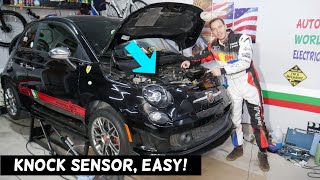
Typical fix: Replace the knock sensor. It is located on the back of the engine block, accessible from underneath the vehicle. 🎬 See this walkthrough on how to locate and replace the sensor. The OEM part is Mopar #68070745AB.
Est. part cost: $40-$90 - Wiring or Connector Issues ⚪ Low Probability The wiring harness is located near hot and moving parts like the exhaust and CV axle, making it susceptible to melting, chafing, or corrosion. The connector lock is also known to be difficult to access, potentially leading to an incomplete connection.
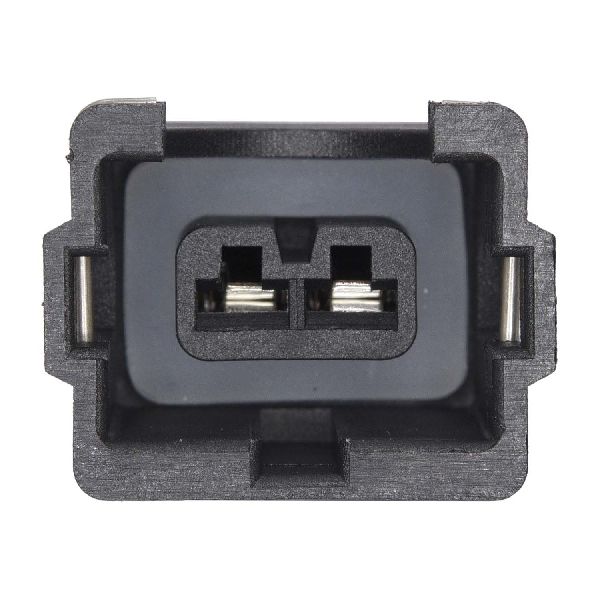
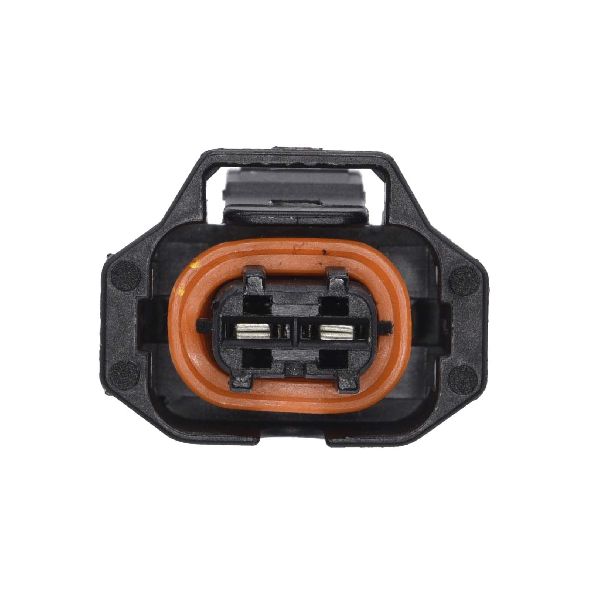
How to confirm: Visually inspect the wiring harness and connector leading to the knock sensor for any signs of melting, chafing, or corrosion. Check for a secure connection by ensuring the yellow lock tab is engaged.
Typical fix: Repair the damaged section of the wiring harness or clean/replace the connector.
Est. part cost: $5-$50
Rare But Worth Checking
- Internal Engine Problems: If the engine is actually knocking due to mechanical issues (e.g., bad bearings, carbon buildup, wrong fuel octane), the knock sensor will correctly report this. This can sometimes set a performance code if the knock is severe and persistent. This is rare and would usually be accompanied by other serious symptoms.
- Faulty Powertrain Control Module (PCM): → Shop Engine Control Module (ECM) In very rare cases, the PCM's internal circuit for the knock sensor can fail. This should only be considered after all other possibilities, including software updates, have been exhausted. A loose battery ground can also mimic PCM failure.
Diagnosis Steps
- Check for Technical Service Bulletins (TSBs). For a 2017 Fiat 500, TSBs #18-083-17, #18-026-17 REV. A, and #18-116-16 are highly relevant.
- If code P0000 is present with symptoms, suspect a masked P0326 per the TSBs.
- Verify if the PCM software is up-to-date. If not, have a dealer or qualified shop perform the software update. This may resolve the issue entirely.
- If P0326 is present (or appears after the update), locate the knock sensor on the rear of the engine block, above the passenger-side CV axle and next to the starter.
- Inspect the sensor's wiring and connector for damage, melting, or loose connections. Ensure the yellow locking tab on the connector is secure.
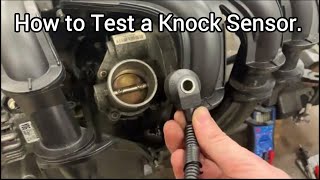
- If wiring is intact, disconnect the sensor and test its internal resistance with a multimeter. 🎬 Watch this video to learn how to test a knock sensor. Compare the reading to the manufacturer's specification.
- If the sensor tests out of range or is physically damaged, replace it. Ensure the mounting surface on the engine block is perfectly clean before installing the new sensor, as debris can affect its reading.
- Torque the new sensor's 13mm bolt to the correct specification, which is 18 ft-lbs (25 Nm).
- Clear the DTCs and perform a test drive, including some acceleration under load, to ensure the code does not return.
Parts You'll Likely Need
- Knock Sensor
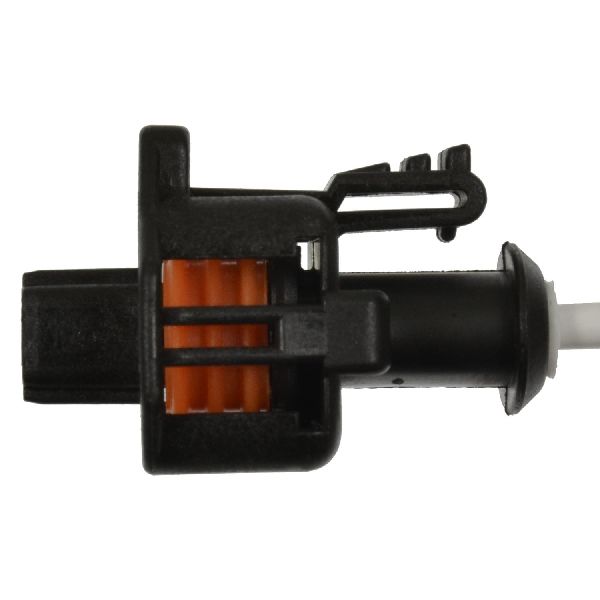
(OEM #68070745AB)— This is the most common hardware failure for this code after software issues are ruled out. The correct OEM part for the 1.4L MultiAir engine is Mopar #68070745AB.
Trusted brands: Mopar (OEM), Bosch, Delphi, NGK/NTK, Standard Motor Products
OEM price range: $45-$70
Aftermarket price range: $40-$90
Related Codes That Often Appear With This One
- P0000 — Due to a known software glitch, the PCM may display P0000 when the actual fault is P0326.
- P1D7F-00 — TSB #18-083-17 lists this code for 'ETC Self-Learning Failure' as appearing alongside the P0000/P0326 issue, indicating a PCM software update is needed.
Technical Service Bulletins (TSBs) & Recalls
- 18-083-17: Flash: Powertrain Diagnostic and System Improvements, notes that P0000-00 may be displayed instead of P0326-00 for the Fiat 500.
- 18-026-17 REV. A: Flash: Powertrain Diagnostic and System Improvements, also notes the P0000-00 to P0326-00 substitution.
- 18-116-16: Flash: Powertrain Diagnostic and System Improvements, confirms the same P0000-00/P0326-00 software issue.
- 18-118-16: Confirms the identical P0000/P0326 software issue on the 2017 Jeep Renegade with the 1.4L engine.
- 18-087-17: Confirms the identical P0000/P0326 software issue on the 2017 Fiat 500X with the 1.4L engine.
Platform-Specific Known Issues
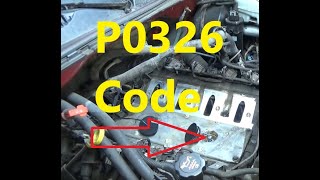
- A series of TSBs (#18-083-17, #18-026-17 REV. A, #18-116-16) were issued for the 2017 Fiat 500, indicating that a PCM software flaw could cause a P0000 code to be stored when the actual issue is P0326 - Knock Sensor 1 Circuit Performance. 🎬 Check out this guide on common causes and fixes for P0326. The recommended fix is a PCM software update. This issue is also confirmed on platform mates like the Jeep Renegade and Fiat 500X with the same 1.4L engine.
Mechanic-Grade Diagnostic Values
- Knock Sensor Mounting Bolt Torque — expected: 18 ft-lbs (25 Nm). Failure: Incorrect torque can lead to improper vibration sensing. Over-torquing can damage the sensor; under-torquing can cause inaccurate readings.
- Knock Sensor AC Voltage Output (Tap Test) — expected: A small AC voltage spike (in millivolts) should be visible on a multimeter when the engine block is tapped near the sensor.. Failure: No voltage signal produced when tapping the block suggests a dead sensor.
- Knock Sensor Wiring to ECU Continuity — expected: Near 0 ohms of resistance between the sensor connector pins and the corresponding ECU pins.. Failure: High resistance or an open circuit (OL) indicates a break in the wiring harness.
Scan Tool Commands That Help
- Generic OBD-II Scanner or wiTECH: Live Data Monitoring — Used to observe the knock sensor's signal in real-time. A technician can perform a 'tap test' by lightly tapping the engine block near the sensor and watching for a corresponding signal spike on the scan tool to confirm the sensor is responsive.
Wiring & Ground Locations
- Engine Ground Strap — One primary ground strap connects the engine/transmission assembly to the vehicle's chassis.. A corroded or loose main engine ground can cause a variety of electrical issues and incorrect sensor readings, including for the knock sensor. Symptoms can include difficulty starting. The OEM part is Mopar #68531756AA, which replaces #5091061AA.
- Knock Sensor ECU Pins (unverified for this specific ECU) — At the Powertrain Control Module (PCM) connector.. For advanced diagnosis, a technician can check for continuity directly from the sensor connector to the ECU. One forum post for a similar vehicle suggests checking pins 36 and 51, but this should be verified with a vehicle-specific wiring diagram before probing.
OEM Part Supersession History
68642245AA→68070745AB— Part revision or manufacturer change.5091061AA→68531756AA— Part revision for the engine ground strap.
Helpful Videos
We Have This Part in Stock


The information in this article is provided for general reference and educational purposes only. Vehicle specifications, procedures, and part compatibility can vary by production date, trim level, and region. Always consult your vehicle's factory service manual and verify part numbers before purchasing or performing repairs. Safety-critical components such as airbags, seat belts, and braking systems should be installed by a qualified professional.
- Fiat 500:
- 🧭 Diagnostic Flowchart
- 🎬 Helpful Videos
- 🛍️ Shop This Part
- What's Unique About the 2017-2017 Fiat 500
- Symptoms You May Notice
- Most Likely Causes
- Rare But Worth Checking
- Diagnosis Steps
- Parts You'll Likely Need
- Related Codes That Often Appear With This One
- Technical Service Bulletins (TSBs) & Recalls
- Platform-Specific Known Issues
- Mechanic-Grade Diagnostic Values
- Scan Tool Commands That Help
- Wiring & Ground Locations
- OEM Part Supersession History
- 🎟️ Get 5% Off