

P0326 on 2015-2022 GMC Canyon: Knock Sensor Fixes & Software Updates
On 2015-2022 GMC Canyons and Chevy Colorados, code P0326 often points to an outdated Engine Control Module (ECM) software calibration, not a bad knock sensor. A dealer software update is the primary fix per multiple GM Technical Service Bulletins (TSBs). If the sensor is faulty, it's an inexpensive part ($30-$55), but labor is very high on the 3.6L V6 as it requires removing the starter motor to access one of the sensors.
- For a P0326 code on a 2015-2022 GMC Canyon, investigate software updates before replacing any parts. A trip to the dealer for an ECM reprogram is a very common and documented fix.
- Do not automatically assume the knock sensor is bad. Thoroughly inspect the wiring and connector for damage, as this is a common point of failure.
- If you have the 3.6L V6, be aware that replacing the knock sensors is a labor-intensive job that can be costly. If one sensor needs replacement, it's wise to replace both.
- An audible pinging or knocking sound means the sensor is likely working correctly and detecting a real problem, such as poor fuel quality or carbon buildup, which needs to be addressed.
What's Unique About the 2015-2022 Gmc CANYON
For this generation of GMC Canyon and its twin, the Chevrolet Colorado, a P0326 code is frequently a software issue rather than a hardware failure. General Motors has issued multiple Technical Service Bulletins (TSBs) advising technicians that this code can be triggered by overly sensitive software calibrations. TSBs like PIP5303B and PIP5273 specifically recommend reprogramming the engine (ECM) and transmission (TCM) control modules as the first step. TSB PIP5273 from March 2015 explicitly warns technicians, "DO NOT replace the knock sensor or the ECM for this code" if it's only set in history, as a software fix was in development. This highlights the importance of checking for software updates before replacing parts.
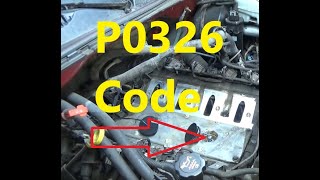
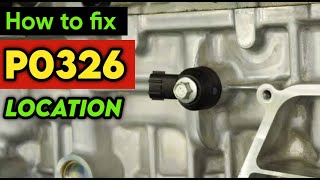
🎬 Watch: Understanding the causes behind the P0326 error code.Diagnostic Flowchart
Tap your situation to follow the diagnostic path that matches what you're seeing on this vehicle.
Symptoms You May Notice
- Check Engine Light is on
- Audible engine pinging or knocking noise, especially during acceleration or under load
- Reduced engine power and sluggish acceleration
- Hesitation or stumbling during acceleration
- Rough idle
- Decreased fuel economy
- A 'bump' feeling when cruise control engages
- Immediately replacing the knock sensor without first checking for software updates via TSBs or thoroughly inspecting the wiring. Many owners on forums report replacing the sensor (sometimes multiple times) only for the P0326 code to return, with the final fix being a dealer software update.
Most Likely Causes
- Outdated Engine Control Module (ECM) Software 🔴 High Probability → Shop Engine Control Module (ECM) GM has explicitly documented this in TSBs PIP5303B and PIP5273, indicating a known software calibration concern that can falsely trigger P0326 and P0331. The bulletins state the fix is to "Reprogram the engine control module and the transmission control module with the latest calibration." This is most prevalent on 2015-2016 models with the 3.6L LFX engine.
How to confirm: A GM dealership or a qualified shop with access to GM's Techline Connect (TIS2Web) can check the current software calibration version against the latest available version for your VIN.
Typical fix: Reprogramming the Engine Control Module (ECM) and Transmission Control Module (TCM) with the latest GM software. This is a dealer or specialty shop-only procedure.
Est. part cost: $0 - Faulty Knock Sensor 🟡 Medium Probability → Shop Ignition Knock (Detonation) Sensor Sensors can fail due to prolonged exposure to engine heat and vibration. While software is a more common culprit on this platform, a hardware failure is still possible. Many owners replace the sensor only to have the code return, pointing back to a software or wiring issue.
How to confirm: After confirming wiring is intact, test the sensor's resistance with a multimeter (should be within manufacturer specs, typically 93-110 kOhms). An oscilloscope can also be used to observe its AC voltage output while lightly tapping on the engine block near the sensor.
Typical fix: Replace the knock sensor. On the 3.6L V6, it is strongly recommended to replace both sensors (Bank 1 and Bank 2) at the same time due to the extremely high labor cost to access them.
Est. part cost: $25-$55 - Wiring or Connector Issue 🟡 Medium Probability The sensor wiring is routed in a hot, high-vibration environment. TSB PIP5273 specifically advises checking for loose connections at the sensor and ECM. A newer TSB for 2023+ models, PIP5985, also points to a poor connection at the X160 connector as a cause for P0326/P0331, indicating a pattern of connector issues on this platform.
How to confirm: Visually inspect the wiring harness for signs of melting, chafing against other components, or corrosion at the connector pins. Disconnect and reconnect the sensor and ECM connectors to ensure they are fully seated.
Typical fix: Repair the damaged section of wiring or clean/replace the connector. Ensure the harness is properly secured away from heat sources.
Est. part cost: $5-$20 - Actual Engine Knock ⚪ Low Probability This is not a fault of the sensor, but the sensor doing its job. The 3.6L LFX is a direct-injection engine, which can be prone to carbon buildup on intake valves and pistons over time, raising compression and causing knock. Using low-octane fuel can also be a cause.
How to confirm: Listen for an audible pinging sound from the engine. Ensure the correct octane fuel is being used per the owner's manual. A borescope can be used to inspect for carbon buildup on pistons. Other engine issues like worn timing chains, common on higher-mileage 3.6L engines, can also cause noises that may be misinterpreted by the sensor.
Typical fix: Switch to top-tier, manufacturer-recommended fuel octane. Perform an induction/carbon cleaning service. Address any underlying mechanical engine issues, such as timing chain wear.
Est. part cost: $0-$2000+
Rare But Worth Checking
- Faulty Engine Control Module (ECM): → Shop Engine Control Module (ECM) This is very rare, but if the software has been updated and the sensor and wiring have been confirmed as good, the ECM's internal circuit for interpreting the knock sensor signal may have failed.
Diagnosis Steps
- Check for Technical Service Bulletins (TSBs) FIRST. Use your vehicle's VIN to check for TSBs PIP5303B, PIP5420, and PIP5273. This is the most critical step for this specific vehicle and code.
- Scan for any other trouble codes. Address other codes first, especially if they relate to misfires, air/fuel ratio, or timing.
- Verify you are using the correct octane fuel as recommended in your owner's manual. Consider running a tank of higher octane fuel to see if the issue subsides.
- Listen for audible engine knock or pinging during a test drive, especially under light load going uphill, as noted in TSB PIP5420.
- Inspect the knock sensor connector and wiring harness. Pay close attention to the connector security and any signs of the harness touching hot engine or exhaust components.
- If TSBs indicate a software update is available, have a GM dealer or qualified shop perform the ECM and TCM reprogram. This is the most likely fix.
- If software is up to date and wiring is good, test the knock sensor. On the 2.5L I4, this is more accessible. On the 3.6L V6, access is very difficult.
- If the sensor tests faulty, replace it. For the 3.6L V6, replace both sensors and the wiring harness between them due to the high labor involved in accessing them.
Parts You'll Likely Need
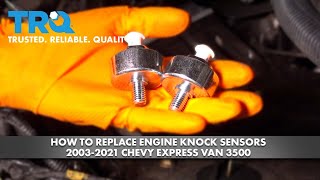
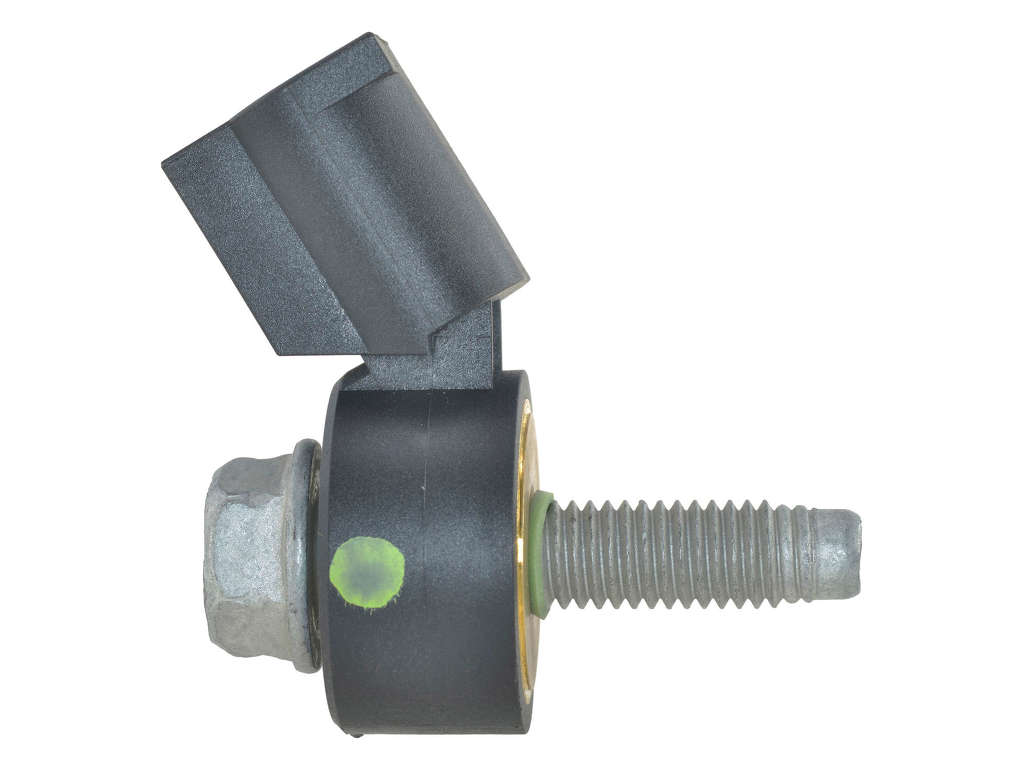
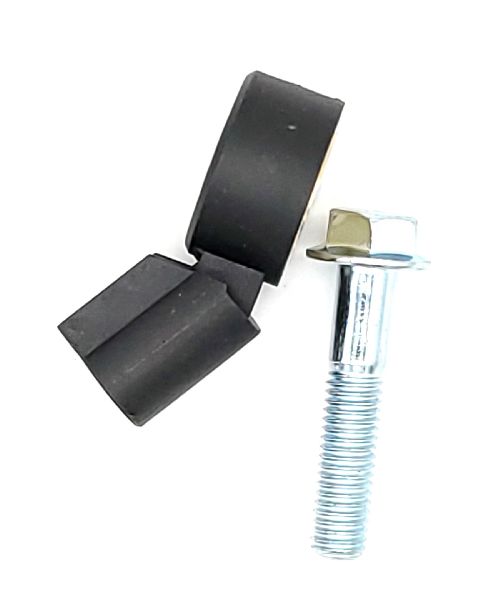
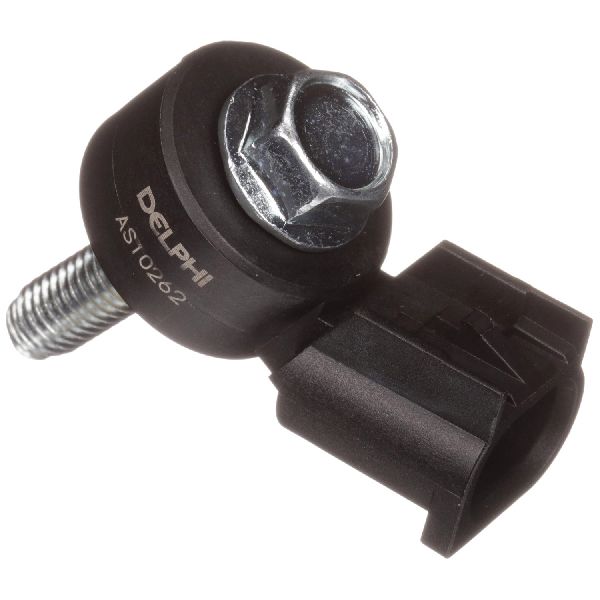
- Ignition Knock Sensor
(OEM #12623095)— This is the hardware component to replace if a software or wiring issue is ruled out. It is the same part for both the 2.5L and 3.6L engines.
Trusted brands: ACDelco (GM Genuine), Delphi, NTK
OEM price range: $40-$55
Aftermarket price range: $25-$45 - Knock Sensor Wiring Harness (V6)
(OEM #12643932 (Verify by VIN))— On the 3.6L V6, the small harness that connects the two knock sensors is located in the engine valley and is exposed to intense heat. It is highly recommended to replace this harness when replacing the sensors, as it can become brittle and cause issues.
Trusted brands: ACDelco
OEM price range: $30-$50
Aftermarket price range: $20-$35
Related Codes That Often Appear With This One
- P0331 — This is the code for the Knock Sensor 2 Circuit (Bank 2) on the V6 engine. TSB PIP5303B explicitly lists both P0326 and P0331 as being resolved by the same ECM/TCM software update.
- P0068, P0101, P0106, P0171 — TSB PIP5529B lists P0326 with these and other codes, suggesting a potential air/vacuum leak or other systemic issue can cause multiple diagnostic trouble codes to appear at once. The ECM may be trying to compensate for an unmetered air issue, leading to timing adjustments that trigger the knock sensor code.
Technical Service Bulletins (TSBs) & Recalls
- PIP5303B: Recommends ECM/TCM reprogram for P0326/P0331 with symptoms like rough idle, spark knock, or cruise control issues on the 3.6L V6.
- PIP5273: For 2015 3.6L V6, specifically warns against replacing parts for a history P0326 code and points to a pending software fix and checking connections.
- PIP5420: Connects P0326 to audible spark knock under light load/uphill, requiring dealer diagnosis with a data capture.
- PIP5529B: Lists P0326 among a group of codes that may be set together, possibly due to a systemic issue like a vacuum leak.
- PIP5985: While for 2023+ models, it shows a continued pattern of P0326/P0331 being caused by a poor electrical connection at a specific harness connector (X160).
Platform-Specific Known Issues
- TSB #PIP5303B: The Software Update Fix: This is the most important TSB. It applies to 2015+ models with the 3.6L V6 and addresses P0326/P0331 accompanied by misfire, rough idle, or a bump during cruise control engagement. The official GM fix is to reprogram both the ECM and TCM with updated software, and it explicitly mentions this may fix 'Detonation, Spark Knock or an abnormal ticking noise'.
- TSB #PIP5273: 'Do Not Replace Parts' Warning: Issued for the 2015 3.6L V6, this early bulletin warned technicians not to replace the knock sensor or ECM for a history code of P0326. It advised checking for loose connections and acknowledged that GM engineering was developing a software fix.
Mechanic-Grade Diagnostic Values
- Knock Sensor Internal Resistance — expected: 93,000 to 110,000 Ohms (93-110 kOhms). Failure: An open (OL) reading or a value significantly outside this range indicates a faulty internal resistor.
- Knock Sensor Connector Voltage (Key On, Engine Off) — expected: ~5.0 Volts DC reference. Failure: 0V indicates a problem with the wiring harness or the ECM's 5V reference circuit.
- Knock Sensor AC Voltage Output (Tap Test) — expected: Should generate small AC voltage spikes (e.g., >100mV to over 1V) when the engine block is tapped firmly near the sensor with a wrench.. Failure: No AC voltage spike, or very low readings (e.g., <10mV), suggests the sensor's piezoelectric element is dead.
- Knock Sensor Mounting Bolt Torque — expected: 15-20 ft-lbs. Failure: A loose sensor can cause erratic signals and false codes. Over-tightening can damage the sensor.
Scan Tool Commands That Help
- GDS2 / Professional Scan Tool: Knock Sensor Live Data / Tap Test — While the engine is idling, monitor the knock sensor signal voltage. Tap the engine block near the sensor with a wrench. A functional sensor will show a clear voltage spike on the scan tool data graph in response to each tap. This dynamically confirms the sensor and wiring are working, separating a hardware issue from a potential software or intermittent fault.
Wiring & Ground Locations
- G103 / G104 — On the rear of the cylinder heads. G103 is typically on the front of the passenger side cylinder head, while G104 is on the back of the driver's side head.. The Engine Control Module (ECM) and its sensors rely on clean ground connections. A corroded or loose engine-to-chassis ground can introduce electrical noise, which may be misinterpreted by the sensitive knock sensor circuit, leading to a false P0326 code.
- ECM Connector (e.g., X1 or X2) — The Engine Control Module is located in the engine bay. The knock sensor signal wire and ground reference wire terminate at specific pins on one of its main connectors.. To perform a definitive circuit integrity test, you must check for continuity and resistance between the sensor connector pins and the corresponding pins at the ECM connector. This verifies the wiring harness is intact.
Real Owner Repair Stories
- ColoradoFans.com forum user (2015 Chevrolet Colorado 3.6L V6) — Check Engine Light with codes P0326 and P0331.
❌ Tried (didn't work) The user initially suspected a hardware failure.
✅ What actually fixed it The user took the truck to the dealership. The dealer performed a software update to the Engine Control Module (ECM) and Transmission Control Module (TCM) as prescribed by TSB PIP5303B. This resolved both knock sensor codes.
OEM Part Supersession History
12649193→12694246— Part number has been updated by GM. The latest number should always be used for replacement.
Heads up: While the original part number was 12623095, it has been superseded multiple times. As of early 2026, the current GM part number appears to be 12694246, but always verify with a dealer using the VIN.
Model Year Variations Within This Range
- 2015-2016: These models use the 3.6L LFX V6 engine. They are the primary vehicles affected by the software sensitivity issue described in TSBs like PIP5303B. A software reflash is the most probable solution for P0326 on these model years.
- 2017-2022: These models use the updated 3.6L LGZ V6 engine, which was a significant redesign. While still possible, P0326 is less likely to be caused by the same software sensitivity issues as the earlier LFX engine. Diagnosis for these years should lean more towards traditional hardware causes (sensor, wiring, mechanical noise) after confirming the software is up-to-date.
Helpful Videos
We Have This Part in Stock


The information in this article is provided for general reference and educational purposes only. Vehicle specifications, procedures, and part compatibility can vary by production date, trim level, and region. Always consult your vehicle's factory service manual and verify part numbers before purchasing or performing repairs. Safety-critical components such as airbags, seat belts, and braking systems should be installed by a qualified professional.
- Gmc CANYON:
- 🧭 Diagnostic Flowchart
- 🎬 Helpful Videos
- 🛍️ Shop This Part
- What's Unique About the 2015-2022 Gmc CANYON
- Symptoms You May Notice
- Most Likely Causes
- Rare But Worth Checking
- Diagnosis Steps
- Parts You'll Likely Need
- Related Codes That Often Appear With This One
- Technical Service Bulletins (TSBs) & Recalls
- Platform-Specific Known Issues
- Mechanic-Grade Diagnostic Values
- Scan Tool Commands That Help
- Wiring & Ground Locations
- Real Owner Repair Stories
- OEM Part Supersession History
- Model Year Variations Within This Range
- 🎟️ Get 5% Off