

P0326 on 2017-2024 Jeep Compass 2.4L: Knock Sensor Performance Guide
This code means the knock sensor signal is out of range. The most common cause is a faulty knock sensor, but wiring issues are also possible. The sensor is located under the intake manifold, making replacement a labor-intensive job.
- P0326 on a 2017-2024 Jeep Compass indicates a performance problem with the knock sensor circuit.
- The most common fix is replacing the knock sensor, but the wiring and connector should always be checked first.
- The sensor is located under the intake manifold, making this a labor-intensive repair with a DIY difficulty of 4 out of 5.
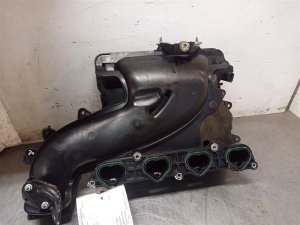
- Due to the difficult access, always replace the intake manifold gaskets when performing this repair to prevent future vacuum leaks.
- If you hear audible engine knocking, the sensor may be working correctly; investigate potential mechanical engine problems or fuel quality issues.
What's Unique About the 2017-2024 Jeep Compass
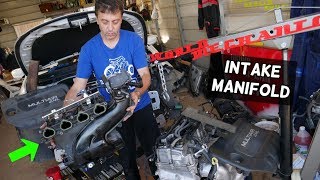
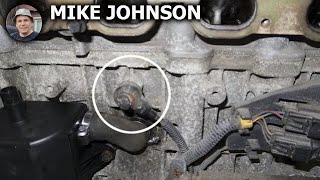
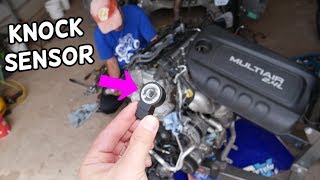
For the 2.4L Tigershark engine in the second-generation Jeep Compass, the key challenge with a P0326 code is the physical location of the knock sensor. It is buried on the engine block underneath the intake manifold. This makes what would be a simple sensor swap on many other vehicles a much more involved and labor-intensive repair, as the entire intake manifold must be removed for access. Because of the high labor cost, it's critical to correctly diagnose the problem and not just replace the sensor without checking the wiring first.
Symptoms You May Notice
🎬 Watch: Understanding how P0326 performance issues affect your engine.- Check Engine Light is on
- Audible engine knocking or pinging, especially during acceleration
- Reduced engine power and sluggish acceleration
- Hesitation during acceleration
- Decreased fuel economy
- Replacing the knock sensor without first thoroughly inspecting the wiring harness and connector. A damaged wire or corroded connector can mimic the symptoms of a failed sensor.
Most Likely Causes
- Faulty Knock Sensor 🔴 High Probability → Shop Ignition Knock (Detonation) Sensor Heat and constant vibration can cause the sensor's internal piezoelectric crystal to fail over time. Given the difficult access, it's the most commonly replaced part once a technician commits to the labor.
How to confirm: After confirming the wiring is intact, the sensor itself is the most likely culprit. Due to the labor required to access it, it is often replaced once the intake manifold is removed without further testing.
Typical fix: Replace the knock sensor. It is highly recommended to also replace the intake manifold gaskets at the same time to prevent vacuum leaks. 🎬 See this walkthrough for removing the intake manifold and gaskets.
Est. part cost: $25-$100 - Wiring or Connector Issue 🟡 Medium Probability The wiring harness is located in a high-heat area near the engine block, making it susceptible to brittleness, chafing, or melting over time. The pigtail connector itself can become brittle and fail. Rodent damage is also a possibility.
How to confirm: Visually inspect the wiring harness leading to the knock sensor for any signs of damage, melting, or corrosion. Check for a secure connection at both the sensor and the PCM. A multimeter can be used to check for continuity and shorts in the circuit.
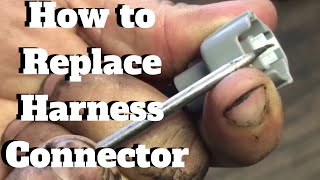
Typical fix: Repair the damaged section of the wiring harness or replace the connector pigtail. It is often wise to replace the pigtail connector when replacing the sensor due to its high-heat environment.
Est. part cost: $15-$40 - Improperly Torqued Knock Sensor ⚪ Low Probability → Shop Ignition Knock (Detonation) Sensor This typically only occurs if the sensor has been previously replaced.
How to confirm: This can only be confirmed by accessing the sensor. The sensor must be torqued to the manufacturer's specification, which is typically 20 N·m (15 ft-lbs) for this engine family. If it's too loose or too tight, it cannot 'hear' engine vibrations properly.
Typical fix: Remove and reinstall the knock sensor, torquing it to the correct specification.
Est. part cost: $0
Rare But Worth Checking
- Internal Engine Mechanical Problems: If actual, audible engine knock is present, the sensor might be working correctly and reporting a real problem. This could be caused by issues like low-quality fuel, severe carbon buildup, or failing engine components like rod bearings. If other engine codes are present, they should be investigated first.
- Powertrain Control Module (PCM) Fault: → Shop Engine Control Module (ECM) This is very rare. A PCM failure can cause it to misinterpret a good sensor signal. On some platform mates like the Jeep Renegade, a PCM software update was required to fix logic errors that could falsely trigger a P0326 code. While no specific TSB for the Compass was found, it's a known possibility for this powertrain family.
Diagnosis Steps
- Read the code using an OBD-II scanner and confirm P0326 is present. Note any other codes.
- Listen for audible engine knocking or pinging during a test drive. If present, the issue may be mechanical rather than electrical.
- Visually inspect the area around the intake manifold for any obvious signs of wiring damage (rodent chew, melting, etc.) that might be accessible before disassembly.
- Disconnect the battery before proceeding, as the starter motor's main power wire is near the work area.
- If no external damage is found, proceed with removing the intake manifold to gain access to the knock sensor located on the engine block.
- Once accessed, thoroughly inspect the knock sensor connector and its wiring pigtail for corrosion, damage, or loose pins.
- Test the wiring harness for continuity and shorts between the sensor connector and the PCM.
- If the wiring is confirmed to be good, the knock sensor itself is the most likely cause.
- Replace the knock sensor, ensuring it is torqued to the manufacturer's specification of 20 N·m (15 ft-lbs).
- It is highly recommended to replace the intake manifold gaskets to prevent future vacuum leaks.
- Reassemble all components, reconnect the battery, clear the trouble codes, and perform a test drive to ensure the repair was successful.
Parts You'll Likely Need
- Ignition Knock (Detonation) Sensor
(OEM #5033316AB)— This is the most common part to fail, causing the P0326 code. Due to the high labor cost to access it, replacement is the standard fix once the intake manifold is removed.
Trusted brands: Mopar, Bosch, NTK, Delphi
OEM price range: $60-$120
Aftermarket price range: $25-$75 - Intake Manifold Gasket Set — These are single-use gaskets that must be replaced anytime the intake manifold is removed to prevent vacuum leaks, which can cause other performance issues.
Trusted brands: Mopar, Fel-Pro, Mahle
OEM price range: $20-$40
Aftermarket price range: $15-$30
Technical Service Bulletins (TSBs) & Recalls
- While no TSB directly links P0326 to the Jeep Compass, TSB #18-086-17 for the 2017 Jeep Renegade (a platform mate) addresses a software glitch where a P0000 code is displayed instead of the correct P0326, requiring a PCM flash.
- TSB 18-032-21 for the 2020 Jeep Compass addresses engine hesitation and surging via a PCM software update, which could be related to symptoms experienced with a P0326 code.
Platform-Specific Known Issues
- On some related FCA vehicles with the 2.4L engine, like the Jeep Renegade, a P0326 code has been associated with the need for a PCM software update per TSBs. While no specific TSB for the Compass was found in the search, it's a known possibility for this powertrain family.
- A YouTube video by 'WORLD MECHANICS' demonstrates the full process of removing the intake manifold to access the knock sensor on the 2.4L engine used in the Compass and Renegade, confirming the difficult location and repair procedure. 🎬 Watch: How to locate and replace the 2.4L knock sensor.
Mechanic-Grade Diagnostic Values
- Knock Sensor Circuit Reference Voltage — expected: Approximately 5V at the harness connector with the sensor disconnected and ignition on.. Failure: No voltage or significantly lower voltage points to a wiring issue or a problem with the PCM.
- Knock Sensor Live Data Voltage (Scan Tool) — expected: A low and steady voltage, typically around 0.5V - 1.0V at idle.. Failure: A signal that is stuck at 0V, above 4.5V, or is extremely erratic at idle.
- Knock Sensor 'Tap Test' (Scan Tool) — expected: When tapping the engine block near the sensor with a wrench, the voltage on a scan tool should spike into the 1.0V - 3.0V range.. Failure: No corresponding voltage spike on the scan tool data PID when the block is tapped indicates a dead sensor.
- Knock Sensor Internal Resistance — expected: While not specified for all sensors, some piezoelectric types used by FCA have a resistance between 93 and 100 kOhms.. Failure: An open circuit (infinite resistance) or a reading far outside the expected range suggests a failed sensor. However, voltage tests are more reliable.
Hidden / Shadow Codes Worth Checking
- P0000: On platform mates like the 2017 Jeep Renegade, TSBs #18-086-17 and #18-118-16 state that a scan tool may incorrectly display P0000 when the actual fault is P0326. This is a 'ghost code' and all diagnosis should focus on the knock sensor circuit. (see via This may appear on dealer-level scan tools like Witech when the underlying P0326 fault is present.)
Scan Tool Commands That Help
- Advanced OBD-II Scanner (e.g., Witech, Autel, iCarsoft): Live Data > Knock Sensor PID — This is essential for diagnosis. It allows the technician to monitor the sensor's voltage output in real-time at idle and during a 'tap test' to determine if the sensor is responsive or if the signal is erratic.
Wiring & Ground Locations
- Knock Sensor Connector — On the 2.4L Tigershark engine, the sensor is located on the engine block, under the intake manifold. The connector is directly on the sensor, making it inaccessible without removing the manifold.. This is the primary connection point to test. Due to its location in a high-heat, high-vibration area, the connector itself can become brittle or contaminated, causing the P0326 code even if the sensor and wiring are otherwise intact.
- PCM Connector — The Powertrain Control Module (PCM) is located in the engine bay. The knock sensor circuit wires terminate at this connector.. A poor connection, bent pin, or corrosion at the PCM connector for the knock sensor circuit can cause a P0326 code and be misdiagnosed as a faulty sensor. It should be checked for integrity if sensor and harness tests are inconclusive.
OEM Part Supersession History
5033316AA→5033316AB— Part revision or manufacturer change.
Diagnostic Flowchart
Other Known Issues on This Vehicle
Issues unrelated to this code that are worth knowing about as an owner of this generation:
- Excessive Oil Consumption 🔴 High — Widespread issue across multiple model years, often appearing under 50,000 miles. Can consume over 1 quart per 1,000 miles. (Ref: Subject of class-action lawsuits and warranty extensions (e.g., XB1, W80) rather than a formal recall. TSB 09-018-24 provides dealer guidance.)
- Engine Stalling While Driving 🔴 High — Commonly reported on 2017-2020 models. Can happen unexpectedly at various speeds and is often linked to the oil consumption issue or faulty PCM. (Ref: NHTSA has opened investigations (but not a full recall) into stalling problems. Recall U87 was issued for some 2018 models for a faulty PCM voltage regulator that could cause stalling.)
- Faulty Powertrain Control Module (PCM) 🟠 Medium → Shop Engine Control Module (ECM) — Affects various 2018 FCA models, including the Compass. A faulty voltage regulator chip can fail, leading to a stall or no-start condition. (Ref: Chrysler Recall U87 / NHTSA 18V-332.)
- Cracked Oil Pump Housing 🔴 High — Reported in some 2018 models with the 2.4L engine, can lead to sudden oil pump failure and engine seizure. (Ref: Chrysler Recall U87 / NHTSA 17V-670.)
- Hesitation / Surging During Acceleration 🟡 Low — Reported on 2020 models, typically felt between 25-50 mph. (Ref: TSB 18-032-21 involves a PCM software update to correct the issue.)
Used vs. New Parts: Buying Guide for This Vehicle
When a used part is the smart pick: For this specific repair, using a used knock sensor is strongly discouraged. The part is an inexpensive electronic sensor, but the labor to access it by removing the intake manifold is significant. The risk of a used sensor failing shortly after installation outweighs any minor cost savings.
What to inspect on the donor part:
- Not applicable as used part is not recommended.
OEM-only on this vehicle (don't cheap out):
- Ignition Knock (Detonation) Sensor
Aftermarket brands forum-validated for this vehicle:
- Mopar (OEM)
- NTK
- Delphi
- Bosch
Brands owners have reported issues with on this vehicle:
- Unbranded, no-name sensors from online marketplaces. Given the high labor cost of this repair, using a part of unverified quality is a significant financial risk.
Real Owner Stories
Aggregated from forums and TSBs cited above. Mileages and costs reflect what owners reported in those sources.
2017 Jeep Renegade 2.4L Tigershark
Symptoms: A P0000 code is displayed instead of the correct P0326 due to a software glitch.
What fixed it: A PCM flash (software update) was required to correct the issue.
Source hint: TSB #18-086-17
2020 Jeep Compass 2.4L Tigershark
Symptoms: Engine hesitation and surging during acceleration, typically between 25-50 mph.
What fixed it: A PCM software update was performed to resolve the symptoms.
Source hint: TSB 18-032-21
Jeep Compass 2.4L Tigershark
Symptoms: Owner was experiencing an oil consumption issue and also noted poor shifting performance.
What fixed it: A PCM re-program performed by the dealer for a recall fixed the oil consumption and improved shifting.
Source hint: Reddit thread in r/JeepCompass
Related OBD-II Codes
Frequently Asked Questions
How difficult is it to replace the knock sensor on my 2.4L Jeep Compass?
What is the correct torque specification for the knock sensor on the 2.4L Tigershark engine?
Should I replace any other parts when I'm replacing the knock sensor?
Could a software update fix the P0326 code on my Jeep Compass?
My 2020 Compass is hesitating and surging. Is this related to a P0326 code?
My engine is stalling and I have a P0326 code. Are these issues connected?
Helpful Videos
We Have This Part in Stock

The information in this article is provided for general reference and educational purposes only. Vehicle specifications, procedures, and part compatibility can vary by production date, trim level, and region. Always consult your vehicle's factory service manual and verify part numbers before purchasing or performing repairs. Safety-critical components such as airbags, seat belts, and braking systems should be installed by a qualified professional.
- Jeep Compass:
- 🧭 Diagnostic Flowchart
- 🎬 Helpful Videos
- 🛍️ Shop This Part
- What's Unique About the 2017-2024 Jeep Compass
- Symptoms You May Notice
- Most Likely Causes
- Rare But Worth Checking
- Diagnosis Steps
- Parts You'll Likely Need
- Technical Service Bulletins (TSBs) & Recalls
- Platform-Specific Known Issues
- Mechanic-Grade Diagnostic Values
- Hidden / Shadow Codes Worth Checking
- Scan Tool Commands That Help
- Wiring & Ground Locations
- OEM Part Supersession History
- Other Known Issues on This Vehicle
- Used vs. New Parts: Buying Guide for This Vehicle
- Real Owner Stories
- 2017 Jeep Renegade 2.4L Tigershark
- 2020 Jeep Compass 2.4L Tigershark
- Jeep Compass 2.4L Tigershark
- Related OBD-II Codes
- Frequently Asked Questions
- 🎟️ Get 5% Off