

P0326 on 2017 Jeep Renegade: Knock Sensor Circuit Performance Causes and Fixes
On a 2017 Jeep Renegade, P0326 most often points to a faulty knock sensor or a wiring issue. However, a critical first step is to check for PCM software updates, as TSBs indicate the wrong code may be displayed or a flash update is required to fix the underlying logic.
- For a 2017 Jeep Renegade, P0326 means there's a performance issue with the knock sensor circuit.
- Before replacing any parts, check for TSBs related to a PCM flash, as this is a very common fix, especially for the 1.4L engine.
- The physical sensor is difficult to access, so thorough diagnosis of wiring and software is critical to avoid unnecessary labor.
- Proper torque on the knock sensor mounting bolt is essential for correct operation.
What's Unique About the 2017-2017 Jeep RENEGADE
The 2017 Jeep Renegade has a well-documented quirk related to this code. Manufacturer Technical Service Bulletins (TSBs) state that a scan tool may display code P0000-00 when the actual fault is P0326-00. These TSBs often point to a required Powertrain Control Module (PCM) software update to correct this diagnostic issue and other related drivability problems, particularly on the 1.4L Turbo engine with a manual transmission built on or before August 30, 2017.
Diagnostic Flowchart
Tap your situation to follow the diagnostic path that matches what you're seeing on this vehicle.
Symptoms You May Notice
- Check Engine Light is on
- Audible engine pinging or knocking, especially under acceleration
- Reduced engine power and acceleration
- Hesitation or stumbling when accelerating
- Decreased fuel economy
- Hard starting or long crank times
- Replacing the knock sensor without checking for TSBs first. The issue could be software-related, and a new sensor won't fix it.
- Replacing the knock sensor when the actual problem is a damaged wire or corroded connector.
- Failing to properly torque the new knock sensor upon installation, causing the code to return immediately.
Most Likely Causes
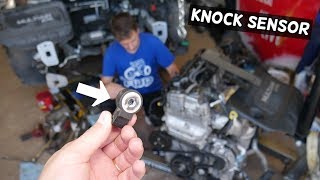
- Faulty Knock Sensor 🔴 High Probability → Shop Ignition Knock (Detonation) Sensor Sensors can fail over time due to constant heat cycles and vibration. The knock sensor contains a piezoelectric crystal that can degrade or crack.
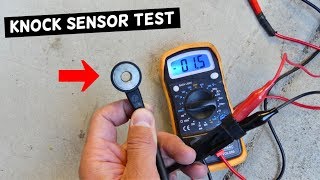
How to confirm: After checking wiring, test the sensor's resistance with a multimeter to see if it's within the manufacturer's specified range. Also, check the sensor's mounting bolt torque; if it's loose or over-tightened, it can cause this code.
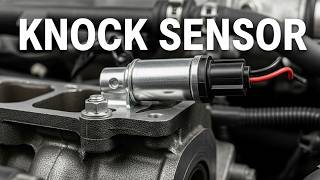
Typical fix: Replace the knock sensor. On the 2.4L engine, it is located on the back of the engine block, under the intake manifold. 🎬 See this walkthrough for locating the sensor on 2.4L engines. On the 1.4L, it is also under the intake. Crucially, the new sensor must be torqued to specification (typically 15-20 ft-lbs) for proper operation.
Est. part cost: $40-$100 - PCM Software Update Needed 🟡 Medium Probability Multiple TSBs (e.g., 18-043-21, 18-086-17) were issued for the 2017 Renegade (especially the 1.4L with manual transmission) to fix powertrain logic, including issues that trigger P0326.
How to confirm: A Jeep dealership or a qualified shop with access to wiTECH software can check your vehicle's VIN against the TSBs to see if a software update is available and required. TSB 18-086-17 applies to vehicles built on or before August 30, 2017.
Typical fix: Reprogram (flash) the Powertrain Control Module with the latest software per the TSB.
Est. part cost: $0 (if under warranty) or typically one hour of shop labor ($100-$200) - Wiring or Connector Issue 🟡 Medium Probability The wiring harness to the knock sensor is routed in a high-heat area and can be exposed to vibration, leading to frayed wires, chafing against the engine block, or corrosion at the connector pins. Rodent damage is also a possibility.
How to confirm: Visually inspect the entire circuit from the PCM to the knock sensor. Look for any signs of damage, melting, or chafing, especially where the harness bends or contacts the engine. Check for a secure connection at the sensor and the PCM.
Typical fix: Repair the damaged section of wiring or replace the connector pigtail.
Est. part cost: $10-$50
Rare But Worth Checking
- Internal Engine Mechanical Problem: Sometimes, the knock sensor is not faulty but is correctly detecting a real mechanical issue (like a bad rod bearing, piston slap, or excessive carbon buildup) that the PCM cannot correct with timing adjustments. This is a misdiagnosis of the sensor itself.
- Faulty Powertrain Control Module (PCM): → Shop Engine Control Module (ECM) While rare, the PCM itself can fail, causing it to misinterpret the knock sensor signal. This should only be considered after all other possibilities, including software updates, have been exhausted.
- Improperly Torqued Knock Sensor: → Shop Ignition Knock (Detonation) Sensor The knock sensor is a piezoelectric device that relies on a specific clamping force to correctly 'hear' engine vibrations. If the sensor was previously replaced and not torqued to the manufacturer's specification (too loose or too tight), it can generate an out-of-range signal and set a P0326 code.
Diagnosis Steps
- Check for Technical Service Bulletins (TSBs) for your specific VIN. A PCM software update may be the required fix, especially on the 1.4L engine with a manual transmission built on or before August 30, 2017.
- Using a scan tool, check if code P0000 is present, as this may indicate a P0326 fault per the TSBs.
- Inspect the knock sensor's wiring harness and connector for any signs of damage, corrosion, chafing, or loose connections. Pay close attention to where the harness may rub against the engine block or other components.
- Verify the knock sensor mounting bolt is torqued to the correct specification (typically around 15-20 ft-lbs or 20-27 Nm). An improperly torqued sensor can cause false signals.
- If wiring is intact and torque is correct, test the knock sensor circuit. With the key on, engine off, the power wire should have a 5V reference, and the ground wire should have less than 1 ohm of resistance to chassis ground.
- Test the sensor's AC voltage output. With a multimeter set to AC millivolts, connect to the sensor's signal and ground pins. Lightly tap the engine block near the sensor; you should see a small AC voltage signal generated.
- If the sensor and wiring are confirmed to be good, and a PCM update has been performed, investigate potential mechanical engine noises that could be triggering the sensor.
- If all other tests pass, replacement of the knock sensor is the next logical step.
Parts You'll Likely Need
- Ignition Knock (Detonation) Sensor (2.4L Engine)
(OEM #5033316AB)— This is the most common hardware failure for code P0326 on the 2.4L engine after software and wiring issues have been ruled out. This part number supersedes 5033316AA.
Trusted brands: Mopar, NGK/NTK, Standard Motor Products, Delphi
OEM price range: $60-$130
Aftermarket price range: $40-$80 - Ignition Knock (Detonation) Sensor (1.4L Engine)
(OEM #68070745AB)— This is the most common hardware failure for code P0326 on the 1.4L turbo engine after software and wiring issues have been ruled out. This part number supersedes 68642245aa.
Trusted brands: Mopar, Bosch, Delphi
OEM price range: $45-$70
Aftermarket price range: $30-$60
Related Codes That Often Appear With This One
- P0000 — According to Jeep TSBs #1804321 and #18-118-16, a P0000 code can be displayed by the scan tool when the actual issue is P0326.
- P1524 — This code for 'Oil Pressure Out Of Range - Camshaft Advance/Retard Disabled' is listed in the same TSBs as P0326, indicating a related software issue to be addressed by a PCM flash.
Technical Service Bulletins (TSBs) & Recalls
- 1804321: Notes that P0000-00 may be displayed instead of P0326-00 and recommends a PCM flash for this and other conditions on 1.4L engines.
- 18-118-16: Also states that a P0000-00 code may be displayed when the actual fault is P0326-00 (Knock Sensor 1 Circuit Performance).
- 18-086-17: Supersedes 18-118-16 and involves reprogramming the PCM for various DTCs, including the P0000/P0326 issue on 2017 1.4L engines with manual transmissions built on or before August 30, 2017.
Platform-Specific Known Issues
- TSB #18-043-21 and #18-118-16 (superseded by 18-086-17) specifically call out that on some 2017 Renegades with the 1.4L engine, a P0326 fault may be incorrectly displayed as P0000. A PCM flash is the remedy.
- Owner experiences on forums like JeepRenegadeForum.com confirm that the PCM flash is a common fix prescribed by dealerships for this code, often solving the problem without replacing parts.
Mechanic-Grade Diagnostic Values
- Knock Sensor Signal Voltage (at idle) — expected: 0.5V - 1.0V AC. Failure: Voltage is 0V or fixed at a specific value, indicating a dead sensor or shorted circuit.
- Knock Sensor Signal Voltage (tapping block near sensor) — expected: Spikes from 1.0V - 4.0V AC, proportional to tap force. Failure: No voltage spike is generated, indicating a faulty piezoelectric element in the sensor.
- Knock Sensor Circuit Power Wire (Key On, Engine Off) — expected: 5.0V DC reference. Failure: 0V indicates a broken wire or issue from the PCM; voltage significantly different from 5V indicates a short.
- Knock Sensor Circuit Ground Wire Resistance — expected: < 1.0 Ω to chassis ground. Failure: High resistance (> 5.0 Ω) indicates a poor ground connection, which can cause erratic signals.
Hidden / Shadow Codes Worth Checking
- P0000-00: A generic, null code that is displayed by some scan tools when the actual underlying fault is P0326-00 (Knock Sensor 1 Circuit Performance). (see via Standard OBD-II scan tool. Per TSB #18-086-17, this is a known software issue on affected vehicles.)
Scan Tool Commands That Help
- wiTECH (FCA Dealer Tool): Reprogram Powertrain Control Module (PCM) — This is the specific repair procedure mandated by TSB #18-086-17 for 2017 Renegades (1.4L manual, built before 08/30/2017) that present with P0326 or the associated P0000 code. It updates the PCM's logic for interpreting the knock sensor signal.
- wiTECH (or advanced aftermarket scanner): ECM Communication Test — This is a final diagnostic step. If a new, known-good sensor has been installed, wiring is confirmed intact, and the P0326 code still returns, this function tests the communication integrity between the scanner and the PCM's knock sensor circuit to help determine if the PCM itself is faulty.
Wiring & Ground Locations
- Knock Sensor (2.4L) — On the rear of the engine block, underneath the intake manifold, often near the starter motor.. This is the component that generates the signal. Its location makes it susceptible to heat damage and makes replacement labor-intensive.
- Main Engine Ground Strap — Typically runs from the engine block or a motor mount to the vehicle's chassis/frame rail.. A corroded or broken main ground strap can create electrical noise throughout the vehicle's systems. The sensitive knock sensor circuit can misinterpret this noise as an out-of-range signal, falsely triggering a P0326 code even if the sensor and its dedicated wiring are good.
"I Checked Everything" — The Actual Cause
- In the context of P0326, the equivalent of a 'smoke test clean' scenario is when the knock sensor and its wiring are tested and found to be in perfect working order, yet the code persists. For the 2017 Jeep Renegade 1.4L, the most common cause in this situation is the need for a Powertrain Control Module (PCM) software update, as detailed in TSB 18-086-17. The hardware is functioning, but the PCM's software logic for interpreting the sensor's signal is flawed, causing it to set the code erroneously.
OEM Part Supersession History
5033316AA, 56028563AA→5033316AB— Updated design or manufacturer for the knock sensor fitting the 2.4L MultiAir engine.68642245aa→68070745AB— Updated design or manufacturer for the knock sensor fitting the 1.4L MultiAir Turbo engine.
Model Year Variations Within This Range
- 2017: TSB #18-086-17, which addresses the P0000-for-P0326 software glitch, applies specifically to models with the 1.4L Turbo engine and manual transmission that were built on or before August 30, 2017 (MDH 0830XX). Vehicles built after this date should not require this specific software flash.
Helpful Videos

The information in this article is provided for general reference and educational purposes only. Vehicle specifications, procedures, and part compatibility can vary by production date, trim level, and region. Always consult your vehicle's factory service manual and verify part numbers before purchasing or performing repairs. Safety-critical components such as airbags, seat belts, and braking systems should be installed by a qualified professional.
- Jeep RENEGADE:
- 🧭 Diagnostic Flowchart
- 🎬 Helpful Videos
- What's Unique About the 2017-2017 Jeep RENEGADE
- Symptoms You May Notice
- Most Likely Causes
- Rare But Worth Checking
- Diagnosis Steps
- Parts You'll Likely Need
- Related Codes That Often Appear With This One
- Technical Service Bulletins (TSBs) & Recalls
- Platform-Specific Known Issues
- Mechanic-Grade Diagnostic Values
- Hidden / Shadow Codes Worth Checking
- Scan Tool Commands That Help
- Wiring & Ground Locations
- "I Checked Everything" — The Actual Cause
- OEM Part Supersession History
- Model Year Variations Within This Range
- 🎟️ Get 5% Off