

P0326 on 2015-2021 Volkswagen GTI: Knock Sensor Performance Fixes
On a 2015-2021 VW GTI, code P0326 often points to a faulty knock sensor but can also be caused by a software issue. Before replacing the sensor, check for any available Engine Control Module (ECM) updates from a dealer, as a Technical Service Bulletin (TSB) exists for this issue. If the sensor is bad, it is located under the intake manifold and must be torqued to exactly 20 Nm (15 ft-lbs) to function correctly. Expect to pay $40-$100 for the part.
- First, check with a VW dealer if your car needs a software update per TSB #V0123042069630 before buying parts.
- Always use the recommended premium octane fuel, as low-quality gas can cause issues.
- If you replace the knock sensor, it is critical to use a torque wrench and tighten the bolt to the exact specification (15 ft-lbs / 20 Nm).
- Inspect the sensor's wiring harness for damage before condemning the sensor itself.
What's Unique About the 2015-2021 Volkswagen GTI
For the Mk7 and Mk7.5 GTI, the P0326 code has a known software-related cause. Volkswagen issued a Technical Service Bulletin (TSB #V0123042069630, also listed as 2069630/4) indicating that an ECM software update can resolve this fault. This is a crucial, non-mechanical fix that owners should investigate before assuming a part has failed. Additionally, these direct-injection, turbocharged engines are sensitive to fuel quality and carbon buildup on intake valves. Using lower-than-recommended octane fuel can cause true knock, while heavy carbon deposits can create hot spots in the cylinder that may also lead to pre-ignition, which the sensor may detect.
Generation note: The 2015-2021 year range covers the Volkswagen GTI Mk7 (2015-2017) and the facelifted Mk7.5 (2018-2021). Both generations use the EA888 Gen 3 engine, and there are no significant differences between them regarding the causes or fixes for code P0326. The issue is also common on platform mates like the Audi A3 and VW Jetta GLI with the same engine.
Symptoms You May Notice
- Check Engine Light is on
- EPC (Electronic Power Control) light may be on
- Reduced engine power and sluggish acceleration, especially above 3000 RPM.
- Hesitation or stumbling under load.
- Audible engine pinging or knocking noise.
- Poor fuel economy (a drop of 5-10% is possible).
- Rough idle that may smooth out at cruising speed.
- Replacing the knock sensor without checking for TSBs. The ECM software update mentioned in TSB V0123042069630 could be the actual fix.
- Ignoring actual engine knock. The sensor might be doing its job correctly by reporting a real mechanical problem or an issue caused by low-quality fuel.
- Replacing the sensor without using a torque wrench. Incorrect mounting torque (too loose or too tight) will alter the sensor's readings and cause the code to return.
Most Likely Causes
- Faulty Knock Sensor 🔴 High Probability → Shop Ignition Knock (Detonation) Sensor Sensors can fail over time due to extreme heat cycles and constant vibration. The sensor's internal piezoelectric crystal can degrade, causing it to send erratic or out-of-range voltage signals.
How to confirm: After checking wiring, test the sensor's resistance with a multimeter against the manufacturer's specification. A 'tap test' can also be performed: while monitoring the sensor's live data on a scan tool, gently tap the engine block near the sensor with a wrench; a good sensor will show a sharp voltage spike, while a bad one will show no reaction. In some forum cases, owners have found the sensor was damaged during other repairs, like a water pump replacement.
Typical fix: Replace the knock sensor. It is critical to torque the new sensor to the manufacturer's specification of 20 Nm (15 ft-lbs), as incorrect torque will affect its sensitivity and cause incorrect readings. The sensor is located under the intake manifold.
Est. part cost: $40-$100 - Engine Control Module (ECM) Software Update Needed 🟡 Medium Probability → Shop Engine Control Module (ECM) VW released a TSB (#V0123042069630 or 2069630/4) for this specific code, indicating that the fault can be triggered by overly sensitive software logic rather than a hardware failure.
How to confirm: A Volkswagen dealer or a qualified independent shop with access to VW's ODIS system can check if your vehicle's VIN is eligible for this software update by checking the TSB.
Typical fix: Perform the ECM software update as described in the TSB. This re-calibrates the parameters the ECM uses to evaluate the knock sensor signal.
Est. part cost: $0 (if under warranty) - $200 (dealer labor) - Damaged Wiring or Loose Connector 🟡 Medium Probability The wiring harness to the knock sensor is routed in a high-heat area near the engine block and under the intake manifold. Over time, the plastic loom and wire insulation can become brittle, crack, or melt, leading to shorts or open circuits. A user on a forum noted that the code appeared after a water pump replacement, suggesting the wiring may have been pinched or damaged during the repair.
How to confirm: Visually inspect the entire length of the knock sensor wiring for any signs of damage, melting, or corrosion. Check that the connector is securely plugged into the sensor and the main engine harness. Test for the 5-volt reference signal at the connector with the ignition on.
Typical fix: Repair the damaged section of wiring or clean/replace the connector.
Est. part cost: $5-$50
Rare But Worth Checking
- Incorrect Fuel Octane: The EA888 engine is designed for premium (91 octane or higher) fuel. Using lower-octane gasoline can cause real engine knock, which the sensor will correctly detect. If the knock is persistent, the ECM's attempts to compensate by retarding timing may be insufficient, triggering a performance code.
- Internal Engine Mechanical Issues: In rare cases, other mechanical noises (like a failing rod bearing, piston slap, or timing chain tensioner noise) can be misinterpreted by the knock sensor, setting a P0326 code. This is a serious condition and would usually be accompanied by other codes and significant audible engine noise.
- Faulty Engine Control Module (ECM): → Shop Engine Control Module (ECM) While extremely rare (estimated at <2% of cases), the ECM itself can fail, causing it to misinterpret a perfectly good signal from the sensor. This should only be considered after all other possibilities, including the software update, have been exhausted.
Diagnosis Steps
- Check for Technical Service Bulletins (TSBs). Contact a VW dealer with your VIN to see if your vehicle needs the ECM update mentioned in TSB #V0123042069630 / 2069630/4.
- Verify Fuel Quality. Ensure you are using the recommended premium (91+) octane fuel.
- Inspect Wiring and Connector. Visually check the knock sensor's wiring harness and connector for any signs of damage, corrosion, or loose connections. The harness is under the intake manifold, so this may require a mirror and flashlight.
- Perform a 'Tap Test'. Using a capable OBD-II scanner (like VCDS), monitor the live data for the knock sensor. With the engine idling, gently tap the engine block near the sensor with a wrench. You should see a sharp voltage spike on the scanner. No reaction suggests a dead sensor or open circuit.
- Test the Sensor Circuit. With the ignition on and engine off, unplug the sensor and use a multimeter to check for a 5-volt reference signal at the connector. Check the sensor's internal resistance and compare it to the factory specification (if available).
- Inspect the Sensor Mounting. If removing the sensor, ensure it was torqued correctly to the engine block (20 Nm / 15 ft-lbs). A loose or over-tightened sensor will not read correctly. Also check for rust or corrosion on the mounting surface, which can interfere with the signal.
- Replace the Knock Sensor. If the sensor fails tests or if all other steps check out, replace the knock sensor. Remember to use a torque wrench for the new installation.
- Listen for Mechanical Noise. If the code returns, listen carefully for any abnormal engine noises that could be misinterpreted as knock, such as timing chain rattle.
Parts You'll Likely Need
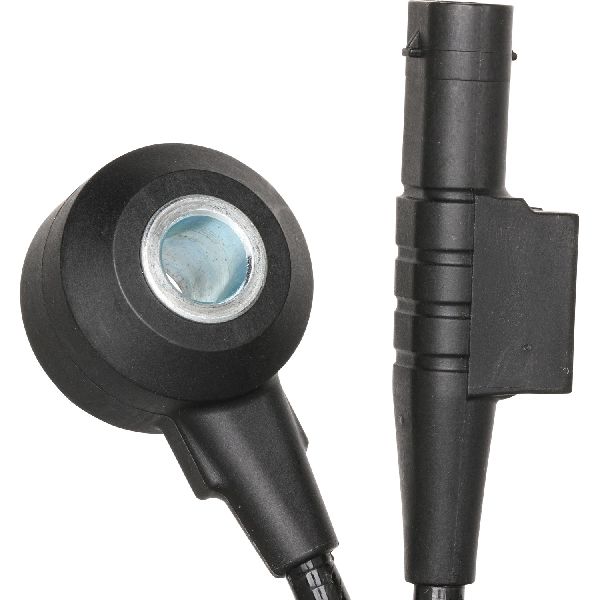
- Knock Sensor
(OEM #06L905377 (or superseded 06K905377A))— This is the most common hardware failure for this code after ruling out software and wiring issues.
Trusted brands: Bosch (OEM supplier), NTK, Genuine Volkswagen
OEM price range: $70-$100
Aftermarket price range: $40-$75
Related Codes That Often Appear With This One
- P0327 — This code for 'Knock Sensor 1 Circuit Low Input' often appears with P0326, indicating a comprehensive problem with the sensor's signal, possibly due to a wiring short or internal sensor failure. A forum user reported both codes appearing simultaneously after a water pump repair, pointing to a damaged wire or sensor.
Technical Service Bulletins (TSBs) & Recalls
- V0123042069630 / 2069630/4: "ECM Update Programming for DTC P2407, P0326, P0442."
Platform-Specific Known Issues
- A known software issue can cause this code, which is correctable with an ECM update per TSB #V0123042069630.
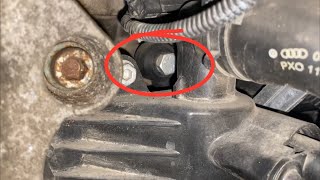
- The knock sensor on the EA888 engine is located on the front of the engine block, underneath the intake manifold, making access difficult and increasing labor time for replacement. This often leads to mechanics replacing it during other jobs that require intake manifold removal, such as carbon cleaning or water pump replacement.
- Wiring can be damaged during unrelated repairs. One owner on Reddit reported P0326 and P0327 appearing immediately after a water pump replacement, suspecting a pinched wire near the thermostat housing where the knock sensor is located.
Mechanic-Grade Diagnostic Values
- Knock Sensor (G61) Circuit Wire Resistance — expected: Max. 1.5 Ω. Failure: A reading higher than 1.5 Ω indicates excessive resistance or an open circuit in the harness between the ECU and the sensor connector.
- Knock Sensor (G61) Circuit Wires - Short Test — expected: ∞ Ω (Infinite resistance / Open circuit). Failure: Any continuity or low resistance reading between the signal and ground wires indicates a short circuit in the harness.
- Knock Sensor Internal Resistance — expected: Not reliably testable with a multimeter.. Failure: Modern piezoelectric knock sensors may not give a consistent resistance reading. A reading of infinite resistance does not definitively prove the sensor is bad. A 'tap test' is more effective.
- Knock Sensor Signal Voltage (Live Data) — expected: Typically 0.5V - 2.5V during operation.. Failure: Voltage that is consistently zero, maxed out, or does not change with engine RPM and load suggests a fault.
Hidden / Shadow Codes Worth Checking
- 16710: This is the VAG-specific fault code that corresponds directly to the generic P0326. (see via VW/Audi-specific scan tools like VCDS (by Ross-Tech) or ODIS will display this code.)
- 3B7E: A hexadecimal sub-code or status byte that may accompany P0326, providing more specific fault information for dealer-level tools. (see via May be visible on advanced scan tools like Autel or Snap-on when reading manufacturer-specific codes.)
Scan Tool Commands That Help
- VCDS (Ross-Tech): Advanced Measuring Blocks - Group 026 — Use this to view the live voltage from the knock sensor for each individual cylinder. This helps determine if the signal is erratic, absent, or if one cylinder is producing an unusually high reading, which could indicate a real knock event.
- VCDS (Ross-Tech): Advanced Measuring Blocks - Group 020 — Use this to monitor the ignition timing retard in degrees of crank angle (°KW) for each cylinder. If the ECU is actively pulling timing on a specific cylinder, it confirms the system is detecting what it believes to be knock. If P0326 is present and there is no timing retard, it points more strongly to a sensor or circuit performance issue rather than actual knock.
Wiring & Ground Locations
- Engine Block Ground (G15) — A primary ground point is located on the cylinder head.. A poor engine ground can create a floating ground reference for sensors like the knock sensor, leading to erratic voltage signals and fault codes.
- Chassis Ground — A main chassis ground point is located on the firewall/bulkhead, behind and above the battery.. This is a critical ground connection for the entire engine management system. Corrosion or looseness here can cause a wide range of electrical issues, including sensor faults.
- Knock Sensor (G61) Connector — On the front of the engine block, under the intake manifold. The wiring harness runs from the sensor towards the driver's side of the engine bay to the main ECU harness.. This connector and its wiring are prone to damage from heat and during other repairs (e.g., water pump replacement), causing open or shorted circuits.
- ECU Connector (T94a) — The main 94-pin engine control unit connector, located next to the battery and fuse box.. This is the termination point for the knock sensor circuit. A confirmed wiring issue would require checking continuity back to the specific pins on this connector.
Real Owner Repair Stories
- Ross-Tech Forum user (2017 VW Scirocco with 1.4L TSI engine (similar architecture)) — Persistent knock sensor fault code that kept returning.
❌ Tried (didn't work) Replacing the knock sensor (G61).
✅ What actually fixed it A wiring fault was found. Using a wiring diagram, the owner tested continuity from the sensor to the ECU and discovered damaged wires for pins 55 (yellow) and 56 (green) that were hidden by the protective black cable sleeving. Repairing the wires resolved the code. - Reddit user @r/GolfGTI (2017 GTI Sport DSG) — Codes P0326 and P0327 appeared immediately after a DIY water pump replacement, specifically when accelerating above 3000 RPM.
❌ Tried (didn't work) Reseating all visible electrical connectors on the side of the intake manifold.
✅ What actually fixed it The user did not post a final confirmation, but the strong suspicion, shared by other technicians in the thread, was that the knock sensor wire was pinched or damaged during the water pump replacement, as the sensor is located directly above the thermostat housing. The resolution is implied to be inspecting and repairing the wire harness under the intake manifold.
OEM Part Supersession History
06K905377A→06L905377— Standard part revision and update by the manufacturer.
Heads up: The parts are physically interchangeable, but it is always recommended to use the latest revision (06L905377) for any new replacement.
Diagnostic Flowchart
Other Known Issues on This Vehicle
Issues unrelated to this code that are worth knowing about as an owner of this generation:
- Leaking Water Pump / Thermostat Housing 🔴 High — Very common. Can occur as early as 40,000-60,000 miles. The plastic housing is prone to cracking from heat cycles, causing coolant leaks.
- Carbon Buildup on Intake Valves 🟠 Medium — Inevitable on all direct-injection engines. Typically requires cleaning (walnut blasting) every 50,000-80,000 miles to prevent rough idle, misfires, and performance loss.
- PCV Valve Failure 🟠 Medium — Common failure item. Can lead to excessive oil consumption, rough idle, misfires, and oil leaks from failed seals due to high crankcase pressure.
- Sunroof Leaks 🟠 Medium — Common on models equipped with a sunroof. The sunroof drain tubes can become clogged, causing water to leak into the cabin, potentially damaging electronics. (Ref: Multiple TSBs exist for drain cleaning procedures.)
- Turbocharger Failure (IHI IS20) 🟠 Medium → Shop Turbocharger — Less common on later models, but early production Mk7 GTIs (2015-2016) had a higher rate of failure with the stock IHI IS20 turbocharger, sometimes requiring replacement.
Used vs. New Parts: Buying Guide for This Vehicle
When a used part is the smart pick: Almost never for the knock sensor itself, as its piezoelectric element degrades with heat and time. A used part is a false economy. However, sourcing a used wiring harness pigtail from a junkyard is an excellent, cost-effective repair if only the plastic connector or a short section of wire is damaged.
Donor-vehicle mileage cap: roughly under 120000 miles for the part to have meaningful remaining life.
What to inspect on the donor part:
- For a wiring pigtail, ensure the plastic is not brittle or cracked.
- Check that the connector's locking tab is intact and functional.
- Flex the wires to feel for internal breaks or stiff, heat-damaged insulation.
OEM-only on this vehicle (don't cheap out):
- While not strictly 'OEM-only', using a no-name, unbranded knock sensor is highly discouraged. The sensor's sensitivity is precisely calibrated, and cheap aftermarket versions are a common cause of repeat failures.
Aftermarket brands forum-validated for this vehicle:
- Bosch (often the original equipment manufacturer)
- NTK
Brands owners have reported issues with on this vehicle:
- Unbranded sensors from online marketplaces (e.g., Amazon, eBay) that lack a reputable brand name.
Real Owner Stories
Aggregated from forums and TSBs cited above. Mileages and costs reflect what owners reported in those sources.
2015-2021 Volkswagen GTI EA888 2.0L Turbo
Symptoms: The owner reported that immediately after replacing the water pump, the car threw codes P0326 and P0327. They suspected a pinched wire near the thermostat housing where the knock sensor is located.
What fixed it: Inspection of the wiring harness near the thermostat housing for damage or pinching that occurred during the water pump repair.
Source hint: Reddit r/GolfGTI thread titled 'replaced water pump and now have codes p0327 and...'
Related OBD-II Codes
Frequently Asked Questions
Is there a Technical Service Bulletin for P0326 on my Volkswagen GTI?
Why did my GTI lose power above 3000 RPM when the P0326 code appeared?
Where is the knock sensor located on the EA888 2.0L Turbo engine?
What is the specific torque specification for a new knock sensor on this vehicle?
Can a recent water pump replacement cause a P0326 code?
Will using low-octane fuel trigger this code on my GTI?
Helpful Videos
We Have This Part in Stock


The information in this article is provided for general reference and educational purposes only. Vehicle specifications, procedures, and part compatibility can vary by production date, trim level, and region. Always consult your vehicle's factory service manual and verify part numbers before purchasing or performing repairs. Safety-critical components such as airbags, seat belts, and braking systems should be installed by a qualified professional.
- Volkswagen GTI:
- 🧭 Diagnostic Flowchart
- 🎬 Helpful Videos
- 🛍️ Shop This Part
- What's Unique About the 2015-2021 Volkswagen GTI
- Symptoms You May Notice
- Most Likely Causes
- Rare But Worth Checking
- Diagnosis Steps
- Parts You'll Likely Need
- Related Codes That Often Appear With This One
- Technical Service Bulletins (TSBs) & Recalls
- Platform-Specific Known Issues
- Mechanic-Grade Diagnostic Values
- Hidden / Shadow Codes Worth Checking
- Scan Tool Commands That Help
- Wiring & Ground Locations
- Real Owner Repair Stories
- OEM Part Supersession History
- Other Known Issues on This Vehicle
- Used vs. New Parts: Buying Guide for This Vehicle
- Real Owner Stories
- 2015-2021 Volkswagen GTI EA888 2.0L Turbo
- Related OBD-II Codes
- Frequently Asked Questions
- 🎟️ Get 5% Off