

P0327 on 2019-2025 Audi A6: Knock Sensor Circuit Low Causes and Fixes
This code indicates a low voltage signal from the Bank 1 knock sensor. The most common causes are a faulty knock sensor or a wiring/connector issue. On the 3.0L V6 TFSI (EA839) engine, the sensors are located in the engine's 'hot-V' valley under the turbocharger, making replacement a labor-intensive job.
- P0327 on a 2019-2025 Audi A6 means the Bank 1 knock sensor circuit has a low voltage reading.
- The most likely causes are a bad knock sensor or a wiring issue, both located in the 'hot-V' of the engine.
- Due to the sensor's location under the turbocharger on the 3.0L V6 TFSI (EA839), this is a labor-intensive and expensive repair that is not recommended for DIY.
- It is highly advisable to replace both knock sensors (Bank 1 and Bank 2, OEM part 06M-905-377) and all associated turbo/intake gaskets at the same time to avoid future repeat labor costs.
What's Unique About the 2019-2025 Audi A6
For the C8 generation Audi A6 with the 3.0L V6 TFSI (EA839) engine, the design places the single twin-scroll turbocharger in the 'hot-V' valley between the cylinder banks. The knock sensors are located in this same valley, underneath the turbocharger assembly. This location makes what would be a simple sensor replacement on many other vehicles a significantly more involved and costly repair due to the extensive labor required to access them. The provided TSB for V6 TFS engines confirms this is a known area for DTCs, including P0327. [TSB_2081342_1]
🎬 Watch: Common engine problems to check before buying an Audi 3.0T.Diagnostic Flowchart
Tap your situation to follow the diagnostic path that matches what you're seeing on this vehicle.
Symptoms You May Notice
- Check Engine Light is on
- "Drive System Malfunction" message on the dashboard [TSB_2081342_1]
- Reduced engine power and sluggish acceleration, sometimes referred to as 'limp mode'
- Decreased fuel economy
- Engine may run rough or hesitate
- Audible engine pinging or knocking noises under load (this is less common, as the primary symptom is the ECM's *inability* to detect knock, but a mechanical issue causing knock could trigger the code if the sensor is intermittent)
- Replacing spark plugs or ignition coils without diagnosing the knock sensor circuit first.
- Assuming the engine is knocking when the code's primary meaning is a fault in the sensor's electrical circuit.
Most Likely Causes
- Faulty Knock Sensor (Bank 1) 🔴 High Probability → Shop Ignition Knock (Detonation) Sensor Sensors can fail over time due to extreme heat cycles in the 'hot-V' of the engine and constant vibration. This is the most common failure point for this code.
How to confirm: After confirming the wiring is intact, the sensor itself is the most likely culprit. A technician can test the sensor's resistance, but given the high labor cost to access it, it's almost always replaced if the turbocharger is removed for this issue.
Typical fix: Replace the Bank 1 knock sensor. It is highly recommended to replace the Bank 2 sensor (for code P0332) at the same time due to the labor involved in accessing them. Both sensors are identical.
Est. part cost: $35-$120 - Wiring Harness or Connector Issue 🟡 Medium Probability The engine valley location exposes the wiring harness to significant heat, which can make insulation brittle and prone to cracking over time. Rodent damage is also a known possibility in this protected area.
How to confirm: Visually inspect the wiring harness leading to the knock sensor for any signs of damage, chafing, melting, or corrosion. Check for continuity and shorts to ground using a multimeter. This must be done after gaining access to the sensor area.
Typical fix: Repair the damaged section of the wiring harness or replace the connector pigtail.
Est. part cost: $20-$50
Rare But Worth Checking
- Powertrain Control Module (PCM) Fault: This is very rare and should only be considered after all other possibilities, including the sensor and wiring, have been exhaustively ruled out.
- Improperly Torqued Knock Sensor: → Shop Ignition Knock (Detonation) Sensor Knock sensors must be torqued to a specific value (typically around 20 Nm, but always verify with the service manual) to function correctly. If the sensor is too loose or too tight, it can't detect vibrations properly. This is more likely to be an issue if the sensor was recently replaced.
- Internal Engine Problems: In rare cases, excessive mechanical noise from another failing component (like a timing chain tensioner or rocker arm) could potentially cause erratic signals that the ECM interprets as a fault, though this is uncommon. A user on AudiWorld forums found that a broken vacuum line was the source of their knock sensor codes.
Diagnosis Steps
- Read the fault codes using an OBD-II scanner (like VCDS for VW/Audi) to confirm P0327 is present and note any other codes.
- Visually inspect the top of the engine and wiring harnesses for any obvious signs of damage, such as from rodents.
- Gain access to the knock sensor connectors in the engine valley. This will require removing the turbocharger assembly.
- Inspect the Bank 1 knock sensor connector and harness for corrosion, damage, or loose pins.
- Using a multimeter, test the wiring between the ECM and the knock sensor connector for continuity and to ensure there is no short to ground.
- If wiring is confirmed to be good, the knock sensor itself is the cause of the fault.
- Replace the knock sensor(s), ensuring they are torqued to the manufacturer's specification (verify spec, but often around 20 Nm).
- While access is available, replace all associated single-use gaskets for the turbocharger and intake components.
- Reassemble all components in the reverse order of removal.
- Clear the fault codes and perform a test drive, monitoring live data to ensure the knock sensor is reporting correctly.
Parts You'll Likely Need
- Knock Sensor
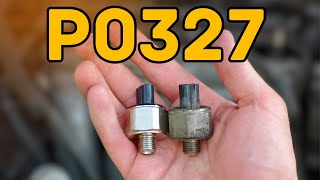
(OEM #06M-905-377)— This is the most common component to fail, triggering the P0327 code. Two are required to do the job properly.
Trusted brands: Bosch, Genuine Audi
OEM price range: $35-$55
Aftermarket price range: $25-$45 - Supercharger/Turbocharger Gaskets
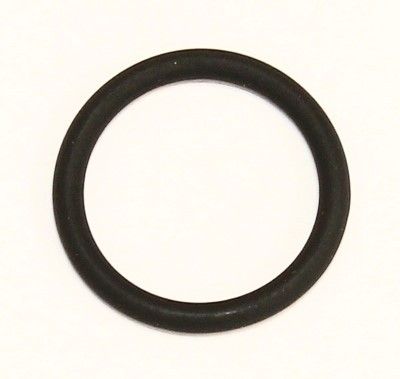
(OEM #079129717D (Manifold to Supercharger, x6), 06E145723A (Intercooler Gasket, x2))— These are single-use gaskets that must be replaced anytime the turbo/supercharger assembly is removed to access the knock sensors.
Trusted brands: Genuine Audi, Elring
OEM price range: $80-$150 (for a full set)
Aftermarket price range: $50-$90
Related Codes That Often Appear With This One
- P0332 — This is the same 'Circuit Low' code but for the Bank 2 knock sensor. Since both sensors are in the same difficult-to-access location and subject to the same conditions, they often fail around the same time and are always recommended to be replaced together.
- P0328 — This code is for 'Knock Sensor 1 Circuit High'. It points to an electrical issue in the same circuit, just a different type of fault (e.g., an open circuit instead of a short to ground).
- P0326 — This code indicates 'Knock Sensor 1 Circuit Range/Performance'. It can appear alongside P0327 if the signal is intermittent or implausible, pointing towards a failing sensor or connection. A Ross-Tech forum user reported these two codes together on a 3.0T engine.
Technical Service Bulletins (TSBs) & Recalls
- TSB_2081342_1: Mentions Drive System Malfunctions related to knock sensor codes P0327, P0332, P0328, and P0333 on V6 TFS engines.
Platform-Specific Known Issues
- A Technical Service Bulletin (TSB #TSB_2081342_1) exists for V6 TFS engines regarding a 'Drive System Malfunction' that can be caused by knock sensor-related DTCs, including P0327. [TSB_2081342_1]
- The location of the sensors in the 'hot-V' under the turbocharger is the primary vehicle-specific challenge, turning a simple sensor swap into a major repair job.
Mechanic-Grade Diagnostic Values
- Knock Sensor Signal Voltage (Signal Range Check) — expected: Above 0.5 V. Failure: A voltage reading that remains below 0.5 V for more than one second can trigger the fault.
- Knock Sensor Bolt Tightening Torque — expected: 20 Nm (15 ft-lbs). Failure: Over-tightening can make the sensor overly sensitive and trigger false codes, while under-tightening can prevent it from detecting real knock.
- Wiring Harness Continuity/Resistance — expected: Approximately 0.1-0.5 ohms. Failure: A high resistance or open circuit (OL) reading on a multimeter indicates a break in the wire between the ECM and the sensor connector.
Hidden / Shadow Codes Worth Checking
- 16711: This is the VAG-specific fault code that corresponds to the generic OBD-II code P0327. (see via VAG-COM (VCDS) or other Audi/VW-specific diagnostic tools.)
Scan Tool Commands That Help
- VCDS, ODIS, or other advanced scan tools: Live Data Monitoring / Data List — Use this to monitor the 'Knock Feedback Value' or the direct voltage output from the knock sensor in real-time. A static, low, or non-responsive value while revving the engine can confirm a circuit or sensor fault before disassembly.
Wiring & Ground Locations
- G61 — This is the component name for the Bank 1 Knock Sensor.. This is the primary component monitored by the P0327 fault code.
- Engine Block Ground Strap — Typically runs from the engine block (often near the alternator or an engine mount) to the chassis frame rail.. A corroded or loose main engine ground can cause a floating ground reference for all engine sensors, leading to erratic voltage readings and codes like P0327.
- Sensor Ground Connection — Knock sensor circuits use a dedicated sensor ground that is bundled in the engine wiring harness and terminates at a specific pin on the ECM.. A fault in this specific ground wire within the harness can cause a P0327 code, even if the main engine ground is good. Testing continuity from the sensor connector back to the ECM pin is required to verify.
Model Year Variations Within This Range
- 2019 (early production): The EA839 engine had known issues with rocker arm failure in its initial 2018 model year release. Early 2019 models could potentially be affected. A failing rocker arm creates excessive mechanical noise in the valvetrain, which could cause erratic signals from the knock sensor and potentially trigger fault codes as the ECM struggles to interpret the unexpected vibrations.
- 2024-2025: For the 2024 model year, the A6 C8 received a mid-life facelift (C8.5). These changes were primarily cosmetic, affecting the grille and lighting. There are no documented fundamental changes to the 3.0L V6 TFSI engine, knock sensor locations, or the causes of code P0327 for these refresh years.
Helpful Videos
Used OEM Parts in Stock
New Aftermarket Parts Available

The information in this article is provided for general reference and educational purposes only. Vehicle specifications, procedures, and part compatibility can vary by production date, trim level, and region. Always consult your vehicle's factory service manual and verify part numbers before purchasing or performing repairs. Safety-critical components such as airbags, seat belts, and braking systems should be installed by a qualified professional.
- Audi A6:
- 🧭 Diagnostic Flowchart
- 🎬 Helpful Videos
- 🛍️ Shop This Part
- What's Unique About the 2019-2025 Audi A6
- Symptoms You May Notice
- Most Likely Causes
- Rare But Worth Checking
- Diagnosis Steps
- Parts You'll Likely Need
- Related Codes That Often Appear With This One
- Technical Service Bulletins (TSBs) & Recalls
- Platform-Specific Known Issues
- Mechanic-Grade Diagnostic Values
- Hidden / Shadow Codes Worth Checking
- Scan Tool Commands That Help
- Wiring & Ground Locations
- Model Year Variations Within This Range
- 🎟️ Get 5% Off