

P0327 on 2019-2026 Audi Q8: Knock Sensor Circuit Low Causes and Fixes
This code indicates a low voltage signal from the Bank 1 knock sensor. The most common causes are a faulty knock sensor or a wiring issue. Expect a repair cost of $407 to $549 at a shop, with the part itself costing around $102. The sensor is located under the intake manifold, making replacement labor-intensive.
- P0327 on an Audi Q8 means the Bank 1 knock sensor circuit has a low voltage fault.
- The most likely cause is a failed knock sensor, followed by a wiring issue in the engine valley.
- Repair is complex and expensive due to the sensor's location under the intake/supercharger, making professional service highly recommended.
- Audi has issued a TSB (#TSB_2081342_1) that includes this code, indicating it's a recognized issue.
- Proper torque (25 Nm) on the sensor bolt is critical for correct function; improper torque is a common cause of recurring faults.
- Driving with this code can lead to poor performance and potential engine damage if actual knock occurs.
What's Unique About the 2019-2026 Audi Q8
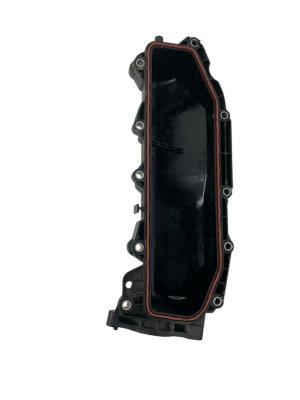
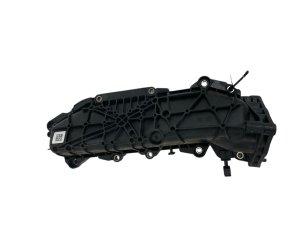
For the Audi Q8 with the 3.0L TFSI V6 engine (part of the EA839 family co-developed with Porsche), this code is specifically addressed by a Technical Service Bulletin (TSB), indicating a recognized issue. The knock sensors on this V6 engine are located in the hot 'V' of the engine, underneath the intake manifold/supercharger assembly. This placement makes access significantly more involved and labor-intensive than on engines where the sensors are on the exterior of the block.
Diagnostic Flowchart
Tap your situation to follow the diagnostic path that matches what you're seeing on this vehicle.
Symptoms You May Notice
- Check Engine Light is on
- Reduced engine power and acceleration, sometimes described as "limp mode".
- Engine pinging or knocking sounds, especially under load (though a faulty sensor may fail to report this).
- Decreased fuel economy.
- Hesitation or stumbling during acceleration
- Fluctuating engine RPM.
- Replacing spark plugs or ignition coils without diagnosing the knock sensor circuit first.
- Assuming the engine has a mechanical knock without checking for codes. The code P0327 is an electrical circuit fault, not necessarily a mechanical problem.
- Replacing the knock sensor but failing to properly torque it, leading to the code returning.
Most Likely Causes
- Faulty Knock Sensor (Bank 1) 🔴 High Probability → Shop Ignition Knock (Detonation) Sensor The sensor can fail due to age, internal cracks from heat cycles, or moisture intrusion. Its location in the hot engine valley under the intake manifold contributes to a shorter lifespan due to extreme temperatures. Water can also pool in the 'V' of the engine, submerging and ruining the sensor if protective grommets fail.
How to confirm: After accessing the sensor, test its internal resistance with a multimeter and compare the reading to the manufacturer's specification. An out-of-spec or open circuit reading confirms a bad sensor. Visually inspect for cracks in the sensor's housing.
Typical fix: Replace the Bank 1 knock sensor. It is highly recommended to replace both sensors (Bank 1 and Bank 2) at the same time due to the significant labor involved in accessing them. The mounting bolt must be tightened to a specific torque (often 20-25 Nm) with a torque wrench, as incorrect torque will lead to improper readings and a recurring code.
Est. part cost: $60-$110 - Wiring or Connector Issue 🟡 Medium Probability The wiring harness is located in the hot engine valley, where high temperatures can make the insulation brittle and prone to cracking over time. Rodents are also known to chew on the soy-based wiring insulation used in modern cars, causing shorts or open circuits.
How to confirm: Visually inspect the wiring harness leading to the knock sensor for any signs of damage, fraying, melting, or corrosion on the connector pins. Perform a continuity test with a multimeter from the sensor connector to the corresponding pins at the ECM connector.
Typical fix: Repair the damaged section of the wiring harness or replace the connector pigtail. In cases of extensive damage, a new engine harness may be required.
Est. part cost: $20-$50 for a pigtail, much more for a harness
Rare But Worth Checking
- Incorrectly Torqued Knock Sensor: → Shop Ignition Knock (Detonation) Sensor If the sensor was recently replaced, it may have been improperly torqued. The sensor is a microphone that must be tightened to a specific specification (e.g., 20 Nm or 15 ft-lb) to correctly 'hear' engine vibrations. An AudiWorld forum user with a P0327 on a similar engine reported that re-torquing the sensor to spec resolved the issue.
- Engine Control Module (ECM) Fault: This is a rare cause. The ECM's internal circuit for the knock sensor can fail, but all other possibilities, including the sensor, torque, and wiring, should be exhaustively ruled out before condemning the ECM.
Diagnosis Steps
- Confirm the presence of code P0327 (and any others) with an OBD-II scanner.
- Check for any related TSBs in the NHTSA or manufacturer database. TSB #TSB_2081342_1 confirms this is a known issue for the 3.0L TFSI engine.
- Because the sensors are difficult to access, first perform a thorough visual inspection of any visible wiring harnesses in the engine bay for signs of rodent damage or heat exposure.
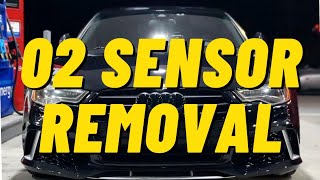
- If external wiring looks good, proceed with removing the supercharger/intake manifold 🎬 See how to remove the supercharger to access the engine valley. to gain access to the knock sensors located in the engine 'V'.
- Once accessed, inspect the knock sensor and its connector for physical damage, corrosion, or loose connections. Check for signs of water or oil pooling in the engine valley.
- Disconnect the sensor and test its resistance with a multimeter. Compare the value to the factory specification. An open or out-of-spec reading indicates a failed sensor.
- Inspect the wiring harness under the intake for any signs of heat damage, brittleness, or rodent damage.
- If the sensor tests good, check for continuity and for shorts to ground/power in the wiring harness between the sensor connector and the ECM.
- If replacing the sensor, ensure the mounting surface on the engine block is clean and install the new sensor using a torque wrench set to the manufacturer's specification (typically 20-25 Nm for this platform).
- If both the sensor and wiring are confirmed to be good, the issue may lie with the ECM, though this is highly uncommon.
Parts You'll Likely Need
- Knock Sensor
(OEM #06M905377B)— This is the most common component to fail, triggering a P0327 code.
Trusted brands: Bosch, VAG (Genuine OEM), Delphi
OEM price range: $102
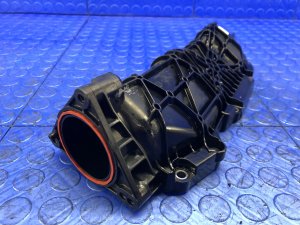
Aftermarket price range: $60-$90 - Intake Manifold Gaskets — These are single-use gaskets that must be replaced anytime the intake manifold/supercharger is removed to access the knock sensors.
Trusted brands: Victor Reinz, Elring, VAG (Genuine OEM)
OEM price range: $40-$60
Aftermarket price range: $20-$35
Related Codes That Often Appear With This One
- P0332 — This code is for 'Knock Sensor 2 Circuit Low (Bank 2)'. It's common to see both codes if there is a shared wiring issue, if water intrusion has affected both sensors in the engine valley, or if both sensors are failing around the same time due to age and heat exposure.
- P0328 — This code is for 'Knock Sensor 1 Circuit High'. It can appear intermittently along with P0327 if the sensor or wiring has an erratic fault, causing the signal voltage to fluctuate wildly.
Technical Service Bulletins (TSBs) & Recalls
- TSB_2081342_1: Provides information for a Drive System Malfunction with DTCs related to Knock Sensors P0327, P0332, P0328, P0333 on V6 TFSI engines. It guides technicians on diagnosing the circuit.
Platform-Specific Known Issues
- Audi issued Technical Service Bulletin #TSB_2081342_1 for 2019 V6 TFSI engines, which specifically mentions DTC P0327 related to a Drive System Malfunction. This bulletin confirms that the manufacturer is aware of issues with the knock sensor system on these vehicles and provides diagnostic guidance.
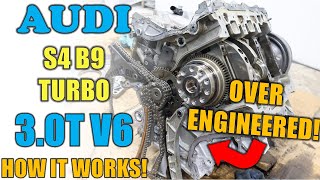
- The EA839 engine family is known 🎬 Watch this engine teardown to see the EA839's internal layout. for having the knock sensors located in the 'hot V' valley, which subjects them to extreme heat and can lead to premature failure of the sensor or its wiring harness.
Mechanic-Grade Diagnostic Values
- Knock Sensor Signal Voltage — expected: The ECM expects a signal that is not shorted to ground. The code sets when the voltage is below a specific threshold, often less than 0.18V or 0.5V.. Failure: A constant voltage reading below the minimum threshold (e.g., <0.18V) for more than one second will trigger DTC P0327.
- Knock Sensor Mounting Bolt Torque — expected: 20 Nm (15 ft-lb).. Failure: Torque that is too loose or too tight will cause the piezoelectric element to vibrate incorrectly, leading to either no signal (P0327) or a false signal.
- Knock Sensor Harness Shielding Continuity — expected: Less than 1.0 Ω between the shield pin on the connector and a clean engine ground point.. Failure: A high resistance or open circuit reading indicates a break in the shielding, which can allow electrical noise to interfere with the low-voltage knock signal, potentially causing various knock sensor codes.
Hidden / Shadow Codes Worth Checking
- 16711: This is the VAG-specific fault code that corresponds to the generic OBD-II code P0327, meaning 'Knock Sensor 1 (G61): Signal Too Low'. (see via This code is visible with VAG-specific scan tools like VCDS (Ross-Tech) or ODIS (dealership tool).)
Scan Tool Commands That Help
- ODIS (Offboard Diagnostic Information System): Guided Fault Finding — When P0327 is present, ODIS will initiate a 'Test Plan' that walks the technician through a manufacturer-approved diagnostic tree. It provides step-by-step instructions, expected values, and wiring diagrams specific to the vehicle, which is essential for a complex circuit like the knock sensor's.
- VCDS (VAG-COM Diagnostic System): Measuring Value Blocks (MVB) — A technician can monitor the live voltage readings from the knock sensors while the engine is running. For P0327, one would expect to see a flat, near-zero voltage reading from sensor 1 (G61) that doesn't change with engine RPM or load, while the other sensor shows fluctuating voltage. This helps confirm a lack of signal from the Bank 1 sensor or its circuit.
Wiring & Ground Locations
- Knock Sensor 1 (G61) — On the EA839 3.0L V6, the knock sensors are located in the valley ('hot V') between the cylinder banks, underneath the supercharger/intake manifold assembly. Bank 1 is the passenger side on US vehicles.. This location makes the sensor and its wiring highly susceptible to heat damage. It also means significant labor is required for access, making a wiring check at the sensor connector a late-stage diagnostic step.
- Engine Ground Straps — There are multiple ground points for the engine harness. A primary one is typically located near the engine mount on the frame rail. A faulty or corroded main engine ground can cause floating voltages and erratic sensor behavior across the system.. A poor ground connection can cause a voltage differential, which the ECM might interpret as a low signal from the knock sensor, triggering P0327 even if the sensor and its direct wiring are intact.
Real Owner Repair Stories
- Carly Community User (2018 Audi Q7 (uses a similar EA839 engine)) — Check engine light, uneven idling, and a 25% increase in fuel consumption.
❌ Tried (didn't work) Initial thought was a bad sensor.
✅ What actually fixed it The root cause was a pinched wiring harness connection near the knock sensor that had been damaged during a recent routine maintenance service. The sensor itself was fine. The fix was to repair the damaged wire connection, which cost 95 Euro and resolved all symptoms. - Reddit user r/Audi (2019 Audi SQ5 (uses the same EA839 3.0T engine)) — P0328 (Signal Too High), but the diagnostic principle is relevant. The code appeared after applying a Stage 1 ECU tune.
❌ Tried (didn't work) Considering replacing the knock sensor.
✅ What actually fixed it The user added an octane booster to each tank of gas. The code did not return, indicating the issue was related to low-quality fuel causing excessive knock that the tune was sensitive to, rather than a hardware fault with the sensor circuit. This highlights the importance of considering fuel quality and software changes.
Model Year Variations Within This Range
- 2019-2026: The Audi Q8 received a facelift for the 2024 model year, which included cosmetic updates and new lighting technology. However, the core powertrain, the 3.0L TFSI V6 (EA839) engine, remained unchanged. Therefore, the causes, diagnostic procedures, and fixes for P0327 are consistent across the entire 2019-2026 model range.
Helpful Videos
We Have This Part in Stock

The information in this article is provided for general reference and educational purposes only. Vehicle specifications, procedures, and part compatibility can vary by production date, trim level, and region. Always consult your vehicle's factory service manual and verify part numbers before purchasing or performing repairs. Safety-critical components such as airbags, seat belts, and braking systems should be installed by a qualified professional.
- Audi Q8:
- 🧭 Diagnostic Flowchart
- 🎬 Helpful Videos
- 🛍️ Shop This Part
- What's Unique About the 2019-2026 Audi Q8
- Symptoms You May Notice
- Most Likely Causes
- Rare But Worth Checking
- Diagnosis Steps
- Parts You'll Likely Need
- Related Codes That Often Appear With This One
- Technical Service Bulletins (TSBs) & Recalls
- Platform-Specific Known Issues
- Mechanic-Grade Diagnostic Values
- Hidden / Shadow Codes Worth Checking
- Scan Tool Commands That Help
- Wiring & Ground Locations
- Real Owner Repair Stories
- Model Year Variations Within This Range
- 🎟️ Get 5% Off