

P0327 on 2014-2017 Subaru Forester: Knock Sensor Circuit Low Causes and Fixes
On a 2014-2017 Subaru Forester, code P0327 is most often caused by a failed knock sensor. Subaru issued a Technical Service Bulletin (TSB #07-133-18R) for this issue, recommending replacement with an updated, more durable part originally designed for turbo engines. Expect to pay $60-$110 for the OEM sensor and 1-2 hours of labor.
- P0327 on a 2014-2017 Forester is almost certainly a failed knock sensor or its wiring.
- Subaru is aware of the issue and released TSB 07-133-18R, which recommends an upgraded part for a permanent fix.
- When replacing the sensor, use the updated OEM part number (22060AA180 or 22060AA18A depending on VIN) for long-term durability.
- The repair is DIY-friendly for those comfortable working in tight spaces on the back of the engine, but requires care to torque the new sensor to exactly 17.7 ft-lbs.
- Driving with this code will result in reduced performance and fuel economy, and disables a key engine protection system, so it should be addressed promptly.
What's Unique About the 2014-2017 Subaru FORESTER
For this generation of Forester (SJ) with the naturally aspirated FB25 engine, Subaru identified a durability issue with the original knock sensor. They released a revised Technical Service Bulletin (TSB #07-133-18R) acknowledging that the sensor could fail due to heat and vibration, setting codes like P0327. The official fix is to replace the original sensor (P/N 22060AA160) with a more robust version (P/N 22060AA180 or 22060AA18A) originally designed for their turbo (DIT) engines to improve heat resistance and durability. This makes it a well-documented and common repair.
🎬 Watch: A complete Subaru knock sensor diagnosis and replacement walkthrough.Diagnostic Flowchart
Tap your situation to follow the diagnostic path that matches what you're seeing on this vehicle.
Symptoms You May Notice
- Check Engine Light is on
- Flashing cruise control light and disabled EyeSight system (common on Subarus when a CEL is present)
- Reduced engine power and sluggish acceleration
- Decreased fuel economy
- Engine pinging or knocking sounds during acceleration (less common, as the code indicates a sensor *circuit failure*, not necessarily active knock)
- Replacing spark plugs or ignition coils, assuming the poor performance is a misfire without checking codes first.
- Ignoring the code because drivability seems 'ok' at first. The lack of knock detection puts the engine at long-term risk.
Most Likely Causes
- Failed Knock Sensor 🔴 High Probability → Shop Ignition Knock (Detonation) Sensor Subaru issued TSB #07-133-18R indicating the original sensor on naturally aspirated models had durability issues and was prone to failure from heat and vibration, sometimes leading to internal cracks or corrosion.
How to confirm: After checking the wiring, this is the most likely component to have failed. The sensor's internal resistance can be tested with a multimeter. A reading outside the manufacturer's specification (e.g., a common spec is >400 kOhms, with some sources citing 530-580 kOhms) or an open/short circuit indicates failure.
Typical fix: Replace the knock sensor with the updated OEM part (22060AA180 or 22060AA18A). Ensure the mounting surface on the engine block is clean and the new sensor is torqued to specification (17.7 ft-lbs / 24 Nm).
Est. part cost: $60-$110 - Damaged Wiring or Connector 🟡 Medium Probability The knock sensor is located on the engine block, where its wiring is exposed to high heat and vibration. Rodents are also known to chew on the soy-based wiring insulation used in many modern cars, including Subarus, causing shorts or open circuits. Water intrusion into a damaged connector can also cause a short.
How to confirm: Visually inspect the entire length of the knock sensor wiring harness and the connector for any signs of breaks, melting, chafing, corrosion, or tell-tale signs of rodent damage like droppings or nests. Check for reference voltage at the harness connector with the ignition on; a reading of approximately 5V is expected.
Typical fix: Repair the damaged section of wire or replace the connector pigtail. In cases of rodent damage, using capsaicin-infused anti-rodent tape for the repair can deter future issues.
Est. part cost: $10-$30 for a pigtail or repair materials - Loose Knock Sensor ⚪ Low Probability → Shop Ignition Knock (Detonation) Sensor
How to confirm: Physically check if the knock sensor is securely bolted to the engine block. A loose sensor cannot properly detect engine vibrations and may cause erratic signals.
Typical fix: Torque the knock sensor mounting bolt to the correct specification, which is 17.7 ft-lbs (24 Nm). Do not over-tighten, as this can damage the sensor.
Est. part cost: $0
Rare But Worth Checking
- Faulty Powertrain Control Module (PCM): This is extremely rare. The PCM should only be considered after all other possibilities, including the sensor and wiring, have been thoroughly tested and ruled out.
Diagnosis Steps
- Scan the vehicle's computer with an OBD-II scanner to confirm P0327 is the active code and check for any other related DTCs.
- Locate the knock sensor on the rear of the engine block (driver's side on the FB25), near the bell housing and to the right of the throttle body. Access is tight but does not require intake manifold removal.
- Visually inspect the sensor's electrical connector and wiring harness for obvious damage, corrosion, melting, or signs of rodents.
- If the wiring appears intact, disconnect the sensor. Test its internal resistance using a multimeter set to kOhms. Measure between the sensor's pin and its metal housing. A reading above 400 kOhms is expected (spec is often cited as ~560 kOhms). An open circuit (infinite resistance) or a short (near zero resistance) indicates a failed sensor. 🎬 See how to test and replace a faulty knock sensor.
- Check for reference voltage at the harness connector (from the ECM) with the ignition on to ensure the circuit is intact. A reading of approximately 5V DC is expected.
- If the wiring and voltage supply are good and the sensor tests bad, replace the knock sensor.
- Before installing the new sensor, thoroughly clean the mounting surface on the engine block to ensure proper contact and grounding.
- Torque the new sensor's bolt to exactly 17.7 ft-lbs (24 Nm). Do not use anti-seize compound on the threads. The correct torque is critical for accurate readings.
- Reconnect the electrical connector, clear the trouble code with the OBD-II scanner, and perform a test drive to ensure the code does not return.
Parts You'll Likely Need
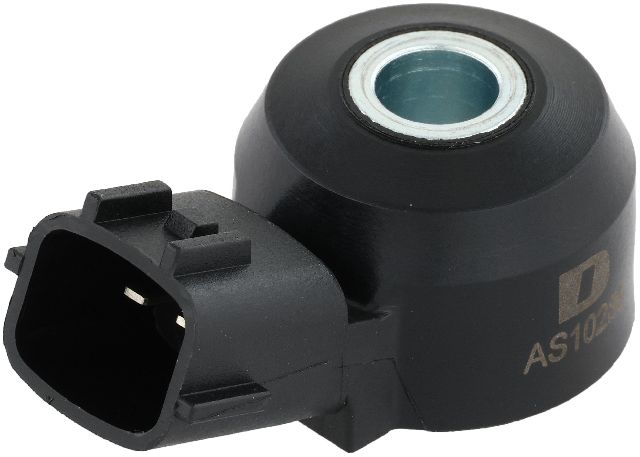
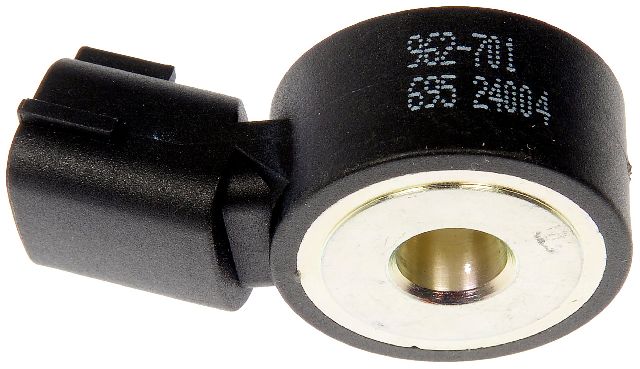
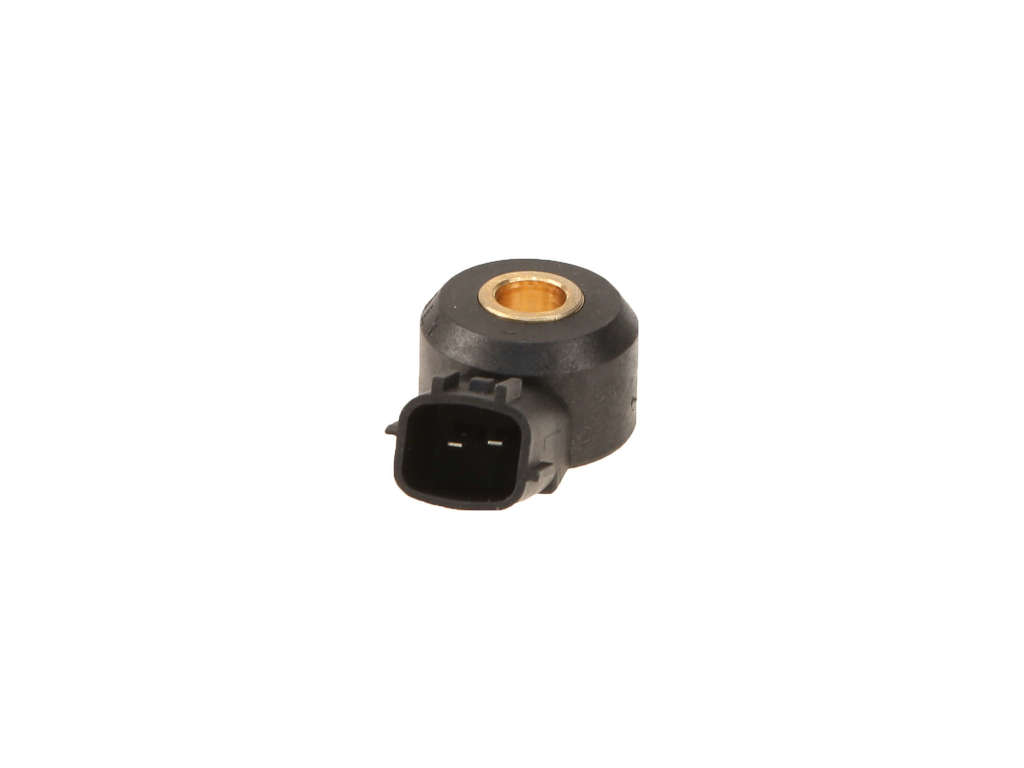
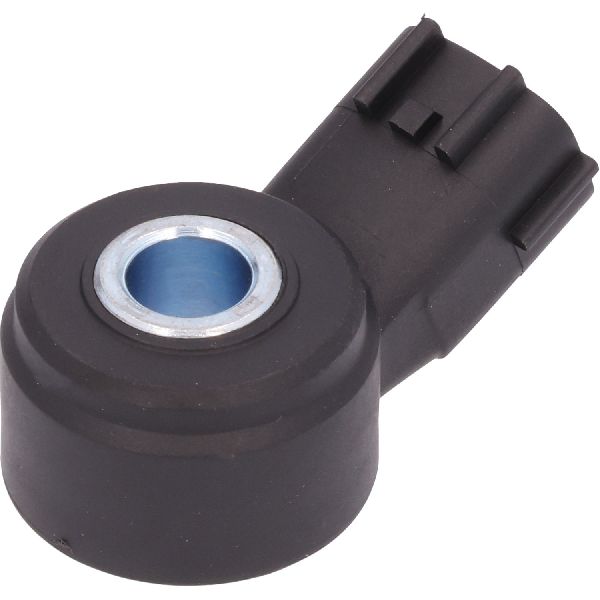
- Knock Sensor
(OEM #22060AA180 or 22060AA18A)— This is the updated, more durable component identified by Subaru in TSB #07-133-18R as the fix for the original, failure-prone sensor (P/N 22060AA160). Using the updated part is critical for a long-term repair. 22060AA180 is for Japan-built vehicles and 22060AA18A is for US-built vehicles. Always confirm with the dealer based on your VIN.
Trusted brands: Subaru (Genuine), Denso, NTK, Hitachi
OEM price range: $80-$150
Aftermarket price range: $50-$90
Related Codes That Often Appear With This One
- P0328 — This code is for 'Knock Sensor 1 Circuit High Input'. It often relates to the same root causes (sensor failure or wiring issues) and is mentioned in the same TSB from Subaru.
Technical Service Bulletins (TSBs) & Recalls
- 07-133-18R: This is a revision of the original TSB. It announces a design change, replacing the original knock sensor with the more durable DIT (turbo) engine version to increase durability and heat resistance. It explicitly lists P0327 as a resulting code. It specifies part number 22060AA180 for Japan-built and 22060AA18A for US-built models.
Platform-Specific Known Issues
- Subaru Technical Service Bulletin #07-133-18R describes the original knock sensor on naturally aspirated engines failing and setting DTCs P0327, P0328, P0332, and P0333. The fix is to replace it with a more durable sensor designed for turbo engines to improve heat resistance.
- Rodent damage to the knock sensor harness is a recurring theme in owner forums due to the location of the sensor and the use of soy-based wire insulation.
Mechanic-Grade Diagnostic Values
- Knock Sensor Internal Resistance — expected: > 400 kΩ, with a more precise specification often cited as 530-580 kΩ.. Failure: A reading near zero ohms (short circuit), infinite resistance (open circuit), or significantly below 400 kΩ indicates a faulty sensor.
- Harness Voltage (Key On, Engine Off) — expected: Approximately 5V DC at the harness connector pin with the sensor disconnected.. Failure: A reading of 0V indicates an open or short in the wiring between the ECM and the sensor connector.
- Sensor AC Voltage Output (Dynamic Test) — expected: > 1V AC when lightly tapping the engine block near the sensor with the engine running.. Failure: No AC voltage signal when tapping indicates the sensor is not generating a signal in response to vibration.
Scan Tool Commands That Help
- Subaru Select Monitor (SSM) or equivalent professional scan tool: Clear Memory Mode — After replacing the knock sensor or repairing wiring, this function should be performed to clear the DTC and reset any learned fuel or timing adjustments the ECM made in response to the fault.
Wiring & Ground Locations
- Knock Sensor Ground — The sensor grounds directly through its metal base to the engine block.. A corroded or dirty mounting surface on the engine block can create a poor ground, leading to incorrect sensor readings and triggering a P0327 code even with a functional sensor. The mounting surface must be clean and the bolt torqued correctly.
Real Owner Repair Stories
- The Irish Subaru Drivers Club forum (2005 Forester XT 2.0) — Engine light on with code P0327.
✅ What actually fixed it The owner replaced the knock sensor with the correct part from a specialty supplier. After fitting the new sensor, the check engine light went away and the car ran smoothly. - Subaru Enthusiasts Car Club of the Sierras forum (1997 Impreza L 2.2) — Intermittent Check Engine Light for P0325 (older equivalent of P0327), which became constant after replacing the sensor.
❌ Tried (didn't work) Replacing the original, cracked knock sensor.
✅ What actually fixed it The owner diagnosed the brand new replacement sensor and found its resistance was only 0.780 kΩ, far below the required minimum of 400 kΩ. The issue was a new, out-of-spec aftermarket part causing the persistent code.
OEM Part Supersession History
22060AA160→22060AA180 (Japan-built) or 22060AA18A (US-built)— The original sensor had durability issues related to heat and vibration. The new part, originally for turbo (DIT) engines, is more robust.
Heads up: Using a non-OEM or low-quality aftermarket sensor is a common cause of failed repairs, as they may have incorrect resistance values out of the box.
Model Year Variations Within This Range
- 2014-2017: The primary variation is not by model year, but by vehicle assembly plant. Japan-built models (VIN starting with 'J') and US-built models (VIN starting with '4S4') require different part numbers for the updated knock sensor, as specified in TSB #07-133-18R.
Helpful Videos
We Have This Part in Stock


The information in this article is provided for general reference and educational purposes only. Vehicle specifications, procedures, and part compatibility can vary by production date, trim level, and region. Always consult your vehicle's factory service manual and verify part numbers before purchasing or performing repairs. Safety-critical components such as airbags, seat belts, and braking systems should be installed by a qualified professional.
- Subaru FORESTER:
- 🧭 Diagnostic Flowchart
- 🎬 Helpful Videos
- 🛍️ Shop This Part
- What's Unique About the 2014-2017 Subaru FORESTER
- Symptoms You May Notice
- Most Likely Causes
- Rare But Worth Checking
- Diagnosis Steps
- Parts You'll Likely Need
- Related Codes That Often Appear With This One
- Technical Service Bulletins (TSBs) & Recalls
- Platform-Specific Known Issues
- Mechanic-Grade Diagnostic Values
- Scan Tool Commands That Help
- Wiring & Ground Locations
- Real Owner Repair Stories
- OEM Part Supersession History
- Model Year Variations Within This Range
- 🎟️ Get 5% Off