

P0327 on 2015-2017 Subaru WRX: Knock Sensor Circuit Low Causes and Fixes
On a 2015-2017 Subaru WRX, the P0327 code is most often caused by a faulty knock sensor or its wiring harness, frequently triggered by water intrusion. The sensor is located on top of the engine block under the intercooler, a spot prone to collecting moisture after heavy rain or car washes. Replacement with an updated OEM sensor (part #22060AA180) is the common fix, costing around $70-$150 for the part.
- P0327 on a 2015-17 WRX points directly to a problem in the knock sensor circuit, not necessarily engine knock.
- The most likely cause is a faulty knock sensor, often triggered by moisture getting onto the sensor after rain or a car wash.
- A damaged wiring harness is the second most likely cause, especially if the code appears with the key on and engine off.
- The fix is to replace the sensor with the updated genuine OEM part (#22060AA180) and torque it to 17.7 ft-lbs. The job requires removing the intercooler but is manageable for a DIYer.
- Subaru released an updated, more durable sensor to address this issue (TSB #07-133-18R).
- The 2014-2018 Forester XT with the same FA20F engine shares this exact problem.
What's Unique About the 2015-2017 Subaru WRX
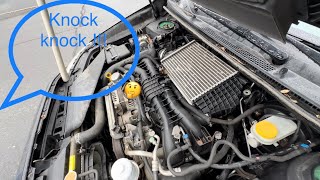
The 2015-2017 WRX uses the FA20F direct-injection turbocharged (DIT) engine. The knock sensor is located on the top of the engine block, underneath the top-mount intercooler. This location creates a small depression where water can pool, especially after heavy rain or engine washing. This moisture can seep into the sensor's connector, causing a short and triggering the P0327 code. This is a widely reported issue in owner forums. 🎬 Watch: A detailed breakdown of the WRX knock sensor circuit. In fact, Subaru issued a revised Technical Service Bulletin (TSB #07-133-18R) noting that an updated, more durable knock sensor was implemented to improve heat resistance and durability for these DIT engines.
Diagnostic Flowchart
Tap your situation to follow the diagnostic path that matches what you're seeing on this vehicle.
Symptoms You May Notice
- Check Engine Light is on
- Reduced engine performance or acceleration
- Engine may feel hesitant or sluggish
- Inability to clear the code until the sensor and connector have dried out.
- Audible engine pinging or knocking noises under load (less common with this specific code, which indicates a sensor fault, not necessarily real knock)
- Replacing the sensor without checking the wiring. If the code returns immediately, especially if it appears with the key on but the engine off, the problem is almost certainly in the wiring circuit.
- Using a cheap, non-OEM aftermarket sensor. Many owners report that generic sensors are out of spec and can cause a P0328 (high input) code immediately after installation, or fail quickly.
Most Likely Causes
- Faulty Knock Sensor (Often due to Water Intrusion) 🔴 High Probability → Shop Ignition Knock (Detonation) Sensor The sensor's location on top of the block makes it a collection point for water from rain or car washes, especially if the stock plastic engine cover is removed for an aftermarket intercooler. This moisture corrodes the sensor and its connector over time. A TSB (#07-133-18R) was issued that introduced a more durable sensor (originally for DIT engines) across other models to improve heat and moisture resistance.
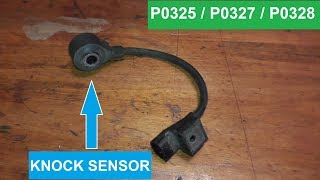
How to confirm: After removing the intercooler to access the sensor, inspect it and its connector for corrosion, moisture, or physical cracks in the sensor housing. You can test the sensor's internal resistance with a multimeter; it should be within the manufacturer's specified range (typically around 560 kOhms for Subarus, but verify with a service manual). 🎬 See how to test and replace a faulty knock sensor. If the code appears only after rain, water intrusion is almost certainly the cause.
Typical fix: Replace the knock sensor with the updated genuine OEM part (#22060AA180). It is critical to clean the mounting surface on the block and torque the new sensor to the factory specification of 24 Nm / 17.7 ft-lbs. 🎬 Watch this step-by-step guide to replacing the WRX knock sensor. Do not use anti-seize compound on the bolt threads. Applying dielectric grease to the connector can help prevent future moisture issues.
Est. part cost: $70 - $150 - Damaged Wiring or Connector 🟡 Medium Probability The wiring harness is in the engine bay and exposed to heat cycles, which can make it brittle. Rodents can also chew on the wires. If the code appears instantly with the key on (engine off), even with a new sensor, the problem is almost certainly in the wiring circuit.
How to confirm: Visually inspect the entire length of the knock sensor wiring harness from the sensor to the main engine harness. Look for any signs of cracking, melting, fraying, or breaks. Check that the connector pins are clean, straight, and making a secure connection. Test for continuity from the sensor connector back to the ECM pins.
Typical fix: Repair the damaged section of wire or replace the connector pigtail if it is corroded or broken. Companies like iWire sell replacement connector kits. In severe cases, a portion of the engine harness may need to be replaced.
Est. part cost: $15 - $50 for a pigtail
Rare But Worth Checking
- Faulty Engine Control Module (ECM): This is extremely rare. The ECM should only be considered a potential cause after the knock sensor and all related wiring have been thoroughly tested and confirmed to be in good working order.
- Loose Knock Sensor Bolt: → Shop Fastener Assortment A rare but possible cause is the sensor's retaining bolt loosening over time, which would prevent it from accurately detecting vibrations. Always verify torque during diagnosis.
Diagnosis Steps
- Confirm the P0327 code is present using an OBD-II scanner.
- Note the conditions when the code appeared (e.g., after a car wash, during heavy rain).
- Allow the engine to cool completely.
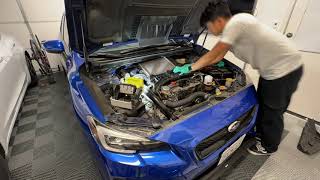
- Remove the top-mount intercooler to gain access to the knock sensor, which is bolted to the top of the engine block.
- Inspect the knock sensor and its electrical connector for any signs of moisture, corrosion, or physical damage like cracks in the plastic housing.
- If moisture is present, dry the area completely with compressed air, apply dielectric grease to the connector, clear the code, and see if it returns. If it does, the sensor was likely damaged by the water.
- Disconnect the sensor and inspect the wiring harness for any breaks, frays, or melted sections.
- If the wiring appears intact, test the knock sensor's internal resistance with a multimeter. Compare the reading to the factory specification (approx. 560 kOhms). A reading below 500 kOhms indicates a faulty sensor.
- If the sensor tests out of spec or shows physical damage, replace it. Ensure the mounting surface on the engine block is clean and torque the new sensor to 17.7 ft-lbs (24 Nm).
- If the sensor tests good, check for continuity and shorts in the wiring harness between the sensor connector and the ECM.
- If the wiring and sensor are both confirmed to be good, the issue may lie with the ECM, though this is highly unlikely.
Parts You'll Likely Need
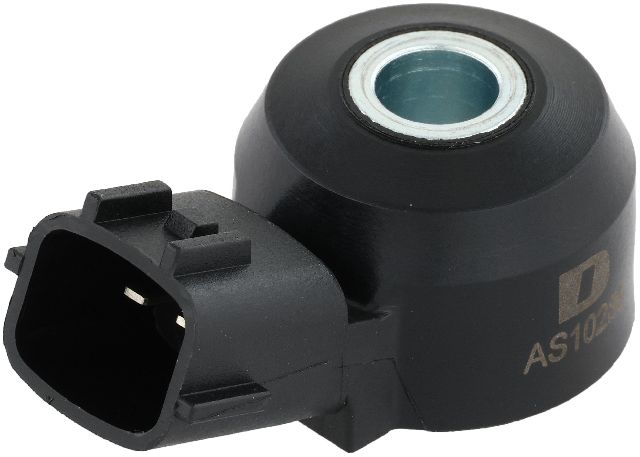
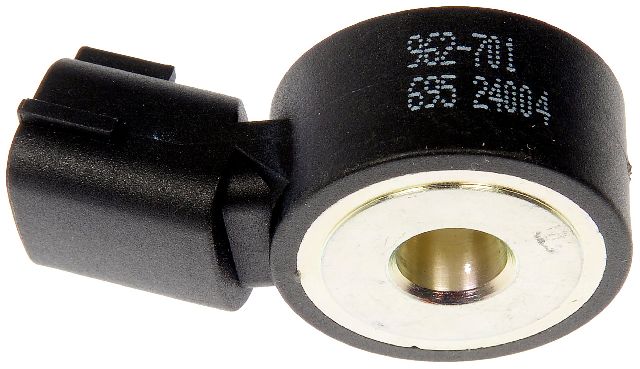
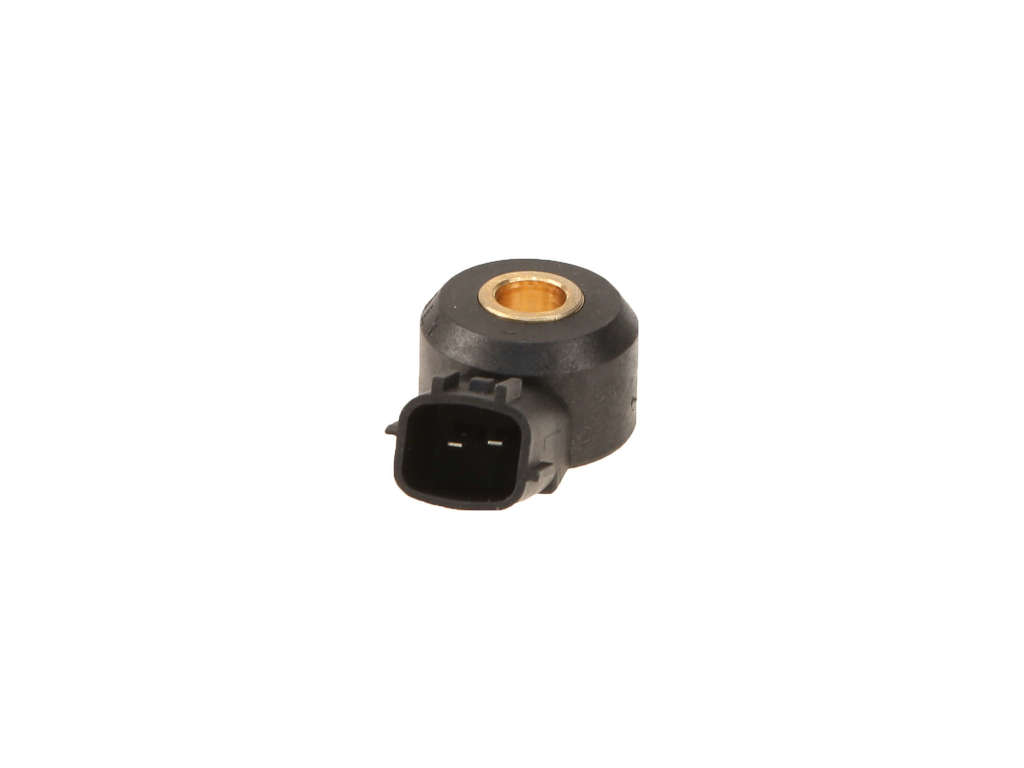
- Knock Sensor
(OEM #22060AA180)— This is the updated, more durable OEM part number specified in TSB 07-133-18R to address this common failure. It supersedes the original part, 22060AA160. This is the most common failure point for the P0327 code on this platform.
Trusted brands: Subaru (Genuine OEM), Denso
OEM price range: $70-$150
Aftermarket price range: $40-$80 - Knock Sensor Connector Pigtail — If the connector itself is corroded or damaged, or if the wiring is broken near the plug, a replacement pigtail is needed for a solid repair.
Trusted brands: iWire Wiring Solutions, GP Autosports, Dorman
OEM price range: N/A
Aftermarket price range: $15-$30
Technical Service Bulletins (TSBs) & Recalls
- 07-133-18R: Announces a design change and new part number (22060AA180) for the knock sensor to increase durability and heat resistance, applicable to the WRX and Forester Turbo with FA20F engines. Confirms the torque spec is 17.7 ft-lbs and warns against using anti-seize.
Platform-Specific Known Issues
- TSB #07-133-18R: Updated Knock Sensor: → Shop Ignition Knock (Detonation) Sensor Subaru acknowledged that the Check Engine Light may illuminate with knock sensor codes P0327, P0328, P0332, and P0333. A new, more durable knock sensor (Part #22060AA180) was introduced to improve resistance to heat and increase durability. This TSB applies to the 2015-2017 WRX and 2014-2017 Forester Turbo.
- Water Intrusion After Rain or Car Wash: Numerous owners on forums and YouTube report that the P0327 code appears immediately after heavy rain or a car wash. This is especially common if the plastic engine cover has been removed for an aftermarket intercooler, which exposes the sensor's location to direct water pooling. Often, the code can be cleared and will not return once the sensor and connector have fully dried.
Mechanic-Grade Diagnostic Values
- Knock Sensor Internal Resistance — expected: Approximately 560 kΩ. Some sources state a broader acceptable range of 400 kΩ to 700 kΩ.. Failure: A reading below 500 kΩ, an open circuit (infinite resistance), or a direct short (0 ohms) indicates a faulty sensor.
- Harness Voltage (Key On, Engine Off) — expected: Approximately 5.0 Volts DC at the harness connector with the sensor unplugged.. Failure: A reading of 0V indicates an open or short to ground in the wiring between the ECM and the connector. If voltage is ~5V when unplugged but does not drop to a lower value (e.g. ~2.5V) when the sensor is reconnected, the sensor is likely open internally.
- Sensor AC Voltage Output (Engine Running) — expected: A small AC voltage signal should be generated when the engine block near the sensor is tapped. This can be observed with a multimeter set to AC volts or, more clearly, with an oscilloscope.. Failure: A lack of any AC voltage output when the block is tapped indicates the sensor's internal piezoelectric element is dead and not generating a signal.
Scan Tool Commands That Help
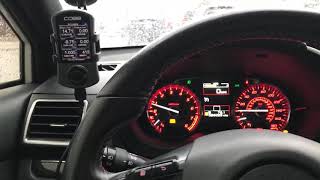
- Cobb Accessport or similar: Reset ECU — After addressing a temporary issue like water intrusion that has since dried, an ECU reset is required to clear the code and restore normal engine operation. The car may need to be driven gently for a few miles for the ECU to relearn parameters.
Wiring & Ground Locations
- Knock Sensor Ground — The sensor grounds through its metal body to the engine block itself.. A clean, metal-to-metal contact surface is critical for a proper ground. Corrosion or debris on the engine block where the sensor mounts can cause a poor ground and lead to faulty readings. The mounting bolt must be torqued to 17.7 ft-lbs (24 Nm) without anti-seize to ensure this connection.
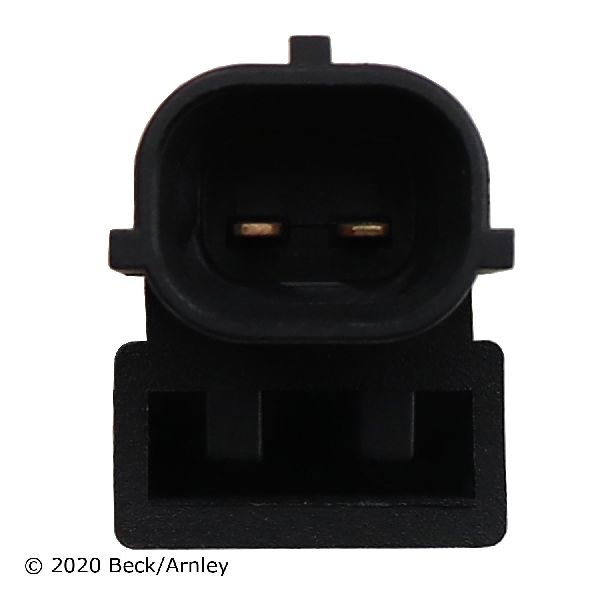
- Knock Sensor Connector (E14) — On top of the engine block, under the top-mount intercooler. It is a single-wire connector.. This connector is the primary point of failure due to water intrusion. The depression in the engine block allows water to pool here, shorting the circuit and causing the P0327 code. Inspecting for corrosion and applying dielectric grease is a key preventative step.
Real Owner Repair Stories
- YouTube user 'Subie-Life' (2016 Subaru WRX) — Check Engine Light with code P0327 appeared only during or after heavy rainfall.
❌ Tried (didn't work) Initially just clearing the code, but it would return with the next rainfall.
✅ What actually fixed it The user let the engine bay dry out completely, which allowed the code to be cleared and stay off. The video confirms the issue is water pooling on the sensor, causing a temporary short circuit. The long-term fix is replacing the sensor and sealing the connector with dielectric grease.
OEM Part Supersession History
22060AA160→22060AA180— To increase durability and resistance to heat, as announced in TSB 07-133-18R.
Helpful Videos
We Have This Part in Stock


The information in this article is provided for general reference and educational purposes only. Vehicle specifications, procedures, and part compatibility can vary by production date, trim level, and region. Always consult your vehicle's factory service manual and verify part numbers before purchasing or performing repairs. Safety-critical components such as airbags, seat belts, and braking systems should be installed by a qualified professional.
- Subaru WRX:
- 🧭 Diagnostic Flowchart
- 🎬 Helpful Videos
- 🛍️ Shop This Part
- What's Unique About the 2015-2017 Subaru WRX
- Symptoms You May Notice
- Most Likely Causes
- Rare But Worth Checking
- Diagnosis Steps
- Parts You'll Likely Need
- Technical Service Bulletins (TSBs) & Recalls
- Platform-Specific Known Issues
- Mechanic-Grade Diagnostic Values
- Scan Tool Commands That Help
- Wiring & Ground Locations
- Real Owner Repair Stories
- OEM Part Supersession History
- 🎟️ Get 5% Off