

P0328 on 2019-2025 Audi A7: Knock Sensor Circuit High Causes and Fixes
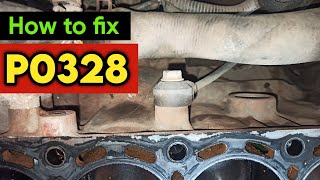
This code indicates the engine computer (ECU) is receiving an abnormally high voltage signal from the knock sensor on Bank 1. The most common cause is a faulty knock sensor, followed by wiring issues. On this engine, the sensors are located under the intake manifold, making replacement a more involved job. Expect to pay $600-$1100 for a professional repair due to the increased labor.
- P0328 on your Audi A7 means the Bank 1 knock sensor circuit has a fault, most likely a bad sensor or its wiring.
- Symptoms include a "Drive System Malfunction" warning, reduced power, and poor fuel economy.
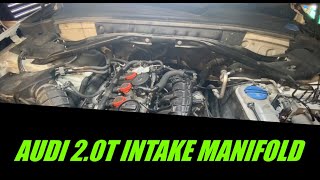
- The repair is labor-intensive because the sensors are located under the intake manifold, requiring its removal.
- It is highly recommended to replace both knock sensors (Bank 1 and Bank 2) at the same time to save on future labor costs.
- A professional repair is estimated to cost between $600 and $1100 due to the complexity of the job.
What's Unique About the 2019-2025 Audi A7
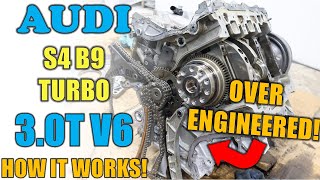
The 2019-2025 Audi A7 (C8 generation) primarily uses a sophisticated 3.0L V6 TFSI engine (EA839). A key distinction for this platform is the location of the two knock sensors; they are mounted to the engine block, deep within the 'V' of the engine, underneath the intake manifold. This location makes accessing them for diagnosis or replacement significantly more labor-intensive than on engines where they are externally mounted. The repair requires removing the intake manifold and related components. Audi has issued a Technical Service Bulletin (TSB 2081342/1) that includes P0328, indicating this is a recognized issue on this engine family.
Diagnostic Flowchart
Tap your situation to follow the diagnostic path that matches what you're seeing on this vehicle.
Symptoms You May Notice
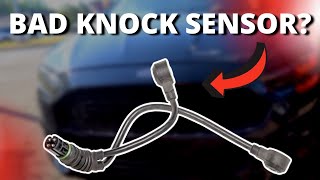
🎬 See a breakdown of common symptoms of a bad sensor.- Check Engine Light is on
- "Drive System Malfunction" message on the dashboard
- Reduced engine power and sluggish acceleration
- Audible engine knocking or pinging, especially under load
- Decreased fuel economy (10-20% drop is possible)
- Hesitation or rough idling
- Engine running hotter than normal
- Replacing spark plugs or ignition coils without diagnosing the knock sensor circuit first. While misfires can sometimes be related, P0328 specifically points to the sensor circuit itself.
- Assuming the audible knock is the primary problem. The code indicates a circuit fault (high voltage), which means the sensor is likely not reporting knock correctly at all, and the ECM is defaulting to a safe timing map.
Most Likely Causes
- Faulty Knock Sensor (Bank 1) 🔴 High Probability → Shop Ignition Knock (Detonation) Sensor The existence of a TSB covering this code suggests a known potential for sensor failure. The sensor is a piezoelectric crystal that can fail due to constant heat and vibration deep within the engine valley.
How to confirm: After confirming the wiring is intact, the sensor itself is the most likely culprit. Diagnosis requires removing the intake manifold for access. Once accessed, its internal resistance can be tested with a multimeter. An open or shorted reading indicates failure. However, due to the high labor cost to access it, most technicians will replace the sensor (and often the Bank 2 sensor simultaneously) as a matter of course if P0328 is present and wiring appears okay externally.
Typical fix: Replace the Bank 1 knock sensor. It is located on the passenger side of the engine block, under the intake manifold. It is highly recommended to replace the Bank 2 sensor (P0333) at the same time, as the labor to access them is the same.
Est. part cost: $60-$150 - Wiring or Connector Issue 🟡 Medium Probability The wiring harness for the knock sensors runs in the hot engine valley, making it susceptible to heat degradation over time. Rodents are also known to nest in this area and chew on wiring.
How to confirm: Visually inspect the wiring harness and connector for the Bank 1 knock sensor after removing the intake manifold. Look for any signs of melting, chafing, corrosion, or breaks. Use a multimeter to check for continuity and for a short-to-power on the signal wire between the sensor connector and the ECM connector.
Typical fix: Repair the damaged section of the wiring harness or replace the connector pigtail. In some cases, a new engine harness section may be required.
Est. part cost: $20-$100 - Improperly Torqued Sensor ⚪ Low Probability This is only likely if the sensor has been recently replaced. The knock sensor is a microphone for the engine block; if it's too loose or too tight, it can't 'hear' correctly, which can lead to incorrect signals.
How to confirm: Verify the sensor's mounting bolt is torqued to the manufacturer's specification (typically around 20 Nm, but always check the service manual). This requires removing the intake manifold for access.
Typical fix: Torque the knock sensor mounting bolt to the correct specification.
Est. part cost: $0
Rare But Worth Checking
- Powertrain Control Module (PCM) Fault: → Shop Engine Control Module (ECM) This is extremely rare. The PCM should only be considered after all other possibilities, including the sensor and its entire circuit, have been exhaustively tested and ruled out. An advanced scan tool may be able to perform a self-test on the ECM's knock sensor input circuit.
- Internal Engine Problem: While not common, severe internal issues like a failed timing chain tensioner, piston slap, or bad bearings can cause excessive engine vibration or actual knocking that may trigger a knock sensor code. This is a diagnosis of exclusion if the sensor and circuit are good.
Diagnosis Steps
- Read the code from the ECM using an OBD-II scanner (like VCDS/VAG-COM for Audis) and confirm P0328 is present. 🎬 Watch: Understanding the P0328 circuit high input code. Note any other codes, especially P0333 (Bank 2).
- Using a scanner with live data, monitor the voltage from the Bank 1 knock sensor. A static, abnormally high voltage reading (typically near 5V) points to a circuit issue (open circuit or short to power).
- If external wiring can be inspected, check for obvious damage near the firewall and where the harness connects to the ECM.
- Major Step: To proceed further, the intake manifold must be removed to access the knock sensors and their wiring in the engine valley.
- Once the manifold is off, visually inspect the knock sensor, its connector, and the sub-harness for damage, corrosion, or rodent activity.
- Disconnect the sensor. With the key on, engine off, check for the correct reference voltage at the sensor connector.
- Test the sensor's internal resistance with a multimeter and compare it to the manufacturer's specifications. An infinite (open) or zero (shorted) reading confirms a bad sensor.
- Perform a continuity test on the wiring harness between the sensor connector and the ECM to rule out an open circuit or short.
- Check that the sensor is torqued correctly to the engine block.
- If the sensor and wiring are confirmed to be good, the fault may lie with the ECM, but this is highly unlikely.
Parts You'll Likely Need
- Knock Sensor
(OEM #06E905377K)— This is the most frequent failure point for code P0328. It's recommended to replace both Bank 1 and Bank 2 sensors at the same time due to the labor involved.
Trusted brands: Genuine Audi/VW, Bosch
OEM price range: $100-$150
Aftermarket price range: $60-$90 - Intake Manifold Gaskets — These are single-use gaskets and must be replaced anytime the intake manifold is removed for service.
Trusted brands: Genuine Audi/VW, Victor Reinz, Elring
OEM price range: $50-$80
Aftermarket price range: $30-$50
Related Codes That Often Appear With This One
- P0333 — This is the same 'Circuit High' code but for Bank 2 (driver's side). It's common for both to be flagged if there's a shared issue or if both sensors fail around the same time, as noted in Audi's TSB. Since both sensors are under the intake manifold, they are almost always replaced as a pair.
- P0327 — This is the 'Circuit Low' code for Bank 1. Seeing it with P0328 could indicate an intermittent wiring problem that is shorting to ground at times and has an open or short to power at other times.
- P0300-P0306 — These are random or specific cylinder misfire codes. A faulty knock sensor can cause the ECM to apply incorrect timing adjustments, which may lead to misfires.
Technical Service Bulletins (TSBs) & Recalls
- TSB_2081342_1: Provides information for Drive System Malfunction with DTCs P0327, P0332, P0328, P0333 on V6 TFSI engines.
Platform-Specific Known Issues
- Audi has issued Technical Service Bulletin #TSB_2081342_1 which addresses DTCs P0327, P0332, P0328, and P0333 related to a 'Drive System Malfunction' warning on vehicles with V6 TFSI engines. The TSB confirms manufacturer awareness and directs technicians to inspect the knock sensor circuit and replace the sensor(s) if faulty.
Mechanic-Grade Diagnostic Values
- Knock Sensor Mounting Bolt Torque — expected: 20 Nm (15 ft-lbs). Failure: Over-torquing can cause false high signals; under-torquing can cause missed signals.
- Knock Sensor Signal Voltage (Live Data at Idle) — expected: Fluctuating voltage, typically below 1.0V. Failure: A static voltage reading that is greater than 1.0V for a set period.
- Knock Sensor Wiring Harness Continuity — expected: Approximately 0.1 - 0.5 ohms. Failure: A reading of OL (Over Limit) indicates an open circuit. A reading significantly higher than 0.5 ohms indicates excessive resistance.
Hidden / Shadow Codes Worth Checking
- P0328 (Sub-type): While not a separate code, dealer-level tools like ODIS may provide more specific fault details for P0328, such as distinguishing between a 'signal range check' failure and a 'short to B+' failure, which helps pinpoint the electrical fault more accurately. (see via Audi ODIS diagnostic software)
Scan Tool Commands That Help
- VCDS (VAG-COM): Engine -> Measuring Blocks -> Group 028 — This block contains a knock sensor self-test function. The result will display as 'Test ON', 'Test OFF', 'Sys. OK', or 'Sys. not OK', providing a quick health check of the control module's ability to run the test.
- VCDS (VAG-COM): Engine -> Adv. Measuring Blocks -> Groups 026 & 027 — Use these blocks to view the live knock sensor voltage for each cylinder bank. This is critical for observing the high voltage condition (>1.0V) that triggers P0328.
- Advanced Scan Tool (e.g., ODIS, some iCarsoft models): Knock Sensor Active Test — This function allows the technician to monitor the sensor's live signal while gently tapping the engine block near the sensor. A lack of response on the graph indicates a dead sensor or wiring issue, confirming the fault without ambiguity.
Wiring & Ground Locations
- Engine Block Ground Strap — Often located on the right side of the engine compartment, with a strap connecting the engine block (sometimes near the alternator) to the chassis/frame rail.. The knock sensor circuit relies on a solid ground reference. A corroded or loose main engine ground can create a floating voltage, causing the ECM to see a false high signal from the sensor, directly triggering a P0328 code.
- Battery Tray Ground Point — Underneath the battery tray is a common chassis ground point for multiple systems.. This area is prone to corrosion from battery fumes or leaks. A bad ground here can cause widespread electrical issues, including erratic sensor readings.
Real Owner Repair Stories
- Reddit user in r/Audi (2023 Audi Q7 55 TFSI (EA839 Engine), 90,000 km) — Check Engine Light came on while driving.
❌ Tried (didn't work) Owner considered if fuel type (Octane 95 vs 100) was the cause.
✅ What actually fixed it The Audi dealer diagnosed a faulty knock sensor (Bank 1) and replaced it under warranty, which resolved the P0328 code.
Model Year Variations Within This Range
- 2019: Early production EA839 engines (including the 2019 model year) used rocker arms with needle bearings that were more prone to failure than the revised design used in later years. A failure can introduce metallic debris into the oil, potentially causing a cascade of issues, including abnormal engine noises that could be misinterpreted by the knock sensing system.
Helpful Videos
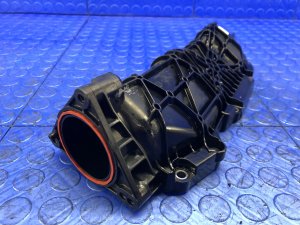
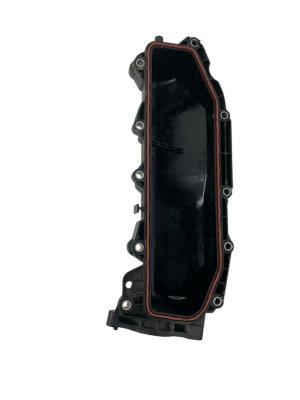
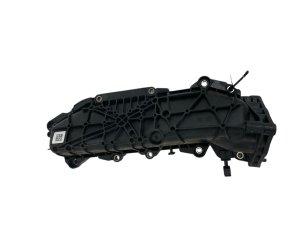
We Have This Part in Stock

The information in this article is provided for general reference and educational purposes only. Vehicle specifications, procedures, and part compatibility can vary by production date, trim level, and region. Always consult your vehicle's factory service manual and verify part numbers before purchasing or performing repairs. Safety-critical components such as airbags, seat belts, and braking systems should be installed by a qualified professional.
- Audi A7:
- 🧭 Diagnostic Flowchart
- 🎬 Helpful Videos
- 🛍️ Shop This Part
- What's Unique About the 2019-2025 Audi A7
- Symptoms You May Notice
- Most Likely Causes
- Rare But Worth Checking
- Diagnosis Steps
- Parts You'll Likely Need
- Related Codes That Often Appear With This One
- Technical Service Bulletins (TSBs) & Recalls
- Platform-Specific Known Issues
- Mechanic-Grade Diagnostic Values
- Hidden / Shadow Codes Worth Checking
- Scan Tool Commands That Help
- Wiring & Ground Locations
- Real Owner Repair Stories
- Model Year Variations Within This Range
- 🎟️ Get 5% Off