

P0328 on 2018-2025 Audi S4: Knock Sensor Circuit High Causes & Fixes
P0328 on a B9/B9.5 Audi S4 indicates the Bank 1 (passenger side) knock sensor circuit has a high voltage fault. This is most often caused by an internal failure of the knock sensor itself. Replacement is a labor-intensive job as the sensor is located in the engine 'V' under the intake manifold, requiring significant disassembly.
- P0328 on your S4 means the passenger-side knock sensor circuit is sending an abnormally high voltage signal.
- The most likely fix is replacing the knock sensor itself, but its location under the intake manifold makes this a labor-intensive job.
- Due to the labor involved, it is strongly recommended to replace both knock sensors and their wiring pigtail at the same time.
- Using the correct torque (20 Nm) on the new sensor bolt is critical for proper operation.
What's Unique About the 2018-2025 Audi S4
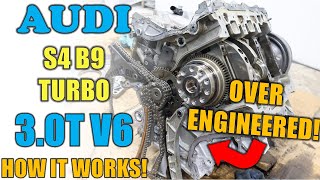
The 2018-2025 Audi S4 (B9/B9.5 generation) uses the EA839 3.0L single-turbo V6 engine. 🎬 Watch: A complete teardown of the EA839 V6 engine A known issue, documented in Technical Service Bulletin TSB 2081342/1, links this code with a general "Drive System Malfunction" warning on the dashboard, confirming it's a recognized fault on this V6 platform. The location of the two knock sensors on this engine is deep in the hot 'V' valley, underneath the intake manifold and other components, making diagnosis and replacement significantly more labor-intensive than on engines with externally mounted sensors.
Diagnostic Flowchart
Tap your situation to follow the diagnostic path that matches what you're seeing on this vehicle.
Symptoms You May Notice
- Check Engine Light is on
- "Drive System Malfunction" message on the instrument cluster
- Reduced engine power and sluggish acceleration
- Hesitation or stumbling during acceleration
- Decreased fuel economy
- Audible engine pinging or knocking (less common with a circuit fault, as the ECM may default to a safe timing map)
- Rough or uneven idle
- Replacing spark plugs or ignition coils, assuming the performance issues are from a misfire without checking the diagnostic codes first.
- Attributing the code to low-octane fuel. While poor fuel can cause actual knock, a persistent P0328 'Circuit High' code almost always indicates a hardware or electrical fault, not a fuel quality issue.
Most Likely Causes
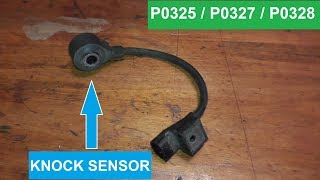
- Faulty Knock Sensor 1 (Bank 1) 🔴 High Probability → Shop Ignition Knock (Detonation) Sensor The sensor is subjected to extreme heat cycles and constant vibration in the valley of the V6 engine, leading to internal failure of the piezoelectric element or its wiring over time. This is the most common cause for a persistent P0328 code. 🎬 See this guide on how to test and replace knock sensors
How to confirm: After verifying the wiring is intact (a difficult step given the location), the most definitive test is to replace the sensor. Testing with a multimeter is often impractical without first removing the intake manifold.
Typical fix: Replace the Bank 1 knock sensor. It is strongly recommended to replace the Bank 2 sensor (P0333) and the wiring harness pigtail at the same time due to the significant labor involved in accessing them.
Est. part cost: $80-$150 - Wiring or Connector Issue 🟡 Medium Probability The engine harness is routed in the hot 'V' of the engine, making it susceptible to heat degradation, which can cause wires to become brittle and crack. Rodent damage is also a known cause, as animals seek shelter in the engine valley and can chew on the sensor wiring.
How to confirm: With the intake manifold removed, visually inspect the harness for chafing, breaks, melting, or corrosion at the connector. Perform a continuity test on the signal and ground wires from the sensor connector to the ECM connector pins.
Typical fix: Repair the damaged section of the wiring harness or replace the connector pigtail. Audi often sells a repair harness for this purpose.
Est. part cost: $20-$70 - Improperly Torqued Sensor ⚪ Low Probability This is only likely if the sensor has been recently replaced. The sensor is a sensitive microphone and must be torqued correctly to function. Over-torquing can make it hyper-sensitive, while under-torquing can prevent it from detecting vibrations properly.
How to confirm: Verify the sensor's mounting bolt is torqued to the manufacturer's specification. For the EA839 engine, this is typically 20 Nm (approx. 15 ft-lbs).
Typical fix: Using a calibrated torque wrench, tighten the sensor's mounting bolt to exactly 20 Nm.
Est. part cost: $0
Rare But Worth Checking
- Engine Control Module (ECM) Fault: → Shop Engine Control Module (ECM) This is extremely rare. Before condemning the ECM, all other possibilities (sensor, wiring, connections, and grounding) must be exhaustively ruled out by a qualified technician.
Diagnosis Steps
- Read the fault codes with an OBD-II scanner to confirm P0328 is present and note any other codes (e.g., P0333 for Bank 2).
- Visually inspect the top of the engine for any obvious signs of rodent damage to wiring harnesses before disassembly.
- Plan for the removal of the intake manifold. This requires purchasing new intake manifold gaskets and potentially new single-use stretch bolts for the manifold.
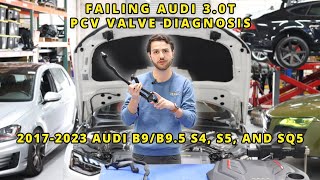
- Carefully disconnect the battery. Proceed to remove the throttle body, disconnect fuel lines (use caution and de-pressurize if necessary), and unbolt the intake manifold. 🎬 Watch: How to diagnose the PCV valve while the manifold is off
- Once the intake is removed, the two knock sensors and their harness will be visible in the engine valley.
- Carefully inspect the wiring harness leading to both knock sensors for any signs of melting, chafing, rodent chew marks, or broken wires.
- Inspect the knock sensor connectors for corrosion or damage. If wiring is damaged, repair or replace the harness pigtail.
- If the wiring appears intact, the cause is almost certainly a failed sensor. Replace the Bank 1 knock sensor (passenger side). It is highly recommended to replace the Bank 2 sensor and the harness pigtail at the same time.
- Using a torque wrench, tighten the new sensors to exactly 20 Nm. Do not overtighten or undertighten.
- Reassemble the intake manifold with new gaskets and bolts as required.
- Reconnect the battery, clear the fault codes, and perform a test drive to ensure the code does not return.
Parts You'll Likely Need
- Knock Sensor
(OEM #06M905377F (supersedes 06M905377))— This is the most common failure point for a P0328 code. Internal failure of the sensor's piezoelectric element causes the high circuit voltage reading.
Trusted brands: Bosch, Genuine Audi/VW
OEM price range: $110-$150
Aftermarket price range: $70-$100 - Intake Manifold Gaskets
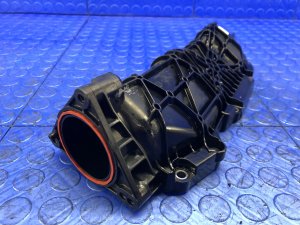
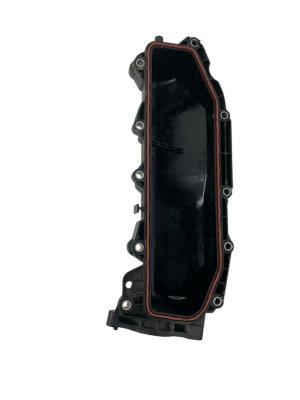
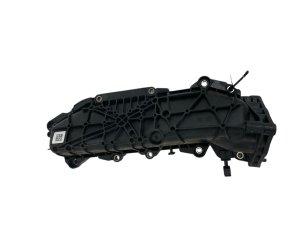
(OEM #06M129717H (Quantity: 2))— These are single-use gaskets that must be replaced anytime the intake manifold is removed to access the knock sensors.
Trusted brands: Victor Reinz, Elring, Genuine Audi
OEM price range: $50-$70 (for the pair)
Aftermarket price range: $30-$50 (for the pair) - Knock Sensor Wiring Harness / Pigtail — Often replaced as a preventative measure with the sensors, as the plastic connectors and wiring can become brittle from heat.
Trusted brands: Genuine Audi
OEM price range: $50-$80
Related Codes That Often Appear With This One
- P0333 — Knock Sensor 2 Circuit High (Bank 2). This code for the driver's side sensor often appears alongside P0328, especially if there is a shared wiring issue or if both sensors are failing due to age and heat exposure. The TSB groups these codes together.
- P0327 — Knock Sensor 1 Circuit Low. This indicates the opposite fault (low voltage) but points to the same system components. The TSB also groups this code with P0328.
Technical Service Bulletins (TSBs) & Recalls
- TSB 2081342/1: Provides information for Drive System Malfunction with DTCs P0327, P0332, P0328, P0333 on V6 TFSI engines. This TSB primarily serves to guide technicians when this specific warning appears on the dash.
Platform-Specific Known Issues
- A Technical Service Bulletin (TSB #2081342/1) has been issued by the manufacturer for a "Drive System Malfunction" that includes DTC P0328 on V6 TFSI engines, confirming this is a recognized issue.
- The location of the sensors in the hot 'V' of the engine makes them and their wiring particularly susceptible to heat degradation and rodent damage.
Mechanic-Grade Diagnostic Values
- Knock Sensor Mounting Bolt Torque — expected: 20 Nm (15 ft-lbs). Failure: An incorrect torque value can cause the sensor to misread engine vibrations, leading to false signals or a failure to detect real knock.
- Knock Sensor Signal Voltage (Live Data) — expected: Variable low AC voltage signal that increases with engine RPM and load.. Failure: A signal that is consistently above 5V, or is stuck at a high voltage regardless of engine operation, indicates a 'Circuit High' fault.
Scan Tool Commands That Help
- VCDS (VAG-COM): Measuring Value Blocks (MVB) - Groups 020-029 — To monitor knock control in real-time. These groups display ignition timing retard for individual cylinders. If the ECU is actively retarding timing based on sensor input, it will be visible here. However, with a circuit fault, the ECU may ignore the sensor and these values may show 0 or a default.
Wiring & Ground Locations
- Knock Sensor 1 (G61) — On the passenger side of the engine block, in the 'V' valley, underneath the intake manifold.. This is the sensor that generates the P0328 code. Its location makes it and its wiring vulnerable to heat damage and rodent activity.
- Engine Control Module (ECM/J623) — Located in the plenum chamber, under the plastic cowl cover at the base of the windshield.. The wiring from the knock sensor terminates here. Testing continuity and checking for shorts to power/ground should be done at the ECM connector if a wiring fault is suspected.
- ECM Connector Pins for G61 — On the B9 platform, the knock sensor is a 2-wire sensor. The wires for G61 (Bank 1) run to specific pins on the main ECM connector. While exact pin numbers for the EA839 can vary slightly, they are typically designated for knock sensor signal and shield/ground in the wiring diagram.. Knowing the pin locations allows a technician to test the entire circuit from the ECM side without having to first remove the intake manifold to access the sensor connector.
- Engine Block Ground Strap — A primary ground strap connects the engine block to the vehicle chassis, typically near the engine mount or transmission.. A poor engine ground can create electrical noise and unstable reference voltages for various sensors, including the knock sensors, potentially leading to erroneous fault codes.
Real Owner Repair Stories
- Audizine Forum User (2018 Audi S4 (B9)) — Check Engine Light with codes P0328 and P0333.
❌ Tried (didn't work) Clearing codes (they returned immediately).
✅ What actually fixed it Upon removing the intake manifold, the wiring harness for the knock sensors was found to be chewed by rodents. The user replaced the entire knock sensor harness and both knock sensors as a preventative measure. This resolved both fault codes. - Tacoma World Forum User (similar engine layout) (Toyota Tacoma V6 (engine with knock sensors in the 'V')) — Check Engine Light, TRAC OFF light, and vehicle in limp mode with code P0333 (Bank 2, but same failure mode).
❌ Tried (didn't work) Initial hope that clearing the code would solve an intermittent issue.
✅ What actually fixed it The user found evidence of a mouse nest in the engine valley. The knock sensor wires were chewed through right at the connector. The damaged section of the harness was cut out, new wire was soldered in, and the area was treated with rodent repellent spray. This fixed the limp mode and cleared the code permanently.
OEM Part Supersession History
06M905377→06M905377F— Part revision and improvement by the manufacturer. It is common for parts to be updated to improve reliability or address known failure modes.
Heads up: The newest part number (06M905377F) should always be used. While older versions may fit, the latest revision is considered the most reliable replacement. Some dealer sites also show 06K905377F as a valid, related part number.
Model Year Variations Within This Range
- 2018-2025: No significant variations have been identified for the knock sensor system between the B9 (2018-2019) and B9.5 (2020-2025) facelift models. The EA839 engine and sensor locations remain consistent, and the diagnosis for P0328 is the same across this generation.
Helpful Videos
We Have This Part in Stock

The information in this article is provided for general reference and educational purposes only. Vehicle specifications, procedures, and part compatibility can vary by production date, trim level, and region. Always consult your vehicle's factory service manual and verify part numbers before purchasing or performing repairs. Safety-critical components such as airbags, seat belts, and braking systems should be installed by a qualified professional.
- Audi S4:
- 🧭 Diagnostic Flowchart
- 🎬 Helpful Videos
- 🛍️ Shop This Part
- What's Unique About the 2018-2025 Audi S4
- Symptoms You May Notice
- Most Likely Causes
- Rare But Worth Checking
- Diagnosis Steps
- Parts You'll Likely Need
- Related Codes That Often Appear With This One
- Technical Service Bulletins (TSBs) & Recalls
- Platform-Specific Known Issues
- Mechanic-Grade Diagnostic Values
- Scan Tool Commands That Help
- Wiring & Ground Locations
- Real Owner Repair Stories
- OEM Part Supersession History
- Model Year Variations Within This Range
- 🎟️ Get 5% Off