

P0328 on 2014-2017 Subaru Forester: Knock Sensor Circuit High Input Causes and Fixes
On a 2014-2017 Subaru Forester with the 2.5L naturally aspirated engine, code P0328 is most often caused by a failed knock sensor. A Subaru Technical Service Bulletin (TSB 07-133-18R) confirms that an updated, more durable sensor was introduced to address this common failure. Replacing the original sensor with the updated OEM part is the most common and recommended fix.
- P0328 on a 2014-2017 Forester almost always points to a faulty knock sensor, a known weak point.
- Subaru released TSB 07-133-18R acknowledging the issue and introduced an improved sensor (p/n 22060AA180), making an OEM replacement the highly recommended fix.
- The sensor is located on the back of the engine block and can be difficult to access, making the repair moderately challenging for a DIYer. Expect to use extensions and a swivel socket.
- Before replacing the sensor, always perform a quick visual inspection of the wiring and connector for obvious damage, including signs of rodents chewing on the wires.
What's Unique About the 2014-2017 Subaru FORESTER
For the 2014-2017 Forester (SJ generation), particularly the non-turbo (NA) models with the FB25 engine, the original knock sensor's durability was a known issue. The sensor's plastic housing can crack over time due to heat and vibration, allowing moisture to enter and cause corrosion or electronic failure. Subaru issued a revised Technical Service Bulletin (TSB #07-133-18R) stating that a more robust knock sensor, originally used on the turbo (DIT) engines, was later adopted for the NA engines to improve heat resistance and durability. This makes a failed sensor a very high-probability cause for this code on this specific vehicle.
Diagnostic Flowchart
Tap your situation to follow the diagnostic path that matches what you're seeing on this vehicle.
Symptoms You May Notice
- Check Engine Light is on
- Reduced engine power and acceleration
- Hesitation during acceleration, sometimes described as a 'jerk' over 3,000 RPM.
- Decreased fuel economy.
- Audible engine pinging or knocking (less common, as the ECM will try to compensate)
- Engine running hotter than normal.
- Replacing spark plugs or ignition coils without diagnosing the knock sensor circuit. While these can cause misfires, they don't directly cause a P0328 circuit high code.
- Assuming the engine has a serious internal problem causing knock without first testing the sensor and circuit, which are the most likely culprits for this specific code.
Most Likely Causes
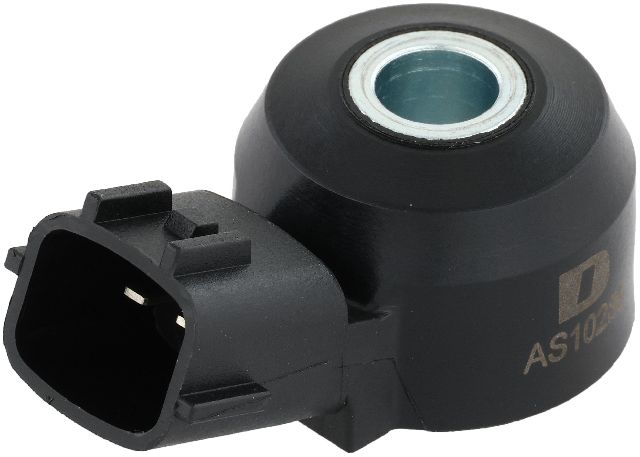
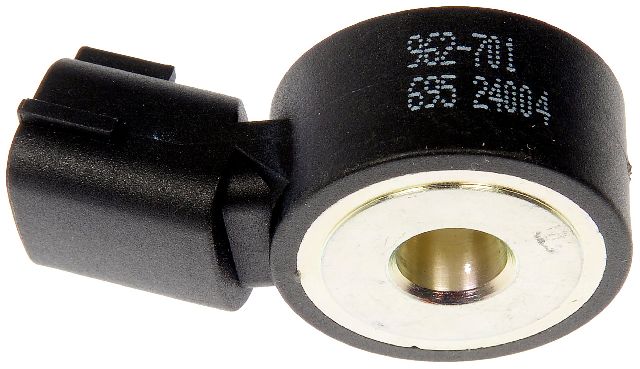
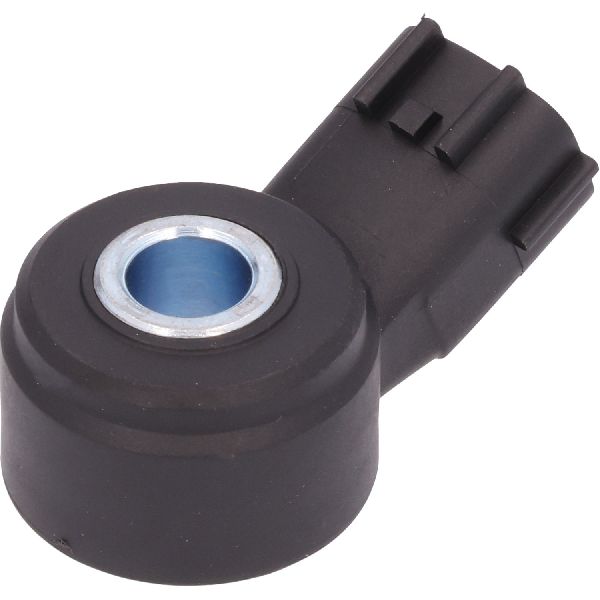
- Failed Knock Sensor 🔴 High Probability → Shop Ignition Knock (Detonation) Sensor As documented in Subaru TSB #07-133-18R, the original knock sensor on naturally aspirated models was prone to failure from cracking and moisture intrusion. An updated, more durable part was later specified. The failure is common enough that it's the first and most likely component to check.
How to confirm: Visually inspect the sensor for cracks in its plastic housing, which is a common failure mode. Test the sensor's internal resistance with a multimeter; 🎬 Watch: How to test a Subaru knock sensor for P0328. a good sensor on a similar Subaru model should read over 400 kilo-ohms. A reading that is very low, very high, or open indicates a failed sensor. The sensor is located on the back of the engine block, below the throttle body area.
Typical fix: Replace the knock sensor with the updated OEM part (part number 22060AA180 for Japan-built or 22060AA18A for US-built models). Ensure the mounting surface on the engine block is clean before installation. The bolt should be torqued to Subaru's specification of 24 Nm (17.7 ft-lbs), and the sensor must be oriented correctly (approx. 60 degrees from the engine rear) to avoid cracking the new part.
Est. part cost: $119-$165 - Wiring or Connector Damage 🟡 Medium Probability The knock sensor wiring is located in a hot, vibration-prone area of the engine bay. Additionally, Subaru models have been noted to have issues with rodents chewing on soy-based wire insulation, which can cause shorts or open circuits. Damage can occur anywhere from the sensor's pigtail to the main engine harness.
How to confirm: Visually inspect the entire length of the knock sensor wiring harness and the connector (wiring diagram ID E14 or R69) for any signs of chewing, melting, corrosion, or loose pins. Check for continuity between the sensor connector and the ECM connector using a multimeter to rule out a break in the wire.
Typical fix: Repair the damaged section of wiring or replace the connector pigtail. In cases of rodent damage, using capsaicin-infused anti-rodent tape for the repair can help deter future issues.
Est. part cost: $15-$50 for a pigtail or repair materials
Rare But Worth Checking
- Engine Control Module (ECM) Fault: → Shop Engine Control Module (ECM) This is very rare. Before suspecting the ECM, all other possibilities, especially the sensor and wiring, must be thoroughly ruled out. An ECM fault might be suspected if the P0328 code returns immediately after replacing the sensor and verifying the wiring is perfect.
- Severe Mechanical Engine Noise: In some cases, other failing components (like a bad bearing, piston slap, or timing chain tensioner) can create excessive vibrations. The knock sensor correctly interprets this as engine knock and sends a high signal, setting the code. This is a serious condition that requires immediate mechanical diagnosis to prevent catastrophic engine failure.
Diagnosis Steps
- Read the code from the ECM using an OBD-II scanner.
- Inspect the knock sensor, which is located on the top rear of the engine block, somewhat centered, underneath the intake manifold runners. Access can be tight. Look for visible cracks, damage, or signs of melting on the sensor's plastic body.
- Inspect the wiring harness and connector leading to the knock sensor. Look for signs of rodent damage (chewed wires), chafing against other components, or corrosion in the connector pins.
- With the engine off, disconnect the sensor. Use a multimeter to test the resistance across the two pins of the sensor itself. A reading above 400 kOhms is typical for a good sensor on many Subarus; an open or shorted reading indicates a bad sensor.
- Check the harness connector for the reference voltage from the ECM (typically ~5V with key on, engine off). A 'circuit high' code often means this voltage isn't being pulled down correctly by the sensor, pointing towards a bad sensor or an open circuit in the ground wire.
- If the sensor and wiring test good, the issue could be a rare fault within the ECM or actual excessive mechanical noise being picked up by the sensor.
Parts You'll Likely Need
- Knock Sensor
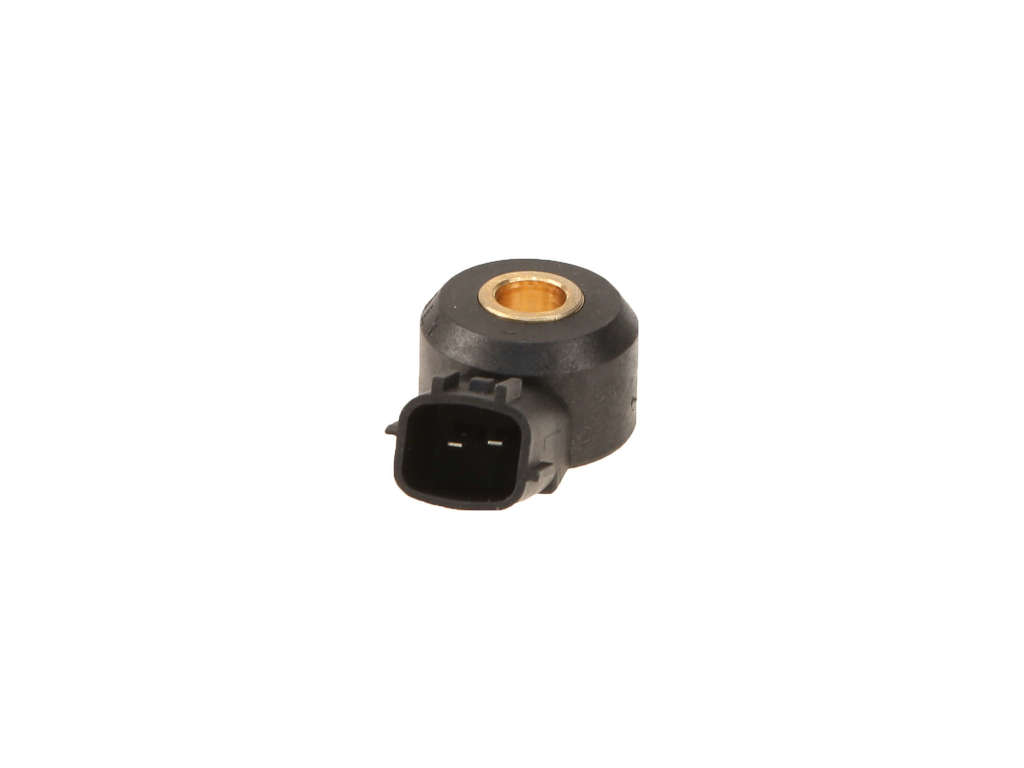
(OEM #22060AA180 or 22060AA18A)— This is the updated, more durable OEM part specified by Subaru in TSB 07-133-18R to fix the common failure that causes code P0328. It supersedes the older, less reliable part number 22060AA160. Use 22060AA180 for Japan-built Foresters and 22060AA18A for US-built models.
Trusted brands: Subaru (OEM), Denso, NGK/NTK
OEM price range: $120-$160
Aftermarket price range: $50-$100
Related Codes That Often Appear With This One
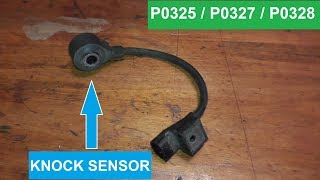
- P0327 — This code is for 'Knock Sensor Circuit Low Input'. Seeing it alongside P0328, or having them appear intermittently, can strongly indicate an intermittent wiring problem or a failing sensor that is fluctuating between open and shorted states.
Technical Service Bulletins (TSBs) & Recalls
- 07-133-18R: This revised TSB announces that the more durable knock sensor from DIT (turbo) engines is now used for NA (naturally aspirated) engines to improve heat resistance and prevent codes like P0327 and P0328. It specifies the new part number as 22060AA180 (Japan-built) or 22060AA18A (US-built).
Platform-Specific Known Issues
- Subaru TSB #07-133-18R specifically addresses the P0328 code (among others) and points to a knock sensor durability issue on naturally aspirated engines, recommending an updated part. The change was implemented in production starting November 18th, 2016.
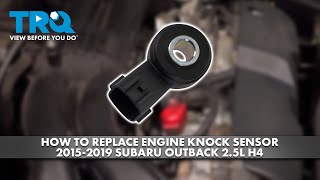
- The location of the sensor on the FB25 engine is on the back of the block under the intake manifold, making access difficult. It often requires a combination of extensions and a swivel socket or clawfoot wrench 🎬 See this walkthrough for replacing the sensor on a 2.5L engine. to remove the 12mm bolt.
- Subaru vehicles, including the Forester, have been cited in reports and lawsuits for using soy-based wiring insulation that can attract rodents, making wiring damage a more-than-average possibility for this code.
Mechanic-Grade Diagnostic Values
- Knock Sensor Mounting Bolt Torque — expected: 24 Nm (17.7 ft-lbs). Failure: A loose bolt can cause false signals; over-tightening can damage the new sensor. TSB explicitly warns: Do NOT use anti-seize compound.
- Knock Sensor Resistance — expected: > 400 kΩ (kilo-ohms). Failure: A reading of 0 ohms (short), infinite/open, or significantly below 400 kΩ indicates a failed sensor.
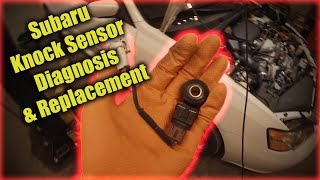
- Harness Voltage (Key On, Engine Off) — expected: ~5V DC at the signal wire in the harness connector.. Failure: A reading of 0V points to a break in the wiring between the ECM and the connector. 🎬 Watch a mechanic diagnose and replace a faulty Subaru knock sensor. A P0328 code occurs when the sensor fails to pull this voltage down.
- Sensor AC Voltage (Dynamic Test) — expected: A small AC voltage is generated when tapping the engine block near the sensor with the engine running.. Failure: No AC voltage signal when tapping indicates the sensor's internal piezoelectric element is dead and not generating a signal.
Wiring & Ground Locations
- E14 / R69 / E48 — The electrical connector for the knock sensor itself, located on the engine block pigtail.. This connector is a common point for corrosion or damage. Knowing the diagram ID helps locate it on a wiring schematic. Spread or corroded pins can cause high resistance or intermittent signals.
- Sensor Mounting Surface — The flat surface on the engine block where the knock sensor is bolted down.. The sensor grounds through its metal base to the engine block. Corrosion or debris on this surface can create a poor ground, leading to incorrect readings. The surface must be clean before installing a new sensor.
Real Owner Repair Stories
- ScoobyNet.com forum user 'spike747' (2001 Subaru Legacy 2.0L B4 (EJ20 engine)) — Check Engine Light with code P0328, sudden bad power loss when accelerating from cold.
❌ Tried (didn't work) Clearing the code (it returned immediately)., Replacing the knock sensor (this cleared the P0328 code, but the power loss issue remained).
✅ What actually fixed it Replacing the rear O2 sensor. The old O2 sensor was intermittently sending high voltage spikes (measured at 5.115V) to the ECU, which was the root cause of the electrical noise and performance problems, even though the ECU initially flagged it as a knock sensor circuit fault.
When the Usual Fixes Don't Work
- While P0328 almost always points to a failed knock sensor or its direct wiring, there are rare documented cases where another failing component was the true cause. In one instance involving a Subaru, a faulty rear O2 sensor was sending high voltage spikes to the computer. This electrical noise triggered the P0328 code. Replacing the knock sensor cleared the code itself, but the root cause of the performance problem (hesitation) was only resolved by replacing the O2 sensor. This highlights the need to confirm the fix by resolving the symptoms, not just clearing the code, and to consider other sensors if problems persist after the primary repair.
OEM Part Supersession History
22060AA160→22060AA180 (for Japan-built vehicles) or 22060AA18A (for US-built vehicles)— The original sensor was prone to cracking from heat and vibration. The new part, originally for turbo (DIT) engines, offers improved durability and heat resistance.
Heads up: While both updated parts will likely function, using the correct part number based on the vehicle's country of origin (VIN starts with 'J' for Japan, '4' for USA) is recommended per the TSB.
Model Year Variations Within This Range
- 2014-2016: Foresters built before November 18th, 2016 (prior to VIN HH538942 for NA models) were originally equipped with the failure-prone knock sensor (22060AA160). Vehicles built after this date have the updated, more durable sensor from the factory.
Helpful Videos
We Have This Part in Stock


The information in this article is provided for general reference and educational purposes only. Vehicle specifications, procedures, and part compatibility can vary by production date, trim level, and region. Always consult your vehicle's factory service manual and verify part numbers before purchasing or performing repairs. Safety-critical components such as airbags, seat belts, and braking systems should be installed by a qualified professional.
- Subaru FORESTER:
- 🧭 Diagnostic Flowchart
- 🎬 Helpful Videos
- 🛍️ Shop This Part
- What's Unique About the 2014-2017 Subaru FORESTER
- Symptoms You May Notice
- Most Likely Causes
- Rare But Worth Checking
- Diagnosis Steps
- Parts You'll Likely Need
- Related Codes That Often Appear With This One
- Technical Service Bulletins (TSBs) & Recalls
- Platform-Specific Known Issues
- Mechanic-Grade Diagnostic Values
- Wiring & Ground Locations
- Real Owner Repair Stories
- When the Usual Fixes Don't Work
- OEM Part Supersession History
- Model Year Variations Within This Range
- 🎟️ Get 5% Off