

P0328 on 2015-2017 Subaru WRX: Knock Sensor Circuit High Causes and Fixes
On a 2015-2017 WRX, P0328 almost always means the knock sensor has failed or its connector is damaged. It's a common issue addressed by a Subaru TSB. Replacing the sensor is the typical fix, costing around $90-$150 for the part. Water pooling in the sensor's location on the engine block is a primary contributor to failure.
- P0328 on a 2015-2017 WRX points to an electrical fault in the knock sensor circuit, not necessarily engine knock.
- The most common cause is a failed knock sensor due to a design flaw allowing moisture damage, an issue Subaru addressed with an updated part (22060AA180) and a TSB (07-133-18R).
- Before replacing the sensor, always inspect the wiring and connector for corrosion or damage, as water pooling in the sensor's location is a primary cause of failure.
- Driving with this code will cause poor performance and fuel economy as the car's computer enters a protective mode.
- This repair is manageable for a DIYer. The key steps are removing the intercooler for access, cleaning the mounting surface, and torquing the new sensor to 24 Nm (17.7 ft-lbs).
What's Unique About the 2015-2017 Subaru WRX
The 2015-2017 WRX uses the FA20F direct-injection turbocharged (DIT) engine. Subaru issued a Technical Service Bulletin (TSB 07-133-18R) for this platform that specifically mentions P0328. The TSB explains that the original knock sensor design was prone to failure and was updated to improve durability and resistance to heat and moisture. The sensor's location on the FA20F engine block is in a recessed area where water can pool, especially after rain or engine washing, leading to corrosion and failure of the sensor or its connector.
Diagnostic Flowchart
Tap your situation to follow the diagnostic path that matches what you're seeing on this vehicle.
Symptoms You May Notice
- Check Engine Light is on
- Noticeable loss of engine power and acceleration
- Hesitation during acceleration
- Reduced fuel economy
- In some cases, the engine may run rough or ping on acceleration
- Car may take longer to start after an ECU reset
- Replacing spark plugs or ignition coils, assuming the performance loss is due to a misfire.
- Assuming the engine has a serious mechanical knock, when the code points to an electrical circuit fault.
- Replacing the sensor without cleaning the mounting surface on the block or failing to torque it correctly, leading to a repeat failure.
Most Likely Causes
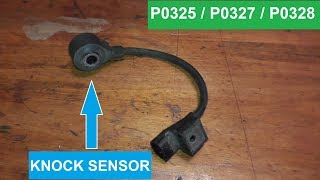
- Faulty Knock Sensor 🔴 High Probability → Shop Ignition Knock (Detonation) Sensor The original sensor design (part no. 22060AA160) is prone to developing cracks in its plastic housing from heat and vibration. This allows moisture to enter and corrode the internal piezoelectric element, leading to an open circuit or incorrect voltage readings. This is a widely documented failure acknowledged by Subaru's TSB 07-133-18R.
How to confirm: After checking wiring, this is the most likely cause. A definitive test involves back-probing the sensor connector and wiggling it; a fluctuating voltage reading 🎬 Watch: How to test and replace a faulty knock sensor on a multimeter indicates an internal sensor fault. However, given the high failure rate and TSB, replacement is the most common and effective diagnostic step. A sensor may pass a resistance test when cold but still be faulty.
Typical fix: Replace the knock sensor with the updated OEM part (22060AA180). It is critical to torque the new sensor's 12mm bolt to the correct specification (24 Nm / 17.7 ft-lbs) and orient the connector correctly.
Est. part cost: $90-$150 - Damaged Wiring or Connector 🟡 Medium Probability The knock sensor is located on the engine block, directly under the intercooler. Water can drip from the hood scoop area and pool in the recess where the sensor sits, causing the connector pins to corrode. The wiring harness is also exposed to significant heat and vibration, which can make it brittle over time.
How to confirm: Visually inspect the wiring harness and the inside of the connector for green or white corrosion, melting, or chafing. Unplug the sensor and check for a steady 5V reference from the ECM on the harness side with a multimeter. If the voltage is absent or erratic, the wiring is suspect.
Typical fix: Clean the connector terminals with electrical contact cleaner. If corrosion is severe, replace the connector pigtail. Repair any damaged sections of the wire harness.
Est. part cost: $15-$40 - Engine Control Module (ECM) Fault ⚪ Low Probability → Shop Engine Control Module (ECM)
How to confirm: This is extremely rare and should only be considered after a new OEM sensor and verified wiring fail to resolve the code. Professional diagnosis is required.
Typical fix: Replace or reprogram the ECM.
Est. part cost: $600-$1200
Diagnosis Steps
- Read the code with an OBD-II scanner to confirm P0328 is present.
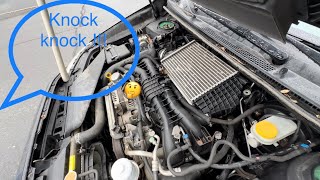
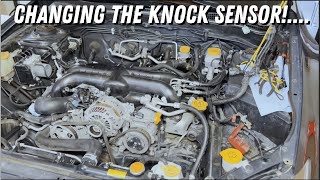
- Visually inspect the knock sensor and its wiring harness. On the FA20F, the Bank 1 sensor is located on the passenger side of the engine block, below the intercooler and just behind the AC compressor. 🎬 See this walkthrough for replacing the Bank 1 sensor
- Check the connector for moisture, corrosion, or damage. Water ingress from rain or washing the engine is a very common cause.
- Disconnect the sensor. With the key on (engine off), use a multimeter to check for a 5V reference voltage from the ECM on the harness side. This confirms the circuit from the ECM is likely intact.
- If reference voltage is present, the sensor is the primary suspect. Test the sensor's internal resistance; it should be between 530-580 kΩ. However, a sensor can pass this test and still be bad. Wiggling the connector while monitoring voltage is a more definitive test.
- If reference voltage is not present, inspect the wiring harness for an open or short between the sensor and the ECM.
- When replacing, ensure the mounting surface on the engine block is clean. Torque the new sensor bolt to exactly 24 Nm (17.7 ft-lbs). Do not use anti-seize compound.
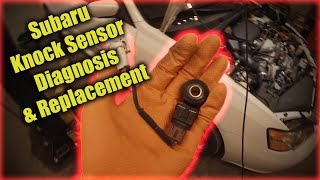
- After replacing the sensor or repairing wiring, clear the code using the scanner and perform a test drive to ensure the fix was successful. The ECU may need to relearn, so avoid heavy boost for the first few miles. 🎬 Watch: A complete Subaru knock sensor diagnosis and replacement guide
Parts You'll Likely Need
- Knock Sensor
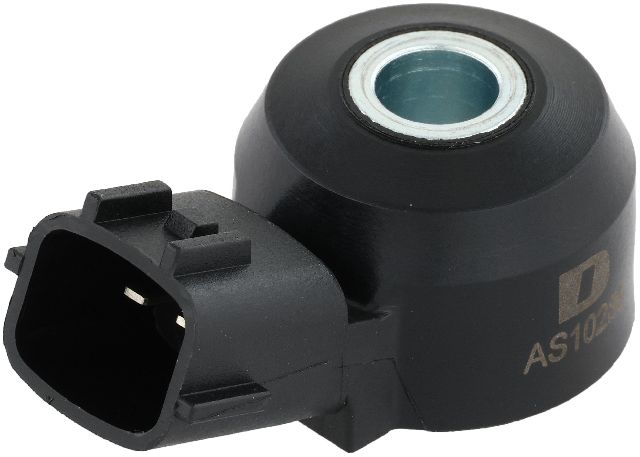
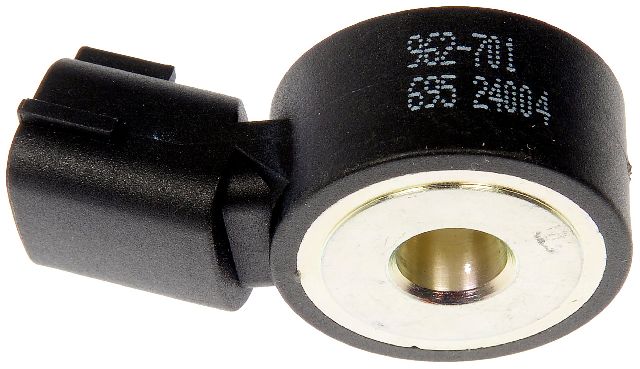
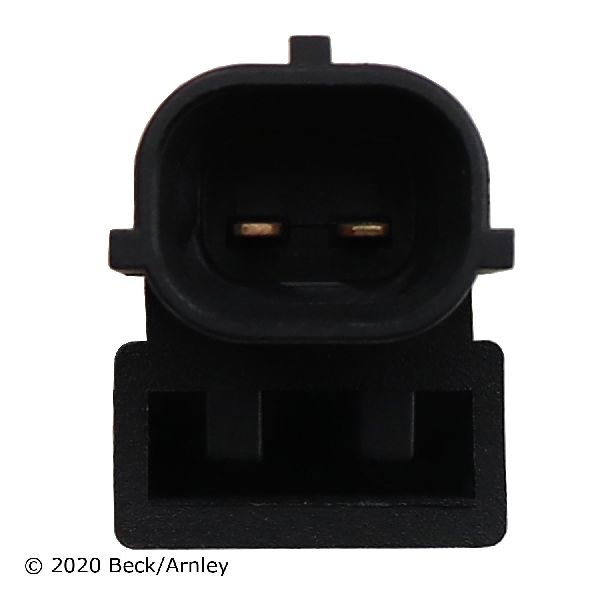
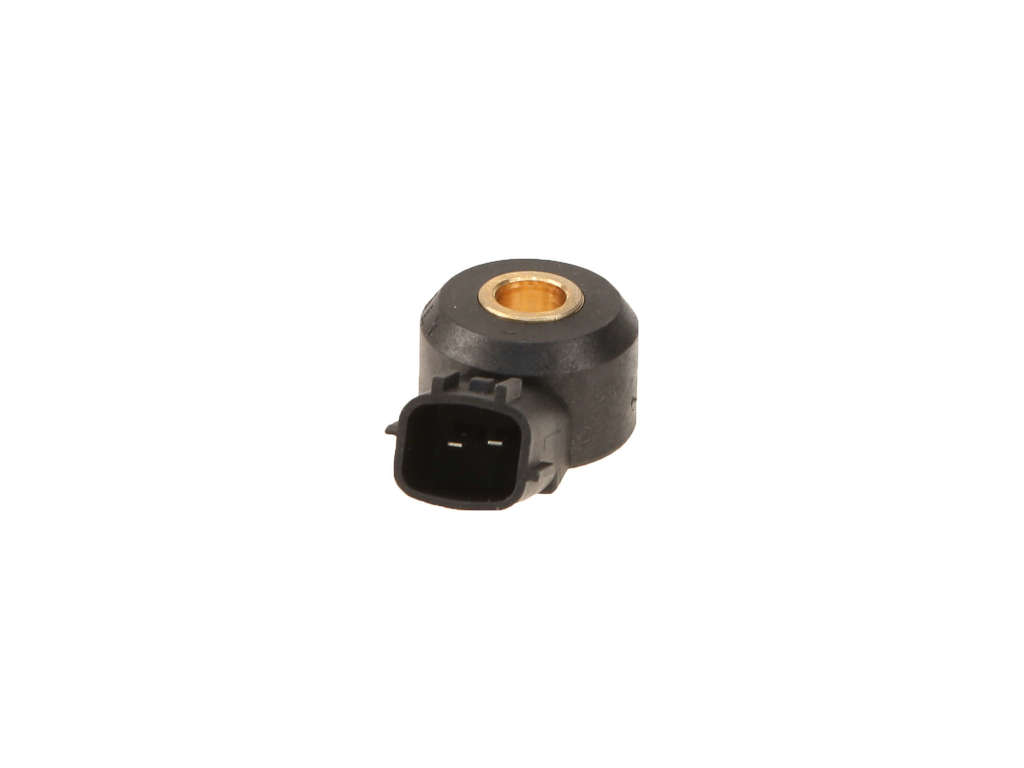
(OEM #22060AA180)— This is the updated, more durable part specified by Subaru to fix the issue described in TSB 07-133-18R for Japan-built vehicles like the WRX. The original part (22060AA160) is prone to failure. Sticking to the Genuine Subaru part is highly recommended.
Trusted brands: Genuine Subaru
OEM price range: $120-$150
Aftermarket price range: $70-$110
Related Codes That Often Appear With This One
- P0327 — Knock Sensor 1 Circuit Low. If the wiring is damaged or the sensor is failing intermittently, it can cause both high (open circuit) and low (short circuit) voltage faults at different times, sometimes triggered by moisture.
- P0332 — Knock Sensor 2 Circuit Low (Bank 2). The FA20F engine has two knock sensors, one for each bank. They are the same part and prone to the same failures. It is not uncommon for one to fail, followed by the other.
Technical Service Bulletins (TSBs) & Recalls
- Bulletin #07-133-18R: This revised TSB announces the design change of the knock sensor to increase durability and resistance to heat. It lists P0327, P0328, P0332, and P0333 as related DTCs and provides the new part number. It also specifies the torque spec (24 Nm) and warns against using anti-seize.
Platform-Specific Known Issues
- A known issue documented in Subaru Technical Service Bulletin #07-133-18R addresses the failure of knock sensors on DIT engines, including the P0328 code. The bulletin notes that an updated, more durable sensor (22060AA180) was released to resolve the problem and was incorporated into production starting with WRX VIN H9830255.
- Water Intrusion: The location of the knock sensors on the FA20F block is in a valley that can collect water, particularly after heavy rain or engine bay cleaning. This moisture is a primary cause of connector corrosion and sensor failure.
Mechanic-Grade Diagnostic Values
- Knock Sensor Internal Resistance — expected: 530 kΩ to 580 kΩ. Failure: A reading of 0 Ω (short), infinity/OL (open), or significantly outside the specified range. Note: A sensor can pass this test when cold and still be faulty.
- Knock Sensor Harness Voltage (KOEO, Unplugged) — expected: ~5.0 Volts DC. Failure: A reading of 0V indicates an open wire or ECM fault. A reading below ~4.9V could indicate a wiring problem. This test confirms the integrity of the circuit from the ECM.
- Knock Sensor Bias Voltage (KOEO, Plugged In) — expected: ~2.5 Volts DC. Failure: A reading of 5V indicates an open in the sensor or connector. A reading of 0V indicates a short. Wiggling the connector at the sensor and seeing this voltage fluctuate wildly points to an internal sensor failure.
Wiring & Ground Locations
- Knock Sensor Ground — The sensor grounds through its metal body directly to the engine block where it is mounted.. A clean, rust-free mounting surface and correct torque (24 Nm / 17.7 ft-lbs) are critical for a proper ground and accurate sensor readings. Corrosion or a loose sensor can cause incorrect signals.
- Signal Wire Shielding — The single signal wire running from the ECM to the knock sensor is wrapped in a metallic shield within the harness.. The shield protects the low-voltage piezoelectric signal from radio frequency (RF) and electromagnetic (EM) interference. A break in the shield or its ground connection can allow stray voltage into the circuit, potentially triggering a P0328 code.
Real Owner Repair Stories
- Wrenchy Research Article (2015-2017 Subaru WRX) — Check Engine Light with P0333 (Bank 2 equivalent of P0328).
❌ Tried (didn't work) The owner tested the resistance of the original knock sensor and found it was within the manufacturer's specification.
✅ What actually fixed it Replacing the knock sensor with the updated OEM part (22060AA180) resolved the code. This suggests the sensor had an intermittent failure (likely related to heat or moisture) that was not detectable with a simple resistance test on a non-running engine. - YouTube/Boosted & Shutterd (2015+ Subaru WRX) — Check Engine Light with P0327 (Circuit Low) that would only appear during or after rainfall.
✅ What actually fixed it The owner allowed the engine bay and sensor area to dry out completely. After the area was dry, resetting the ECU with a Cobb Accessport cleared the code and it did not return, confirming water intrusion was the direct cause.
When the Usual Fixes Don't Work
- While a multimeter test of the sensor's resistance is a standard diagnostic step, there is strong evidence that a sensor can pass this test and still be the root cause of the P0328 code. In one documented case for this platform, a WRX owner found the sensor's resistance was within the correct 400-700 kΩ range, yet the code persisted. The final fix was to replace the sensor, which suggests that intermittent, heat- or moisture-related internal faults may not be apparent during a simple bench test. Therefore, if wiring is confirmed good, replacing the sensor is often the correct next step even if it tests 'good' with a multimeter.
OEM Part Supersession History
22060AA160→22060AA180— The new part was introduced to improve durability and resistance to heat and moisture, addressing the high failure rate of the original sensor.
Heads up: The 2015-2017 WRX is built in Japan and uses part number 22060AA180. A similar part, 22060AA18A, is specified for US-built Subaru models and should not be used.
Model Year Variations Within This Range
- Late 2017: Subaru began installing the updated, more durable knock sensor (22060AA180) at the factory starting November 18, 2016, with VIN H9830255. Vehicles produced after this date are less likely to experience this code from the original sensor failing, though failure is still possible.
Helpful Videos
We Have This Part in Stock


The information in this article is provided for general reference and educational purposes only. Vehicle specifications, procedures, and part compatibility can vary by production date, trim level, and region. Always consult your vehicle's factory service manual and verify part numbers before purchasing or performing repairs. Safety-critical components such as airbags, seat belts, and braking systems should be installed by a qualified professional.
- Subaru WRX:
- 🧭 Diagnostic Flowchart
- 🎬 Helpful Videos
- 🛍️ Shop This Part
- What's Unique About the 2015-2017 Subaru WRX
- Symptoms You May Notice
- Most Likely Causes
- Diagnosis Steps
- Parts You'll Likely Need
- Related Codes That Often Appear With This One
- Technical Service Bulletins (TSBs) & Recalls
- Platform-Specific Known Issues
- Mechanic-Grade Diagnostic Values
- Wiring & Ground Locations
- Real Owner Repair Stories
- When the Usual Fixes Don't Work
- OEM Part Supersession History
- Model Year Variations Within This Range
- 🎟️ Get 5% Off