

P0330 on 2015-2020 Ford Edge: Knock Sensor Circuit Malfunction Causes and Fixes
On a 2015-2020 Ford Edge, code P0330 is most often caused by a damaged wiring harness shared between the knock sensor and the engine coolant temperature (ECT) sensor, not a faulty knock sensor itself. Inspect the wiring harness near both sensors, especially where it routes near the cylinder head on the firewall side (Bank 2), before replacing any parts. This issue is well-documented in multiple Ford Technical Service Bulletins (TSBs) affecting the Edge and its platform mates.
- For a 2015-2020 Ford Edge, P0330 strongly suggests a wiring problem, not necessarily a bad sensor.
- Always check for accompanying codes related to the Engine Coolant Temperature (ECT) sensor, as this is a key indicator of the known TSB issue.
- Before buying a new knock sensor, carefully inspect the wiring harness and connectors for both the knock sensor and the ECT sensor.
- This code applies to all available engines for this period (2.0L, 2.7L, 3.5L), but the 'Bank 2' designation is most relevant for the V6 models.
What's Unique About the 2015-2020 Ford EDGE
For this generation of Ford Edge, P0330 is uniquely and strongly tied to a known wiring harness issue. Ford issued multiple Technical Service Bulletins (TSBs) highlighting that a damaged or poorly seated wiring harness is a frequent cause. The wiring for the knock sensor and Engine Coolant Temperature (ECT) sensor is often routed together in a location susceptible to heat damage and chafing against the engine or brackets, especially near the cylinder head. [SSM 48991, SSM 47791, SSM 46906] This means that unlike in many other vehicles where the sensor itself is the primary suspect, on the Edge, the wiring should be your first point of inspection, potentially saving you from a costly and unnecessary sensor replacement.
Diagnostic Flowchart
Tap your situation to follow the diagnostic path that matches what you're seeing on this vehicle.
Symptoms You May Notice
- Check Engine Light is on
- Reduced engine power and sluggish acceleration
- Engine hesitation or stumbling under load
- Audible engine pinging or knocking, especially during acceleration
- Decreased fuel economy
- Engine may run rough or idle unevenly.
- Replacing the knock sensor without checking the wiring first. Given the TSBs for the Ford Edge, the wiring harness is a more likely culprit than the sensor itself, especially if ECT codes are also present.
Most Likely Causes
- Damaged or Corroded Wiring Harness/Connector 🔴 High Probability Ford has issued multiple TSBs (SSM 48991, SSM 47791, SSM 46906) for the 2015-2020 Edge, explicitly stating that P0330 (often with ECT sensor codes) can be caused by a damaged wiring harness or a connector that is not fully seated. The harness is prone to heat damage and chafing where it passes over the cylinder head.
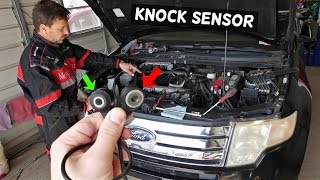
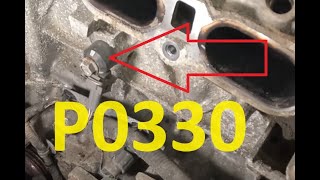
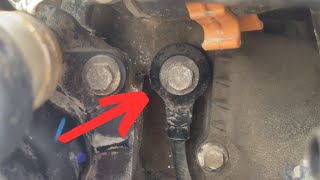
How to confirm: Visually inspect the entire wiring harness for the Bank 2 knock sensor and the ECT sensor, focusing on the area near the back of the cylinder head (firewall side on V6). Look for chafing, melting, corrosion in the connectors, or loose connections. Test the circuit for continuity and proper voltage with a multimeter 🎬 See this video for common P0330 causes and circuit fixes. per the service manual.
Typical fix: Repair the damaged section of the wiring harness or replace the connector pigtail. The ECT connector pigtail (e.g., Motorcraft WPT-1285) is often replaced along with repairing the knock sensor wires. Ensure the connector is clean and fully seated with dielectric grease.
Est. part cost: $15-$60 - Faulty Knock Sensor (Bank 2) 🟡 Medium Probability → Shop Ignition Knock (Detonation) Sensor While less common than the wiring issue, the sensor's internal piezoelectric crystal can fail. On V6 engines, the sensors are located in the engine valley under the intake manifold, making replacement labor-intensive.
How to confirm: If the wiring and circuit test good, the sensor itself is the next suspect. Testing involves checking its internal resistance with a multimeter and comparing it to the spec (often 93-110 kOhms for similar GM sensors, though Ford-specific values are not widely published). A scan tool can also monitor the sensor's voltage output.
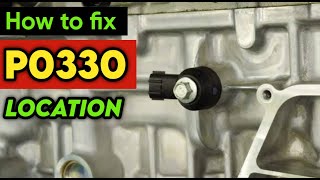
Typical fix: Replace the Bank 2 knock sensor. On V6 engines, this requires removing the upper and lower intake manifolds for access. 🎬 Watch: Step-by-step guide to replacing Bank 1 and 2 knock sensors. It is highly recommended to replace both knock sensors and the sub-harness at the same time due to the labor involved.
Est. part cost: $40-$150 - Powertrain Control Module (PCM) Fault ⚪ Low Probability → Shop Engine Control Module (ECM)
How to confirm: This is diagnosed by exclusion. If the sensor and its entire circuit (wiring and connectors) are confirmed to be in perfect working order through rigorous testing, the PCM's internal driver for the knock sensor circuit may be at fault.
Typical fix: The PCM would need to be professionally tested and either repaired or replaced and reprogrammed by a dealer or specialist.
Est. part cost: $500-$1200
Rare But Worth Checking
- Severe Mechanical Engine Issues: If the engine is producing excessive internal noise from something like a bearing failure or valvetrain issue, it can sometimes overwhelm the knock sensor, causing an out-of-range signal and setting a circuit code. This is rare and would be accompanied by significant audible engine noise.
Diagnosis Steps
- Scan for other DTCs. If any ECT-related codes (P0116-P0119, P0128, P1026) are present, immediately suspect the wiring harness issue described in the Ford TSBs.
- Locate the ECT sensor on the Bank 2 cylinder head (firewall side on V6 engines). Begin a thorough visual inspection of the wiring harness at this point, looking for any signs of damage, melting, chafing against brackets, corrosion, or loose pins.
- Follow the harness from the ECT sensor to the knock sensor and back toward the main loom, inspecting for damage along the way.
- If the visual inspection is inconclusive, use a scan tool to monitor live data for the knock sensor voltage. An erratic or flat-lined reading can confirm a circuit issue. 🎬 Watch: How to troubleshoot and understand knock sensor circuit faults.
- Use a multimeter to test the knock sensor circuit. Check for proper voltage and continuity from the sensor connector back to the PCM, following the vehicle's service manual.
- If the circuit tests good, test the knock sensor's internal resistance. Compare the reading to the manufacturer's specification (e.g., 93-110 kOhms for similar sensors).
- If both the circuit and sensor are good, clear the codes and perform a test drive under load to see if the code returns.
- If the code returns and all other possibilities are exhausted, the issue may lie with the PCM, which requires professional diagnosis.
Parts You'll Likely Need
- Knock Sensor Wiring Harness or Pigtail Connector
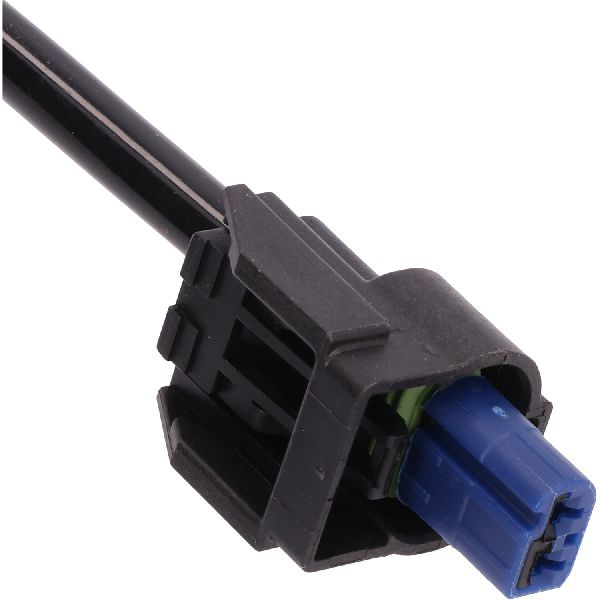
(OEM #Motorcraft WPT-987 (Knock Sensor Pigtail), WPT-1285 (ECT Pigtail))— This is the most likely failure point on the 2015-2020 Ford Edge, according to multiple manufacturer TSBs. The ECT pigtail is often damaged along with the knock sensor wiring.
Trusted brands: Motorcraft, Standard Motor Products
OEM price range: $40-$80
Aftermarket price range: $15-$50 - Knock Sensor
(OEM #FT4Z-12A699-F (V6 Engines))— If the wiring is intact, the sensor itself is the next most likely part to have failed. On V6 models, it's recommended to replace both sensors and the harness that connects them due to the high labor cost of access.
Trusted brands: Motorcraft, Bosch, NTK
OEM price range: $80-$180
Aftermarket price range: $40-$90
Related Codes That Often Appear With This One
- P0116, P0117, P0118, P0119 — These are Engine Coolant Temperature (ECT) sensor circuit codes. They often appear with P0330 on the Ford Edge because the wiring for the ECT and knock sensors may be routed together and prone to similar damage, as noted in TSBs SSM 48991, SSM 47791, and SSM 46906.
- P0128 — Thermostat Rationality code. This can also be triggered by the same ECT sensor wiring issue that causes P0330. [SSM 48991]
- P0325 — This is the equivalent code for the Knock Sensor 1 Circuit on Bank 1. If both appear, it could point to a shared wiring harness issue, a problem with the sub-harness under the intake (on V6 models), or a problem affecting both sensors.
- P1026 — Also related to the ECT sensor circuit and listed in the same TSBs (SSM 48991, 47791, 46906) as a common companion code to P0330 due to the shared wiring harness fault.
Technical Service Bulletins (TSBs) & Recalls
- SSM 48991: Links P0330 to ECT or knock sensor wiring harness issues.
- SSM 47791: Links P0330 to an unseated ECT connector or damaged wiring on 2.7L engines.
- SSM 46906: Links P0330 to an unseated ECT connector or damaged wiring.
Platform-Specific Known Issues
- TSB #SSM 48991: Notes that on some vehicles, DTCs including P0330 may be due to the engine coolant temperature (ECT) sensor or knock sensor wiring harness. The recommended fix is to replace both the ECT sensor and the knock sensor harness.
- TSB #SSM 47791: Specifically for the 2.7L engine, this bulletin points to a P0330 code (among others) being caused by an ECT sensor connector that is not fully seated or has damaged wiring.
- TSB #SSM 46906: Similar to the above, this TSB indicates that P0330 can be caused by an ECT sensor connector that is not fully seated or has damaged wiring between connectors.
- Owner Experience: A common real-world failure scenario involves the wiring harness insulation becoming brittle from heat cycles, leading to cracks and shorts where the harness bends or rubs near the back of the engine.
Mechanic-Grade Diagnostic Values
- Knock Sensor Circuit Voltage (PCM detection threshold) — expected: Between 0.2V and 4.8V with engine speed > 2000 RPM. Failure: Voltage is less than 0.2V or greater than 4.8V
- Knock Sensor Circuit Continuity (harness resistance) — expected: Below 3.0 Ohms. Failure: Resistance is 3.0 Ohms or higher, indicating an open or high resistance in the circuit.
- Knock Sensor AC Voltage Output (dynamic test) — expected: A fluctuating AC voltage signal is generated when the engine block is tapped near the sensor.. Failure: No voltage or very low voltage (e.g., less than 10 millivolts) is produced, suggesting a dead sensor.
- Vehicle Reference Voltage (VREF) from PCM — expected: 5.0 volts ± 0.5 volts. Failure: Voltage outside this range indicates a potential PCM or wiring issue affecting multiple sensors.
Wiring & Ground Locations
- C175B — This is one of the main connectors at the Powertrain Control Module (PCM).. The knock sensor circuits run through this connector to the PCM. Testing for voltage and continuity at the specific pins for Knock Sensor 2 in this connector can confirm if the signal is reaching the PCM, helping to isolate a wiring fault from a PCM fault.
- Knock Sensor (V6 engines) — Located in the engine valley, between the cylinder heads, under the upper and lower intake manifolds.. This location makes the sensors and the sub-harness difficult to access. Due to the high labor involved, it's critical to confirm the fault is here before disassembly. It also makes them susceptible to damage if other work is performed in the valley.
- Knock Sensor (2.0L I4 engine) — Mounted on the engine block, behind the intake manifold.. Access requires removing the intake manifold, which is less intensive than on the V6 but still a significant job. Knowing the location helps plan the diagnosis and repair.
- Knock Sensor (2.7L V6 EcoBoost) — Located at the rear of the engine.. The TSBs specifically point to a shared harness issue with the ECT sensor on this engine. The rear location makes the harness susceptible to chafing against the firewall or other components.
Real Owner Repair Stories
- Reddit user my2k2zx2 (2016 Ford Edge 2.0L) — Check Engine Light with code P0330.
❌ Tried (didn't work) Initially cleared the code to see if it would return.
✅ What actually fixed it The user did not post a final fix, but the discussion provided valuable diagnostic information. Another user provided a component diagram showing the knock sensor's location (#24) behind the intake manifold near the PCV area for the 2.0L engine. They also noted that using FORScan, the live PID data for KNOCK_1 and KNOCK_2 both read '30', but the acceptable range was unknown.
OEM Part Supersession History
FT4Z-12A699-B, FT4Z-12A699-C, FT4Z-12A699-D→FT4Z-12A699-F— Standard part revision and improvement by the manufacturer.
Heads up: The newer part numbers supersede the older ones and should be backward compatible for the specified applications.
Model Year Variations Within This Range
- 2019-2020: The 2019 model year introduced a facelift for the Edge, which included an 8-speed automatic transmission replacing the previous 6-speed. While the core engines remained, wiring harnesses and component locations may have minor differences. For example, the engine compartment wire harness for a 2.7L has a specific part number K2GZ-12A581-K for 2019 models. Always verify part numbers against the vehicle's VIN, especially for post-facelift models.
Helpful Videos
We Have This Part in Stock


The information in this article is provided for general reference and educational purposes only. Vehicle specifications, procedures, and part compatibility can vary by production date, trim level, and region. Always consult your vehicle's factory service manual and verify part numbers before purchasing or performing repairs. Safety-critical components such as airbags, seat belts, and braking systems should be installed by a qualified professional.
- Ford EDGE:
- 🧭 Diagnostic Flowchart
- 🎬 Helpful Videos
- 🛍️ Shop This Part
- What's Unique About the 2015-2020 Ford EDGE
- Symptoms You May Notice
- Most Likely Causes
- Rare But Worth Checking
- Diagnosis Steps
- Parts You'll Likely Need
- Related Codes That Often Appear With This One
- Technical Service Bulletins (TSBs) & Recalls
- Platform-Specific Known Issues
- Mechanic-Grade Diagnostic Values
- Wiring & Ground Locations
- Real Owner Repair Stories
- OEM Part Supersession History
- Model Year Variations Within This Range
- 🎟️ Get 5% Off