

P0330 on 2017-2020 Lincoln Continental: Knock Sensor Circuit Malfunction Causes & Fixes
On 2017-2020 Lincoln Continentals, especially those with the 2.7L engine, code P0330 is frequently caused by a damaged wiring harness shared with the Engine Coolant Temperature (ECT) sensor, not a faulty knock sensor. Inspecting the wiring harness for damage near the sensors is the first step before replacing any parts. This is a well-documented issue across multiple Ford/Lincoln models with this engine.
- For the 2017-2020 Lincoln Continental, P0330 is very often a wiring issue, not a sensor failure.
- Always check for other trouble codes, especially those related to the Engine Coolant Temperature (ECT) sensor, as they point to a known TSB issue.
- Thoroughly inspect the wiring harness and connectors for both the knock sensor and ECT sensor before buying any parts.
- Replacing the knock sensor can be labor-intensive, as it may require removing the intake manifold.
What's Unique About the 2017-2020 Lincoln CONTINENTAL
For this generation of Lincoln Continental, particularly those with the 2.7L V6, the P0330 code is often not a simple case of a failed knock sensor. Manufacturer Technical Service Bulletins (TSBs) repeatedly link this code to problems with a wiring harness that is shared between the knock sensor and the Engine Coolant Temperature (ECT) sensor. This means a loose connector or wiring damaged by heat and vibration is a very common culprit, often triggering other ECT-related codes simultaneously. The issue is so prevalent that Ford issued a TSB for the F-150 with the same engine that involves installing a sensor relocation kit.
🎬 Watch: 2.7L EcoBoost knock sensor and wiring repair walkthroughDiagnostic Flowchart
Tap your situation to follow the diagnostic path that matches what you're seeing on this vehicle.
Symptoms You May Notice
- Check Engine Light is on
- Reduced engine power and sluggish acceleration
- Audible engine pinging or knocking, especially under load
- Decreased fuel economy
- Engine may run hotter than normal or cooling fans may run continuously
- False 'Engine Coolant Over Temperature' warnings on the dash
- Replacing the knock sensor without first thoroughly inspecting the wiring harness. Given the TSBs for this vehicle, the wiring is a more likely culprit and checking it first can save significant time and money. Forum users have reported replacing the sensors only for the code to return, pointing to a wiring issue.
Most Likely Causes
- Damaged or Poorly Seated Wiring Harness 🔴 High Probability Multiple TSBs (SSM 48991, SSM 47791, SSM 46906) confirm that the wiring harness for the knock sensor and ECT sensor is a known failure point. The issue can be a connector that isn't fully seated or wiring that is damaged due to heat and vibration where it routes over the cylinder head. This issue is common across all platforms using the 2.7L EcoBoost engine.
How to confirm: Visually inspect the wiring harness and connectors for both the Bank 2 knock sensor and the ECT sensor. The sensors and wiring are located in the engine valley, under the intake manifold. Check for chafing, melting, or corrosion. Ensure connectors are fully seated. Test the circuit for continuity and proper voltage back to the PCM per the service manual.
Typical fix: Repair the damaged section of the wiring harness or replace the connector pigtail. Ensure the harness is properly secured away from heat sources. In some cases, TSB 21-2168 for the related F-150 suggests installing an ECT sensor relocation kit (Part No. ML3Z-14A411-H) which includes a new hose and jumper harness.
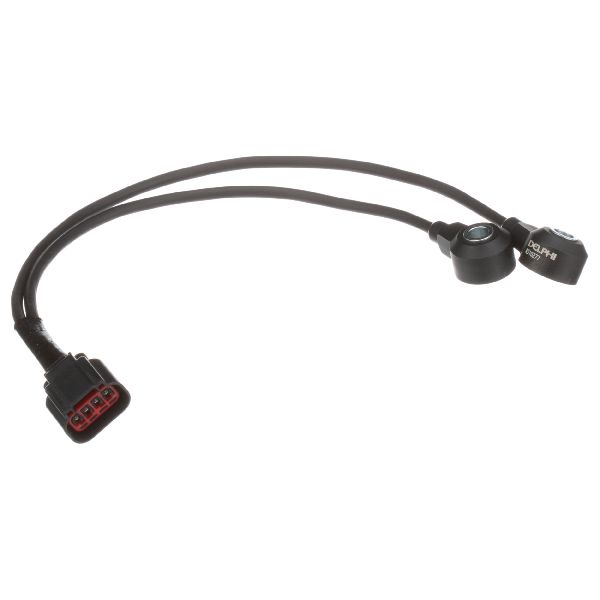
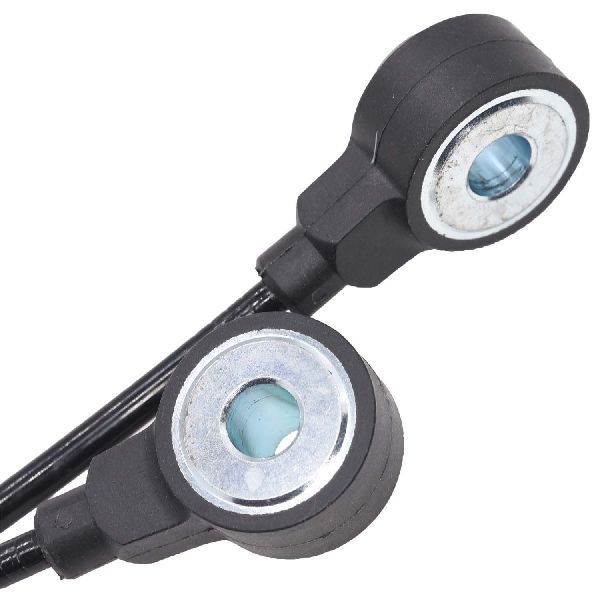
Est. part cost: $20-$150 - Failed Knock Sensor (Bank 2) 🟡 Medium Probability → Shop Ignition Knock (Detonation) Sensor Like any sensor, the knock sensor can fail over time due to extreme heat and vibration. It is a piezoelectric microphone mounted directly to the engine block, under the intake manifold. Coolant leaks from hoses in the engine valley can also drip onto the sensors and cause them to short out. 🎬 Watch: How to fix common EcoBoost coolant leaks near sensors
How to confirm: After confirming the wiring is intact, test the sensor's internal resistance with a multimeter. Compare the reading to the manufacturer's specifications. An out-of-spec reading indicates a failed sensor. This requires removing the intake manifold for access.
Typical fix: Replace the Bank 2 knock sensor. This is a labor-intensive job as it requires removing the intake manifold for access. Mechanics strongly recommend replacing the wiring harness pigtail at the same time.
Est. part cost: $40-$150 - Powertrain Control Module (PCM) Issue ⚪ Low Probability → Shop Engine Control Module (ECM)
How to confirm: This is a diagnosis of exclusion. If the sensor, wiring, and connectors have all been tested and confirmed to be good, the PCM's internal circuitry may be at fault. This requires advanced diagnostic tools. 🎬 See this guide on diagnosing P0330 circuit and sensor faults
Typical fix: The PCM would need to be repaired or replaced and programmed by a dealer or specialized shop.
Est. part cost: $800-$1500
Rare But Worth Checking
- Rodent Damage:
Diagnosis Steps
- Scan the PCM for any other stored trouble codes. Note any codes related to the ECT sensor (P0116, P0117, P0118, P1299), as this strongly points to the TSB-documented wiring issue.
- Carefully inspect the wiring harness and electrical connectors for both the Bank 2 knock sensor and the ECT sensor. This will require significant disassembly to access the engine valley beneath the intake manifold. Look for loose connections, corrosion, or physical damage like chafing or melting.
- If the visual inspection reveals no issues, use a multimeter and wiring diagram to test the knock sensor circuit for proper voltage and ground back to the PCM.
- Check the resistance of the knock sensor itself. If it is outside the specified range, the sensor has failed.
- If the wiring and sensor test good, the final step is to suspect a fault within the Powertrain Control Module (PCM), which requires professional diagnosis.
Parts You'll Likely Need
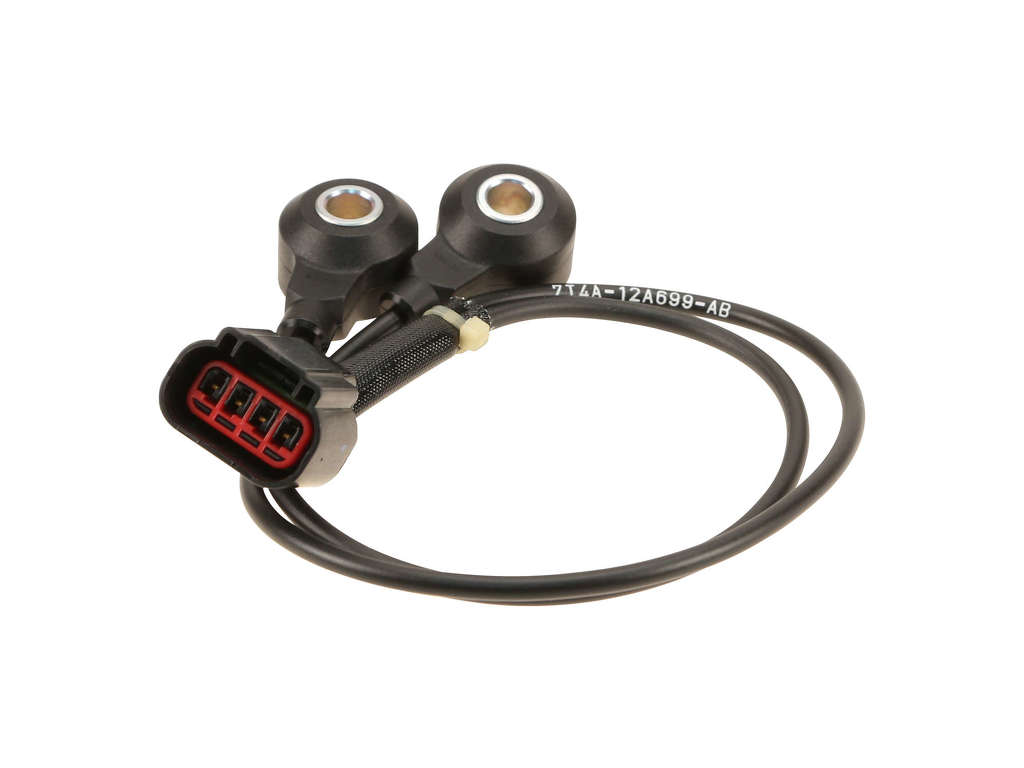
- Knock Sensor
(OEM #FT4Z-12A699-C)— If the sensor itself fails its resistance test, it will need to be replaced. The original part number 1S7Z-12A699-BB has been superseded. FT4Z-12A699-C is the current part for the 2.7L EcoBoost.
Trusted brands: Motorcraft, NTK, Standard Motor Products (SMP)
OEM price range: $50-$90
Aftermarket price range: $30-$60 - Wiring Harness Pigtail Connector
(OEM #WPT-986)— Often the plastic connector or a small section of wire is the point of failure. A pigtail allows for splicing in a new connector without replacing the entire harness. WPT-986 is a common Motorcraft connector pigtail for this application.
Trusted brands: Motorcraft, Dorman
OEM price range: $25-$45
Aftermarket price range: $15-$30 - ECT Sensor Relocation Kit (for reference)
(OEM #ML3Z-14A411-H)— While specified for the F-150 in TSB 21-2168, this kit represents Ford's official fix for the underlying ECT circuit issue that causes P0330. It includes a new heater hose with a relocated sensor and a jumper harness.
Trusted brands: Motorcraft
OEM price range: $100-$150
Aftermarket price range: N/A
Related Codes That Often Appear With This One
- P0116 — This code for ECT Sensor Circuit Range/Performance is listed in TSBs SSM 48991, 47791, and 46906 as appearing with P0330 due to a shared, faulty wiring harness.
- P0117 — This code for ECT Sensor Circuit Low is listed in TSBs SSM 48991, 47791, and 46906 as appearing with P0330 due to a shared, faulty wiring harness.
- P0118 — This code for ECT Sensor Circuit High is listed in TSBs SSM 48991, 47791, and 46906 as appearing with P0330 due to a shared, faulty wiring harness.
- P0217 — This Engine Overtemperature Condition code is listed in TSBs SSM 48991, 47791, and 46906, likely triggered by faulty signals from the ECT sensor circuit which shares a harness with the knock sensor.
- P1299 — This Cylinder Head Overtemperature Protection Active code is also cited in TSBs SSM 48991 and 21-2168 as being related to the same wiring harness and ECT sensor circuit issue.
- P1026 — This manufacturer-specific code is also cited in TSBs SSM 48991, 47791, and 46906 as being related to the same wiring harness issue.
Technical Service Bulletins (TSBs) & Recalls
- SSM 48991: Addresses MIL illumination with multiple DTCs including P0330, pointing to the ECT or knock sensor wiring harness for 2017-2020 models.
- SSM 47791: Cites a poorly seated or damaged ECT sensor connector as a cause for P0330 on 2018 models.
- SSM 46906: Cites a poorly seated or damaged ECT sensor connector as a cause for P0330 on 2017 models.
Platform-Specific Known Issues
- TSB #SSM 48991 notes that on some 2017-2020 models with the 2.7L engine, the Malfunction Indicator Lamp (MIL) with DTC P0330 may be due to the engine coolant temperature (ECT) sensor or knock sensor wiring harness. The recommended fix is to replace both the ECT sensor and the knock sensor harness.
- TSB #SSM 47791 points to a potential issue on 2018 models with the 2.7L engine where the ECT sensor connector is not fully seated or the wiring is damaged, causing P0330 among other codes.
- TSB #SSM 46906 describes the same ECT sensor connector and wiring issue for 2017 models with the 2.7L engine, which can trigger code P0330.
- The 3.7L Cyclone V6, used in base models, is known for a costly internal water pump issue, though this is unrelated to the P0330 code which is more documented on the EcoBoost engines.
Mechanic-Grade Diagnostic Values
- Knock Sensor Signal Frequency — expected: Approx. 7.1 kHz normal mode vibration frequency. General operating range is 6 kHz to 15 kHz.. Failure: If the measured frequency is not 7.1 kHz, the sensor or its connection to the ECM may be faulty.
- Knock Sensor AC Voltage Output (Dynamic Test) — expected: A small AC voltage should be generated when the engine block is tapped near the sensor. The voltage should increase with the intensity of the tap.. Failure: No voltage signal, or a steady, non-responsive voltage when tapping indicates a dead sensor.
Scan Tool Commands That Help
- Ford IDS (or equivalent professional scan tool): Live Data Monitoring & Freeze Frame Data Analysis — Use to check the knock sensor PID (Parameter ID) and to review the freeze frame data which captures engine conditions at the exact moment the P0330 code was set. This is critical for seeing if ECT-related codes were triggered simultaneously, pointing towards the common wiring harness issue.
- Ford IDS (or equivalent professional scan tool): Active Command: Engine RPM Control & Misfire Detection — After accessing the sensors, a technician can use the scan tool to hold the engine at a specific RPM (e.g., 2,500 RPM) and gently tap the engine block near the sensor to see if the live data PID registers the input. This helps confirm sensor and circuit integrity back to the PCM without having to induce actual engine knock.
Real Owner Repair Stories
- YouTube video from a professional mechanic (Ford F-150 with 2.7L EcoBoost (same engine and known issue)) — Check engine light with a knock sensor code.
❌ Tried (didn't work) The mechanic immediately suspected the known issue and did not report trying other fixes first.
✅ What actually fixed it The root cause was a coolant tube located in the engine valley, under the intake manifold, that was leaking. The coolant dripped directly onto the knock sensors, causing them to short out. The fix was to remove the intake manifold, replace both the leaking coolant tube and the damaged knock sensors and harness.
"I Checked Everything" — The Actual Cause
- A common diagnostic pattern for P0330 on the 2.7L EcoBoost is that standard electrical tests (like continuity or resistance checks) on the knock sensor circuit may pass, leading a technician to believe the circuit is fine. However, the actual cause is an intermittent short or open in the shared wiring harness that also serves the Engine Coolant Temperature (ECT) sensor. The fault only appears under specific heat or vibration conditions and often triggers false ECT codes alongside the P0330, which is the key clue that standard knock sensor tests are missing.
When the Usual Fixes Don't Work
- While the most common cause cited in TSBs is a wiring harness fault (chafing, loose connectors), there is strong evidence from field repairs that the knock sensors themselves can and do fail, but often due to an external cause. A documented repair on a 2.7L EcoBoost showed that a leaking coolant tube under the intake manifold dripped directly onto the sensors, causing them to short-circuit. This contradicts a simple 'bad wiring' diagnosis and highlights that a secondary mechanical failure (the coolant leak) can be the true root cause of the electrical DTC P0330.
OEM Part Supersession History
FT4Z-12A699-C→FT4Z-12A699-F— Part has been updated by the manufacturer. This is a common practice to improve reliability or change suppliers.
Heads up: FT4Z-12A699-F is the latest revision and replaces previous versions including -B, -C, and -D. Using the newest available part number is recommended.
Model Year Variations Within This Range
- 2018-2020: For the related Ford F-150 with the same 2.7L engine, a specific Technical Service Bulletin (TSB 21-2168) was issued for these years. It recommends installing an ECT sensor relocation kit to fix the underlying wiring issue that causes P0330. This suggests that while the problem exists in earlier models, a more permanent field fix was engineered and documented for the later model years, which may have slight differences in harness routing or PCM sensitivity.
Helpful Videos
We Have This Part in Stock


The information in this article is provided for general reference and educational purposes only. Vehicle specifications, procedures, and part compatibility can vary by production date, trim level, and region. Always consult your vehicle's factory service manual and verify part numbers before purchasing or performing repairs. Safety-critical components such as airbags, seat belts, and braking systems should be installed by a qualified professional.
- Lincoln CONTINENTAL:
- 🧭 Diagnostic Flowchart
- 🎬 Helpful Videos
- 🛍️ Shop This Part
- What's Unique About the 2017-2020 Lincoln CONTINENTAL
- Symptoms You May Notice
- Most Likely Causes
- Rare But Worth Checking
- Diagnosis Steps
- Parts You'll Likely Need
- Related Codes That Often Appear With This One
- Technical Service Bulletins (TSBs) & Recalls
- Platform-Specific Known Issues
- Mechanic-Grade Diagnostic Values
- Scan Tool Commands That Help
- Real Owner Repair Stories
- "I Checked Everything" — The Actual Cause
- When the Usual Fixes Don't Work
- OEM Part Supersession History
- Model Year Variations Within This Range
- 🎟️ Get 5% Off