

P0330 on 2005-2015 Toyota Tacoma 4.0L V6: Knock Sensor Circuit Causes and Fixes
On a 2005-2015 Tacoma with the 4.0L V6, code P0330 is almost always caused by a failed knock sensor sub-harness located under the intake manifold, often due to rodent damage or heat degradation. The repair is labor-intensive, and it's highly recommended to replace both sensors and the harness at the same time using OEM parts to avoid repeat failure. Expect a DIY cost of ~$250 for parts or a shop total of $700-$1200.
- P0330 on the 4.0L Tacoma almost always points to a bad wiring harness under the intake manifold, not necessarily a bad sensor.
- This is a very labor-intensive repair (4-6+ hours). Due to the difficulty, always replace both knock sensors, the sub-harness, and the intake gaskets at the same time.
- Strongly prefer OEM/Denso sensors and a genuine Toyota harness. Using cheap aftermarket parts is a major risk for repeat failure and having to do the job twice.
- Rodent damage is a leading cause due to the location and material of the harness; consider preventative measures like rodent tape or sprays.
- The correct torque on the knock sensor bolts (15 ft-lbs) is critical for proper function.
What's Unique About the 2005-2015 Toyota Tacoma
On the 1GR-FE 4.0L V6 engine, the two knock sensors and their dedicated sub-harness are buried deep in the engine valley, underneath the lower intake manifold. This location makes them a common nesting spot for rodents, who often chew through the soy-based wire insulation, causing an open or short circuit. Even without rodent damage, the intense heat in the engine valley causes the harness to become brittle and fail over time. Because accessing these components is a significant labor effort, the most common and recommended repair is to replace both sensors and the harness simultaneously, even if only one is triggering a code.
Generation note: The 2005-2015 model years all fall within the second generation (2nd Gen) of the Toyota Tacoma. The causes, symptoms, and repair procedures for code P0330 are consistent across this entire generation for the 4.0L V6 engine. The issue is also common in other Toyota vehicles using the 1GR-FE engine.
Symptoms You May Notice
- Check Engine Light is on
- TRAC OFF light may also be illuminated
- Significant loss of engine power and sluggish acceleration (limp mode)
- Transmission may not shift into overdrive
- Drastically reduced fuel economy (e.g., 11-12 MPG)
- Hesitation under load
- Possible engine pinging or knocking sound on acceleration
- Replacing only the Bank 2 knock sensor but not the harness. The harness is the most frequent failure point, and leaving the old one in place often results in the code returning.
- Using cheap, non-OEM knock sensors. Many owners report that aftermarket sensors fail quickly, are dead on arrival, or are not sensitive enough, forcing them to repeat the entire labor-intensive job.
- Assuming the engine is actually knocking. The code refers to a circuit fault, not necessarily a mechanical knock.
Most Likely Causes
- Damaged Knock Sensor Sub-Harness 🔴 High Probability → Shop Engine Wiring Harness The harness is located in the engine valley, a warm, sheltered area that attracts rodents who chew the soy-based wires. The high heat also makes the harness brittle over time, leading to cracked insulation and short circuits.
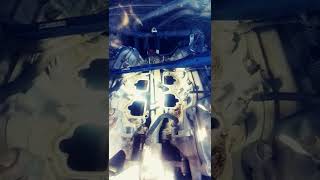
How to confirm: Visually inspect the harness for chewed wires, brittleness, or damage. This requires removing the upper and lower intake manifolds. A borescope may allow for a preliminary inspection before disassembly, 🎬 Watch how to access the sensors without removing the heads. and signs of rodent activity (droppings, nesting material) in the engine bay are a strong indicator.
Typical fix: Replace the knock sensor sub-harness. It is strongly recommended to replace both knock sensors at the same time.
Est. part cost: $40-$60 for the harness - Failed Knock Sensor (Bank 2) 🟡 Medium Probability → Shop Ignition Knock (Detonation) Sensor While the sensors are robust, they can fail internally over time due to heat cycles, vibration, and corrosion. The internal piezoelectric crystal can crack or degrade.
How to confirm: After accessing the sensor, test its resistance with a multimeter. A reading between 120-280 kΩ at room temperature is expected. An out-of-spec or open reading indicates failure. However, given the labor involved, testing is often skipped in favor of proactive replacement.
Typical fix: Replace the Bank 2 knock sensor. It is best practice to replace both sensors (Bank 1 and Bank 2) and the harness simultaneously.
Est. part cost: $150-$280 per OEM sensor
Rare But Worth Checking
- Faulty Engine Control Module (ECM): → Shop Engine Control Module (ECM) This is extremely rare. All other possibilities, especially wiring and sensors, should be exhaustively ruled out before considering the ECM as the cause.
- Corroded or Loose Connector: The main connector where the sub-harness meets the engine harness can become corroded or loose, but this is less common than damage to the harness itself in the engine valley.
Diagnosis Steps
- Confirm the presence of code P0330 with an OBD-II scanner.
- Check for other related codes like P0325, which would strongly suggest a harness issue.
- Inspect the engine bay for obvious signs of rodent activity (droppings, nesting material, chewed wires on top of the engine).
- If possible, use a borescope to inspect the engine valley under the intake manifold for visible wire damage to the knock sensor harness.
- If damage is suspected or the code persists, proceed with removing the upper and lower intake manifolds to gain access to the knock sensors and harness.
- Once accessed, carefully inspect the entire sub-harness for breaks, melting, or chewed sections.
- Even if no visible damage is found, it is highly recommended to replace the harness and both knock sensors due to the labor involved.
- Ensure the new sensors are torqued to the correct specification, which is 20 N*m or 15 ft-lbf. Incorrect torque can affect sensor performance.
- Reassemble the intake manifolds using new gaskets to prevent vacuum leaks.
- Clear the codes and perform a test drive to ensure the issue is resolved.
Parts You'll Likely Need
- Knock Sensor Sub-Harness
(OEM #82219-34010)— This is the most common point of failure due to rodent damage and heat degradation in the engine valley.
Trusted brands: Toyota (Genuine)
OEM price range: $40-$60
Aftermarket price range: $20-$40 - Knock Sensor
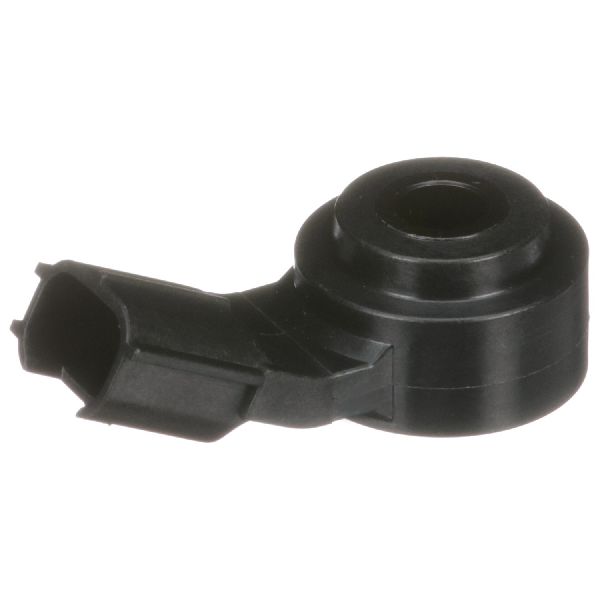
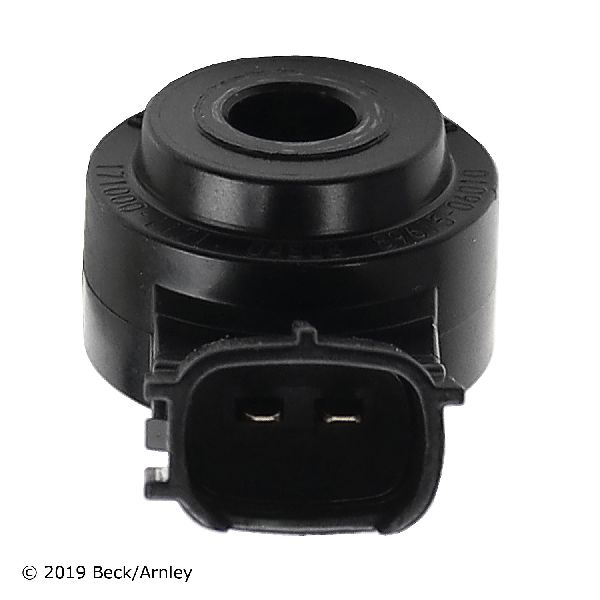
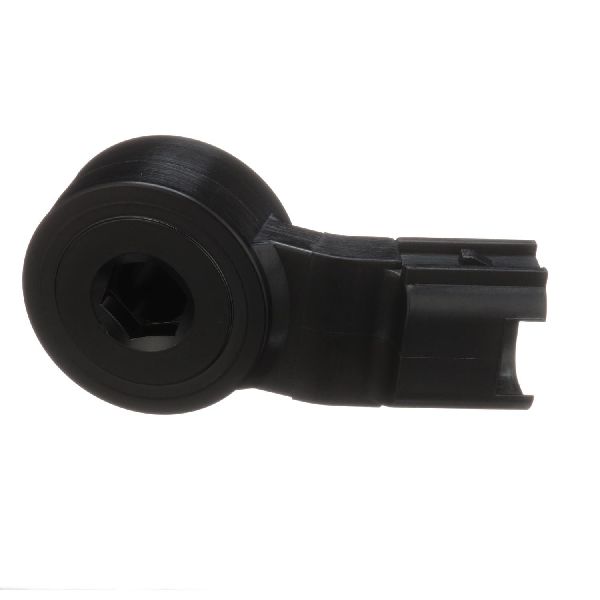
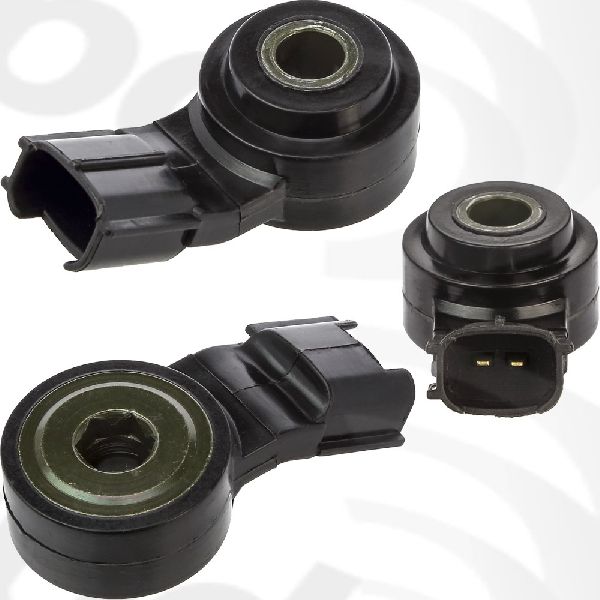
(OEM #89615-06010 (Verify with VIN, may also be 89615-12090))— It is best practice to replace the sensors while the intake is off to avoid repeat labor. Always replace in pairs.
Trusted brands: Denso, Toyota (Genuine)
OEM price range: $160-$280
Aftermarket price range: $50-$120 - Intake Manifold Gasket Set
(OEM #Multiple gaskets required, e.g., 17176-0P030 (Air Surge Tank), 17177-AD010 (Intake to Head))— The upper and lower intake manifold gaskets must be replaced any time the manifold is removed to prevent vacuum leaks.
Trusted brands: Fel-Pro, Mahle, Toyota (Genuine)
OEM price range: $50-$80
Aftermarket price range: $25-$50
Related Codes That Often Appear With This One
- P0325 — This is the code for the Bank 1 (passenger side) knock sensor. It often appears with P0330 because the underlying cause, such as a chewed harness or heat degradation, typically affects the wiring for both sensors.
- P0333 — This code is for 'Knock Sensor 2 Circuit High Input'. It points to the same component and circuit as P0330 and is often caused by the same wiring issues, such as wires shorting together.
Platform-Specific Known Issues
- Real Owner Experience: Rodent Damage: A user on TacomaWorld shared their experience where a P0333 code (related to P0330) was caused by 🎬 Watch this video to see a P0333 repair walkthrough. rodents chewing the soy-based wiring. They found evidence of a mouse nest, including straw, in the engine valley near the chewed wires. Their insurance covered a portion of the multi-thousand dollar dealer quote.
- Real Owner Experience: Heat Degradation: A TacomaWorld forum member who experienced codes P0325 and P0330 noted that the primary reason for failure, besides rodents, is the wiring harness becoming old, cracked, and brittle from years of intense heat cycles in the engine valley. This causes the circuit to short or open, triggering the codes and putting the truck in limp mode.
- Repair Story: DIY Replacement: A Reddit user on r/4thGen4Runner detailed their DIY repair for a P0333 code on their 1GR-FE engine. They found corrosion on the sensor to be the cause, not rodent damage. They provided a detailed list of all replaced parts, including gaskets and O-rings, emphasizing the need to replace multiple small components during the job.
Mechanic-Grade Diagnostic Values
- Knock Sensor Internal Resistance — expected: 120-280 kΩ at room temperature. Failure: A reading that is significantly higher (e.g., in the MΩ range) or shows an open circuit (OL) indicates a failed sensor. Readings can be intermittent, changing when the sensor is handled or stressed.
- Knock Sensor Installation Torque — expected: 20 N*m (15 ft-lbf). Failure: Incorrect torque (either too loose or too tight) can affect the sensor's ability to properly detect vibrations, leading to persistent or false codes even with new parts.
- Knock Sensor Signal Frequency (Advanced) — expected: Normal mode vibration frequency is 7.1 kHz.. Failure: If the frequency measured with an oscilloscope is not 7.1 kHz, the sensor is considered to be malfunctioning.
Scan Tool Commands That Help
- Toyota Techstream: Active Test / Health Check — While there isn't a specific bidirectional command to activate a single knock sensor, using Techstream to perform a full health check and monitor live data from the knock sensor circuits during an engine rev can help confirm if the ECU is receiving any signal at all. It can also read freeze frame data to show engine conditions when the fault was first logged.
Wiring & Ground Locations
- ED1 Connector — This is the wire-to-wire connector that joins the knock sensor sub-harness (in the valley) to the main engine harness. It is typically located at the back of the engine, near the firewall.. This connector is a key testing point. Technicians can disconnect it to isolate the sub-harness and sensors from the main harness and ECM for continuity and resistance checks without removing the intake manifold.
- ECM Pins KNK2 and E1 — At the Engine Control Module (ECM). KNK2 is the signal wire for the Bank 2 knock sensor, and E1 is the sensor ground.. These are the final termination points for the circuit. A continuity test from the sensor connector pin to the corresponding ECM pin can definitively rule out a wiring break. A short-to-ground test would also be performed from these pins.
- Engine Ground Points (General) — Key grounds for the engine harness are typically located on the cylinder heads, the engine block itself, and behind the kick panels inside the cab.. A poor engine ground can introduce electrical noise and cause a variety of sensor issues, including false knock sensor codes. While not a common cause for P0330 specifically, ensuring main grounds are clean and tight is a fundamental step in any electrical diagnosis.
Real Owner Repair Stories
- Reddit user on r/4thGen4Runner (2004 Toyota 4Runner V6 (1GR-FE), failure at ~80,000 miles) — Intermittent P0333 (High Input, related to P0330). CEL would appear when using lower octane (85) fuel but would often stay off with higher octane (91) fuel.
❌ Tried (didn't work) Initially just clearing the code and changing fuel octane, which only masked the issue temporarily.
✅ What actually fixed it The owner performed the full intake removal. No rodent damage was found. The cause was an internal failure of the Bank 2 knock sensor due to corrosion. The old sensor gave intermittent and out-of-spec resistance readings (5 MΩ, vs. spec of 120-280 kΩ). Replacing both knock sensors (with NTK brand) and all associated gaskets resolved the code permanently. - TacomaWorld Forum User (1st Gen Tacoma (similar 5VZ-FE engine, but diagnostic logic is relevant)) — Persistent P0330 code that would not clear.
❌ Tried (didn't work) Initial replacement of the sensor and harness did not fix the issue.
✅ What actually fixed it The user performed a diagnostic trick by swapping the pin locations for the Bank 1 and Bank 2 knock sensors at the ECU connector. When the code changed from P0330 to P0325, it confirmed the ECU was good and the fault was in the wiring or sensor for Bank 2. As a temporary fix (and further diagnostic step), they spliced the signal wire from the bad sensor's circuit (Bank 2) into the good sensor's circuit (Bank 1) at the ECU, making the computer read the good sensor's signal for both banks. This cleared the code, proving the Bank 2 sensor/wiring was the issue and allowing them to pass an inspection before performing the full mechanical repair.
OEM Part Supersession History
89615-20090→89615-06010— Standard part number consolidation and revision by Toyota.
Heads up: The new part number (89615-06010) is the correct, direct replacement for the original and is widely used across many Toyota models.82219-35020→82219-34010— Part number consolidation. The 82219-34010 harness is listed for earlier 3.4L V6 engines but is commonly cited and used for the 4.0L 1GR-FE as well.
Heads up: There can be confusion as some parts catalogs show different harness numbers for different year ranges. 82219-34010 is confirmed to work for the 2005-2015 Tacoma, but always verify with VIN.
Model Year Variations Within This Range
- 2012-2015: Engines from 2012 onwards included a Secondary Air Injection (SAI) system. While this does not change the knock sensor location or the P0330 repair procedure itself, it adds components to the engine bay and potentially different cylinder heads/exhaust manifolds. This is primarily relevant if considering a full engine swap between early (2005-2011) and late (2012-2015) models.
- Mid-2006: Toyota updated the head gasket design in mid-2006. This does not affect the P0330 repair but is a critical piece of information for anyone performing work that requires head removal.
Diagnostic Flowchart
Other Known Issues on This Vehicle
Issues unrelated to this code that are worth knowing about as an owner of this generation:
- Frame Rust/Rot 🔴 High — Very common on 2005-2010 models, especially in regions with road salt. Toyota had a warranty enhancement program to inspect and replace frames. (Ref: Toyota Limited Service Campaign/Warranty Enhancement Program (Not a formal recall))
- Secondary Air Injection Pump Failure 🟠 Medium — Common failure, particularly on 2012 models, often occurring outside of warranty. Can cost over $1500 to repair at a dealer. (Ref: A warranty extension was offered for this issue (ZE6).)
- Cracked/Broken Rear Leaf Springs 🟠 Medium — Common on 2005-2011 models with the original 3-leaf spring packs. Springs can fracture, potentially contacting the fuel tank. (Ref: Yes, recall issued for 2005-2011 models to inspect and replace leaf springs.)
- Driveline Vibrations / Shudder 🟡 Low — Some owners report vibrations on takeoff or at certain speeds, often attributed to driveshaft angles or U-joint issues.
- Weeping Timing Chain Cover 🟡 Low — A minor oil weep or leak can develop from the timing chain cover sealant over time. It is often not severe enough to warrant the expensive repair.
Used vs. New Parts: Buying Guide for This Vehicle
When a used part is the smart pick: For this specific repair, using used parts is generally not recommended due to the high labor cost. If the repair fails, the entire job must be done again. The only exception might be sourcing a used main engine wiring harness if a break is found outside of the replaceable sub-harness, as a new main harness can be prohibitively expensive.
Donor-vehicle mileage cap: roughly under 80000 miles for the part to have meaningful remaining life.
What to inspect on the donor part:
- For a sub-harness: Inspect carefully for any signs of brittleness, cracking at the connectors, or rodent chew marks. The plastic should still have some flexibility.
- For a sensor: There is no reliable way to visually inspect a used knock sensor. Its internal piezoelectric crystal can be cracked without any external signs of damage.
OEM-only on this vehicle (don't cheap out):
- Knock Sensor
- Knock Sensor Sub-Harness
Aftermarket brands forum-validated for this vehicle:
- Denso (often the OEM supplier)
- NTK (as reported by some owners)
Brands owners have reported issues with on this vehicle:
- Generic, unbranded sensors from online marketplaces. Forum consensus is overwhelmingly against using cheap aftermarket knock sensors, as they have a very high rate of premature failure or are dead-on-arrival, forcing a costly repeat of the repair.
Real Owner Stories
Aggregated from forums and TSBs cited above. Mileages and costs reflect what owners reported in those sources.
Toyota Tacoma 1GR-FE 4.0L V6
Symptoms: A P0333 code (related to P0330) was present, and evidence of a mouse nest, including straw, was found in the engine valley near chewed wires.
What fixed it: The owner repaired the chewed wire on the knock sensor harness themselves.
Source hint: Tacoma World (tacomaworld.com) - Thread 'PSA: Rodent proof your engine before it's too late! (P0333 - DIY Knock sensor harness repair)'
Toyota Tacoma 1GR-FE 4.0L V6
Symptoms: Codes P0325 and P0330 were present, and the truck was in limp mode.
What fixed it: The failure was attributed to the wiring harness becoming old, cracked, and brittle from heat, causing a short. The implied fix is the replacement of the harness.
Source hint: vehicle_specific_issues: 'Real Owner Experience: Heat Degradation'
Toyota 4Runner (4th Gen) 1GR-FE 4.0L V6
Symptoms: A P0333 code was triggered by corrosion on the sensor, not rodent damage.
What fixed it: The owner performed a DIY replacement of the corroded knock sensor and all associated gaskets and O-rings for the intake manifold.
Source hint: vehicle_specific_issues: 'Repair Story: DIY Replacement'
Toyota Tacoma 1GR-FE 4.0L V6
Symptoms: The P0330 code remained active even after replacing the harness.
What fixed it: The initial fix of replacing the visibly 'trashed' harness did not solve the problem, leading the owner to suspect the knock sensors themselves were also faulty.
Source hint: Tacoma World (tacomaworld.com) - Thread 'P0330 Everyone's Favorite Code'
Related OBD-II Codes
Frequently Asked Questions
Why is my 2005-2015 Tacoma so prone to the P0330 knock sensor code?
If I have code P0330, should I just replace the one knock sensor for Bank 2?
My mechanic suspects rodents chewed the wires. Is that a common problem on the 4.0L V6?
What is the correct torque specification for the knock sensors on my 1GR-FE engine?
Besides the Check Engine Light, what other symptoms will my Tacoma show with a P0330 code?
Are other Toyota trucks like the 4Runner or Tundra affected by this same knock sensor issue?
Is it safe to use a used knock sensor harness to save money on the repair?
Helpful Videos
We Have This Part in Stock


The information in this article is provided for general reference and educational purposes only. Vehicle specifications, procedures, and part compatibility can vary by production date, trim level, and region. Always consult your vehicle's factory service manual and verify part numbers before purchasing or performing repairs. Safety-critical components such as airbags, seat belts, and braking systems should be installed by a qualified professional.
- Toyota Tacoma:
- 🧭 Diagnostic Flowchart
- 🎬 Helpful Videos
- 🛍️ Shop This Part
- What's Unique About the 2005-2015 Toyota Tacoma
- Symptoms You May Notice
- Most Likely Causes
- Rare But Worth Checking
- Diagnosis Steps
- Parts You'll Likely Need
- Related Codes That Often Appear With This One
- Platform-Specific Known Issues
- Mechanic-Grade Diagnostic Values
- Scan Tool Commands That Help
- Wiring & Ground Locations
- Real Owner Repair Stories
- OEM Part Supersession History
- Model Year Variations Within This Range
- Other Known Issues on This Vehicle
- Used vs. New Parts: Buying Guide for This Vehicle
- Real Owner Stories
- Toyota Tacoma 1GR-FE 4.0L V6
- Toyota Tacoma 1GR-FE 4.0L V6
- Toyota 4Runner (4th Gen) 1GR-FE 4.0L V6
- Toyota Tacoma 1GR-FE 4.0L V6
- Related OBD-II Codes
- Frequently Asked Questions
- 🎟️ Get 5% Off