

P0331 on 2019 Alfa Romeo Stelvio: Knock Sensor Circuit Range/Performance Fixes
This code indicates a problem with Knock Sensor 2. The most common causes are a faulty knock sensor, a wiring issue, or an engine control module (ECM) software glitch. For the 2.0L engine, a specific TSB (#18-045-23) points to a required software update as a primary fix. Inspect the sensor and wiring before replacing parts, but be aware the sensor on the 2.0L is under the intake manifold, making replacement labor-intensive.
- P0331 on a 2019 Stelvio points to an issue with the Knock Sensor 2 circuit.
- For the 2.0L engine, the first step should be checking for a required ECM software update as specified in TSB #18-045-23.
- The most common physical faults are the knock sensor itself or its wiring/connector.
- Always use the recommended premium octane fuel to prevent engine knock that could trigger this code.
- If you are also seeing codes P0106 or P013A, it strongly suggests the software issue mentioned in the TSB is the root cause.
- Be prepared for high labor costs if the sensor needs replacement on the 2.0L engine, as it is located under the intake manifold.
What's Unique About the 2019-2019 Alfa Romeo STELVIO
On the 2019 Alfa Romeo Stelvio, which uses sophisticated direct-injection turbocharged engines (either the 2.0L I4 or 2.9L V6), the knock control system is critical for balancing performance and engine longevity. A Technical Service Bulletin (TSB #18-045-23, which supersedes 18-024-20) has been issued specifically for the 2.0L engine in this model year, indicating that P0331 can appear alongside other codes due to a software issue that requires an update from a dealer. This strongly suggests that for the 2.0L model, not all P0331 codes are caused by a simple hardware failure and the software update should be the first step.
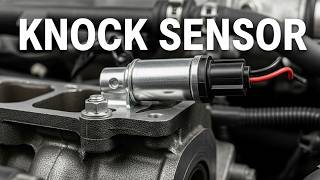
🎬 Watch: A quick breakdown of the P0331 code on Alfa Romeos.Diagnostic Flowchart
Tap your situation to follow the diagnostic path that matches what you're seeing on this vehicle.
Symptoms You May Notice
- Check Engine Light is on
- Reduced engine power and acceleration
- Audible engine knocking or pinging, especially under load
- Poor fuel economy
- Rough or uneven idle
- Hesitation during acceleration.
- Replacing spark plugs or ignition coils when the issue is the sensor itself or its wiring.
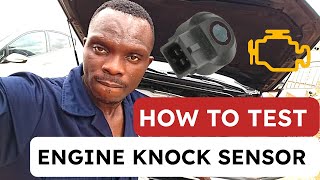
- Assuming the engine has a serious mechanical problem before properly diagnosing the knock sensor circuit. 🎬 See this quick guide on how to test a knock sensor.
- Replacing the knock sensor on a 2.0L model before performing the software update specified in TSB #18-045-23.
Most Likely Causes
- Engine Control Module (ECM) Software Update Needed 🔴 High Probability → Shop Engine Control Module (ECM) Manufacturer TSB #18-045-23 specifically lists P0331-00 as a DTC that can be set due to a software logic issue on the 2.0L engine. This is the most likely cause if other codes like P0106 or P013A are also present.
How to confirm: A dealership or a properly equipped independent shop can check if the vehicle's ECM software is up to date by referencing its VIN against the TSB.
Typical fix: Update the ECM software to the latest version. The TSB specifies a labor time of 0.4 hours for this procedure.
Est. part cost: $0-$250 (dealer labor) - Faulty Knock Sensor 2 🟡 Medium Probability → Shop Ignition Knock (Detonation) Sensor Sensors can fail over time due to extreme heat cycles and constant vibration. On the 2.0L engine, the sensors are located under the intake manifold, a high-heat area that also makes replacement difficult.
How to confirm: Test the sensor's signal with an oscilloscope or swap it with Knock Sensor 1 (if identical) and see if the code changes to P0326 (for Knock Sensor 1). A user on Reddit with a 2.0L Stelvio reported the code appearing immediately after an engine swap, suggesting the sensor or its connection was the issue.
Typical fix: Replace the faulty knock sensor. On the 2.0L, this requires removing the intake manifold.
Est. part cost: $40-$120 - Wiring or Connector Issue 🟡 Medium Probability Engine vibrations can damage wiring, and connectors can become corroded or contaminated with oil or moisture, especially during other engine work. A forum user noted that after an engine swap, a knock sensor code appeared, and suspected a damaged or unplugged harness connector.
How to confirm: Visually inspect the wiring harness and connector for Knock Sensor 2 for any signs of damage, corrosion, or loose connections. Perform a continuity test on the wiring from the sensor to the ECM.
Typical fix: Repair the damaged wiring or clean/replace the connector.
Est. part cost: $5-$50 - Incorrect Fuel Octane ⚪ Low Probability The Stelvio's turbocharged engines are high-compression and designed for premium (91+ octane) fuel. Using lower octane fuel can cause engine knock, which may over-sensitize the system and trigger the sensor code.
How to confirm: Check the fuel type being used. If it's lower than the recommended premium grade, this could be the cause.
Typical fix: Fill the tank with the correct premium octane fuel. The code may clear after driving.
Est. part cost: $0
Rare But Worth Checking
- Faulty Engine Control Module (ECM): → Shop Engine Control Module (ECM) This is rare, but if all other causes have been ruled out, the ECM itself could be the problem. This usually presents with multiple, unrelated fault codes.
- Excessive Engine Vibration: Mechanical issues like worn engine mounts or an exhaust system component vibrating against the engine block can sometimes be misinterpreted by the knock sensor as engine knock.
Diagnosis Steps
- Read all fault codes stored in the ECM. Note any other codes that appear with P0331, especially P0106, P013A, P015A, or P026E.
- For 2.0L engines, check for any applicable Technical Service Bulletins (TSBs), specifically TSB #18-045-23 (or its predecessor 18-024-20). If the VIN is applicable, having the dealer perform the ECM software update is the first and most crucial step.
- Verify the correct premium (91+ octane) fuel is being used as recommended in the owner's manual.
- Locate Knock Sensor 2. On the 2.9L V6 engine, Bank 2 is the driver's side in North America. On the 2.0L I4, the sensors are located under the intake manifold, making visual inspection difficult without disassembly.
- Inspect the accessible parts of the sensor's wiring and connector for any visible damage, corrosion, or loose connections.
- Using a multimeter, check for correct voltage and ground at the sensor connector. For the 2.0L engine, check continuity between the sensor connector and the PCM (Connector C, pins 47 and 35).
- If wiring is good, test the knock sensor itself. The correct method for these piezoelectric sensors is to use an oscilloscope to observe the AC voltage pattern while lightly tapping the engine block near the sensor. 🎬 Watch: How to test a knock sensor using this DIY guide. A simple resistance check is not sufficient, though checking for very high resistance (megaohms) between the pins and to ground can rule out internal shorts.
- If the sensor tests faulty or all other steps fail to resolve the code, replace Knock Sensor 2. Be aware of the significant labor involved for the 2.0L engine due to the intake manifold removal.
- After repair, use a scan tool to perform a 'Reset Memory' or 'Clear Adaptations' function to ensure the ECM relearns the new sensor's baseline values.
Parts You'll Likely Need
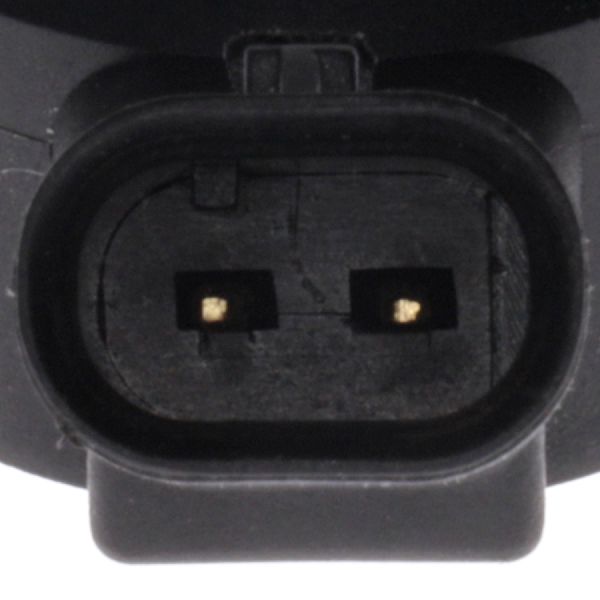
- Knock Sensor
(OEM #50050746, 68223050AA (for 2.0L I4))— This sensor is the most common hardware failure for code P0331 after wiring and software issues are ruled out. On the 2.0L engine, it is located under the intake manifold, making the labor cost significant.
Trusted brands: Mopar, Bosch, NTK
OEM price range: $80-$120
Aftermarket price range: $40-$75
Related Codes That Often Appear With This One
- P0106 — Manifold Absolute Pressure/Barometric Pressure Circuit Range/Performance. TSB #18-045-23 lists this code as potentially appearing with P0331 due to the same underlying software issue on the 2.0L engine.
- P013A — O2 Sensor Slow Response – Rich to Lean (Bank 1 Sensor 2). Also mentioned in TSB #18-045-23 as being related to the same software glitch.
- P015A — O2 Sensor Delayed Response - Rich to Lean (Bank 1 Sensor 1). Another code listed in TSB #18-045-23.
- P026E — Charge Air Cooler Coolant Pump Performance. Also listed in TSB #18-045-23.
Technical Service Bulletins (TSBs) & Recalls
- 18-045-23 (supersedes 18-024-20): Addresses Malfunction Indicator Lamp (MIL) illumination on 2.0L engines where P0331-00 may be one of several stored DTCs caused by a software issue requiring a PCM reprogram.
Platform-Specific Known Issues
- A known Technical Service Bulletin (TSB #18-045-23) exists for the 2019 Stelvio with the 2.0L engine, where a Malfunction Indicator Lamp (MIL) can be triggered by code P0331, often in conjunction with P0106 and P013A, due to an ECM software issue. This should be the first diagnostic check.
- On the 2.0L GME-T4 engine, the knock sensors are located underneath the plastic intake manifold. This placement increases labor time and cost significantly for a replacement, with estimates ranging from $476 to $698 for labor alone.
Mechanic-Grade Diagnostic Values
- Knock Sensor Signal Test — expected: Using an oscilloscope, observe a clear AC voltage sine wave that increases in amplitude when the engine block is lightly tapped near the sensor.. Failure: A flat line, erratic signal, or no signal change when tapping indicates a faulty sensor or wiring issue.
- Knock Sensor Circuit Continuity — expected: Less than 1 ohm of resistance between the sensor connector pins and their corresponding pins at the PCM.. Failure: High resistance or an open circuit (OL) indicates a break in the wire.
- Knock Sensor Circuit to Ground — expected: Infinite resistance (OL) between either wire in the circuit and the chassis ground.. Failure: Any continuity or low resistance reading indicates a short to ground.
Scan Tool Commands That Help
- wiTECH, AlfaOBD: Reset Adaptive Values / Clear Adaptations — This function should be used after replacing a knock sensor or performing significant engine repairs. It clears the learned values the ECM has stored for the old component, preventing the new part from being misread based on old data and potentially causing the code to return.
Wiring & Ground Locations
- G12 (Knock Sensor 2) — On the 2.0L I4 engine, located on the engine block, underneath the intake manifold.. This is the specific component that code P0331 refers to. Its location makes physical access for testing or replacement difficult.
- A022 (PCM/ECM) Connector C — The Powertrain Control Module is located in the engine bay. Connector C is one of the main harness connections to it.. This is the termination point for the knock sensor wiring, essential for continuity testing. Pin 47 is the signal wire from Knock Sensor 2, and Pin 35 is the sensor's ground/return wire.
Real Owner Repair Stories
- giuliaforums.com user report (2017 Alfa Romeo Giulia 2.0L (platform mate)) — Persistent P0331 Check Engine Light.
❌ Tried (didn't work) Replacing the knock sensor (which was labor-intensive)., Performing a continuity test on the wiring harness from the sensor to the PCM, which passed.
✅ What actually fixed it The final resolution was replacing the Powertrain Control Module (PCM/ECM) itself. This indicates a rare internal failure of the PCM's knock sensor input circuit.
When the Usual Fixes Don't Work
- While the TSB software update, the sensor itself, and wiring are the most common culprits, there are confirmed cases on the same platform (Alfa Romeo Giulia) where none of these were the issue. In one instance, after a new sensor was installed and the wiring was confirmed to be perfect via a continuity test to the PCM, the P0331 code persisted. The problem was ultimately resolved only by replacing the entire Powertrain Control Module (PCM), pointing to a rare internal failure of the module's driver circuit for the knock sensor.
OEM Part Supersession History
68223050AA→68570138AA— Part number has been updated by Mopar, likely indicating a revision for improved reliability or a change in manufacturer.
Helpful Videos
We Have This Part in Stock


The information in this article is provided for general reference and educational purposes only. Vehicle specifications, procedures, and part compatibility can vary by production date, trim level, and region. Always consult your vehicle's factory service manual and verify part numbers before purchasing or performing repairs. Safety-critical components such as airbags, seat belts, and braking systems should be installed by a qualified professional.
- Alfa Romeo STELVIO:
- 🧭 Diagnostic Flowchart
- 🎬 Helpful Videos
- 🛍️ Shop This Part
- What's Unique About the 2019-2019 Alfa Romeo STELVIO
- Symptoms You May Notice
- Most Likely Causes
- Rare But Worth Checking
- Diagnosis Steps
- Parts You'll Likely Need
- Related Codes That Often Appear With This One
- Technical Service Bulletins (TSBs) & Recalls
- Platform-Specific Known Issues
- Mechanic-Grade Diagnostic Values
- Scan Tool Commands That Help
- Wiring & Ground Locations
- Real Owner Repair Stories
- When the Usual Fixes Don't Work
- OEM Part Supersession History
- 🎟️ Get 5% Off