

P0331 on 2013-2017 Chevrolet Malibu: Knock Sensor Circuit Causes and Fixes
P0331 on a 2013-2017 Malibu indicates a problem with the Knock Sensor 2 circuit. The most common fix is replacing the faulty knock sensor, which costs about $25-$75 for an aftermarket part. However, wiring issues are also possible, especially on 2013 2.5L models which had a recall (12292A) for reversed knock sensor wiring. In some cases, TSBs point to loose intake manifold bolts as the root cause.
- P0331 points to a fault in the Knock Sensor 2 circuit, most often a failed sensor.
- For 2013 2.5L models, always check if recall 12292A for reversed wiring has been performed.
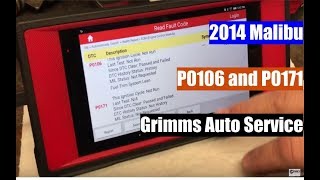
- If other codes like P0101, P0106, or P0171 are present, suspect loose intake manifold bolts per TSB PIP5529B before replacing sensors.
- Wiring damage from heat and oil is a common secondary cause.
- Using OEM/ACDelco replacement sensors is highly recommended to avoid compatibility issues.
What's Unique About the 2013-2017 Chevrolet MALIBU

The 2013-2017 Malibu spans two different generations (8th and 9th), with different engines and sensor locations. A key issue for the 2013 2.5L model was a factory recall (12292, later revised to 12292A) where the knock sensor wiring harnesses may have been installed backwards, causing this code and performance problems. Additionally, GM Technical Service Bulletin PIP5529B lists P0331 among a large group of seemingly unrelated codes, which can point to a vacuum leak from loose intake manifold bolts rather than a simple sensor failure.
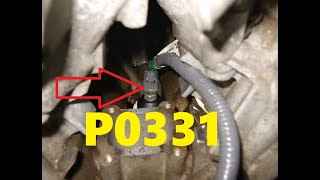
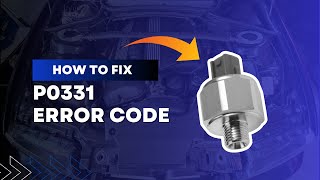
🎬 Watch: Step-by-step diagnosis and repair for the P0331 code.Diagnostic Flowchart

Tap your situation to follow the diagnostic path that matches what you're seeing on this vehicle.
Generation note: This range covers the end of the 8th generation (2013-2016 'Limited' models) and the start of the 9th generation (2016-2017). The 8th gen primarily used a 2.5L LCV engine, while the 9th gen introduced 1.5L LFV Turbo and 2.0L LTG Turbo engines. The location of the knock sensors and potential causes can differ between these engines. For instance, on the 1.5L, one sensor is above the CV axle and the other is on the back of the engine.
Symptoms You May Notice
- Check Engine Light is on
- Audible engine knocking or pinging, especially under acceleration
- Reduced engine power and sluggish acceleration
- Poor fuel economy
- Engine hesitation or misfires
- Vehicle may stall in rare cases associated with TSB PIP5529B
- Replacing spark plugs or ignition coils when the issue is the sensor's circuit.
- Replacing the wrong knock sensor (Sensor 1 instead of Sensor 2).
- Replacing the knock sensor when the actual fault is loose intake manifold bolts causing a vacuum leak and multiple codes.
Most Likely Causes

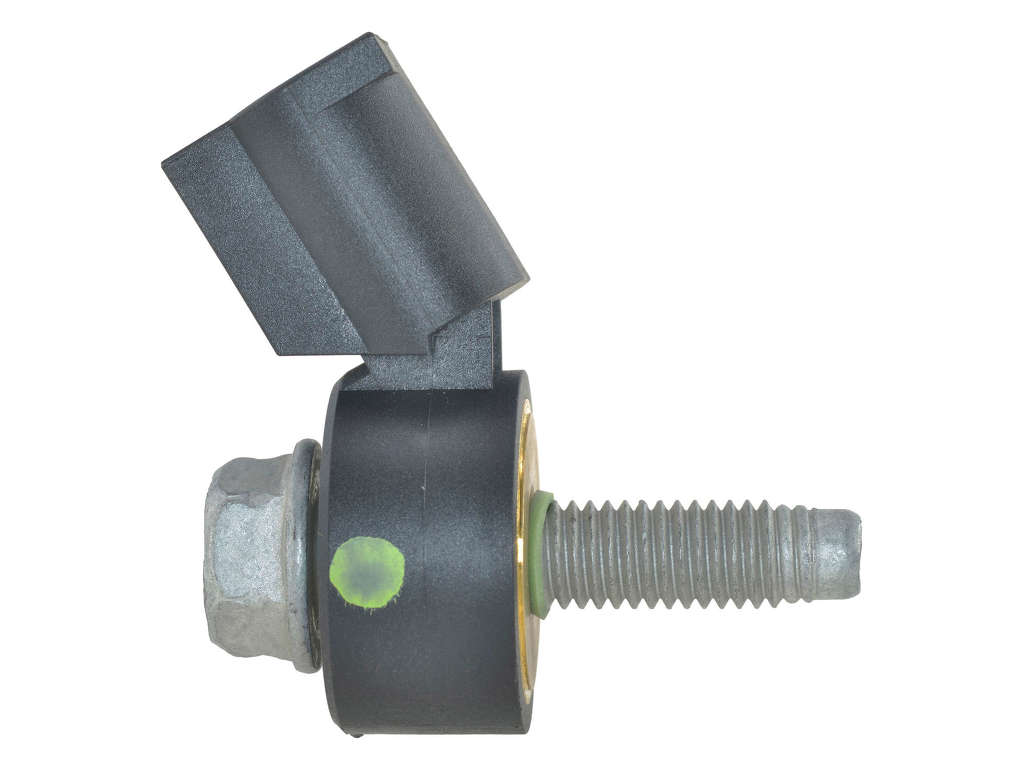
- Faulty Knock Sensor 🔴 High Probability → Shop Ignition Knock (Detonation) Sensor Sensors are exposed to constant engine heat and vibration, leading to eventual failure. Some owners recommend using only OEM/ACDelco sensors, as aftermarket versions can sometimes fail to resolve the code.
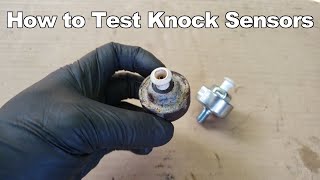
How to confirm: After checking wiring, test the sensor's internal resistance with a multimeter. A typical range for many GM vehicles is 93-100 ohms, but verify specs for your specific sensor. A common DIY test is to temporarily relocate a new sensor to an accessible part of the engine block, clear codes, and see if the code returns.
Typical fix: Replace the faulty knock sensor. It's often recommended to replace both sensors and the wiring harness at the same time, especially if they are difficult to access.
Est. part cost: $25-$75 - Wiring or Connector Issue 🟡 Medium Probability GM issued a recall (12292A) for some 2013 Malibus with the 2.5L engine because the knock sensor wiring may have been reversed from the factory. Wires can also become damaged from heat, oil, or chafing, leading to an open or short in the circuit.
How to confirm: Visually inspect the wiring harness leading to knock sensor 2 for any signs of damage, melting, or corrosion at the connector. Check for continuity and shorts using a multimeter.
Typical fix: Repair the damaged section of wire or replace the connector pigtail. For the specific 2013 recall, the harness needs to be reworked to the correct configuration. The recall procedure also involves replacing the rear transmission mount bolts.
Est. part cost: $10-$30 for a pigtail, or a new harness for $50-$75. - Loose Intake Manifold Bolts ⚪ Low Probability → Shop Engine Intake Manifold TSB PIP5529B specifically calls out loose intake manifold bolts as a cause for a cluster of codes, including P0331, on 2013-2017 models with LCV, LKW, and LTG engines. This can create a vacuum leak that the ECM misinterprets.
How to confirm: After ruling out sensor and wiring issues, and if other codes from the TSB are present (e.g., P0101, P0106, P0171), inspect the intake manifold bolts for looseness.
Typical fix: Per the TSB, remove one bolt at a time, apply medium strength threadlocker, and torque all bolts in sequence to the proper specification. The intake gasket does not typically need to be replaced.
Est. part cost: $5-$10 for threadlocker. - Incorrect Fuel Octane ⚪ Low Probability
How to confirm: The code appears after filling up with a lower-than-recommended octane fuel. This is more likely on the turbocharged engines (1.5L, 2.0L) which are more sensitive to fuel quality.
Typical fix: Fill the tank with the correct octane fuel as specified in the owner's manual. The code should clear after driving.
Est. part cost: $0
Rare But Worth Checking
- Engine Control Module (ECM) Fault: → Shop Engine Control Module (ECM) This is rare, but TSBs (#PIP5529B, #PIP5529A) that group P0331 with many other codes suggest a complex electrical or module-level problem can be the root cause. This should only be considered after all other possibilities are exhausted.
- Internal Engine Mechanical Problems: If there is a severe mechanical issue causing excessive vibration (like a worn rod bearing), the knock sensor will correctly report it, but the signal may be so far out of range that it triggers a circuit performance code. This would typically be accompanied by loud, audible engine noises.
- Engine Block Flashing / Debris: A GM Preliminary Information bulletin (PIP5773B, though for a later model year) notes that sometimes excess block material or plastic flashing from the sensor itself can interfere with the sensor's contact with the engine block. This causes an improper reading. The fix is to remove the sensor, clean any debris from the mounting boss, and reinstall to the correct torque (25 +/- 4 Nm).
Diagnosis Steps
- Read the code from the ECM with an OBD-II scanner and note any other codes present. Pay special attention if codes like P0101, P0106, or P0171 are also stored.
- Check for TSBs and recalls related to your specific year and engine. For 2013 2.5L models, check if recall 12292A was performed.
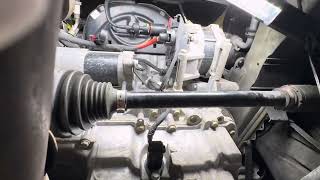
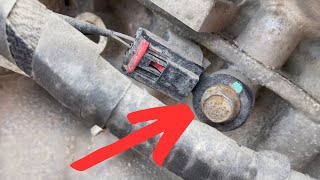
- Inspect the knock sensor and its wiring harness. On the 2.5L engine, the sensors are on the side of the engine block. On the 1.5L Turbo, one sensor is located above the CV axle and the other is on the back of the engine, requiring the vehicle to be lifted.
- If wiring looks good, test the circuit. Check for the correct reference voltage at the sensor connector with the key on. Test the sensor's internal resistance and compare it to the manufacturer's specification (often ~100k ohms for these models, but verify).
- If multiple codes from the TSB list are present, inspect the intake manifold bolts for looseness before replacing any parts.
- If the sensor and wiring test good, and no other codes are present, consider the fuel quality. If you recently used a lower octane fuel, this could be the cause.
- As a last resort, an ECM fault could be the cause, but this is highly unlikely and should be diagnosed by a professional.
Parts You'll Likely Need
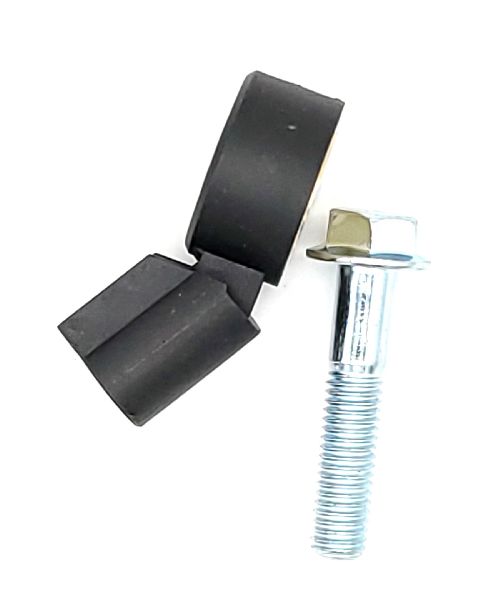
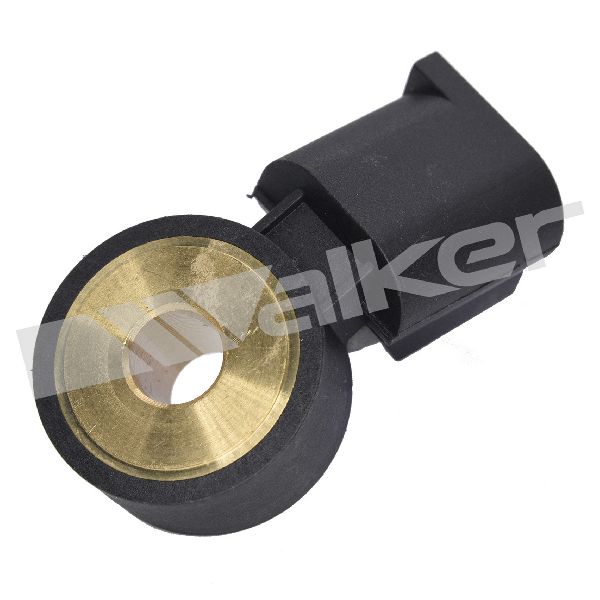
- Ignition Knock Sensor
(OEM #ACDelco 12623095 (for 2.5L LCV) or ACDelco 12729597 (supercedes 12636736 for 1.5L/2.0L LTG))— This is the most common component to fail, triggering the P0331 code.
Trusted brands: ACDelco (OEM), Delphi, Bosch, Standard Motor Products
OEM price range: $40-$80
Aftermarket price range: $25-$75
Related Codes That Often Appear With This One
- P0326 — This is the equivalent code for Knock Sensor 1. If both appear, it could point to a shared wiring problem, an issue with fuel, or a mechanical problem affecting the whole engine.
- P0068, P0101, P0106, P0171, P0131, P0137, P0324, P0506 — TSBs #PIP5529A and #PIP5529B group P0331 with these codes, indicating a potential shared fault. The TSB points specifically to loose intake manifold bolts as a likely cause for this group of codes appearing together.
Technical Service Bulletins (TSBs) & Recalls
- PIP5529B: For 2013-2017 models, mentions P0331 as part of a group of codes that can be set due to loose intake manifold bolts, causing a hesitation or stall. The fix is to re-torque the bolts with threadlocker.
- PIP5529A: An earlier version of the same TSB for 2015 models, also pointing to loose intake manifold bolts.
- PIP5773B: For 2019-2020 models with the 2.0L LTG engine, notes that P0331 is under engineering investigation and advises against replacing parts if no obvious fault is found. While outside the primary year range, it indicates ongoing sensitivity in the system.
Platform-Specific Known Issues
- Recall #12292A: Some 2013 Malibu models with the 2.5L engine were recalled because the knock sensor wiring harnesses could be reversed, causing incorrect spark timing and setting trouble codes. The service procedure was later revised and requires replacing the rear transmission mount bolts.
Mechanic-Grade Diagnostic Values
- Knock Sensor Internal Resistance — expected: 93,000 to 110,000 Ohms (93kΩ - 110kΩ). Failure: A reading of OL (open circuit) or a value significantly outside the expected range indicates a faulty sensor.
- Knock Sensor Circuit Bias Voltage — expected: ~2.5V DC with key on, engine off. Should rise to a steady 5V when the sensor is unplugged.. Failure: A reading of 0V or one that doesn't change when unplugging the sensor points to a wiring or ECM issue.
- Knock Sensor AC Voltage (Tap Test) — expected: A fluctuating AC voltage signal should be generated when tapping the engine block near the sensor.. Failure: No AC voltage, or a very low millivolt reading, suggests the sensor's piezoelectric crystal is dead.
- Knock Sensor Mounting Bolt Torque — expected: 18 lb-ft (25 Nm) for 2.0L LTG engine.. Failure: Over or under-tightening the sensor will alter its sensitivity and can cause the code to return even with a new part.
- Intake Manifold Bolt Torque (2.5L LCV Engine) — expected: 106 lb-in (approx. 12 Nm). Failure: Bolts being loose to the touch is a strong indicator of the issue described in TSB PIP5529B.
Scan Tool Commands That Help
- GDS2 / Professional Scan Tool: Live Data Monitoring: Knock Retard (KR) — Use this PID to determine if the ECM is actively detecting knock. Consistently high retard values (many degrees) under light load or at idle can indicate a false knock signal from a mechanical issue (loose bracket, bad accessory) or a hypersensitive sensor. It should be near 0 at idle.
Wiring & Ground Locations
- G101 — Left front of the engine compartment, on the lower engine block.. This is a primary ground point for the Engine Control Module (ECM). A poor connection or corrosion here can cause erratic sensor readings and numerous, seemingly unrelated codes.
- G122 — Rear of the engine, on the cylinder head.. This ground is physically close to the knock sensors and other critical engine components. A loose or corroded connection can introduce electrical noise into the knock sensor circuit.
- Engine Block to Chassis Ground Strap — Main ground cable connecting the engine block to the vehicle's frame/body.. The knock sensor uses the engine block for its ground path. If the entire engine has a poor ground connection to the chassis, it can create a floating ground, leading to unreliable sensor signals.
Real Owner Repair Stories
- Go-Parts.com analysis of common forum reports for sister code P0326 (Chevrolet Malibu (unspecified year)) — Check engine light with knock sensor code (P0326, but applicable to P0331).
❌ Tried (didn't work) Replacing the knock sensor.
✅ What actually fixed it The root cause was a loose motor mount creating excessive engine vibration, which the knock sensor misinterpreted as engine knock. Tightening the motor mount resolved the code. - Go-Parts.com analysis of YouTube video for related codes (Chevrolet Malibu with 2.5L LCV engine) — Check engine light with multiple codes, including P0171 (System Too Lean), which is grouped with P0331 in TSB PIP5529B.
❌ Tried (didn't work) Initial diagnosis focused on O2 sensors or fuel system components.
✅ What actually fixed it The mechanic discovered the intake manifold bolts were extremely loose, requiring several full turns to tighten. Torquing the bolts to spec resolved the codes, confirming the TSB's diagnosis.
"I Checked Everything" — The Actual Cause
- A common scenario for this vehicle is having P0331 (often with other codes like P0171 or P0106) and performing a smoke test for vacuum leaks that comes back clean. The actual cause, as documented in TSB PIP5529B, is often the intake manifold bolts being loose. They may not be loose enough to create a detectable vacuum leak at idle but are loose enough to allow the manifold to vibrate against the cylinder head, which the knock sensor picks up as a fault. The fix is not sealing a leak, but mechanically re-torquing the bolts with threadlocker.
When the Usual Fixes Don't Work
- While P0331 is a knock sensor circuit code, a significant amount of field data for the 2013-2017 Malibu suggests the sensor itself is often not the root cause. Technicians and owners frequently find that replacing the sensor does not fix the issue. The code often returns until an underlying mechanical issue creating false vibrations is addressed. The most common counter-evidence points to loose intake manifold bolts (per TSB PIP5529B), which can be fixed for a few dollars in threadlocker and an hour of labor, versus replacing a sensor that may be difficult to access.
OEM Part Supersession History
12636736, 12692505, 12605738→12729597— Standard part evolution, potential improvements in materials or internal design.
Heads up: Applies to the 1.5L LFV and 2.0L LTG engines. Using the older part numbers may work, but the latest revision is always recommended.
Model Year Variations Within This Range
- 2013 only: Models with the 2.5L LCV engine were subject to Emission Recall #12292A, where the knock sensor 1 and 2 connectors may have been reversed at the factory. This is a unique, model-year-specific cause for P0331 that requires checking the wiring configuration before replacing parts.
Helpful Videos

We Have This Part in Stock


The information in this article is provided for general reference and educational purposes only. Vehicle specifications, procedures, and part compatibility can vary by production date, trim level, and region. Always consult your vehicle's factory service manual and verify part numbers before purchasing or performing repairs. Safety-critical components such as airbags, seat belts, and braking systems should be installed by a qualified professional.
- Chevrolet MALIBU:
- 🧭 Diagnostic Flowchart
- 🎬 Helpful Videos
- 🛍️ Shop This Part
- What's Unique About the 2013-2017 Chevrolet MALIBU
- Symptoms You May Notice
- Most Likely Causes
- Rare But Worth Checking
- Diagnosis Steps
- Parts You'll Likely Need
- Related Codes That Often Appear With This One
- Technical Service Bulletins (TSBs) & Recalls
- Platform-Specific Known Issues
- Mechanic-Grade Diagnostic Values
- Scan Tool Commands That Help
- Wiring & Ground Locations
- Real Owner Repair Stories
- "I Checked Everything" — The Actual Cause
- When the Usual Fixes Don't Work
- OEM Part Supersession History
- Model Year Variations Within This Range
- 🎟️ Get 5% Off