

P0331 on 2017-2020 Genesis G80 3.8L: Knock Sensor Circuit Causes and Fixes
This code indicates a problem with the knock sensor circuit on the driver's side of the engine (Bank 2). Before replacing the sensor, carefully inspect its wiring harness, as rodent damage is a surprisingly common cause on this specific vehicle. A new sensor costs around $70-$120, but the fix could be as simple as a wiring repair.
- P0331 on a 2017-2020 G80 3.8L points to the knock sensor circuit on the driver's side.
- The most common cause is NOT a bad sensor, but rather chewed wires from rodents. Always inspect the wiring harness first.
- If the wiring is good, the sensor itself is the next likely failure point. The correct part number for Bank 2 is 39320-3L210.
- When replacing the sensor, it is critical to torque the mounting bolt to 15.7 - 23.5 Nm (11.6 - 17.3 lb-ft) to ensure proper operation.
- Ignoring this code can lead to poor engine performance, bad fuel economy, and the risk of engine damage from undetected detonation.
What's Unique About the 2017-2020 Genesis G80
For the 2017-2020 Genesis G80 with the 3.8L V6, the P0331 code has a notable platform-specific quirk. While the knock sensor itself can fail, a frequent culprit is rodent damage to the sensor's wiring harness. The location of the Bank 2 sensor and its wiring on the driver's side of the engine block seems to be an attractive spot for critters to chew, leading to an open or shorted circuit. Owners and mechanics have reported this specific failure multiple times, making a visual inspection of the wires the most critical first step before ordering parts. The use of soy-based materials in the wiring insulation of many modern cars, including Hyundai/Genesis, is often cited as a reason for this increased attraction to rodents.
Symptoms You May Notice
- Check Engine Light is on
- Audible engine pinging or knocking, especially under load
- Reduced engine power and acceleration
- Hesitation during acceleration
- Worse than normal fuel economy
- Rough idle or engine vibration
- Replacing the knock sensor without first inspecting the wiring harness. Many owners may purchase a new sensor only to find the problem was a simple chewed wire.
- Improperly torquing the new knock sensor bolt, leading to a repeat P0331 code.
Most Likely Causes
- Damaged Wiring Harness or Connector 🔴 High Probability The wiring for the Bank 2 knock sensor is located in an area of the engine bay that has been repeatedly documented as being susceptible to rodent damage (chewed wires). The soy-based wire insulation used in many modern vehicles is believed to attract rodents.
How to confirm: Visually inspect the wiring leading to the knock sensor on the driver's side of the engine block. Look for any signs of chewing, fraying, or breaks in the wire. Check that the connector is secure and free of corrosion or moisture. The connector is often located just below and forward of the oil filler cap.
Typical fix: If the wire is damaged, it can be repaired by soldering and sealing with heat-shrink tubing. Protecting the new repair with automotive-grade anti-rodent tape (such as Honda's capsaicin-infused tape) or wire conduit is highly recommended. If the connector is damaged, a replacement pigtail may be needed.
Est. part cost: $5-$30 - Failed Knock Sensor 🟡 Medium Probability → Shop Ignition Knock (Detonation) Sensor
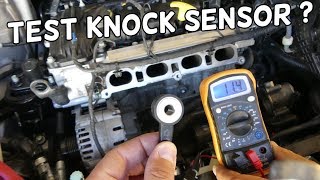
How to confirm: If the wiring is intact, the sensor is the next suspect. You can test it by setting a multimeter to AC millivolts, connecting it to the sensor's two pins, and lightly tapping the engine block near the sensor with a wrench. A healthy sensor will generate a small voltage spike with each tap. If no signal is produced, the sensor has failed. Alternatively, check the sensor's internal resistance with a multimeter; an open circuit (infinite resistance) indicates failure. 🎬 See this walkthrough on how to test your knock sensor.
Typical fix: Replace the Bank 2 knock sensor. It is held to the engine block by a single bolt (typically 12mm or 14mm). It is critical to torque the new sensor to the manufacturer's specification, which is 15.7 - 23.5 Nm (11.6 - 17.3 lb-ft). Over or under-torquing can affect the sensor's sensitivity and cause the code to return.
Est. part cost: $70-$120
Rare But Worth Checking
- Engine Control Module (ECM) Fault: → Shop Engine Control Module (ECM) This is very rare, but if the sensor and wiring are confirmed to be good, the ECM's internal circuit for processing the knock sensor signal could be faulty. This should only be considered after all other possibilities are exhausted and would require professional diagnosis.
- Excessive Engine Vibration or Internal Engine Noise: Severe vibrations from other issues like bad motor mounts, a persistent misfire, or internal engine problems (e.g., timing chain issues, bearing noise) could potentially generate an out-of-range signal from the knock sensor. This would typically be accompanied by other trouble codes and audible mechanical noises.
Diagnosis Steps
- Scan the vehicle for any other stored trouble codes that could indicate a related problem.
- Locate the Bank 2 knock sensor on the driver's side of the engine, below and forward of the oil filler cap.
- Perform a thorough visual inspection of the knock sensor's wiring harness. Look closely for any signs of rodent damage, chafing, or breaks. This is the most common point of failure.
- Check the electrical connector for a secure fit and any signs of corrosion or damage. Disconnect it and inspect the pins.
- If wiring damage is found, repair the wires using solder and heat-shrink tubing. Wrap the repaired section in rodent-repellent tape. Clear the code and perform a test drive to see if P0331 returns.
- If the wiring is intact, test the sensor itself. Disconnect the sensor and use a multimeter to check for a small AC voltage signal while tapping the engine block near the sensor.
- If the sensor fails the test, replace it. The mounting bolt is often a 12mm or 14mm head.
- Torque the new knock sensor mounting bolt to the correct specification: 15.7 - 23.5 Nm (11.6 - 17.3 lb-ft). This is a critical step.
- Clear the DTC and perform a thorough test drive under various load conditions to ensure the code does not return.
- If the sensor and wiring are both good, the issue may be with the ECM, which requires professional diagnosis.
Parts You'll Likely Need
- Knock Sensor (Bank 2, LH)
(OEM #39320-3L210)— This is the sensor for Bank 2 (driver's side) that provides the signal to the ECM. It can fail internally, but should only be replaced after confirming the wiring is intact.
Trusted brands: Hyundai/Genesis (OEM), NTK, Standard Motor Products (SMP)
OEM price range: $90-$120
Aftermarket price range: $60-$100 - Anti-Rodent Electrical Tape / Wire Conduit — Used to protect the repaired or new wiring harness from future rodent damage, which is a known issue on this platform.
Trusted brands: Honda Anti Rodent Tape (P/N 4019-2317), Tesa High-Temp PET Fleece Tape
OEM price range: $15-$30
Aftermarket price range: $5-$15 - Knock Sensor Wiring Harness
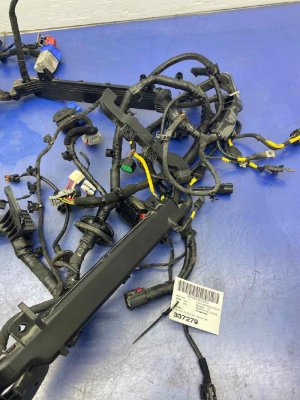
(OEM #91400-C2100-QQH)— If the wiring is too damaged to repair or the connector is broken, the entire sub-harness may need to be replaced.
Trusted brands: Hyundai/Genesis (OEM)
OEM price range: $25-$40
Technical Service Bulletins (TSBs) & Recalls
- While no TSB is specific to P0331 on this model, Hyundai has issued TSB 24-EM-010H for other models (Elantra N, Kona N) regarding knock sensor DTCs caused by water intrusion into the connector, requiring a new sensor and wiring kit. This highlights a potential, though less common, cause on the G80.
Platform-Specific Known Issues
- The wiring harness for the Bank 2 knock sensor is frequently chewed by rodents, causing an open or short circuit that triggers the P0331 code.
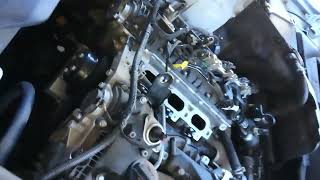
- A YouTube video titled 'Genesis G80 3.8L Knock Sensor 2017 - 2020 P0331 code' specifically details this issue, showing the location and common wire damage. 🎬 Watch: This video shows the exact location of the rodent damage.
Mechanic-Grade Diagnostic Values
- Knock Sensor Live Data Voltage (on Scan Tool) — expected: 0.2V (no knock) to 4.5V (severe knock). Failure: A voltage that is stuck at 0V, at the reference voltage (e.g., 5V), or does not change with engine RPM and load is indicative of a fault.
- Knock Sensor Internal Resistance (Test 1) — expected: 93 to 110 kOhms (kilo-ohms). Failure: An open circuit (infinite resistance) or a reading significantly outside this range suggests a failed sensor. This test involves measuring between the sensor's electrical pin and the metal housing.
- Knock Sensor AC Voltage Output (Dynamic Test) — expected: A small AC voltage spike (in millivolts) when the engine block is tapped near the sensor.. Failure: No voltage signal produced when tapping indicates a dead sensor.
Scan Tool Commands That Help
- Genesis GDS (Global Diagnostic System): Live Data / Data Stream — Use this function to monitor the 'Knock Sensor Bank 2' voltage in real-time. Observe the voltage at idle, and while carefully revving the engine in neutral. A healthy sensor will show small voltage fluctuations. This is a primary step before performing physical wiring checks.
Wiring & Ground Locations
- Engine Ground Cable (Driver's Side) — On the left (driver's) side of the 3.8L engine block, connecting the block to the chassis.. A poor or corroded ground can introduce electrical noise or cause incorrect sensor readings for components on that side of the engine, including the Bank 2 knock sensor. The OEM part number for this cable is 91880B1010.
- Knock Sensor Connector — On the driver's side of the engine block, below and slightly forward of the oil filler cap.. This 2-pin connector is the primary interface for the sensor. It is a common point for rodent damage, moisture intrusion, and corrosion, which can directly cause a P0331 code.
Real Owner Repair Stories
- YouTube: 'Genesis G80 3.8L Knock Sensor 2017 - 2020 P0331 code' (2017-2020 Genesis G80 3.8L V6) — Check Engine Light with code P0331.
❌ Tried (didn't work) The video implies that a common mistake is to immediately buy a new sensor without checking the wiring first.
✅ What actually fixed it The wire leading to the knock sensor was chewed by a rodent. The fix was to solder the broken wire and protect it with new conduit. The video creator notes this has happened on at least two separate Genesis vehicles they have worked on.
Diagnostic Flowchart
Other Known Issues on This Vehicle
Issues unrelated to this code that are worth knowing about as an owner of this generation:
- ABS Module Internal Short Circuit 🔴 High — Common enough to trigger a major safety recall (NHTSA Recall 21V-308) affecting 2015-2020 models. Can occur at any mileage. (Ref: NHTSA Recall 21V-308. Remedy involves replacing a fuse in the junction box. Owners were advised to park outside away from structures.)
- Excessive Oil Consumption 🟠 Medium — Reported by some owners of the 3.8L GDi engine, potentially related to piston ring design. Not universal, but a known concern to monitor. (Ref: No specific recall, but a known issue discussed in relation to the Lambda 3.8L engine family.)
- Starter Solenoid Water Intrusion 🔴 High — Subject of a safety recall (NHTSA Recall 20V-790) for 2017-2019 G80 models. Water can enter the starter solenoid, potentially causing an electrical short and fire risk. (Ref: NHTSA Recall 20V-790.)
- Harsh Shifting / Transmission Solenoid Issues 🟠 Medium — More prevalent on 2017 models. Owners report harsh shifts or flares. A TSB was issued to address the problem, often related to internal transmission solenoids. (Ref: TSB 21-AT-010H addresses shift quality issues.)
- Panoramic Sunroof Creaking/Squeaking 🟡 Low — A very common complaint across many Genesis models of this era. Annoying but not a functional or safety defect. (Ref: No recall, but dealers may attempt fixes under warranty. Many owner DIY solutions exist.)
- Shift Cable Bushing Failure 🟠 Medium — The plastic bushings on the transmission shift cable can degrade, causing a loose shifter feel or inability to select gears. Affects 3.8L RWD models. (Ref: No recall, but a known failure point. Bushings can often be replaced separately from the entire cable.)
Used vs. New Parts: Buying Guide for This Vehicle
When a used part is the smart pick: A used OEM wiring harness from a junkyard is an excellent choice if your original harness is chewed by rodents or has a damaged connector. It's often more cost-effective and reliable than attempting multiple wire repairs in a tight space.
Donor-vehicle mileage cap: roughly under 80000 miles for the part to have meaningful remaining life.
What to inspect on the donor part:
- For a wiring harness, inspect for any signs of rodent damage (nests, droppings, chewed conduit) on the donor vehicle.
- Check that the plastic connector is not brittle or cracked.
- Ensure the connector's weather seal is intact and pliable.
- Look at the pins inside the connector to ensure they are straight and free of corrosion.
OEM-only on this vehicle (don't cheap out):
- While aftermarket sensors exist, the knock sensor is a sensitive piezoelectric device. An OEM sensor (Hyundai/Genesis P/N 39320-3L210) is strongly recommended to avoid issues with incorrect sensitivity that could cause the code to return or fail to detect real knock.
Aftermarket brands forum-validated for this vehicle:
- If an OEM sensor is unavailable, NTK and Standard Motor Products (SMP) are generally considered reliable Tier 1 suppliers for this type of sensor.
Brands owners have reported issues with on this vehicle:
- Avoid unbranded, 'white-box' sensors from online marketplaces, as their internal components may not be tuned to the specific frequency of the Lambda II engine, leading to incorrect readings.
Real Owner Stories
Aggregated from forums and TSBs cited above. Mileages and costs reflect what owners reported in those sources.
2017-2020 Genesis G80 3.8L V6
Symptoms: The vehicle had a P0331 trouble code and the Check Engine Light was on.
What fixed it: The problem was a wire in the knock sensor harness that had been chewed off by rats. Repairing the wire resolved the issue.
Source hint: YouTube comment from 'MechanixContent' cited in the article context.
2017-2020 Genesis G80 3.8L V6
Symptoms: Check Engine Light was on with code P0331.
What fixed it: A visual inspection revealed chewed wires in the Bank 2 knock sensor harness. The creator noted this was a common issue they had seen on multiple Genesis vehicles with this engine.
Source hint: YouTube video 'Genesis G80 3.8L Knock Sensor 2017 - 2020 P0331 code' (s-gY7Y5aLdE)
Related OBD-II Codes
Frequently Asked Questions
Where exactly is the Bank 2 knock sensor on my 2018 Genesis G80 3.8L?
I have a P0331 code on my G80. Is it more likely the sensor or the wiring?
What is the correct torque specification for the knock sensor bolt on the 3.8L V6?
If I find chewed wires, how can I prevent rodents from damaging the repair?
Is there a recall for the P0331 knock sensor problem on the Genesis G80?
I saw a TSB for knock sensor codes on other Hyundais (TSB 24-EM-010H). Could my G80 have the same water intrusion issue?
Helpful Videos
Used OEM Parts in Stock
New Aftermarket Parts Available


The information in this article is provided for general reference and educational purposes only. Vehicle specifications, procedures, and part compatibility can vary by production date, trim level, and region. Always consult your vehicle's factory service manual and verify part numbers before purchasing or performing repairs. Safety-critical components such as airbags, seat belts, and braking systems should be installed by a qualified professional.
- Genesis G80:
- 🧭 Diagnostic Flowchart
- 🎬 Helpful Videos
- 🛍️ Shop This Part
- What's Unique About the 2017-2020 Genesis G80
- Symptoms You May Notice
- Most Likely Causes
- Rare But Worth Checking
- Diagnosis Steps
- Parts You'll Likely Need
- Technical Service Bulletins (TSBs) & Recalls
- Platform-Specific Known Issues
- Mechanic-Grade Diagnostic Values
- Scan Tool Commands That Help
- Wiring & Ground Locations
- Real Owner Repair Stories
- Other Known Issues on This Vehicle
- Used vs. New Parts: Buying Guide for This Vehicle
- Real Owner Stories
- 2017-2020 Genesis G80 3.8L V6
- 2017-2020 Genesis G80 3.8L V6
- Related OBD-II Codes
- Frequently Asked Questions
- 🎟️ Get 5% Off