

P0331 on 2013-2016 Hyundai Genesis Coupe 3.8L: Knock Sensor Causes and Fixes
This code points to a problem with the knock sensor on the driver's side (Bank 2) of the engine. Most often, the sensor itself has failed due to heat and age. Due to its location under the upper and lower intake manifolds, replacement is labor-intensive. Expect to pay $90-$130 for an OEM sensor and 3-4 hours of labor. Before replacing the sensor, a visual inspection of the wiring harness for rodent damage is highly recommended, as this is a known issue on similar Hyundai engines.
- P0331 specifically refers to the knock sensor on the driver's side (Bank 2) of your 3.8L V6.
- The most likely cause is a failed sensor, but always inspect the wiring harness for damage before starting this difficult repair.
- This is not a simple DIY job for most people. The sensor is buried under the intake manifold, making replacement a 2-3+ hour job.
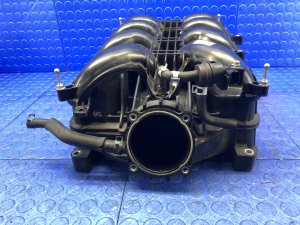
- Always replace the intake manifold gaskets when performing this repair to avoid future vacuum leaks.
- The correct OEM part number for the Bank 2 sensor is 39320-3C750.
What's Unique About the 2013-2016 Hyundai Genesis Coupe
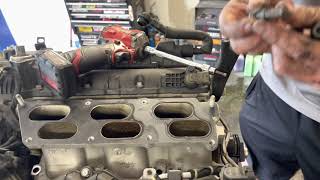
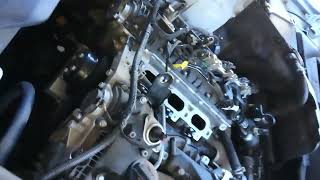
On the 3.8L Lambda V6 in the Genesis Coupe, the knock sensors are located deep in the engine valley, underneath the entire upper and lower intake manifold assembly. 🎬 Watch: 3.8L engine teardown to see the valley layout This location makes what would be a simple sensor swap on many other engines a significantly more involved and labor-intensive job. While the sensor or its wiring is the typical cause, it's crucial to note that Hyundai has issued service campaigns for other models (like Elantra, Tucson, and Veloster) to update knock sensor software for detecting internal engine problems (rod bearing failure), highlighting the system's sensitivity and importance. This specific campaign (966) does not apply to the Genesis Coupe but shows a pattern of using the knock sensor for advanced engine health monitoring.
Symptoms You May Notice
- Check Engine Light is on
- Reduced engine power and hesitation, especially during acceleration.
- Audible engine pinging or knocking sounds.
- Rough or fluctuating idle.
- Poor fuel economy
- Occasional engine stalling (in rare cases)
- Replacing spark plugs or ignition coils. While these can cause performance issues, they will typically set their own specific misfire codes (P030x) and are not the direct cause of a P0331 circuit code.
- Assuming the sensor is bad without checking the wiring first. On related platforms, rodent damage to the harness is a very frequent cause and much cheaper to fix if caught.
Most Likely Causes
- Faulty Bank 2 Knock Sensor 🔴 High Probability → Shop Ignition Knock (Detonation) Sensor The sensor is subjected to intense heat cycles deep within the engine valley, which can lead to internal failure of the piezoelectric element over time. This is the most common failure point after wiring issues have been ruled out.
How to confirm: After verifying the wiring is intact, the sensor can be tested for AC voltage generation by tapping on the engine block near the sensor while monitoring with a multimeter set to millivolts. An open circuit or no voltage signal when tapped indicates a bad sensor. Due to the high labor cost to access it, it's often replaced preventatively if the intake manifold is already removed.
Typical fix: Replace the Bank 2 (driver's side) knock sensor. The upper and lower intake manifolds must be removed to access it. It is critical to torque the new sensor's mounting bolt to the correct specification (typically 11.6 - 17.3 lb-ft) as over or under-tightening will affect its sensitivity.
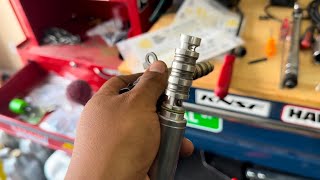
Est. part cost: $80-$130 - Damaged Wiring or Connector 🟡 Medium Probability The wiring harness runs in a hot, tight area of the engine. On similar Hyundai/Genesis platforms like the G80, this area has been noted as being highly susceptible to rodent damage, where critters chew 🎬 Watch: G80 3.8L knock sensor and rodent damage repair the soy-based wire insulation causing an open or short circuit. This should be the first inspection point.
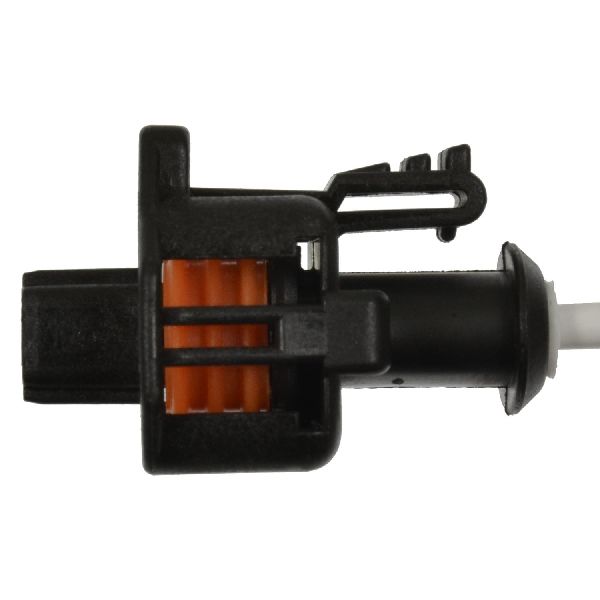
How to confirm: Visually inspect the knock sensor harness for any signs of chewing, melting, or physical damage. A borescope may be helpful. Check the connector for corrosion, moisture, or bent pins. Perform a continuity test on the wiring from the sensor connector to the ECM.
Typical fix: Repair the damaged section of the wiring harness with solder and heat-shrink tubing, then wrap in rodent-deterrent tape. If the connector is damaged, it may need to be replaced.
Est. part cost: $10-$50 - Using Incorrect Fuel Octane ⚪ Low Probability The high-compression (11.5:1) GDi engine is designed for premium fuel (91 octane or higher) to prevent pre-detonation. Using lower octane fuel can cause true engine knock that the ECM may struggle to control, potentially setting a performance-related code.
How to confirm: Check the owner's manual for the recommended fuel octane rating. If lower octane fuel is in the tank, this could be the cause.
Typical fix: Fill the tank with the correct, higher-octane fuel and see if the code returns after being cleared. An octane booster may also be used in the short term.
Est. part cost: $0
Rare But Worth Checking
- Excessive Engine Vibration or Noise: If the engine has other mechanical issues causing severe vibration or noise, like a bad motor mount, a persistent misfire, or a very loose timing chain, it could theoretically create enough 'noise' to trigger a knock sensor performance code. This is rare and would almost certainly be accompanied by other trouble codes.
- Faulty Powertrain Control Module (PCM): → Shop Engine Control Module (ECM) It is extremely rare for the PCM itself to be the cause of this code. All other possibilities, especially the sensor and wiring, should be exhaustively ruled out before considering PCM replacement.
Diagnosis Steps
- Scan the vehicle for any other stored trouble codes to check for related issues.
- Check the fuel in the vehicle. Ensure it meets the manufacturer's recommended octane rating (premium 91+).
- Perform a thorough visual inspection of the Bank 2 (driver's side) knock sensor wiring harness and connector where it is accessible. A borescope can be invaluable for checking for rodent damage under the intake manifold.
- If wiring appears intact, disconnect the sensor and check for 5 volts reference at the connector.
- Test the resistance of the knock sensor itself using a multimeter. Compare the reading to the manufacturer's specifications. If it's an open circuit (infinite resistance), the sensor is faulty.
- Alternatively, test for a small AC voltage from the sensor while tapping on the engine block near its location. No voltage indicates a dead sensor.
- If the sensor and wiring test good, the issue may be intermittent. Consider monitoring the sensor's live data on a scan tool while driving to look for signal dropouts.
- If the sensor is confirmed bad, proceed with replacing it. This requires removing the upper and lower intake manifolds for access.
- When replacing, it is highly recommended to also replace the Bank 1 sensor and the intake manifold gaskets at the same time to avoid future duplicate labor costs.
- Torque the new sensor bolt to the factory specification (11.6 - 17.3 lb-ft / 15.7 - 23.5 Nm).
- After reassembly, clear the DTC and perform a test drive to ensure the repair was successful.
Parts You'll Likely Need
- Knock Sensor (Bank 2, Left/Driver Side)
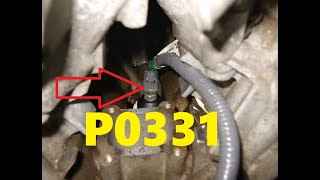
(OEM #39320-3C750)— This is the sensor that directly corresponds to the P0331 code. 🎬 Watch: Understanding P0331 code causes and fixes Internal failure due to heat and age is the most common reason for replacement after wiring issues are ruled out.
Trusted brands: Hyundai (OEM), Bosch, NTK, Beck/Arnley
OEM price range: $90-$130
Aftermarket price range: $40-$80 - Intake Manifold Gaskets (Lower)
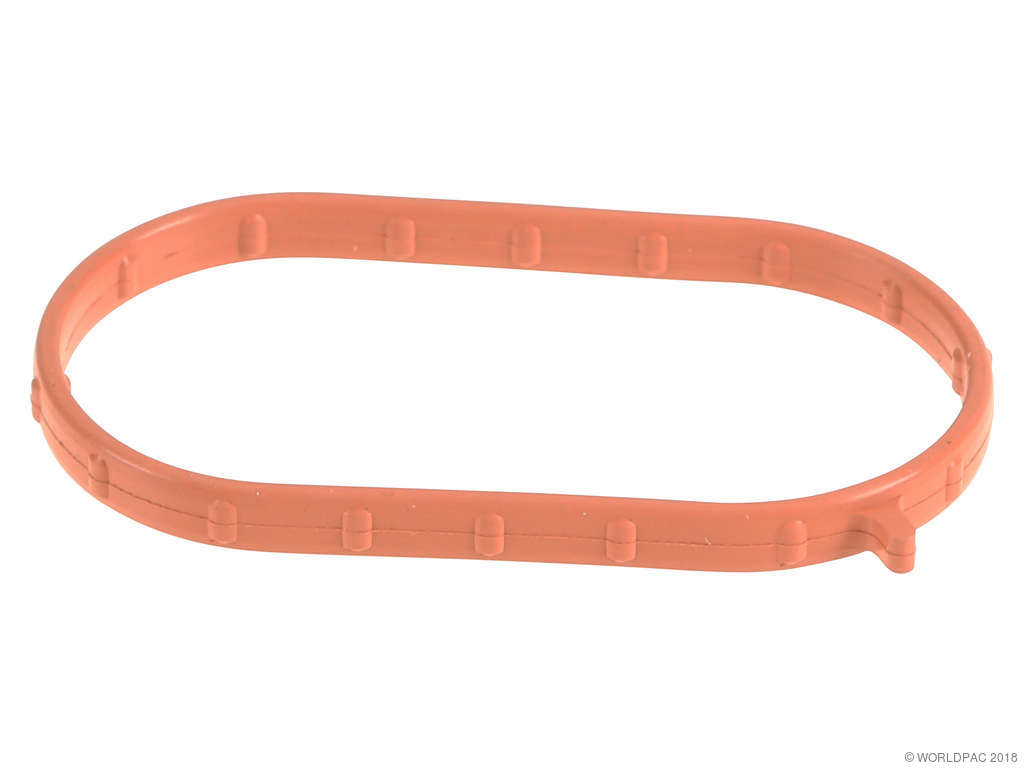
(OEM #28411-3C720)— The lower intake manifold must be removed to access the knock sensor. These gaskets are one-time use and must be replaced to prevent vacuum leaks. Two are required.
Trusted brands: Hyundai (OEM), Fel-Pro, Mahle, Beck/Arnley
OEM price range: $20-$30 each
Aftermarket price range: $10-$20 each - Intake Plenum Gasket (Upper)
(OEM #29215-3C700)— The upper intake manifold (plenum) must be removed. This gasket is also a one-time use item and critical for preventing vacuum leaks.
Trusted brands: Hyundai (OEM), Fel-Pro
OEM price range: $25-$40
Aftermarket price range: $15-$30
Related Codes That Often Appear With This One
- P0326 — This is the equivalent code for the Bank 1 (passenger side) knock sensor. Seeing both codes together could point to a systemic issue like a wiring harness problem common to both, incorrect fuel, or a software issue.
Technical Service Bulletins (TSBs) & Recalls
- TSB #21-01-023H-3 (Campaign 966): While not for the Genesis Coupe, this TSB for other Hyundai models (Elantra, Tucson, etc.) shows the manufacturer has used software updates to change how the knock detection system responds to certain vibrations, in this case to detect bearing failure and set a P1326 code.
Mechanic-Grade Diagnostic Values
- Knock Sensor AC Voltage Generation (Tapping Test) — expected: A small, fluctuating AC voltage reading in the millivolt (mV) range when the engine block near the sensor is tapped with a wrench.. Failure: No voltage reading (0 mV) or a static, unchanging voltage indicates the sensor's internal piezoelectric element is dead.
- Knock Sensor Resistance — expected: Most modern piezoelectric knock sensors like those on the Genesis Coupe will show an open circuit (infinite resistance) when tested with a standard multimeter. They do not have a testable internal resistance value.. Failure: This test is not a reliable indicator of failure for this type of sensor; the AC voltage generation test is the correct method.
- Knock Sensor Signal Voltage (Live Data) — expected: A fluctuating voltage signal, typically between 0.2V and 4.5V, that changes with engine RPM and load.. Failure: A static voltage, or a voltage that is consistently at 0V or 5V, points to a circuit or sensor fault.
Scan Tool Commands That Help
- Hyundai GDS (Global Diagnostic System): Live Data / Data Stream — Use this to monitor the 'Knock Sensor Bank 2' voltage in real-time while driving or revving the engine. It is the primary method to observe the sensor's behavior under various loads to check for signal dropouts or erratic readings before beginning physical disassembly.
Wiring & Ground Locations
- ECM Pin 80 (Knock Sensor 2 Signal) — At the main Engine Control Module connector.. This is the specific pin where the signal from the Bank 2 knock sensor arrives at the ECM. It is the endpoint for continuity testing from the sensor connector to verify the signal wire is intact.
- ECM Pin 81 (Knock Sensor Ground) — At the main Engine Control Module connector.. This is the ground reference for both knock sensors, provided by the ECM. A fault in this shared ground circuit could cause issues with both sensors (P0326 and P0331).
- Main Engine Block Ground — A ground strap connecting the rear of the engine block to the vehicle's chassis/firewall.. A poor or corroded main engine ground can introduce electrical noise and voltage discrepancies across all engine sensors, potentially causing false or erratic readings from sensitive components like the knock sensor.
Real Owner Repair Stories
- CobaltSS.net forum user (Cobalt SS with 2.0L LNF engine (Note: Not a Genesis, but a relevant example of a performance-related knock code fix)) — Intermittent P0331 code with slight power loss, especially under boost.
❌ Tried (didn't work) Adding octane booster and water remover to fuel (provided only temporary relief)., Visual inspection of wiring and sensor (all appeared normal).
✅ What actually fixed it The owner, noting that others with similar modifications experienced minor knock, replaced the stock spark plugs with one-step-colder NGK Iridium plugs (model LTR6IX-11). This resolved the intermittent knock and the P0331 code did not return. - Hyundai Owner Report (NHTSA ODI #11587348) — An owner reported that while driving at approximately 35 mph, the Check Engine Light came on for a P0331 Knock Sensor fault. Although the light was cleared, it returned after driving only 14 miles, highlighting the persistent nature of circuit-related knock sensor codes.
Model Year Variations Within This Range
- 2013-2016: There are no significant documented variations in the knock sensor part number, location, or diagnostic procedure for the 3.8L GDi engine within the 2013-2016 (BK2) generation. The same OEM part number (39320-3C750) applies to all years in this range.
Diagnostic Flowchart
Other Known Issues on This Vehicle
Issues unrelated to this code that are worth knowing about as an owner of this generation:
- Automatic Transmission Issues 🟠 Medium — Fairly common on the 8-speed automatic. Owners report harsh shifting, slipping, or complete failure, sometimes requiring replacement. (Ref: TSB 14-AT-015 addresses inhibitor switch codes P0705/P0706.)
- Timing Chain Rattle / Tensioner Wear 🟠 Medium — A startup rattle that lasts for a few seconds is noted by many owners. While not always indicating imminent failure, it suggests wear in the timing chain tensioners or guides over time.
- GDi Carbon Buildup 🟡 Low — Common to all Gasoline Direct Injection (GDi) engines, carbon deposits can build up on the back of intake valves over 50,000-80,000 miles, potentially causing rough idle or reduced performance.
- Manual Transmission 2nd Gear Lockout/Grind 🟡 Low — Some owners of manual transmission models report difficulty shifting into 2nd gear, especially when cold. Often addressed with upgraded transmission mounts and shifter bushings.
- Interior/Exterior Cosmetic Finish Flaking 🟡 Low — Common complaint of the clear coat on interior 'chrome' plastic pieces (steering wheel, door handles) and exterior paint flaking or chipping prematurely.
Used vs. New Parts: Buying Guide for This Vehicle
When a used part is the smart pick: For this specific repair, using a used knock sensor is NOT recommended. The part is relatively inexpensive compared to the significant labor required to access it. The risk of a used sensor failing prematurely far outweighs the small cost savings.
What to inspect on the donor part:
- Not applicable, as used sensors are not advised.
OEM-only on this vehicle (don't cheap out):
- Knock Sensor: While high-quality aftermarket brands like Bosch or NTK are generally reliable, using an OEM Hyundai sensor is the safest choice to ensure correct sensitivity and avoid repeat labor.
- Intake Manifold Gaskets: Always use new, high-quality gaskets (OEM, Fel-Pro, Mahle) to prevent vacuum leaks, which can cause their own performance issues.
Aftermarket brands forum-validated for this vehicle:
- Bosch
- NTK (NGK)
- Beck/Arnley
Brands owners have reported issues with on this vehicle:
- No-name, unbranded sensors from online marketplaces should be avoided due to inconsistent quality control and a high risk of premature failure or incorrect sensitivity, leading to a repeat of this labor-intensive job.
Real Owner Stories
Aggregated from forums and TSBs cited above. Mileages and costs reflect what owners reported in those sources.
2016 Hyundai Genesis Coupe 3.8L R-Spec
Symptoms: Owner recently purchased the vehicle and encountered a P0331 code; sought advice on sensor location and diagnostic steps.
What fixed it: Diagnostic advice provided included checking for rodent damage and verifying sensor resistance/voltage.
Source hint: reddit.com/r/genesiscoupe - Thread 'Knock Sensor 2 P0331' (Jul 8, 2024)
2016 Hyundai Genesis Coupe 3.8L
Symptoms: Owner questioned if aftermarket modifications like a catch can or clutch issues were causing the P0331 code.
What fixed it: Initial diagnosis focused on identifying if external vibrations or modifications were interfering with the knock sensor signal.
Source hint: reddit.com/r/genesiscoupe - Thread 'Catch can or clutch causing check engine light and code P0331?' (Jul 9, 2024)
Related OBD-II Codes
Frequently Asked Questions
Does TSB #21-01-023H-3 apply to my 2013-2016 Hyundai Genesis Coupe 3.8L?
Is it true that rodents are a common cause for P0331 on the Genesis 3.8L platform?
Can using regular 87 octane fuel trigger a P0331 code on my 3.8L GDi engine?
Where is the Bank 2 knock sensor located on the 3.8L Lambda V6?
What is the specific torque specification for the knock sensor bolt on this vehicle?
Should I replace both knock sensors if only Bank 2 is showing a P0331 code?
Helpful Videos
Used OEM Parts in Stock
New Aftermarket Parts Available


The information in this article is provided for general reference and educational purposes only. Vehicle specifications, procedures, and part compatibility can vary by production date, trim level, and region. Always consult your vehicle's factory service manual and verify part numbers before purchasing or performing repairs. Safety-critical components such as airbags, seat belts, and braking systems should be installed by a qualified professional.
- Hyundai Genesis Coupe:
- 🧭 Diagnostic Flowchart
- 🎬 Helpful Videos
- 🛍️ Shop This Part
- What's Unique About the 2013-2016 Hyundai Genesis Coupe
- Symptoms You May Notice
- Most Likely Causes
- Rare But Worth Checking
- Diagnosis Steps
- Parts You'll Likely Need
- Related Codes That Often Appear With This One
- Technical Service Bulletins (TSBs) & Recalls
- Mechanic-Grade Diagnostic Values
- Scan Tool Commands That Help
- Wiring & Ground Locations
- Real Owner Repair Stories
- Model Year Variations Within This Range
- Other Known Issues on This Vehicle
- Used vs. New Parts: Buying Guide for This Vehicle
- Real Owner Stories
- 2016 Hyundai Genesis Coupe 3.8L R-Spec
- 2016 Hyundai Genesis Coupe 3.8L
- Related OBD-II Codes
- Frequently Asked Questions
- 🎟️ Get 5% Off