

P0332 on 2019-2025 Audi A8: Knock Sensor 2 Circuit Low Causes and Fixes
P0332 on a 2019-2025 Audi A8 with the 3.0L V6 TFSI (EA839) engine indicates a fault in the Bank 2 (passenger side in US) knock sensor circuit. The most common cause is a failed knock sensor, followed by wiring issues. Replacement is labor-intensive as the sensors are located in the engine valley under the supercharger/intake manifold, making it a 4-6 hour job.
- P0332 on a 2019-2025 Audi A8 points to a problem with the knock sensor on Bank 2 (the passenger side of the engine in the US).
- The most common fix is replacing the faulty knock sensor, but the wiring should always be checked for damage first.
- This is not a simple DIY repair. The location of the sensors under the intake manifold requires significant labor and specialized knowledge, making professional service highly recommended.
- Due to the high labor cost, it is a common best practice to replace both knock sensors (Bank 1 and Bank 2) at the same time, along with the intake manifold gaskets.
What's Unique About the 2019-2025 Audi A8
For the Audi A8 (D5 generation) with the 3.0L V6 TFSI engine (engine code EA839), the knock sensors are located deep in the engine valley, underneath the supercharger and intake manifold assembly. This location makes them susceptible to heat-related failures over time but also makes replacement a significantly more complex and labor-intensive job compared to engines where the sensors are externally accessible. Bank 2 corresponds to the passenger side of the engine in North American vehicles. The provided NHTSA TSB #TSB_2081342_1 specifically groups P0332 with other knock sensor codes for V6 TFSI engines, indicating this is a recognized issue area for the manufacturer.
Diagnostic Flowchart
Tap your situation to follow the diagnostic path that matches what you're seeing on this vehicle.
Symptoms You May Notice
- Check Engine Light is on
- Reduced engine performance and acceleration
- Hesitation or stumbling during acceleration, sometimes described as 'rough' running
- Decreased fuel economy
- Audible engine pinging or knocking noises (less common, as the ECM may default to a safe timing map)
- Irregular RPM or drivability problems
- Replacing spark plugs or ignition coils, hoping to solve a performance issue without diagnosing the stored code.
- Replacing the sensor without first thoroughly checking the wiring harness for damage, which can lead to the problem recurring.
- Replacing only one knock sensor. Given the labor cost to access them, replacing both is considered best practice to avoid a similar failure of the other sensor in the near future.
Most Likely Causes
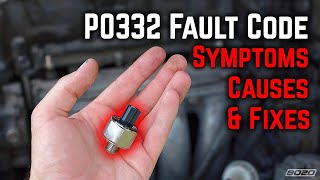
- Faulty Knock Sensor (Bank 2) 🔴 High Probability → Shop Ignition Knock (Detonation) Sensor The sensor is located in a high-heat engine valley under the supercharger, which can lead to premature failure of its internal piezoelectric components over many heat cycles. The TSB for V6 engines suggests this is a known failure point.
How to confirm: After confirming wiring is intact, the most definitive test is to replace the sensor. A technician can also use an oscilloscope or a scan tool's live data to check the sensor's signal output during engine operation; a flatline or near-zero voltage indicates failure.
Typical fix: Replace the knock sensor. Due to the significant labor involved in accessing the sensors, it is highly recommended to replace both Bank 1 and Bank 2 sensors, along with the wiring harness, at the same time.
Est. part cost: $70-$150 per sensor - Wiring or Connector Issue 🟡 Medium Probability Engine bay heat can make wiring and plastic connectors brittle over time. Rodents can also chew on the soy-based wiring insulation. The harness is routed in a tight, hot valley, making it susceptible to damage. A failed connector ground is a documented cause.
How to confirm: Visually inspect the wiring harness leading to the knock sensor for any signs of damage, melting, or corrosion. Use a multimeter to check for continuity and for a short to ground in the circuit between the ECM and the sensor connector.
Typical fix: Repair the damaged section of the wiring harness or replace the entire knock sensor sub-harness. If the connector is damaged, a new pigtail can be spliced in.
Est. part cost: $20-$100 for repair materials or a new harness - Improperly Torqued Sensor ⚪ Low Probability This is most likely to occur after a previous repair. Knock sensors are sensitive and must be torqued to a specific value to function correctly. A service manual for a similar Audi engine explicitly states that they must be installed with 20Nm to function properly.
How to confirm: This can only be checked by accessing the sensor and verifying its mounting bolt is torqued to the manufacturer specification of 20 Nm (approx. 15 ft-lbs).
Typical fix: Correctly torque the knock sensor mounting bolt to 20 Nm. Ensure the contact surface on the engine block is clean before installation.
Est. part cost: $0
Rare But Worth Checking
- Faulty Engine Control Module (ECM): This is extremely rare. The ECM should only be considered after all other possibilities, including the sensor, its connector, and the entire circuit, have been exhaustively tested and ruled out.
Diagnosis Steps
- Read the code using an OBD-II scanner to confirm P0332 (VAG code 16716) is present. Check for any other accompanying codes.
- Visually inspect the area around the engine valley if possible, looking for obvious signs of rodent damage to wiring harnesses.
- Using a diagnostic tool with live data (like VCDS Advanced Measuring Values), monitor the voltage from Knock Sensor 2 (G66). It should show a low, fluctuating voltage with engine RPM. A reading that is flat or near zero volts points to a circuit or sensor issue.
- If access is possible, inspect the knock sensor connector for corrosion or damage. The Bank 2 sensor connector is often a different color (e.g., brown) than the Bank 1 sensor (e.g., green) for identification.
- Test the wiring circuit between the ECM and the knock sensor connector for continuity and ensure there is no short to ground. A known failure point is a bad ground at the connector itself.
- If the wiring and connector are confirmed to be good, the knock sensor itself is the most likely culprit and should be replaced.
- Before installing a new sensor, ensure the mounting surface on the engine block is clean and free of debris or corrosion.
Parts You'll Likely Need
- Knock Sensor
(OEM #06E905376C)— This is the primary component that fails, triggering the P0332 code. Due to its location and the high-heat environment, the sensor's internal components degrade over time. It is often green.
Trusted brands: Bosch, NTK, Genuine Audi
OEM price range: $120-$180
Aftermarket price range: $70-$110 - Intake Manifold Gaskets
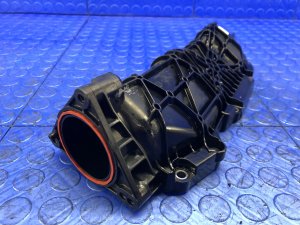
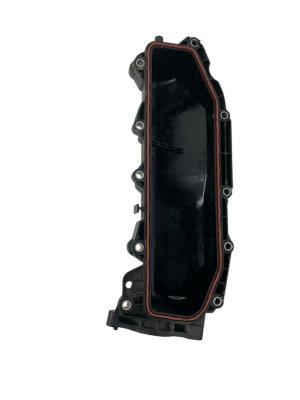
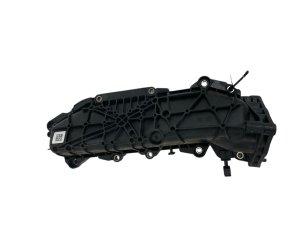
(OEM #06M133198B)— These are single-use gaskets that must be replaced anytime the intake manifold or supercharger is removed to access the knock sensors.
Trusted brands: Victor Reinz, Elring, Genuine Audi
OEM price range: $50-$80
Aftermarket price range: $30-$50 - Knock Sensor Wiring Harness — The wiring harness that connects both knock sensors can become brittle and fail from heat. Since it must be disconnected during the job, and given the high labor cost, replacing it as a preventative measure is wise.
Trusted brands: Genuine Audi
OEM price range: $80-$120
Aftermarket price range: $50-$80
Related Codes That Often Appear With This One
- P0327 — Knock Sensor 1 Circuit Low (Bank 1). This often appears if the wiring harness shared by both sensors is damaged or if both sensors are failing due to age and heat.
- P0333 — Knock Sensor 2 Circuit High. A high input code for the same sensor could indicate an intermittent wiring short to power or a different type of sensor failure.
- P0300-P0306 — Misfire codes. If the ECM cannot properly adjust timing due to the faulty knock sensor, it can lead to combustion instability and trigger misfire codes for one or more cylinders.
Technical Service Bulletins (TSBs) & Recalls
- TSB_2081342_1: Mentions DTCs P0327, P0332, P0328, and P0333 in relation to a Drive System Malfunction on V6 TFSI engines, confirming it's a known fault pattern.
Platform-Specific Known Issues
- A Technical Service Bulletin (TSB #TSB_2081342_1) exists for V6 TFSI engines, which includes the 2019-2025 A8, for knock sensor-related DTCs including P0332, indicating this is a recognized issue by the manufacturer.
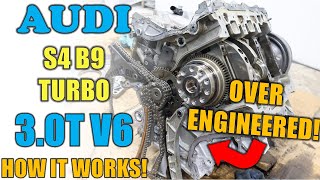
- The EA839 engine family has known issues with rocker arm failures in early model years (approx. 2018-2020), though this is 🎬 Watch: A deep dive into the EA839 engine's internal design. generally unrelated to a P0332 code, it is worth noting for overall engine health context.
Mechanic-Grade Diagnostic Values
- Knock Sensor Voltage (Live Data) — expected: A fluctuating voltage, typically between 0V and 5V, that changes with engine RPM and load.. Failure: A constant reading near 0V or a flat line that does not change with engine RPM points to an open circuit, a short to ground, or a dead sensor.
- Knock Sensor Circuit Wire Resistance — expected: Maximum of 1.5 Ω on the signal and ground wires between the sensor connector and the ECM connector.. Failure: A reading higher than 1.5 Ω indicates excessive resistance in the wire. An 'OL' or infinite reading indicates an open circuit (broken wire).
- Engine-to-Chassis Ground Strap Voltage Drop — expected: Less than 0.1V DC (100mV) when measured between the engine block and the negative battery terminal with the engine running.. Failure: A voltage reading higher than 0.1V indicates a poor ground connection, which can introduce electrical noise and cause sensor reading errors.
Scan Tool Commands That Help
- VCDS (VAG-COM): Engine -> Measuring Blocks -> Group 028: Test knock sensor — This is a guided test to check the functionality of the knock sensor system. The scan tool will monitor the sensor as the engine is operated under specific conditions (short trip). The result will display as 'Sys. OK' or 'Sys. not OK'. Note: On newer UDS controllers, this may be found under Advanced Measuring Values.
Wiring & Ground Locations
- Main Engine-to-Chassis Ground Strap — Typically a thick, braided wire connecting the engine block or transmission case to the vehicle's frame rail, often near one of the engine mounts.. This strap provides the primary ground reference for the entire engine and its sensors. A corroded or loose connection here can create an unstable ground, leading to incorrect voltage readings from sensitive components like the knock sensor, potentially causing a P0332 'Circuit Low' fault.
Real Owner Repair Stories
- AudiWorld Forum User Diagnosis Pattern (Audi V8 (similar repair logic to V6)) — Persistent 'Knock Sensor Signal Too Low' code (P0327/P0332), reduced power, and poor MPG, even after replacing the knock sensor itself.
❌ Tried (didn't work) Replacing the indicated knock sensor (sometimes twice)., Clearing the code, only for it to return quickly.
✅ What actually fixed it The problem was ultimately determined to be in the wiring harness leading to the sensor. After replacing the sensor failed to resolve the code, testing the harness revealed a lack of continuity or a short. Repairing or replacing the engine valley harness resolved the fault permanently.
Helpful Videos
We Have This Part in Stock

The information in this article is provided for general reference and educational purposes only. Vehicle specifications, procedures, and part compatibility can vary by production date, trim level, and region. Always consult your vehicle's factory service manual and verify part numbers before purchasing or performing repairs. Safety-critical components such as airbags, seat belts, and braking systems should be installed by a qualified professional.
- Audi A8:
- 🧭 Diagnostic Flowchart
- 🎬 Helpful Videos
- 🛍️ Shop This Part
- What's Unique About the 2019-2025 Audi A8
- Symptoms You May Notice
- Most Likely Causes
- Rare But Worth Checking
- Diagnosis Steps
- Parts You'll Likely Need
- Related Codes That Often Appear With This One
- Technical Service Bulletins (TSBs) & Recalls
- Platform-Specific Known Issues
- Mechanic-Grade Diagnostic Values
- Scan Tool Commands That Help
- Wiring & Ground Locations
- Real Owner Repair Stories
- 🎟️ Get 5% Off