

P0332 on 2015-2017 Subaru WRX: Knock Sensor Circuit Low Causes and Fixes
On a 2015-2017 Subaru WRX, code P0332 is almost always caused by a failed Bank 2 knock sensor. Subaru issued a Technical Service Bulletin (TSB #07-133-18R) for a redesigned, more durable sensor. Replacing the sensor (Part #22060AA180) and torquing it to 17.7 ft-lbs is the most common fix, costing around $90 for the OEM part.
- P0332 on a 2015-2017 WRX is a known issue with a documented fix from Subaru (TSB 07-133-18R).
- The most likely cause is a failed Bank 2 (driver's side) knock sensor, often triggered by water getting into the connector after rain or a car wash.
- Always replace the faulty sensor with the updated OEM part number 22060AA180 for a permanent fix.
- The retaining bolt torque of 17.7 ft-lbs is critical for proper sensor function.
- This is a common DIY repair that can save significant money over dealer quotes.
What's Unique About the 2015-2017 Subaru WRX
The 2015-2017 WRX with the FA20F engine is known for this specific issue due to the design of the original knock sensor. Subaru acknowledged this by releasing a Technical Service Bulletin (TSB #07-133-18R) and an updated, more durable knock sensor (Part #22060AA180) to improve heat resistance and prevent premature failure. This makes a faulty sensor the most probable cause, rather than a wiring or ECM issue. The issue is also common on the 2014-2018 Forester XT, which shares the same engine.
Diagnostic Flowchart
Tap your situation to follow the diagnostic path that matches what you're seeing on this vehicle.
Symptoms You May Notice
- Check Engine Light is on
- Reduced engine power and acceleration, sometimes described as 'hitting a wall'
- Engine hesitation or stumbling
- Decreased fuel economy
- Audible engine pinging or knocking noises (in rare cases)
- Replacing the wrong knock sensor (Bank 1 instead of Bank 2).
- Assuming a major engine problem exists before checking the sensor and its wiring, especially given the known TSB.
- Over-tightening the knock sensor bolt, which can damage the new sensor or cause incorrect readings.
Most Likely Causes
- Failed Knock Sensor (Bank 2) 🔴 High Probability → Shop Ignition Knock (Detonation) Sensor Subaru issued TSB #07-133-18R regarding the original sensor's lack of durability and heat resistance. The updated part (22060AA180) was designed to fix this known weakness by improving its sealing and heat resistance.
How to confirm: After checking wiring, replacing the sensor is the most common diagnostic step. The Bank 2 sensor is located on the driver's side of the engine block, under the throttle body area. A resistance test on the old sensor may not be conclusive, as some owners report the old sensor tested within spec but was still faulty.
Typical fix: Replace the Bank 2 knock sensor with the redesigned OEM part (22060AA180). The retaining bolt must be torqued to exactly 17.7 ft-lbs (24 Nm). Do not use anti-seize compound on the bolt threads.
Est. part cost: $80-$110 - Wiring or Connector Issue 🟡 Medium Probability The sensor's location is directly under the hood scoop's drainage path, and water ingress into the connector has been frequently reported by owners, especially after heavy rain or car washes. This is a very common trigger for the P0332 code.
How to confirm: Visually inspect the knock sensor connector and nearby wiring for corrosion, damage, or loose connections. The connector is located near the throttle body. The code often appears immediately after starting the car following a period of heavy rain.
Typical fix: Disconnect the connector, clean the terminals with electrical contact cleaner, allow it to dry completely, and apply dielectric grease to the seal before reconnecting. Repair any damaged wires.
Est. part cost: $5-$20 - Faulty Engine Control Module (ECM) ⚪ Low Probability
How to confirm: This is diagnosed by exclusion. If a new, known-good sensor and verified wiring do not resolve the code, the ECM may be at fault. This requires professional diagnosis.
Typical fix: Repair or replace the ECM.
Est. part cost: $500-$1500
Rare But Worth Checking
- Poor Engine Ground Connection:
Diagnosis Steps
- Read the code with an OBD-II scanner to confirm P0332 is present.
- Disconnect the battery.
- Remove the top-mount intercooler to gain access to the throttle body area.
- Locate the Bank 2 knock sensor on the driver's side of the engine block. It is situated near the throttle body.
- Inspect the sensor's electrical connector for moisture, corrosion, or damage. Clean with electrical contact cleaner and apply dielectric grease if needed. Clear codes and test before proceeding.
- Inspect the wiring leading to the sensor for any signs of fraying, melting, or breaks.
- If wiring and connector are good, the sensor has likely failed. Use a long extension and a 10mm deep socket to remove the retaining bolt.
- Install the new OEM sensor (Part # 22060AA180). The sensor's orientation matters; the pigtail should be angled correctly per service manual diagrams (approx. 47-62 degrees from engine centerline).
- Using a torque wrench, tighten the retaining bolt to exactly 17.7 ft-lbs (24 Nm). Do not overtighten.
- Reassemble all components, reconnect the battery, and clear the trouble code with the scanner.
- Start the vehicle and test drive to ensure the code does not return.
Parts You'll Likely Need
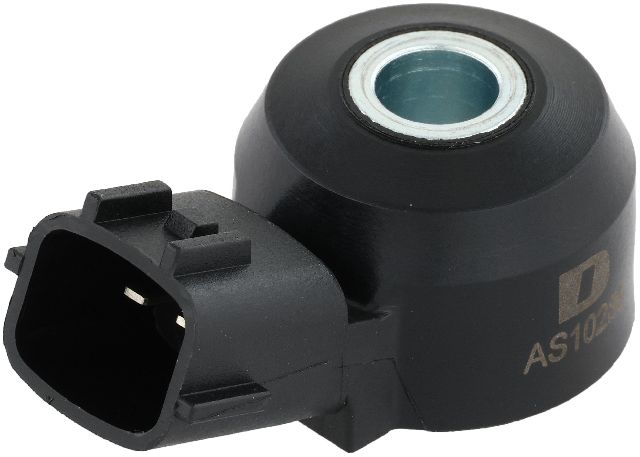
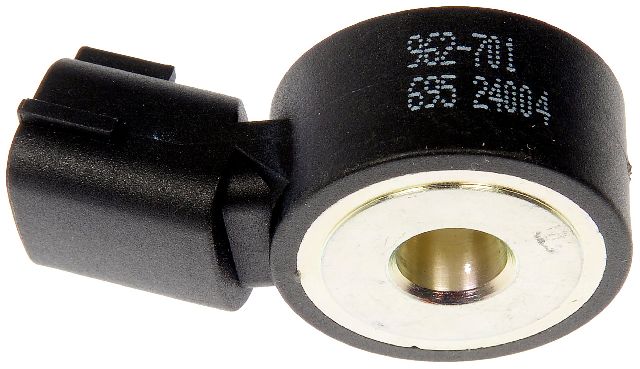
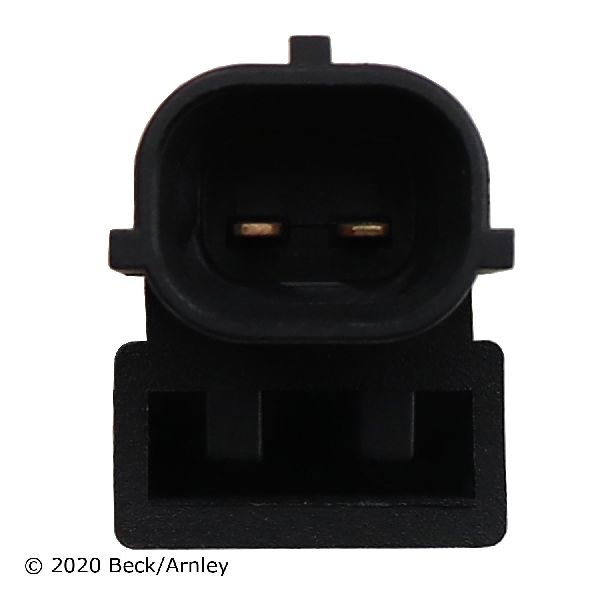
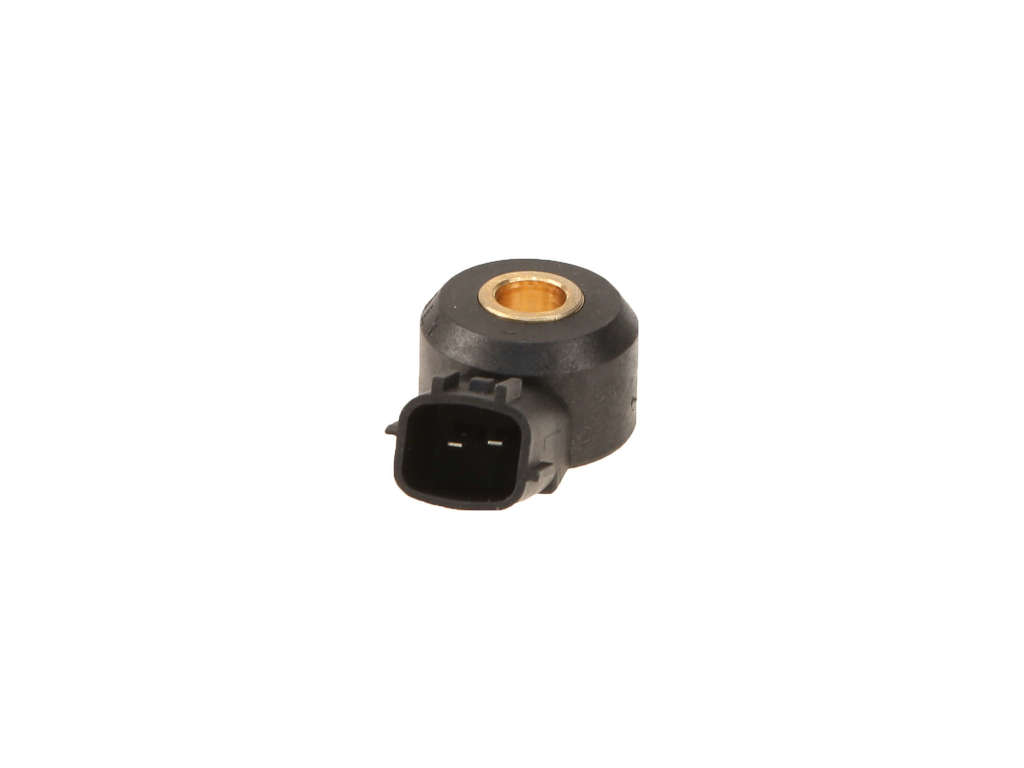
- Knock Sensor
(OEM #22060AA180)— This is the updated, more durable part specified by Subaru in TSB #07-133-18R to fix the root cause of code P0332 on this platform. It replaces the original, failure-prone part (22060AA160).
Trusted brands: Subaru (Genuine OEM)
OEM price range: $80-$110
Aftermarket price range: $40-$70
Related Codes That Often Appear With This One
- P0333 — P0333 is "Knock Sensor 2 Circuit High Input". It relates to the same sensor and can appear if the electrical fault is intermittent or changes characteristics, such as from water intrusion.
- P0327 / P0328 — These are the low and high input codes for the Bank 1 (passenger side) knock sensor. If seen alongside P0332, it could point to a shared wiring harness issue or a systemic problem like water affecting both connectors. The TSB covers all four codes.
Technical Service Bulletins (TSBs) & Recalls
- 07-133-18R: This revised TSB announces a design change for the knock sensor to improve durability and heat resistance. It applies to codes P0327, P0328, P0332, and P0333 for the 2015-2017 WRX and 2014-2017 Forester XT. It specifies the updated part number 22060AA180 and a torque spec of 17.7 ft-lbs (24 Nm) for the retaining bolt.
Platform-Specific Known Issues
- Subaru Technical Service Bulletin #07-133-18R directly addresses this code, stating that the original knock sensor may fail due to heat and durability issues. It recommends replacement with an updated part (22060AA180).
- A common owner experience is the P0332 code appearing after heavy rainfall or a car wash, pointing to water getting into the sensor connector which is located under the hood scoop.
Mechanic-Grade Diagnostic Values
- Knock Sensor Internal Resistance — expected: 530 kΩ to 580 kΩ. Some general Subaru service data suggests a wider range of 400 kΩ to 700 kΩ.. Failure: A reading of 0 ohms (short), infinity/OL (open circuit), or significantly outside the specified range. However, a sensor can still be faulty even if it tests within this range.
- Harness Voltage (at sensor connector, Key On, Engine Off) — expected: ~5 Volts DC reference signal from the ECM.. Failure: A reading near 0V indicates an open wire or ECM fault. A reading significantly different from 5V suggests a wiring issue.
- Bias Voltage (sensor connected, Key On, Engine Off) — expected: The 5V reference from the ECM should be pulled down by the sensor's internal resistance to a lower voltage, typically around 2.5V.. Failure: If the voltage remains at 5V, the sensor is open. If it drops to 0V, the sensor or wiring is shorted to ground. Wiggling the connector and watching for fluctuations on a scope can reveal intermittent connections.
Wiring & Ground Locations
- E14 — This is the wiring diagram identifier for the knock sensor connector itself.. Helps a technician locate the correct connector and pinouts on a factory wiring diagram for continuity and voltage checks between the sensor and the ECM.
- Engine Block Ground — The knock sensor grounds through its mounting base to the engine block.. Corrosion or debris between the sensor's metal base and the engine block can create a poor ground, leading to a 'low input' signal. The mounting surface must be clean for the sensor to function correctly.
Real Owner Repair Stories
- YouTube - 'How to replace Bank 2 Knock Sensor (code P0332) on a 2015+ WRX' (2015+ Subaru WRX) — Check Engine Light with code P0332 appeared after a heavy downpour.
❌ Tried (didn't work) Dealer diagnosis quoted $995 for diagnosis and another $800 for repair.
✅ What actually fixed it The owner performed a DIY replacement of the Bank 2 knock sensor with the updated OEM part for about $90. The owner noted that while he tested the old sensor's resistance and it seemed okay, the TSB and common failure pattern pointed to the sensor itself being the issue, likely due to cracking or water intrusion not detectable by a simple resistance test.
OEM Part Supersession History
22060AA160→22060AA180— The original sensor was prone to premature failure due to lack of durability and heat resistance. The new part is a redesigned, more robust sensor to address these issues.
Model Year Variations Within This Range
- 2015-2017: The TSB for the faulty knock sensor applies to 2015-2017 WRX models built before a specific VIN (H9830255), indicating a production change was made during the 2017 model year to the updated sensor. Vehicles built after this VIN should already have the more durable sensor from the factory.
Helpful Videos
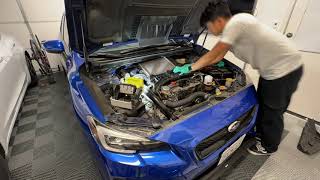
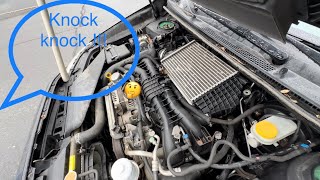
We Have This Part in Stock


The information in this article is provided for general reference and educational purposes only. Vehicle specifications, procedures, and part compatibility can vary by production date, trim level, and region. Always consult your vehicle's factory service manual and verify part numbers before purchasing or performing repairs. Safety-critical components such as airbags, seat belts, and braking systems should be installed by a qualified professional.
- Subaru WRX:
- 🧭 Diagnostic Flowchart
- 🎬 Helpful Videos
- 🛍️ Shop This Part
- What's Unique About the 2015-2017 Subaru WRX
- Symptoms You May Notice
- Most Likely Causes
- Rare But Worth Checking
- Diagnosis Steps
- Parts You'll Likely Need
- Related Codes That Often Appear With This One
- Technical Service Bulletins (TSBs) & Recalls
- Platform-Specific Known Issues
- Mechanic-Grade Diagnostic Values
- Wiring & Ground Locations
- Real Owner Repair Stories
- OEM Part Supersession History
- Model Year Variations Within This Range
- 🎟️ Get 5% Off