

P0333 on 2018-2024 Audi S5: Knock Sensor 2 Circuit High Causes and Fixes
P0333 on a B9/B9.5 Audi S5 almost always points to a faulty knock sensor on Bank 2 (the driver's side of the engine). Replacing the sensor is the most common fix. A 'Circuit High' code indicates the sensor is sending a voltage signal that is unexpectedly high, pointing to an electrical fault, not necessarily engine knock. The correct OEM part is 06M905377G, and it must be torqued to 20 Nm (15 ft-lbs).
- P0333 on your S5 points to an electrical fault in the knock sensor circuit for the driver's side of the engine (Bank 2).
- The most probable cause is a failed knock sensor due to heat exposure, followed by a wiring issue.
- Do not immediately assume the engine has a mechanical problem; this code specifically indicates an electrical circuit fault.
- Repair requires removing the intake manifold and is labor-intensive. It is highly recommended to replace both knock sensors at the same time.
- The knock sensor bolt must be torqued to exactly 20 Nm (15 ft-lbs) for correct operation.
What's Unique About the 2018-2024 Audi S5
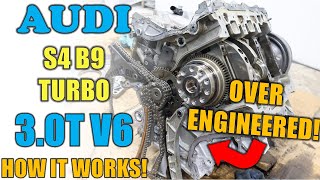
The 2018-2024 Audi S5 uses the EA839 3.0L turbocharged V6 engine. 🎬 Watch: See a complete teardown of the EA839 V6 engine. While a specific TSB for P0333 on this exact engine is not publicly detailed, Audi has a history of addressing over-sensitive knock sensor diagnostics with software updates on other engines, as seen in TSB 2048391/4 for a V8 model. This establishes a pattern where the knock sensor system can be prone to flagging faults. However, for the B9 platform, owner experiences and mechanic reports more frequently point to a hardware failure (the sensor or wiring) rather than a software sensitivity issue. The sensors are located deep in the 'V' of the engine, under the intake manifold, making replacement a labor-intensive job.
Diagnostic Flowchart
Tap your situation to follow the diagnostic path that matches what you're seeing on this vehicle.
Generation note: The 2018-2024 year range covers the Audi B9 and B9.5 generations of the S5. Both use the same EA839 3.0L V6 TFSI engine, so the causes and fixes for P0333 are identical across these models. The B9.5 (2020+) models feature a mild-hybrid system and a different ECU, but this does not appear to alter the diagnosis for P0333.
Symptoms You May Notice
- Check Engine Light is on
- "Drive System Malfunction" message on the dashboard
- Reduced engine power and sluggish acceleration (limp mode)
- Hesitation or delayed gear shifts, with the engine holding revs higher than usual
- Audible engine pinging or knocking, especially under load
- Decreased fuel economy
- Rough or uneven idle
- Replacing spark plugs or ignition coils. While these can cause misfires, they do not directly cause a 'Circuit High' code for the knock sensor.
- Using a lower octane fuel. While low octane fuel can cause real engine knock, the P0333 code specifically points to an electrical circuit problem (high voltage), not the presence of knock itself.
Most Likely Causes
- Failed Knock Sensor (Bank 2) 🔴 High Probability → Shop Ignition Knock (Detonation) Sensor The sensor's location in the hot 'V' of the engine exposes it to extreme heat cycles. The internal piezoelectric crystal can fail or crack, leading to it generating an incorrect high voltage signal. This is the most common point of failure for this code on the EA839.
How to confirm: After checking wiring, the sensor itself is the prime suspect. Testing resistance can be inconclusive for piezoelectric sensors. The definitive test is replacement, especially given the labor to access it.
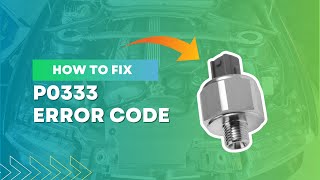
Typical fix: Replace the Bank 2 knock sensor. 🎬 Watch: Diagnostic walkthrough for the P0333 knock sensor code. Bank 2 is on the driver's side (left side) of the engine for this longitudinally mounted V6. Due to the labor involved in removing the intake manifold, many owners and shops elect to replace both Bank 1 and Bank 2 sensors at the same time.
Est. part cost: $70-$180 - Wiring or Connector Issue 🟡 Medium Probability The wiring harness runs through the hot engine valley and is susceptible to heat-related degradation. Wires can become brittle and crack, or the plastic connector can become fragile. Rodent damage is also a known issue in this area.
How to confirm: Visually inspect the wiring harness leading to the Bank 2 knock sensor for any signs of damage, melting, or corrosion. Check the connector for a secure fit and clean contacts. Use a multimeter to check for continuity and shorts to power or ground in the circuit.
Typical fix: Repair the damaged section of the wiring harness or clean/replace the connector. This can sometimes be done without full sensor replacement if the damage is accessible. When repairing terminals, only gold-plated replacements should be used.
Est. part cost: $10-$60
Rare But Worth Checking
- Incorrectly Torqued or Loose Knock Sensor: → Shop Ignition Knock (Detonation) Sensor The knock sensor must be torqued to a specific value to function correctly. The official torque spec for the EA839 knock sensor is 20 Nm (approx. 15 ft-lbs). If it's too tight, it can become over-sensitive and generate false high voltage signals; if too loose, it won't detect knock correctly. This is a critical step if the sensor was recently replaced.
- Powertrain Control Module (PCM/ECM) Fault: → Shop Engine Control Module (ECM) This is the least likely cause. The internal circuitry of the ECM that processes the knock sensor signal can fail, but all other possibilities must be exhausted before condemning the ECM.
- Internal Engine Mechanical Problems: Extremely rare if P0333 is the only code. Severe internal issues like piston slap or bearing failure could theoretically create vibrations that might cause an erratic signal, but this would almost certainly be accompanied by other serious codes (like misfires) and audible mechanical noise.
Diagnosis Steps
- Read the code using an OBD-II scanner and confirm P0333 is present. Note any other codes.
- Identify Bank 2. On the 2018-2024 Audi S5 3.0L V6, Bank 2 is the driver's side of the engine.
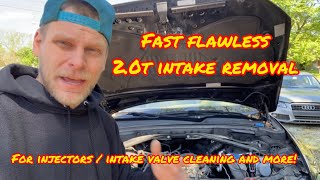
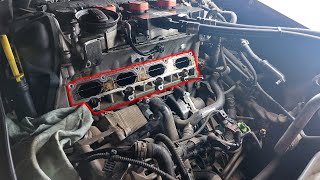
- Access the knock sensors. This requires removing the intake manifold, which is a multi-hour job. 🎬 See this guide on how to remove the intake manifold.
- Once accessed, visually inspect the Bank 2 knock sensor, its connector, and the surrounding wiring harness for obvious damage, melting, corrosion, or signs of rodents.
- If visual inspection passes, disconnect the sensor. Test the harness connector for voltage. A 'Circuit High' code could be caused by a short to voltage in the signal wire. Check for continuity to ground and between the signal and ground wires.
- If the wiring is confirmed to be good, the knock sensor itself is the culprit.
- Replace the Bank 2 knock sensor. It is highly recommended to replace the Bank 1 sensor at the same time to avoid a future repair.
- CRITICAL: Torque the new knock sensor bolt to exactly 20 Nm (15 ft-lbs). Do not use thread locker. Over-torquing can lead to false signals.
- Reassemble all components, clear the trouble codes, and perform a test drive to ensure the code does not return.
- If the code persists after replacing the sensor and verifying the wiring, the ECM may be at fault, which requires advanced diagnostics.
Parts You'll Likely Need
- Knock Sensor
(OEM #06M905377G)— This is the most common failure point for a P0333 code. The original part 06M905377 was superseded by 06M905377B and subsequently 06M905377G, indicating revisions to improve reliability.
Trusted brands: Bosch, Genuine Audi/VW
OEM price range: $130-$180
Aftermarket price range: $70-$110 - Intake Manifold Gaskets — These are single-use gaskets that must be replaced anytime the intake manifold is removed to access the knock sensors.
Trusted brands: Elring, Victor Reinz, Genuine Audi/VW
OEM price range: $40-$60
Aftermarket price range: $20-$35
Related Codes That Often Appear With This One
- P0328 — This is the code for 'Knock Sensor 1 Circuit High (Bank 1)'. Seeing both codes together could indicate a shared wiring problem, a systemic issue like rodent damage to the harness, or a decision to replace both sensors during a single repair.
- P0332 — This is for 'Knock Sensor 2 Circuit Low'. It's uncommon to see high and low codes together, but it would strongly point to a wiring short or a failing sensor sending completely erratic signals.
Technical Service Bulletins (TSBs) & Recalls
- TSB 2048391/4: While for a different engine (V8), this TSB addresses P0333 and other knock sensor high input codes by recommending a software update for over-sensitive OBD diagnostics, showing a history of this type of issue in Audi vehicles.
Platform-Specific Known Issues
- A known failure pattern on the EA839 engine involves the knock sensors failing due to their location in the hot 'V' of the engine. While Audi has issued TSBs for other engines regarding over-sensitive knock sensor software, the B9 S5 issue is most often a hardware failure.
- Accessing the sensors requires removal of the intake manifold, significantly increasing the labor time and cost compared to engines where the sensors are externally mounted.
Mechanic-Grade Diagnostic Values
- Knock Sensor Circuit Voltage (KOEO) — expected: Below 5.0V at the sensor connector with Key On, Engine Off.. Failure: A reading at or above 5.0V suggests a short to power in the wiring or an internal sensor failure.
- Knock Sensor AC Voltage (Engine Running) — expected: A small AC voltage reading on a multimeter when tapping the engine block near the sensor.. Failure: No AC voltage reading during the tap test indicates the sensor's piezoelectric element is not generating a signal and is faulty.
- Wiring Harness Continuity (Sensor to ECM) — expected: Max resistance of 1.0-1.5 Ω.. Failure: Infinite resistance (Open Line) or resistance higher than 1.5 Ω indicates a break in the wire between the sensor connector and the ECM.
Scan Tool Commands That Help
- VCDS (VAG-COM): Measuring Value Blocks (MVB), Groups 020-028 — To observe live knock sensor voltage and ignition timing retard on a per-cylinder basis. Group 026 shows the voltage from each knock sensor, while groups 022-025 show timing retard for each cylinder. Group 028 can be used to run a self-test on the knock control system.
- ODIS (Official Dealer Software): Guided Fault Finding — The dealer tool provides a step-by-step test plan for a specific DTC like P0333. It will prompt the technician to perform specific checks on wiring, connectors, and the sensor, interpreting the results to guide them to the root cause.
Wiring & Ground Locations
- G66 — Knock Sensor 2 (Bank 2) is located on the driver's side of the engine block, deep in the 'V' valley, underneath the intake manifold.. This is the specific sensor that the P0333 code refers to.
- Ground Connection (12) — In the engine compartment, on the left (driver's side) front long member/chassis rail.. A poor engine or chassis ground can introduce electrical noise or voltage offsets, potentially causing a 'Circuit High' fault. This is a primary ground point for the engine harness.
- Knock Sensor Connector — The main harness connector for the knock sensors is a 3-pin connector located under the intake manifold. The terminals are gold-plated to prevent corrosion, which is critical for the low-voltage signal.. This connector and its associated sub-harness are common failure points due to extreme heat exposure in the engine valley.
Real Owner Repair Stories
- Reddit user in r/Audi (2018 SQ5 (same EA839 engine and platform)) — P0328 (Bank 1 equivalent of P0333) appeared only after installing a Stage 1 91-octane aftermarket ECU tune.
❌ Tried (didn't work) Initially planned to replace the knock sensor.
✅ What actually fixed it The user added an octane booster to every tank of fuel, and the code did not return. This indicated the issue was related to the tune's sensitivity combined with lower-quality 91-octane fuel, causing real (but minor) detonation that the sensor was correctly reporting, rather than a hardware fault.
OEM Part Supersession History
06M905377 / 06M905377B→06M905377G— Part revisions suggest improvements to address reliability issues, likely related to heat tolerance and internal component failure that causes the 'Circuit High' fault.
Model Year Variations Within This Range
- 2020-2024 (B9.5): The B9.5 models incorporate a 12V mild-hybrid (MHEV) system and have a different ECU that was harder for tuners to crack initially. While this doesn't change the fundamental cause of P0333 (sensor/wiring failure), it adds complexity to the overall electrical system. The core diagnosis remains the same.
Helpful Videos
![How to Fix P0333 Engine Code in 2 Minutes [1 DIY Method / Only $10.92]](https://img.youtube.com/vi/VxK0OXMG2Bg/mqdefault.jpg)
We Have This Part in Stock

The information in this article is provided for general reference and educational purposes only. Vehicle specifications, procedures, and part compatibility can vary by production date, trim level, and region. Always consult your vehicle's factory service manual and verify part numbers before purchasing or performing repairs. Safety-critical components such as airbags, seat belts, and braking systems should be installed by a qualified professional.
- Audi S5:
- 🧭 Diagnostic Flowchart
- 🎬 Helpful Videos
- 🛍️ Shop This Part
- What's Unique About the 2018-2024 Audi S5
- Symptoms You May Notice
- Most Likely Causes
- Rare But Worth Checking
- Diagnosis Steps
- Parts You'll Likely Need
- Related Codes That Often Appear With This One
- Technical Service Bulletins (TSBs) & Recalls
- Platform-Specific Known Issues
- Mechanic-Grade Diagnostic Values
- Scan Tool Commands That Help
- Wiring & Ground Locations
- Real Owner Repair Stories
- OEM Part Supersession History
- Model Year Variations Within This Range
- 🎟️ Get 5% Off