

P0333 on 2016-2020 Chevrolet Corvette: Knock Sensor Circuit Causes and Fixes
On 2016-2019 Corvettes, this code is frequently caused by an electrical issue where voltage from the transmission's park/neutral circuit interferes with the knock sensor circuit. The fix often involves inspecting and cleaning the ECM X2 connector, as outlined in GM Technical Service Bulletin #20-NA-207. A faulty knock sensor is a less common cause.
- For a 2016-2019 Corvette, P0333 is very likely caused by an electrical issue at the ECM, not a bad knock sensor.
- Check GM Service Bulletin #20-NA-207 before buying parts. The most probable fix is inspecting and cleaning the ECM's X2 connector.
- The problem often occurs when shifting the car out of Park.
- Bank 2 refers to the passenger side of the engine.
- Accessing the ECM connector for inspection is labor-intensive, requiring removal of the passenger front wheel and fender liner.
What's Unique About the 2016-2020 Chevrolet CORVETTE
For the C7 Corvette (2016-2019), this code is often not a simple case of a bad sensor. General Motors identified a specific electrical problem where voltage from the transmission's park/neutral signal circuit can 'bleed' into the knock sensor circuit, creating the high voltage reading. This can cause the Check Engine Light to appear specifically when shifting out of Park. This issue is well-documented in Technical Service Bulletin #20-NA-207, making it a critical first check before replacing any parts.
Diagnostic Flowchart
Tap your situation to follow the diagnostic path that matches what you're seeing on this vehicle.
Generation note: The 2016-2020 range covers two Corvette generations: the C7 (2016-2019) and the C8 (2020-present). The most authoritative information, including GM Technical Service Bulletins, specifically addresses the P0333 code on the 2016-2019 C7 models. While the code means the same thing on a 2020 C8, the specific TSB-related causes are documented for the C7 generation and its platform mates, not the C8.
Symptoms You May Notice
- Check Engine Light (Malfunction Indicator Lamp) is on.
- Engine light may illuminate when shifting the transmission out of Park.
- Audible engine pinging or knocking sounds.
- Reduced engine power and acceleration.
- Noticeable engine vibration or rough idle.
- Sluggish acceleration.
- Immediately replacing the knock sensor without checking for the electrical interference issue described in TSB #20-NA-207. This can lead to the code returning, as experienced by some owners who had dealers replace sensors multiple times without success.
- Replacing the knock sensor when the actual fault is a melted or damaged wiring harness nearby.
Most Likely Causes
- Electrical Interference at ECM Connector (per TSB #20-NA-207) 🔴 High Probability A known issue where voltage from the transmission park/neutral signal circuit bleeds into the knock sensor circuit, often happening when shifting from Park.
How to confirm: After ruling out the sensor and its immediate wiring, inspect the K20 Engine Control Module (ECM) X2 electrical connector for any debris, moisture, or terminal damage. On a C7 Corvette, the ECM is located in a difficult-to-access spot inside the passenger-side front fender. Access requires removing the passenger front wheel and fender liner, then pulling the fender away from the body to reach the connectors. 🎬 Watch: How to access and remove the C7 Corvette ECM
Typical fix: Cleaning the ECM X2 connector with electrical contact cleaner and ensuring it is dry and securely seated. If terminals are damaged, the connector or terminal may need to be repaired or replaced.
Est. part cost: $0-$50 - Faulty Knock Sensor (Bank 2) 🟡 Medium Probability → Shop Ignition Knock (Detonation) Sensor
How to confirm: Test the sensor's resistance with a multimeter to see if it's within the manufacturer's specified range, which for a GM sensor is typically 93k-107k ohms. A scan tool can also be used to monitor the sensor's voltage output in real-time. Bank 2 is the passenger side on a Corvette.
Typical fix: Replace the Bank 2 knock sensor. On V8 engines like the Corvette's, there are two sensors, one for each bank, typically located on the side of the engine block. 🎬 See this walkthrough for replacing the C7 knock sensor
Est. part cost: $40-$90 - Wiring or Connector Issue 🟡 Medium Probability Wiring can be damaged by engine heat, vibration, or improper servicing. Aftermarket headers, in particular, can radiate excess heat and melt the knock sensor wiring harness if not properly shielded or routed.
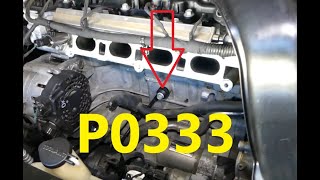
How to confirm: Visually inspect the wiring harness leading to the Bank 2 knock sensor for any signs of fraying, melting, or corrosion, especially near exhaust components. Check for a short to voltage using a multimeter. 🎬 Watch: A guide to diagnosing P0333 causes and fixes
Typical fix: Repair the damaged section of the wiring harness or replace the connector pigtail. Heat-resistant shielding should be used in areas close to the exhaust.
Est. part cost: $15-$40
Rare But Worth Checking
- Faulty Engine Control Module (ECM): → Shop Engine Control Module (ECM) This is rare. The ECM should only be considered after all other possibilities, including the TSB-documented issue, sensors, and wiring, have been thoroughly ruled out.
Diagnosis Steps
- Read the code with an OBD-II scanner to confirm P0333 is present.
- Note if the Check Engine Light appeared when shifting from Park, as this strongly points to the TSB issue.
- Inspect the wiring and connector at the Bank 2 (passenger side) knock sensor for any obvious damage, looseness, or corrosion. Pay close attention to proximity to exhaust headers.
- If the wiring looks good, test the knock sensor itself. Check its internal resistance with a multimeter; a reading between 93k and 107k Ohms is expected for a good GM sensor. Alternatively, monitor its AC voltage output with a multimeter or oscilloscope while gently tapping the engine block near the sensor; a voltage signal should be generated.
- If the sensor and its immediate wiring test okay, proceed to the TSB-recommended step: Inspect the K20 ECM X2 electrical connector.
- To access the ECM on a C7 Corvette, remove the front passenger wheel and the fender well liner. Carefully pull the bottom of the fender away from the body to gain access to the ECM and its connectors.
- Disconnect the X2 connector (check service manual for exact identification) and inspect for debris, moisture, or damaged pins. Clean the connector with electrical contact cleaner and ensure it is dry and securely reseated.
- Clear the code and perform a test drive, including shifting from Park, to see if the code returns.
- If the code persists after these steps, a more in-depth circuit diagnosis for a short to voltage or a check for a faulty ECM may be required.
Parts You'll Likely Need
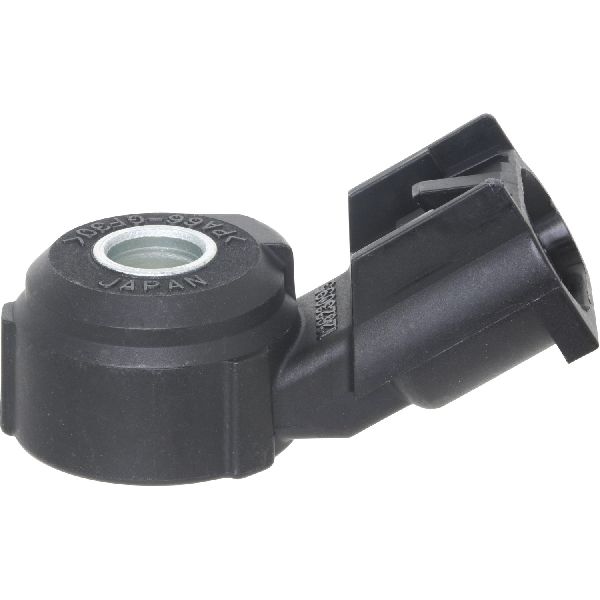
- Knock Sensor (Bank 2)
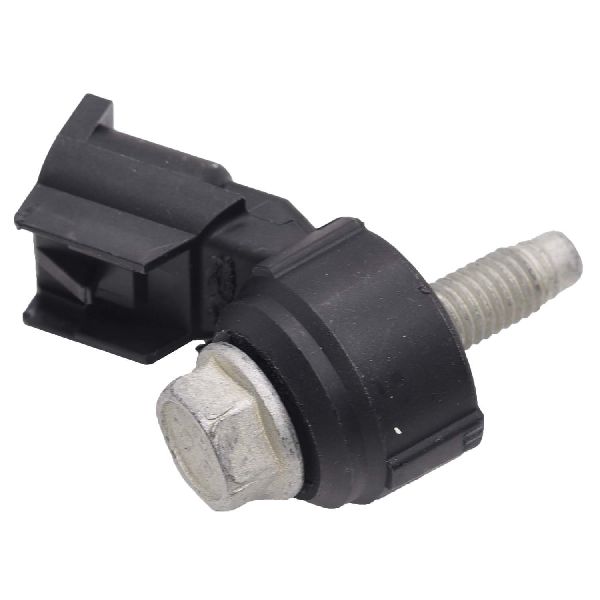
(OEM #12623734)— This is the sensor that reports the high voltage signal. While not always the root cause on this vehicle, it can fail and is a common replacement part for this code.
Trusted brands: ACDelco, Bosch, NTK
OEM price range: $60-$90
Aftermarket price range: $40-$70 - Electrical Contact Cleaner — Required for cleaning the ECM X2 connector, which is the primary fix recommended by the GM service bulletin for this specific issue.
Trusted brands: CRC, WD-40 Specialist
OEM price range: $10-$15
Aftermarket price range: $8-$12
Technical Service Bulletins (TSBs) & Recalls
- 20-NA-207: Information on Malfunction Indicator Lamp (MIL) Illuminated - DTC P0333 Set.
- PIP5576: Knock Sensor Codes P0333 (Superseded by 20-NA-207).
Platform-Specific Known Issues
- A GM Technical Service Bulletin (#20-NA-207, which supersedes #PIP5576) was issued for 2016-2018 Corvettes, and later revised to include up to 2019/2020 models of other vehicles, for this code. It identifies a specific condition where voltage from the transmission's park/neutral signal circuit can interfere with the knock sensor circuit, causing P0333 to set, often when shifting out of park. The recommended fix is to inspect and clean the ECM's X2 connector, which is located behind the passenger front fender liner.
Mechanic-Grade Diagnostic Values
- Knock Sensor Internal Resistance — expected: 93,000 to 107,000 Ohms (93k-107k Ω) when measured across the sensor's pin and housing.. Failure: A reading of OL (open circuit) or a value significantly outside the specified range indicates a faulty sensor.
- Knock Sensor AC Voltage Output — expected: A measurable AC voltage signal should be generated on a multimeter or oscilloscope when the engine block is tapped near the sensor.. Failure: No AC voltage signal when tapping the block suggests the sensor's piezoelectric element is dead.
- Knock Sensor Circuit Bias Voltage (Key On, Engine Off) — expected: Approximately 1.5 to 2.5 volts DC on the signal wire at the sensor connector.. Failure: A reading near 5 volts suggests an open circuit or open sensor. A reading of 0 volts suggests a short to ground.
Wiring & Ground Locations
- ECM Connector X2, Pin 29 — The ECM is located in the passenger side front fender, behind the wheel liner. X2 is one of the main connectors on the ECM.. Pin 29 on the X2 connector is the signal wire for the Bank 2 Knock Sensor on LS3/LT1/LT4 engines. This is a primary test point for continuity and voltage checks.
- ECM Connector X2, Pin 30 — The ECM is located in the passenger side front fender, behind the wheel liner. X2 is one of the main connectors on the ECM.. Pin 30 on the X2 connector is the Low Reference (ground) for the Bank 2 Knock Sensor. A poor connection here can cause faulty readings.
- G103 / G109 — G109 is on the driver's side of the engine block. It is grounded to the driver's side frame rail at G103.. This is a primary engine-to-chassis ground path. Poor contact here can introduce electrical noise and grounding issues for various sensors, including the knock sensors which are grounded through the block.
- G104 — Located on the frame next to the battery tray on the passenger side.. This ground point serves the ECM and is a known spot for corrosion. A bad ground here can cause a variety of erratic ECM behaviors and sensor faults.
Real Owner Repair Stories
- CorvetteForum user (C6 Z06 (similar engine architecture)) — Check Engine Light with code P0333 (High Voltage), which later changed to P0332 (Low Voltage) and P0330.
❌ Tried (didn't work) Clearing the code (it returned)., Replacing the knock sensor (code returned).
✅ What actually fixed it A visual inspection revealed the knock sensor wiring harness had been burned through by the heat from aftermarket headers. The final fix was to splice in new wires and properly insulate them from the header heat.
Helpful Videos
We Have This Part in Stock


The information in this article is provided for general reference and educational purposes only. Vehicle specifications, procedures, and part compatibility can vary by production date, trim level, and region. Always consult your vehicle's factory service manual and verify part numbers before purchasing or performing repairs. Safety-critical components such as airbags, seat belts, and braking systems should be installed by a qualified professional.
- Chevrolet CORVETTE:
- 🧭 Diagnostic Flowchart
- 🎬 Helpful Videos
- 🛍️ Shop This Part
- What's Unique About the 2016-2020 Chevrolet CORVETTE
- Symptoms You May Notice
- Most Likely Causes
- Rare But Worth Checking
- Diagnosis Steps
- Parts You'll Likely Need
- Technical Service Bulletins (TSBs) & Recalls
- Platform-Specific Known Issues
- Mechanic-Grade Diagnostic Values
- Wiring & Ground Locations
- Real Owner Repair Stories
- 🎟️ Get 5% Off