

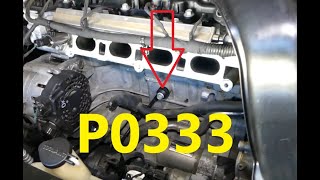
P0333 on 2019-2020 GMC Sierra Denali: Knock Sensor Circuit Causes and Fixes
On a 2019-2020 GMC Sierra, code P0333 is most often caused by an electrical issue at the ECM's X2 connector, not a bad knock sensor. Before replacing parts, inspect this connector for debris or moisture as per GM TSB #20-NA-207, especially if the Check Engine Light appears when shifting out of Park.
- Do not immediately replace the knock sensor. The most likely cause on this truck is the ECM X2 connector issue described in TSB #20-NA-207.
- A key symptom pointing to the TSB issue is the Check Engine Light appearing when you shift out of Park.
- Cleaning the ECM connector is a low-cost, high-probability first step that can save you from a difficult and expensive sensor replacement.
- If the sensor must be replaced, be prepared for a labor-intensive job that involves removing the starter motor for access.
What's Unique About the 2019-2020 Gmc SIERRA DENALI
For this generation of GMC Sierra and its platform mates, the P0333 code has a well-documented, specific cause that is more common than a simple sensor failure. General Motors issued Technical Service Bulletin #20-NA-207 (which supersedes PIP5576) indicating that an electrical issue at the ECM's X2 connector is a frequent culprit. Voltage from the transmission's park/neutral signal circuit can 'bleed' into the knock sensor circuit within the connector, creating a false high voltage reading that triggers the code, often right as the driver shifts out of Park.
Diagnostic Flowchart
Tap your situation to follow the diagnostic path that matches what you're seeing on this vehicle.
Symptoms You May Notice
- Check Engine Light is on
- Check Engine Light illuminates specifically when shifting from Park into a gear
- Reduced engine power and sluggish acceleration
- Decreased fuel economy
- Audible engine pinging or knocking sound (less common with this specific fault)
- Replacing the knock sensor without first inspecting the ECM X2 connector. The TSB-related connector issue is the most probable cause on this specific vehicle, and skipping this step can lead to an unnecessary and labor-intensive repair.
Most Likely Causes
- Electrical Issue at ECM X2 Connector 🔴 High Probability As documented in GM TSB #20-NA-207, this platform is susceptible to debris, moisture, or poor terminal contact in the ECM's X2 connector, which can cause voltage from the transmission's park/neutral circuit to bleed into the knock sensor 2 circuit (Pin 52).
How to confirm: Disconnect the battery, then locate the ECM on the driver's side of the engine bay and disconnect its X2 connector. Visually inspect for any signs of corrosion, moisture, debris, or backed-out terminals, paying close attention to Pin 52 (typically a Dark Blue wire). The issue is strongly indicated if the MIL illuminates when shifting out of Park.
Typical fix: Clean the connector and pins with electrical contact cleaner, let it dry completely, apply dielectric grease to the seal, and ensure a secure reconnection. In some cases, a damaged terminal may need to be replaced. A forum user on gm-trucks.com with a 2015 Sierra 5.3L reported this exact fix resolved their P0333 code after replacing the sensor twice failed to work.
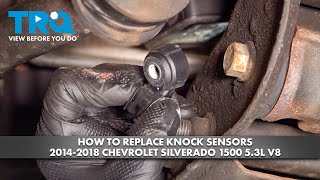
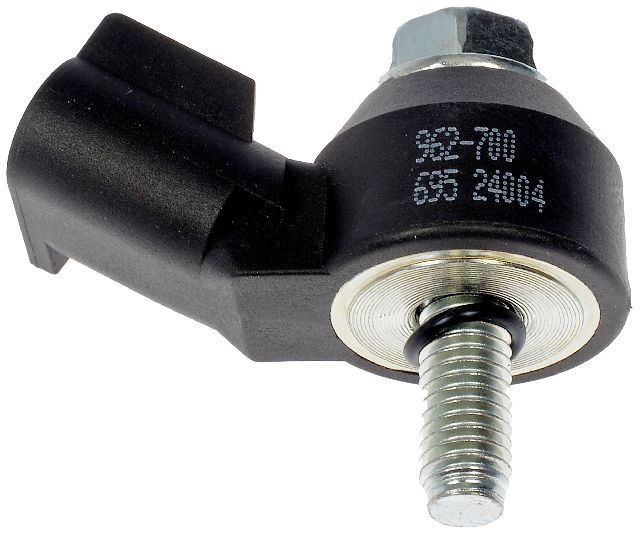
Est. part cost: $5-$20 - Faulty Knock Sensor (Bank 2) 🟡 Medium Probability → Shop Ignition Knock (Detonation) Sensor The sensor is located on the lower passenger side of the engine block, making it exposed to road debris, heat, and moisture. Access is difficult and typically requires removing the starter motor. 🎬 See this walkthrough for accessing and replacing the knock sensor
How to confirm: After ruling out the ECM connector issue, test the sensor's internal resistance with a multimeter. A typical GM sensor should read between 93k and 110k ohms. An open circuit (infinite resistance) or short (near-zero resistance) indicates failure. Also perform a dynamic test by tapping the engine block near the sensor while monitoring AC millivolts; a lack of signal indicates a failed piezoelectric element.
Typical fix: Replace the Bank 2 knock sensor. Access requires removing the starter motor. It is critical to torque the new sensor to the correct specification (typically 15-18 ft-lbs).
Est. part cost: $30-$90 - Damaged Wiring Harness ⚪ Low Probability The harness for the knock sensor runs near hot exhaust components and the starter motor, making it susceptible to heat damage, chafing, or corrosion. It can be damaged during other repairs, like a starter replacement, if not secured properly.
How to confirm: Visually inspect the wiring loom from the Bank 2 knock sensor to the ECM. Check for any melted, frayed, or broken wires. Perform a continuity test on the signal wire (Pin 52 at ECM X2) between the sensor connector and the ECM connector.
Typical fix: Repair the damaged section of the wire or replace the connector pigtail or the entire knock sensor harness (GM Part #12692961).
Est. part cost: $15-$75
Rare But Worth Checking
- Faulty Engine Control Module (ECM): → Shop Engine Control Module (ECM) This is very rare. The ECM should only be considered after all other possibilities, including the TSB, sensor, and wiring, have been thoroughly ruled out by a professional.
Diagnosis Steps
- Retrieve stored DTCs with an OBD-II scanner to confirm P0333 is present.
- Observe if the Check Engine Light turns on specifically when shifting the transmission out of Park. This strongly points to the TSB-related issue.
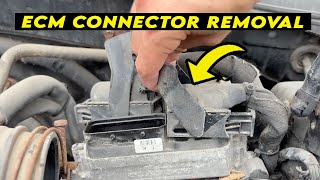
- Following TSB #20-NA-207, disconnect the negative battery terminal. Locate the ECM on the driver's side of the engine bay near the firewall and carefully disconnect the X2 connector (often the middle or rear connector 🎬 Watch: How to safely disconnect and remove ECM connector plugs).
- Thoroughly inspect the connector and the ECM pins for any debris, moisture, or corrosion, paying special attention to Pin 52. Clean with electrical contact cleaner and apply dielectric grease before reconnecting securely.
- If the issue persists, prepare to inspect the Bank 2 (passenger side) knock sensor. This may require jacking up the vehicle and removing the passenger side front wheel for better access.
- Locate and remove the starter motor to gain access to the knock sensor. Inspect the sensor's wiring harness for any visible damage, especially near the starter and exhaust manifold.
- Disconnect the sensor and measure its internal resistance with a multimeter. Compare the reading to the specification (typically 93k-110k ohms for GM). If it's out of spec, the sensor is bad.
- If the sensor and wiring appear good, the final step is to check for continuity and shorts in the circuit between the sensor connector and the ECM. If all tests pass, the ECM itself may be at fault, which requires professional diagnosis.
Parts You'll Likely Need
- Knock Sensor (Bank 2)
(OEM #12623730 (superseded by 12739206))— This is the sensor that reports the fault. While not the most common cause, it is the primary component in the circuit that can fail.
Trusted brands: ACDelco (GM Genuine), Delphi, Bosch
OEM price range: $50-$90
Aftermarket price range: $30-$60 - Knock Sensor Harness
(OEM #12692961)— The wiring harness near the sensor is exposed to heat and can become brittle or damaged, especially during other repairs like starter replacement.
Trusted brands: ACDelco (GM Genuine)
OEM price range: $45-$70
Aftermarket price range: $25-$50 - Electrical Contact Cleaner — Required for cleaning the ECM X2 connector, which is the most likely cause of the problem according to GM TSB #20-NA-207.
Trusted brands: CRC, WD-40 Specialist
OEM price range: $5-$15
Aftermarket price range: $5-$15
Technical Service Bulletins (TSBs) & Recalls
- 20-NA-207: Malfunction Indicator Lamp (MIL) Illuminated - DTC P0333 Set. Points to an electrical concern at the ECM X2 connector as a primary cause. This bulletin supersedes the earlier PIP5576.
Platform-Specific Known Issues
- TSB #20-NA-207: This official GM bulletin states that P0333 can be set due to an electrical concern at the ECM X2 connector. It specifically mentions that voltage from the transmission park/neutral signal circuit can bleed into the knock sensor circuit, causing the 'Circuit High' fault, often when shifting out of Park.
Mechanic-Grade Diagnostic Values
- Knock Sensor Internal Resistance — expected: 93k - 110k Ohms (Ω) between the sensor's pin and the engine block (ground).. Failure: A reading of OL (infinite resistance), near-zero resistance, or significantly outside the specified range indicates a failed sensor.
- Knock Sensor Circuit Voltage (KOEO) — expected: Approximately 2.5V to 5V DC bias voltage from the ECM, measured on the signal wire with the sensor disconnected.. Failure: A P0333 'Circuit High' fault is set when voltage is stuck near the top of the range (e.g., over 4.5V), which can indicate an open circuit or internal sensor failure.
- Knock Sensor Dynamic AC Voltage (Tap Test) — expected: A small, fluctuating AC voltage (typically >20 millivolts) should be generated when tapping the engine block near the sensor with a wrench (engine off).. Failure: No AC voltage or a signal less than 10-20 mV when tapping suggests the sensor's internal piezoelectric element has failed, even if the resistance test passes.
Scan Tool Commands That Help
- GDS2 (GM Global Diagnostic System 2): Engine Data Display / Live Data — While no specific bidirectional test for the knock sensor exists, a technician would use GDS2 to monitor live data parameters like 'Knock Retard' during a test drive. Observing if the ECM is commanding significant timing retard can help diagnose the effects of the fault, though P0333 is primarily a circuit integrity code.
Wiring & Ground Locations
- K20 ECM X2 Connector — The Engine Control Module (ECM) is located in the engine bay, typically on the driver's side near the firewall. X2 is one of the large multi-pin connectors plugging into it.. This is the specific connector identified in TSB #20-NA-207 as the primary location for the electrical fault causing P0333 due to voltage bleed-over.
- Bank 2 Knock Sensor — On the lower passenger side of the engine block, hidden behind the starter motor.. This is the physical location of the sensor itself. Access requires removing the starter, which is critical labor information for estimating repair time and difficulty.
- G103 / G104 Engine Grounds — Common GM V8 engine ground points. G103 is often on the front of the passenger side cylinder head, while G104 is on the rear of the passenger side cylinder head.. A poor engine ground can cause a variety of electrical issues and floating voltages. While not the primary cause listed in the TSB, checking that engine-to-chassis grounds are clean and tight is a fundamental step in diagnosing any electrical circuit fault.
OEM Part Supersession History
12570125→12623730— Part evolution and design updates over vehicle generations.12623730→12739206— Latest revision of the part for this application. Using the most current part number is recommended.
Model Year Variations Within This Range
- 2019-2020: No significant variations in the knock sensor system, wiring, or ECM logic related to DTC P0333 have been documented between the 2019 and 2020 model years for the L84 and L87 engines. The primary cause (TSB #20-NA-207) applies to both.
Helpful Videos

![How to Fix P0333 Engine Code in 2 Minutes [1 DIY Method / Only $10.92]](https://img.youtube.com/vi/VxK0OXMG2Bg/mqdefault.jpg)
We Have This Part in Stock


The information in this article is provided for general reference and educational purposes only. Vehicle specifications, procedures, and part compatibility can vary by production date, trim level, and region. Always consult your vehicle's factory service manual and verify part numbers before purchasing or performing repairs. Safety-critical components such as airbags, seat belts, and braking systems should be installed by a qualified professional.
- Gmc SIERRA DENALI:
- 🧭 Diagnostic Flowchart
- 🎬 Helpful Videos
- 🛍️ Shop This Part
- What's Unique About the 2019-2020 Gmc SIERRA DENALI
- Symptoms You May Notice
- Most Likely Causes
- Rare But Worth Checking
- Diagnosis Steps
- Parts You'll Likely Need
- Technical Service Bulletins (TSBs) & Recalls
- Platform-Specific Known Issues
- Mechanic-Grade Diagnostic Values
- Scan Tool Commands That Help
- Wiring & Ground Locations
- OEM Part Supersession History
- Model Year Variations Within This Range
- 🎟️ Get 5% Off