

P0333 on 2015-2019 GMC Yukon Denali: Knock Sensor Circuit High Causes & Fixes
On a 2015-2019 GMC Yukon Denali, code P0333 is most often caused by an electrical issue, not a bad knock sensor. GM Technical Service Bulletins (TSB #20-NA-207) point to problems at the ECM X2 connector or voltage bleeding from the transmission's park/neutral signal wire. A key symptom is the Check Engine Light illuminating when shifting out of Park. Always inspect these specific wiring issues before replacing the sensor.
- Do NOT immediately replace the knock sensor for a P0333 code on this vehicle.
- The most likely cause is an electrical issue at the ECM X2 connector, as documented in GM TSB #20-NA-207.
- Your first step should always be to inspect and clean the ECM X2 connector.
- If the sensor does need replacement, the Bank 2 sensor is on the passenger side and may be difficult to access.
- Using a quality OEM (ACDelco) or reputable aftermarket part is crucial if replacement is necessary.
What's Unique About the 2015-2019 Gmc YUKON DENALI
On this specific generation of GMC Yukon and its platform mates (like the Sierra, Tahoe, and Escalade), the P0333 code is uniquely tied to known electrical issues rather than simple sensor failure. General Motors has issued specific service bulletins (TSBs) identifying that voltage can bleed from the transmission's park/neutral signal wire into the knock sensor circuit, creating a false high voltage reading. Another documented cause is a poor electrical connection, debris, or moisture in the main ECM's X2 connector. This makes it critical for owners to investigate these specific wiring problems, especially if the code appears when shifting from Park, before assuming the knock sensor is faulty.
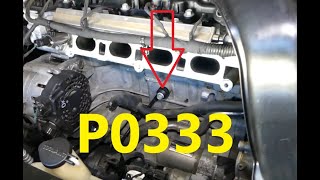
🎬 Watch: Understanding the P0333 code and common high voltage causes.Diagnostic Flowchart
Tap your situation to follow the diagnostic path that matches what you're seeing on this vehicle.
Symptoms You May Notice
- Check Engine Light (MIL) is illuminated
- MIL illuminates specifically when shifting the transmission out of Park.
- Reduced engine power and poor acceleration
- Engine may enter a 'limp mode'
- Decreased fuel economy
- Audible engine pinging or knocking (less common as the cause is often electrical).
- Rough or uneven idle.
- Immediately replacing the knock sensor without first inspecting the ECM X2 connector and wiring harness. The TSBs strongly indicate the problem is often electrical and not the sensor itself, especially if the code sets when shifting from Park.
Most Likely Causes
- Electrical Issue at ECM X2 Connector 🔴 High Probability This is a well-documented issue in GM TSB #20-NA-207. Debris, moisture, or poor terminal contact in the K20 ECM's X2 connector can cause a high resistance or short, triggering the code. The connector's design and location can make it susceptible to these issues over time.
How to confirm: Visually inspect the K20 ECM's X2 electrical connector for any bent pins, corrosion, moisture, or debris. A pinout diagram shows the Knock Sensor 2 Low Reference is at pin 57 (BK/GY wire) and the Transmission Park/Neutral Signal is at pin 58 (WH/GY wire), indicating their close proximity within the connector, which is the source of the voltage bleed. The code often sets when shifting from Park.
Typical fix: Disconnect the battery, then disconnect and clean the connector and terminals with electrical contact cleaner. Ensure all pins are straight and secure. Apply dielectric grease to the connector seal upon reassembly to prevent future moisture intrusion. If terminals are damaged, a connector pigtail or terminal replacement is necessary.
Est. part cost: $5-$50 - Voltage Bleed from Transmission Park/Neutral Circuit 🔴 High Probability This is the specific cause cited in GM TSB #PIP5576 and its successor, #20-NA-207. Voltage from the transmission park/neutral signal 1 circuit can interfere with the knock sensor signal due to their proximity in the harness and ECM connector.
How to confirm: This is difficult to confirm without advanced diagnostics but is strongly indicated if the P0333 code sets immediately after shifting the transmission from Park. This symptom is a key diagnostic clue pointed out in the TSBs.
Typical fix: The fix is the same as the ECM connector issue: ensuring the X2 connector is clean, secure, and free of damage to prevent signal cross-talk between adjacent pins.
Est. part cost: $0-$50 - Faulty Bank 2 Knock Sensor 🟡 Medium Probability → Shop Ignition Knock (Detonation) Sensor The sensor is located on the lower passenger side of the engine block, making it susceptible to heat, moisture, and physical damage from road debris. While less common than the wiring issue, sensor failure is still a possibility.
How to confirm: After ruling out wiring/connector issues, disconnect the sensor and test its internal resistance with a multimeter. A good sensor should read between 93k and 107k ohms. An open circuit (OL) or a reading far outside this range indicates a bad sensor. Also, tapping on the engine block near the sensor should produce a small AC voltage reading on a multimeter.
Typical fix: Replace the Bank 2 knock sensor. Access requires removing the starter motor, which adds to the labor. It is highly recommended to use an OEM ACDelco part to avoid quality issues with aftermarket sensors.
Est. part cost: $30-$110 - Damaged Wiring Harness ⚪ Low Probability The wiring to the knock sensor can become chafed, melted from contact with hot exhaust components, or corroded over time. A preliminary information bulletin (PIT5307) for 2014 models noted the engine harness could rub on the engine vacuum pump pulley, causing this and other codes. Rodent damage is also a possible, though infrequent, cause where wires are chewed.
How to confirm: Visually inspect the entire length of the knock sensor harness from the sensor to the ECM for any signs of damage, melting, chafing, or breaks. Pay close attention to where the harness may rub against the engine block, vacuum pump pulley, or chassis components.
Typical fix: Repair the damaged section of the wire or replace the knock sensor harness pigtail.
Est. part cost: $20-$100
Rare But Worth Checking
- Faulty Engine Control Module (ECM): → Shop Engine Control Module (ECM) This is very rare and should only be considered after all other possibilities, including the TSB-related wiring issues, the harness, and the sensor itself, have been thoroughly ruled out.
Diagnosis Steps
- Read the trouble code with an OBD-II scanner to confirm P0333 is present and note any other codes.
- Per GM TSB #20-NA-207, the first diagnostic step is to disconnect the battery, then disconnect and carefully inspect the ECM's X2 electrical connector. Look for any debris, moisture, corrosion, or damaged/bent terminals.
- Pay special attention to pins 57 (Knock Sensor 2 Low Ref) and 58 (Trans Park/Neutral Signal) for signs of contamination or damage that could cause a signal bleed.
- If the connector appears dirty, clean it with electrical contact cleaner and dry it thoroughly. Apply a small amount of dielectric grease to the seal before reconnecting securely.
- Clear the codes and test drive the vehicle, specifically noting if the code returns when shifting from Park, which points to the TSB-related issue.
- If the code returns, inspect the wiring harness leading to the Bank 2 knock sensor (passenger side) for any signs of melting, chafing, or breaks, particularly near the vacuum pump pulley.
- If the wiring is intact, locate the Bank 2 knock sensor. Access is difficult and typically requires removing the starter motor.
- Disconnect the sensor and test its internal resistance with a multimeter. It should be between 93k-107k ohms. If it's out of spec, the sensor is bad.
- If the sensor tests good, the fault likely lies in the wiring harness between the sensor and ECM or, in rare cases, the ECM itself.
Parts You'll Likely Need
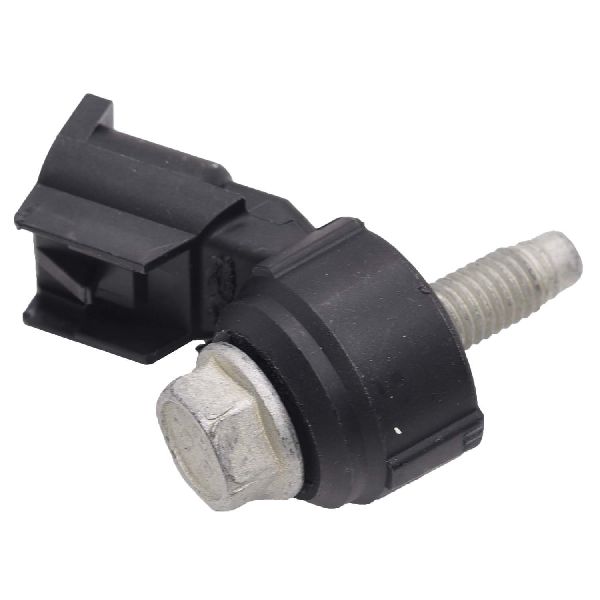
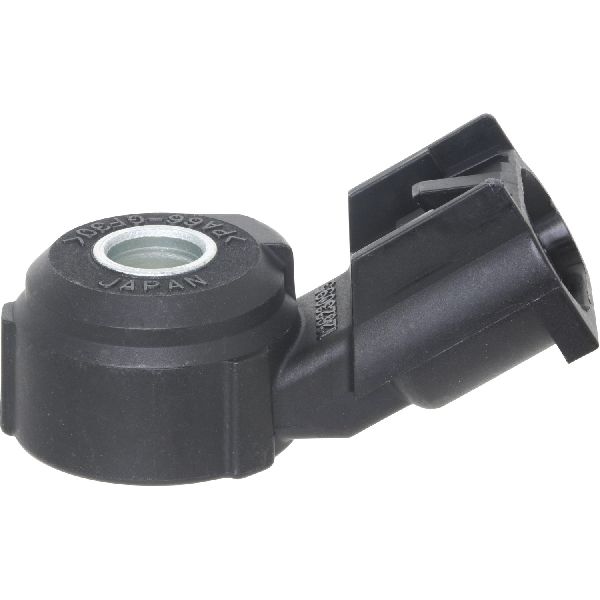
- Ignition Knock (Detonation) Sensor
(OEM #12623095)— This is the part to replace if diagnostic testing confirms the sensor itself has failed, after ruling out the more common wiring and connector issues. Using an OEM part is highly recommended.
Trusted brands: ACDelco (GM OE), Delphi, NGK
OEM price range: $40-$60
Aftermarket price range: $20-$40 - ECM Connector Pigtail/Terminals — If the terminals inside the ECM X2 connector are found to be corroded or damaged beyond cleaning, they will need to be replaced to ensure a solid connection and prevent signal cross-talk.
Trusted brands: ACDelco
OEM price range: $25-$50
Aftermarket price range: $15-$30 - Electrical Contact Cleaner — Required for the most common fix: cleaning the ECM X2 connector terminals as per TSB #20-NA-207.
Trusted brands: CRC, WD-40 Specialist
OEM price range: $8-$15
Aftermarket price range: $8-$15
Technical Service Bulletins (TSBs) & Recalls
- 20-NA-207: Malfunction Indicator Lamp (MIL) Illuminated - DTC P0333 Set
- PIP5576: SES Lamp, Setting DTC P0333 When Shifting From Park
Platform-Specific Known Issues
- TSB #20-NA-207
- TSB #PIP5576
Mechanic-Grade Diagnostic Values
- Knock Sensor Internal Resistance — expected: 93k - 107k Ohms (or ~100k Ohms). Failure: A reading of OL (open circuit) or a value significantly outside the expected range.
- Knock Sensor AC Voltage Output (Tapping Test) — expected: A small, fluctuating AC voltage signal should be generated.. Failure: No AC voltage signal when tapping the engine block near the sensor indicates a dead sensor.
- ECM Reference Voltage (KOEO, sensor disconnected) — expected: ~1.5V - 2.5V. Failure: If the voltage at the ECM pin remains high (near or above 5V) with the sensor disconnected, it points to a short to power in the harness or an internal ECM fault.
Scan Tool Commands That Help
- GM GDS2 (Global Diagnostic System 2): Module Diagnostics > ECM > Data Display — To monitor live data from the knock sensor circuits. While P0333 is a 'hard' circuit code that may not show fluctuating data, this is useful to check for any signal at all and to view data from the Bank 1 sensor for comparison.
- GM GDS2 (Global Diagnostic System 2): Control Functions — While there isn't a direct bidirectional command to 'activate' a knock sensor, GDS2's control functions allow a technician to command other vehicle systems on and off to see if their activation influences the knock sensor circuit voltage, which can help isolate an electrical interference issue.
Wiring & Ground Locations
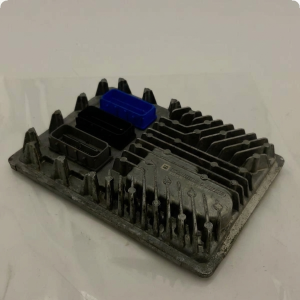
- K20 Engine Control Module (ECM) — Located in the engine bay, typically on the driver's side near the firewall or inner fender.. This is the module where the fault is registered. The X2 connector on this module is the specific location cited by TSB #20-NA-207 as the most likely source of the problem due to debris or signal cross-talk.
- ECM Connector X2 — One of the large, multi-pin connectors that plug into the K20 ECM. On ECMs with multiple connectors, they are often color-coded or physically keyed to prevent incorrect installation.. This is the epicenter of the known TSB issue. Pin 57 (Knock Sensor 2) and Pin 58 (Park/Neutral Signal) are adjacent, and contamination or terminal damage can cause voltage to bleed from one to the other, triggering P0333.
- G102 Engine Ground — Located at the left rear of the engine block, sometimes specified as being below the exhaust manifold near the #3 cylinder area.. The ECM and its sensors, including the knock sensors, rely on clean and secure ground connections to provide accurate readings. A poor engine ground can introduce electrical noise and voltage offsets, potentially contributing to circuit high codes.
Real Owner Repair Stories
- Aggregated from various forums and YouTube comments for 2015+ GM trucks/SUVs (2015+ GMC Sierra/Yukon or Chevy Silverado/Tahoe with 5.3L or 6.2L V8) — P0333 code appears, sometimes intermittently. Check engine light on.
❌ Tried (didn't work) Replacing the knock sensor without checking wiring., Clearing the code, only for it to return immediately.
✅ What actually fixed it The wiring harness for the knock sensor was found to be damaged or chafed near the starter motor. This often occurs after a starter replacement if the harness is not properly secured afterward and makes contact with hot or moving parts. Repairing the chafed wire resolved the code.
OEM Part Supersession History
12623095→12623095— No supersession found.
Heads up: This part number appears stable for the 2015-2019 model years. Aftermarket parts are available, but using the GM OE/ACDelco part is highly recommended to avoid compatibility or quality issues that are common with off-brand sensors.
Helpful Videos
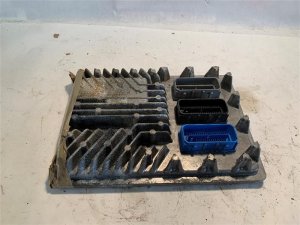
Used OEM Parts in Stock
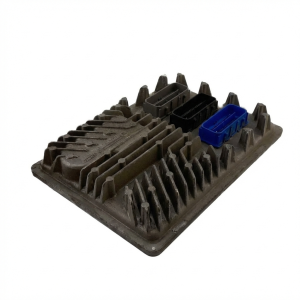
New Aftermarket Parts Available


The information in this article is provided for general reference and educational purposes only. Vehicle specifications, procedures, and part compatibility can vary by production date, trim level, and region. Always consult your vehicle's factory service manual and verify part numbers before purchasing or performing repairs. Safety-critical components such as airbags, seat belts, and braking systems should be installed by a qualified professional.
- Gmc YUKON DENALI:
- 🧭 Diagnostic Flowchart
- 🎬 Helpful Videos
- 🛍️ Shop This Part
- What's Unique About the 2015-2019 Gmc YUKON DENALI
- Symptoms You May Notice
- Most Likely Causes
- Rare But Worth Checking
- Diagnosis Steps
- Parts You'll Likely Need
- Technical Service Bulletins (TSBs) & Recalls
- Platform-Specific Known Issues
- Mechanic-Grade Diagnostic Values
- Scan Tool Commands That Help
- Wiring & Ground Locations
- Real Owner Repair Stories
- OEM Part Supersession History
- 🎟️ Get 5% Off