

P0333 on 2010-2011 Saab 9-5 2.8L V6: Knock Sensor 2 Circuit High Causes and Fixes
This code indicates a fault with the knock sensor on Bank 2 (the firewall side) of the engine. The most common cause is a failed sensor, followed by wiring issues. Replacing the Bank 2 sensor is difficult due to its location and may require removing the secondary air injection pump. It's a labor-intensive job.
- P0333 points specifically to the knock sensor circuit for Bank 2, which is the cylinder bank against the firewall on this engine.
- The most likely cause is a failed knock sensor, but the wiring should always be checked for damage first.
- Replacing the Bank 2 sensor is a difficult DIY job due to its location; it requires removing the secondary air injection pump and working in a tight space.
- Always use a torque wrench to tighten the new sensor to exactly 18 lb-ft (25 Nm), as incorrect torque will cause it to malfunction.
- Given the difficult labor involved for Bank 2, it is strongly
What's Unique About the 2010-2011 Saab 9-5
The 2010-2011 Saab 9-5 uses the GM-based A28NER 2.8L V6 engine, which is part of the GM High Feature (LP9) engine family. For this code, the key challenge is physical access. Bank 2 is the cylinder bank located against the firewall, making its knock sensor exceptionally difficult to reach compared to the Bank 1 sensor. Official service procedures note that the secondary air injection pump must be removed to access and replace the Bank 2 knock sensor, significantly increasing the labor time and complexity of the repair.
Symptoms You May Notice
- Check Engine Light is on
- Reduced engine power and sluggish acceleration
- Audible engine knocking or pinging, especially under load
- Decreased fuel economy
- Rough or uneven idle
- Hesitation when accelerating, especially up hills.
- Replacing the Bank 1 knock sensor by mistake. Bank 2 is on the firewall side of the engine and is much harder to access.
- Replacing the ECM before thoroughly testing the sensor and wiring circuit.
- Using a cheap, low-quality aftermarket knock sensor that is not properly calibrated for the engine's specific vibration frequencies.
Most Likely Causes
- Failed Knock Sensor (Bank 2) 🔴 High Probability → Shop Ignition Knock (Detonation) Sensor The sensor is a sensitive piezoelectric crystal that can fail due to age and constant high heat cycles in the tight V6 engine bay. Aftermarket sensors are also known to have incorrect sensitivity, leading to false codes.
How to confirm: After verifying the wiring is intact, the most definitive test is to swap the knock sensors between Bank 1 and Bank 2. If the code changes to P0328 (Knock Sensor 1 Circuit High), the sensor is faulty. Alternatively, test the sensor's internal resistance with a multimeter; it should be within the manufacturer's specified range (often 93-100k ohms for similar GM sensors).
Typical fix: Replace the Bank 2 knock sensor. It is best practice to replace both sensors at the same time, especially given the labor to access Bank 2. Use an OEM or high-quality OEM-supplier part like Bosch.
Est. part cost: $20-$70 - Wiring or Connector Issue 🟡 Medium Probability Engine bay heat can make wiring insulation brittle over time, and the connector can become corroded or damaged, leading to a short circuit. The harness is tucked in a tight, hot area between the engine and firewall.
How to confirm: Visually inspect the wiring harness leading to the Bank 2 knock sensor for any signs of melting, chafing, or breaks. Check the connector for corrosion, bent pins, or water ingress. Use a multimeter to check for a short to voltage on the signal wire.
Typical fix: Repair the damaged section of the wiring harness or replace the pigtail connector.
Est. part cost: $15-$40 - Improperly Installed Knock Sensor ⚪ Low Probability → Shop Ignition Knock (Detonation) Sensor This typically only occurs after a previous repair. The sensor is highly sensitive to torque.
How to confirm: Check the torque on the knock sensor mounting bolt. It should be exactly 18 lb-ft (25 Nm). A sensor that is too loose will under-detect knock, while one that is too tight can over-detect normal engine vibrations, or in this case, create a constant high signal. Also ensure the mounting surface is clean and free of debris or rust.
Typical fix: Clean the mounting surface and tighten the sensor to the correct torque specification.
Est. part cost: $0
Rare But Worth Checking
- Faulty Engine Control Module (ECM): → Shop Engine Control Module (ECM) This is very rare. The ECM should only be considered after all other possibilities, including the sensor and its entire circuit, have been exhaustively tested and ruled out.
- Severe Internal Engine Noise: If there is a serious mechanical problem causing excessive engine vibration (e.g., a bad bearing, timing chain issue), the sensor may be functioning correctly but picking up this noise. This would typically be accompanied by other severe symptoms and likely other trouble codes.
Diagnosis Steps
- Confirm Bank 2 Location: On the transverse A28NER V6, Bank 2 is the cylinder bank closer to the firewall. Bank 1 is closer to the radiator.
- Visual Inspection: Inspect the wiring harness and connector for the Bank 2 knock sensor. Look for obvious signs of damage, melting, or corrosion. This is difficult due to the location but critical.
- Check for Short to Voltage: Using a multimeter, disconnect the sensor and the ECM connector. Check the signal wire for continuity to a 12V power source, which would confirm a short.
- Check Sensor Installation: If accessible, verify the knock sensor is torqued correctly to 18 lb-ft (25 Nm). Ensure the mounting surface is clean. An over-torqued sensor can cause a 'Circuit High' fault.
- Swap Test (If Possible): If you have the skill and access, swap the Bank 1 and Bank 2 knock sensors. This requires significant disassembly. Clear the codes and drive the vehicle. If the code returns as P0328 (Bank 1), the sensor you moved is faulty and needs replacement.
- Replace the Sensor: If the sensor is confirmed to be bad, replace it. Given the difficult access for Bank 2 (requiring removal of the secondary air injection pump), it is highly recommended to replace both sensors and the wiring pigtail at the same time.
Parts You'll Likely Need
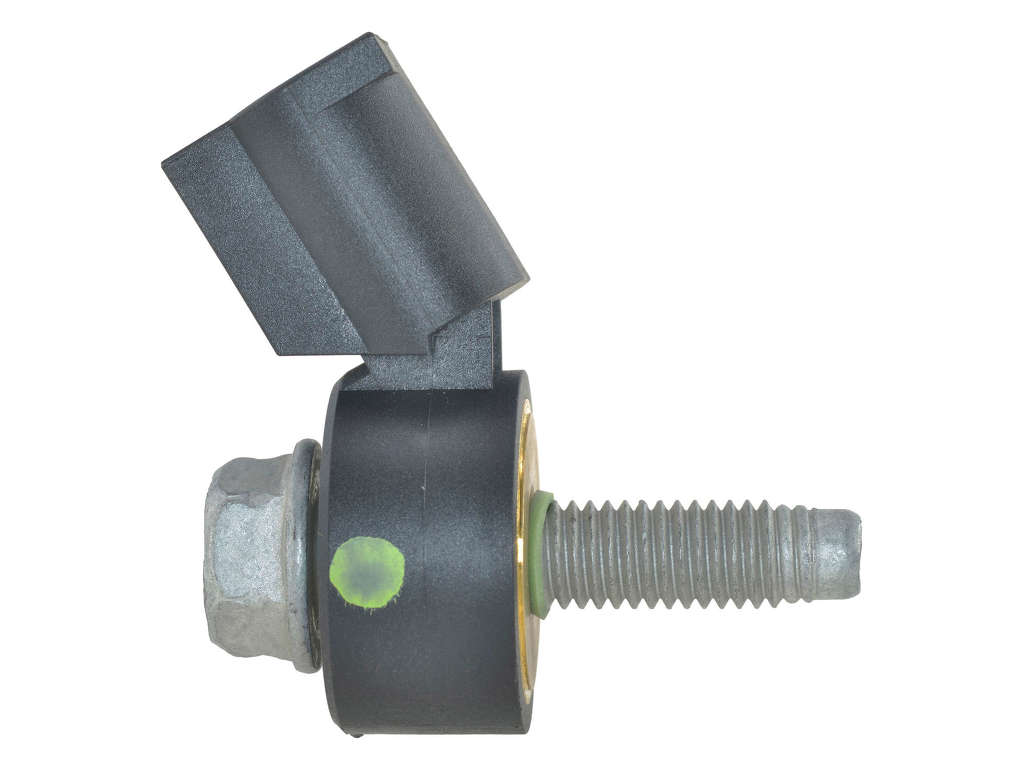
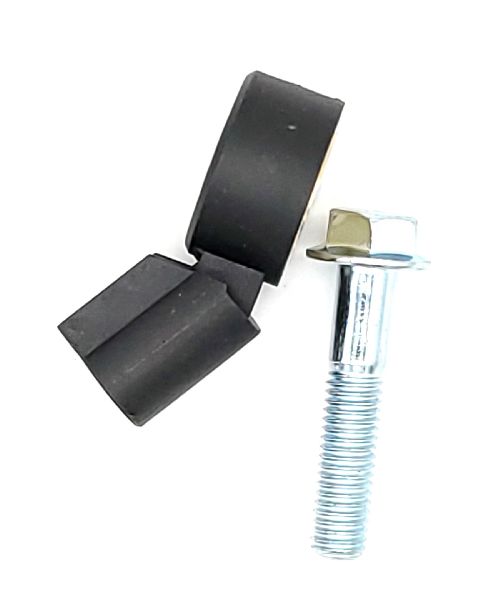
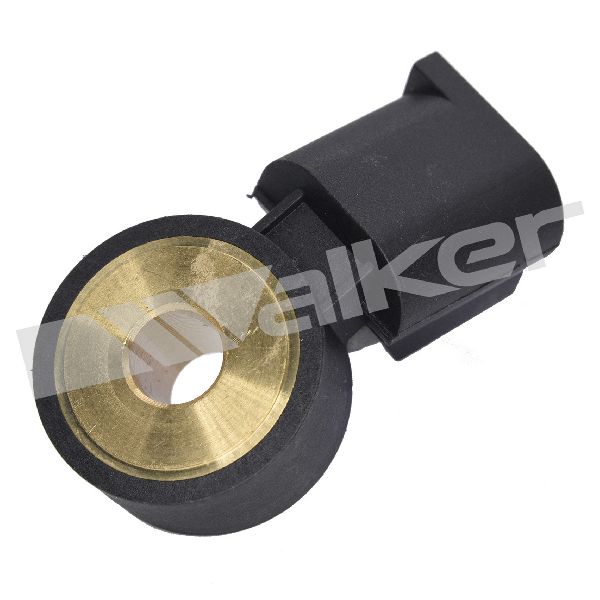
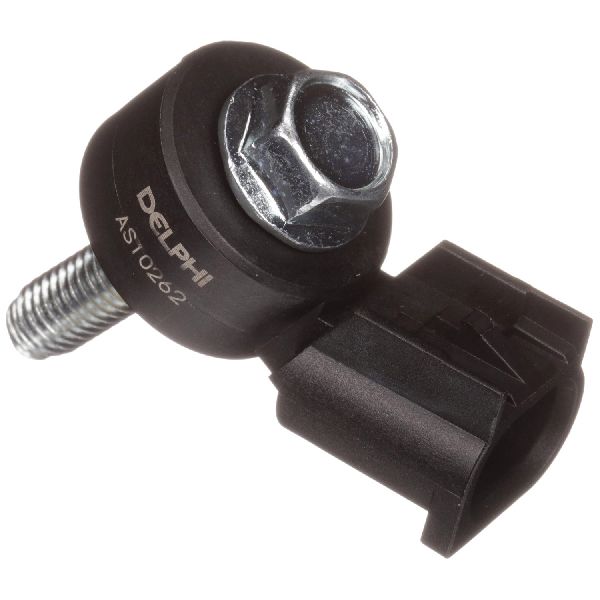
- Ignition Knock Sensor
(OEM #93189202)— This is the most common failure point for code P0333. The sensor's internal crystal fails from heat and age. The OEM supplier is Bosch.
Trusted brands: Bosch (OEM Supplier), ACDelco (GM), Delphi, Standard Motor Products
OEM price range: $60-$75
Aftermarket price range: $20-$45
Platform-Specific Known Issues
- Access to the Bank 2 (rear) knock sensor is obstructed by the secondary air injection pump, which must be removed for replacement, increasing labor time and complexity.
- A user on a Honda forum provided a detailed DIY for a similarly difficult-to-access knock sensor, which involves removing the radiator support rail to gain access from the front, a technique that may be adaptable.
Mechanic-Grade Diagnostic Values
- Knock Sensor Internal Resistance — expected: 93k - 107k Ohms. Failure: A reading significantly outside this range, especially an open (infinite) or shorted (near zero) reading, indicates a failed sensor. This is for the OBD-II style sensor used on this engine.
- Knock Sensor Reference Voltage (at harness connector) — expected: ~5V DC. Failure: No voltage or significantly lower voltage points to a problem with the ECM or the wiring between the ECM and the sensor connector.
- Knock Sensor Signal (Tapping Test) — expected: Small AC voltage reading on a multimeter when the engine block near the sensor is lightly tapped with a wrench (engine off).. Failure: No AC voltage produced during the tap test suggests the sensor's piezoelectric crystal is dead.
Scan Tool Commands That Help
- Tech 2 / GDS2: View Live Data / Data Display for Knock Sensors — Use a GM-specific scan tool like a Tech 2 to monitor the knock retard counts per cylinder in real-time. While driving under conditions that would normally trigger the code, you can observe if the ECM is actively pulling timing based on the (potentially false) high signal from the Bank 2 sensor. This helps confirm the ECM is receiving the faulty signal.
Wiring & Ground Locations
- ECM Pins (Bank 2 Knock Sensor) — At the Engine Control Module (ECM) connectors. While the exact pin numbers for the A28NER were not found, on similar GM V6 engines, the two wires for the Bank 2 knock sensor (Signal and Low Reference) will be located in one of the main ECM connectors.. Testing for continuity and shorts directly at the ECM pins is the definitive way to rule out the entire wiring harness between the sensor and the computer. If the wiring tests good from end-to-end, the fault is isolated to either the sensor or the ECM itself.
- G7 (Engine Ground) — On the console on the front of the left-hand end of the engine (for V6 models).. While the knock sensor has a dedicated low-reference wire back to the ECM, a poor main engine ground can introduce electrical noise into the system. This can cause the ECM to misinterpret sensor signals. Ensuring G7 is clean, tight, and has low resistance to the battery negative terminal is a crucial step in diagnosing any phantom electrical issues.
Diagnostic Flowchart
Other Known Issues on This Vehicle
Issues unrelated to this code that are worth knowing about as an owner of this generation:
- Timing Chain Stretch/Failure 🔴 High — A known weakness of the GM High Feature V6 family. Can occur without warning, often cited as being related to a poor PCV system design and extended oil change intervals. Failure is catastrophic.
- Haldex (XWD) System Failure 🟠 Medium — The all-wheel-drive system requires regular fluid and filter changes (every 30k-40k miles). The pump, controller (ECU), or eLSD clutch pack can fail, leading to loss of AWD and expensive repairs. Parts can be difficult to source.
- Rear Differential (eLSD) Seal Leaks & Failure 🟠 Medium — The electronic limited-slip differential can develop leaks or internal failures, causing clunking noises at low speeds or binding on full lock turns. Repair parts are scarce and often backordered.
- Heat-Related Ignition Coil Failure 🟡 Low — The compact engine bay generates significant heat, leading to premature failure of ignition coils, especially on the rear bank (Bank 2). This is a common cause of misfire codes (P030x).
Used vs. New Parts: Buying Guide for This Vehicle
When a used part is the smart pick: For this repair, using used parts is generally not recommended. The primary failure part is the knock sensor itself, which is an electronic component subject to failure from heat and age. A used sensor carries a high risk of premature failure. A used wiring pigtail could be a viable option if the donor vehicle is low mileage and the part is visually inspected for brittleness, corrosion, or damage.
Donor-vehicle mileage cap: roughly under 40000 miles for the part to have meaningful remaining life.
What to inspect on the donor part:
- For a wiring pigtail, ensure the locking tab is intact.
- Check that the wire insulation is still flexible and not cracked or brittle.
- Inspect the connector pins for any signs of green corrosion or water intrusion.
OEM-only on this vehicle (don't cheap out):
- Ignition Knock Sensor
Aftermarket brands forum-validated for this vehicle:
- Bosch (OEM supplier)
- ACDelco
- Delphi
Brands owners have reported issues with on this vehicle:
- Unbranded, 'white-box' sensors from online marketplaces. These often have incorrect internal resistance or are not calibrated to the specific resonant frequency of the engine, leading to immediate or recurring codes.
Related OBD-II Codes
Frequently Asked Questions
Where is the Bank 2 knock sensor located on my 2010 Saab 9-5 2.8L V6?
Is it okay to use a cheap, unbranded knock sensor to fix the P0333 code?
I'm replacing the faulty Bank 2 knock sensor. Should I also replace the Bank 1 sensor?
What is the correct torque specification for the knock sensor bolt on this engine?
My mechanic suggested swapping the knock sensors between banks to confirm the failure. Is this a valid diagnostic step for this car?
Will a knock sensor from a 2011 Cadillac SRX 2.8T fit my Saab 9-5?
We Have This Part in Stock


The information in this article is provided for general reference and educational purposes only. Vehicle specifications, procedures, and part compatibility can vary by production date, trim level, and region. Always consult your vehicle's factory service manual and verify part numbers before purchasing or performing repairs. Safety-critical components such as airbags, seat belts, and braking systems should be installed by a qualified professional.
- Saab 9-5:
- 🧭 Diagnostic Flowchart
- 🛍️ Shop This Part
- What's Unique About the 2010-2011 Saab 9-5
- Symptoms You May Notice
- Most Likely Causes
- Rare But Worth Checking
- Diagnosis Steps
- Parts You'll Likely Need
- Platform-Specific Known Issues
- Mechanic-Grade Diagnostic Values
- Scan Tool Commands That Help
- Wiring & Ground Locations
- Other Known Issues on This Vehicle
- Used vs. New Parts: Buying Guide for This Vehicle
- Related OBD-II Codes
- Frequently Asked Questions
- 🎟️ Get 5% Off