

P0333 on 2012-2017 Subaru Legacy: Knock Sensor Circuit High Causes and Fixes
On a 2012-2017 Subaru Legacy, code P0333 almost always means the Bank 2 (driver's side) knock sensor has failed. Subaru issued a revised Technical Service Bulletin (TSB #07-133-18R) for this issue, recommending replacement with an updated, more durable sensor. The part costs between $45 and $150, and the repair is manageable for a DIYer with moderate difficulty, though access can be tight.
- P0333 on a 2012-2017 Legacy almost always points to a failed Bank 2 (driver's side) knock sensor.
- This is a known issue acknowledged by Subaru in TSB #07-133-18.
- The correct fix is to replace the sensor with the updated OEM part number 22060AA180.
- It is critical to torque the new sensor's mounting bolt to 17.7 ft-lbs (24 Nm) without using anti-seize compound to ensure it functions correctly.
What's Unique About the 2012-2017 Subaru LEGACY
Subaru has a well-documented issue with the original knock sensors on this platform's naturally aspirated (NA) engines. The manufacturer released Technical Service Bulletin #07-133-18, later revised, acknowledging that the original sensors could fail due to heat and vibration. The official fix is to replace the old sensor with an updated, more durable part (Part No. 22060AA180 for Japan-built or 22060AA18A for US-built vehicles) that was originally designed for their DIT (Direct Injection Turbo) engines but is now used for NA engines to improve heat resistance.
Diagnostic Flowchart
Tap your situation to follow the diagnostic path that matches what you're seeing on this vehicle.
Generation note: This range covers the end of the fifth generation (2012-2014) and the start of the sixth generation (2015-2017) Legacy. The P0333 code and its common cause—a failed knock sensor—apply to the naturally aspirated engines in both generations. The TSB #07-133-18 specifically calls out the 2012 model year, among others, confirming its relevance.
Symptoms You May Notice
- Check Engine Light is on
- Reduced engine power and sluggish acceleration
- Hesitation or flat spots during acceleration
- Decreased fuel economy
- Audible engine pinging or knocking (in some cases, though often the code appears without audible knock)
- Replacing the wrong knock sensor (Bank 1 instead of Bank 2). Bank 2 is on the driver's side for Subaru boxer engines.
- Replacing spark plugs or ignition coils. While these can cause performance issues, they do not cause a P0333 circuit code.
- Assuming an audible engine noise is the cause. P0333 is an electrical circuit fault, not a code for detecting actual engine knock. The fault indicates the sensor's signal is electrically out of range.
Most Likely Causes
- Failed Knock Sensor (Bank 2) 🔴 High Probability → Shop Ignition Knock (Detonation) Sensor Subaru TSB #07-133-18 confirms the original knock sensors on NA engines had durability issues. The plastic housing can crack from heat and vibration, allowing moisture to enter and cause an internal short, leading to the 'Circuit High' fault. This is a very common failure point.
How to confirm: After visually inspecting the wiring, the most definitive test is to replace the sensor. You can also test the sensor's internal resistance with a multimeter; a good sensor should read between 500 and 620 kΩ. A voltage test can also be performed: with the sensor unplugged and key on, the harness connector should show ~5V DC. When plugged in, a healthy sensor will pull this down to ~2.5V DC. If it remains at 5V, the sensor is open internally.
Typical fix: Replace the Bank 2 knock sensor with the updated OEM part (22060AA180 or 22060AA18A). It is critical to torque the mounting bolt to specification (17.7 ft-lbs / 24 Nm) and not use any anti-seize compound. The sensor's orientation is also important; the pigtail should be angled at approximately 60 degrees to the rear of the engine.
Est. part cost: $45-$150 - Damaged Wiring or Connector 🟡 Medium Probability The wiring harness is in a high-heat area of the engine bay. Wires can become brittle, melt, or be damaged by rodents seeking warmth. The connector pins can also corrode or spread, causing an intermittent connection.
How to confirm: Visually inspect the wiring harness leading to the Bank 2 knock sensor for any signs of melting, chafing, or breaks. Check the connector (diagram ID R69 or E14) for corrosion, moisture, or bent pins. A Subaru Outback owner on Reddit reported this exact code and found that rodents had chewed through the wire behind the connector.
Typical fix: Repair the damaged section of the wiring harness or replace the connector pigtail. Use heat-resistant loom or tape for the repair. In cases of rodent damage, soldering in a new piece of wire may be necessary.
Est. part cost: $15-$50
Rare But Worth Checking
- Loose or Improperly Torqued Knock Sensor: → Shop Ignition Knock (Detonation) Sensor The sensor must be torqued correctly to the engine block to properly detect vibrations. If it's too loose or too tight, it may not read correctly. This is worth checking if the sensor has been serviced before, as one forum user noted their sensor was over-torqued from the factory and resting against the engine block, causing false readings.
- Faulty Engine Control Module (ECM): → Shop Engine Control Module (ECM) This is very rare. The ECM's internal circuits for interpreting the knock sensor signal can fail, but all other possibilities should be exhausted before condemning the ECM.
Diagnosis Steps
- Read the code from the ECM using an OBD-II scanner to confirm P0333 is present.
- Locate the Bank 2 knock sensor. On Subaru boxer engines, this is on the driver's side of the engine block, under the intake manifold, often near or behind the A/C compressor.
- Visually inspect the sensor's wiring and connector (diagram ID R69/E14) for any obvious signs of damage, such as melted plastic, chafed wires, rodent damage, or corrosion.
- Perform a voltage test. Unplug the sensor, turn the key to 'ON', and check for a ~5V DC bias voltage at the harness connector. If 5V is present, plug the sensor back in. A healthy sensor should pull the voltage down to ~2.5V DC. If voltage remains at 5V, the sensor is internally open. If there is 0V, check for a wiring short to ground.
- If wiring and voltage tests appear inconclusive, proceed with replacement, as intermittent internal sensor failure is the most common cause.
- When replacing, use the updated OEM part (22060AA180 or 22060AA18A). Aftermarket sensors are not recommended as they may not be calibrated correctly for the engine's specific frequencies.
- Clean the mounting surface on the engine block before installing the new sensor to ensure a good ground connection.
- Install the new sensor, ensuring the connector port is oriented correctly (approx. 60-degree angle from the rear of the engine).
- Torque the new sensor's bolt to exactly 17.7 ft-lbs (24 Nm). Do not over-tighten or under-tighten, and do not use anti-seize.
- Clear the trouble code with the scanner and perform a test drive to ensure the code does not return.
Parts You'll Likely Need
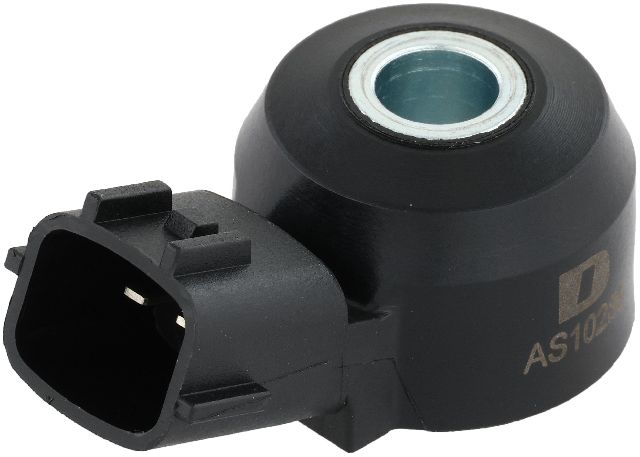
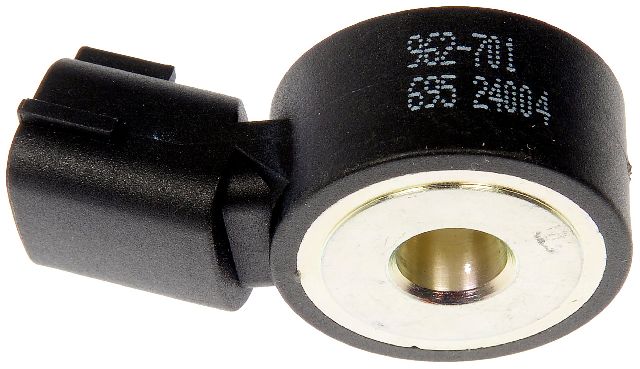
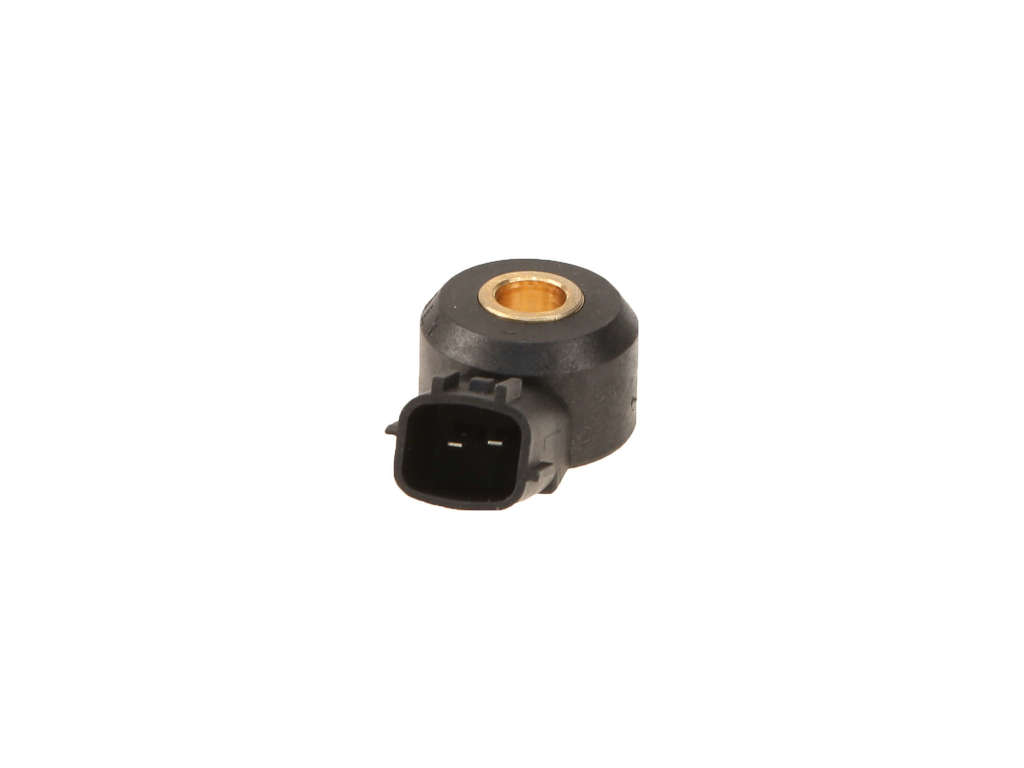
- Knock Sensor
(OEM #22060AA180)— This is the updated, more durable part recommended by Subaru in TSB #07-133-18 to fix the known durability issue with the original sensor (22060AA160).
Trusted brands: Genuine Subaru, Denso, NGK/NTK
OEM price range: $140-$220
Aftermarket price range: $45-$90
Related Codes That Often Appear With This One
- P0332 — Knock Sensor 2 Circuit Low Input. This code can appear with P0333 if the sensor is failing intermittently, causing the signal to fluctuate between too high and too low.
- P0327 / P0328 — These are the corresponding 'Low Input' and 'High Input' codes for the Bank 1 knock sensor. The TSB #07-133-18 lists all four codes (P0327, P0328, P0332, P0333) as being related to the same knock sensor durability issue.
Technical Service Bulletins (TSBs) & Recalls
- Bulletin #07-133-18: A TSB that addresses Check Engine Light illumination with knock sensor codes (P0327, P0328, P0332, P0333). It specifies using an updated, more durable knock sensor (originally for DIT engines) for NA engines to improve heat resistance.
Platform-Specific Known Issues
- A known durability issue with the original knock sensors is documented in Subaru TSB #07-133-18. The bulletin states that the knock sensor was updated for Naturally Aspirated (NA) engines to improve durability and heat resistance, directly addressing the root cause of frequent P0333 faults.
- For the 3.6L EZ36 engine, many owners have shared tips on replacing the driver's side (Bank 2) sensor without removing the intake manifold, which the service manual often recommends. This involves reaching behind the A/C compressor with extensions and a swivel socket.
Mechanic-Grade Diagnostic Values
- Knock sensor circuit bias voltage — expected: ~5.0V DC. Failure: A reading significantly lower than 5.0V indicates a wiring issue (short to ground) between the ECU and the sensor connector.
- Knock sensor operational voltage — expected: ~2.5V DC. Failure: A reading that stays at ~5.0V indicates an open circuit inside the knock sensor. A reading of 0V could indicate a short inside the sensor.
- Knock sensor internal resistance — expected: 500 kΩ - 620 kΩ. Failure: A reading of infinity (OL) indicates an open circuit. A reading of zero or significantly outside the expected range indicates the sensor is faulty.
Wiring & Ground Locations
- R69 / E14 — The electrical connector plug for the knock sensor itself, located on the engine block.. This is the primary connection point for the sensor. Corrosion, damage, or spread pins at this connector are a common cause of circuit faults like P0333. Knowing the diagram ID helps in sourcing a replacement pigtail.
- ECU Ground (Intake Manifold) — The primary ground path for the Engine Control Unit (ECU) is established through bolts on the intake manifold, which then grounds to the engine block and chassis.. A poor ground connection at the intake manifold can introduce electrical noise and unstable reference voltages for all engine sensors, including the knock sensor, potentially causing erroneous readings.
- Sensor Ground (Engine Block) — The metal mounting base of the knock sensor where it bolts to the engine block.. The sensor is a single-wire design that grounds through its body. A clean, corrosion-free mounting surface torqued to spec is essential for a stable ground path. An improper ground can cause incorrect signal readings.
Real Owner Repair Stories
- Reddit user in r/Subaru_Outback (2017 Subaru Outback 3.6R) — Check Engine Light with code P0333.
❌ Tried (didn't work) The owner initially assumed the sensor itself had failed.
✅ What actually fixed it Upon removing the sensor, the owner discovered rodent damage. A wire leading to the knock sensor connector had been chewed completely through. The fix was to solder in a new piece of wire to repair the harness, rather than replacing the entire harness or the sensor.
OEM Part Supersession History
22060AA160→22060AA180 (For Japan-built vehicles) or 22060AA18A (For SIA/US-built vehicles)— The original part had durability issues. The new part, originally for DIT (turbo) engines, was adopted for NA engines to improve durability and resistance to heat.
Heads up: The new part is a direct, improved replacement. No incompatibility is noted. The production changeover began on November 18th, 2016.
Model Year Variations Within This Range
- 2017: Vehicles manufactured after November 18, 2016, were equipped with the more durable knock sensor (22060AA180 or 22060AA18A) from the factory. While failure is still possible, it is less likely to be due to the original design flaw noted in TSB #07-133-18.
Helpful Videos
We Have This Part in Stock


The information in this article is provided for general reference and educational purposes only. Vehicle specifications, procedures, and part compatibility can vary by production date, trim level, and region. Always consult your vehicle's factory service manual and verify part numbers before purchasing or performing repairs. Safety-critical components such as airbags, seat belts, and braking systems should be installed by a qualified professional.
- Subaru LEGACY:
- 🧭 Diagnostic Flowchart
- 🎬 Helpful Videos
- 🛍️ Shop This Part
- What's Unique About the 2012-2017 Subaru LEGACY
- Symptoms You May Notice
- Most Likely Causes
- Rare But Worth Checking
- Diagnosis Steps
- Parts You'll Likely Need
- Related Codes That Often Appear With This One
- Technical Service Bulletins (TSBs) & Recalls
- Platform-Specific Known Issues
- Mechanic-Grade Diagnostic Values
- Wiring & Ground Locations
- Real Owner Repair Stories
- OEM Part Supersession History
- Model Year Variations Within This Range
- 🎟️ Get 5% Off